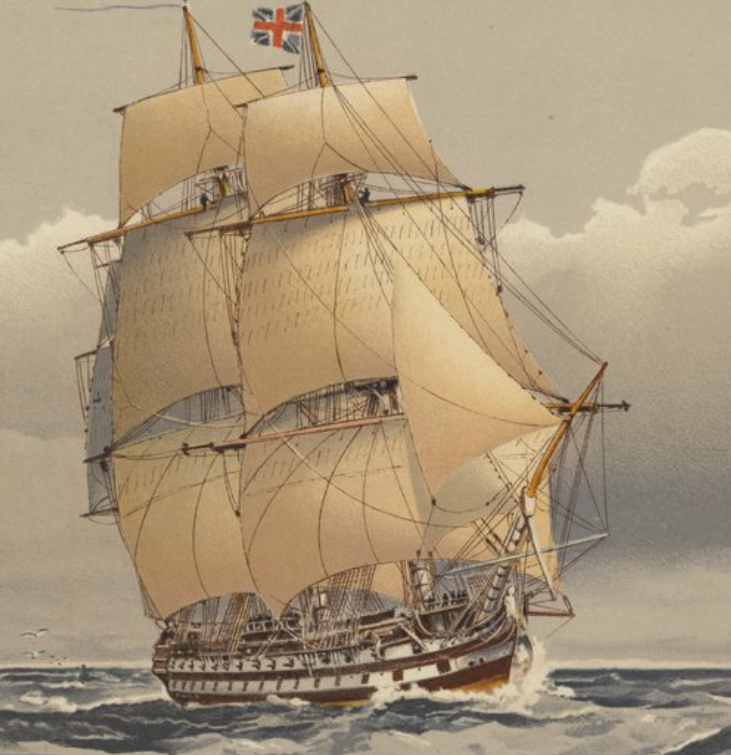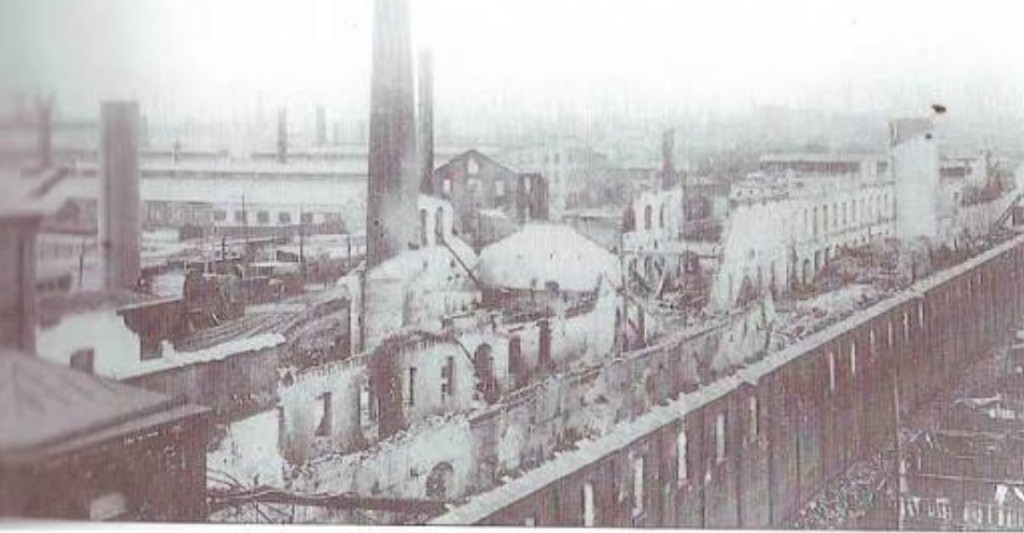
An old, iconic and rusty former industrial titan


The slogan – “Trenton Makes, the World Takes” – is stamped to Lower Trenton Bridge. Illuminated. Bold. “Trenton Makes, the World Takes” is a testament to Trenton’s past manufacturing glory. “Trenton Makes, the World Takes,” hung on the first bridge ever built across the Delaware River. The bridge was built in 1935. In the City which would, for a very short time, that is, be our nation’s capital. 

Trenton was the nation’s capital. From November 1, 1784 to December 24, 1784.

This confident slogan of Trenton’s originated in 1917. Justifiably so. What Trenton was really good at was manufacturing. The City thrived. Trenton’s manufacturing prowess was the foundation for the City’s successes.

Trenton built an economy based on exports. Attributed to the City’s strong manufacturing base. Trenton’s industrial might was coupled to the City’s expertise in the manufacture of finished products such as wire rope and rubber. Trenton became a booming Mid-Atlantic industrial hub.

Wrought iron beams. The very same beams used to build the dome in the U.S. Capital at the east end of the National Mall. Those were manufactured in Trenton.

Wire rope. The very same wire rope used to build the Brooklyn Bridge, the George Washington Bridge, the Golden Gate Bridge and the Wheeling Bridge (the bridge which connects West Virginia to Ohio). That bridge-building wire rope came from Trenton. 

Mechanicals used in San Francisco’s first streetcars? Manufactured in Trenton. 

The cable, spark plugs and electrical wire used in Charles Lindbergh’s single-engine Spirit of St Louis? Manufactured in Trenton. 

The cable used for the Wright Brother first airplane? Manufactured in Trenton. 

Prior to Akron, Ohio claiming the “Rubber Capital of the World” title early on in the Twentieth Century, Trenton was the nation’s tire capital.

John A. Roebling established his steel wire empire – The Roebling Steel Company – in Trenton. 

In 1849 Roebling set out to build his company alongside the Delaware Canal and the Raritan Canal. John A. Roebling’s company would go on to become a manufacturing stalwart. Becoming Trenton’s largest employer. Built on the 25 acres Roebling purchased in 1848. 

Twenty years after John A. Roebling laid the groundwork for Roebling Steel Company, a father and son team placed their signatures upon Trenton’s industrial past. 

Alan and Frank Magowan founded the oldest rubber mill in the United States – Trenton Rubber Company. By the late/1800’s, Trenton was a major production center for rubber…while Roebling went on to become the world’s largest manufacturer of wire rope. 

Wire rope, shipping, mining, construction, electrical power transmission, cable cars, tramways, aircraft, submarine netting, musical instruments, elevators, logging, oil drilling. At one time, each representing products proudly made in Trenton.

Trenton’s industrial prominence was routed in the City’s ability to harness productivity gains attributed to the canals and the railroads built in Trenton. Trenton’s expansive network of canals and railroads enabled the City to ship finished manufactures off to New York City and Philadelphia.

While Trenton enjoyed its long and storied run as an American manufacturing center, in June of 1974, a Trenton chapter was forever closed.

In June of that year the final 1,400 employees of what had once been the Roebling industrial empire lost their jobs. These final Roebling layoffs coming after numerous failed attempts to revive the Trenton plant. The plant, that time, a subsidiary of Colorado Fuel & Iron. 

Both Roebling manufacturing plants closed their doors for good in Trenton in 1974. Marking the formal ending of Roebling’s presence in Trenton. The closing of Roebling…poetic justice in that this end to an era was representative of Trenton’s last days as a manufacturing center. 

Cheap foreign goods. Foreign competition. The hollowing out of the City’s property tax base due the demise of manufacturing. Suburbanization. Each contributed in their own unique way to Trenton’s decline. Declining productivity. Bleeding over into a decline in the City’s population. A decade-by-decade descent.

Long before Trenton’s descent, the City’s population steadily increased. Year-by-year. Beginning in the latter part of the 18th Century through the 1950’s. Topping off at just about 128,000 in 1955.

By 2022 Trenton’s population was down to 90,000.
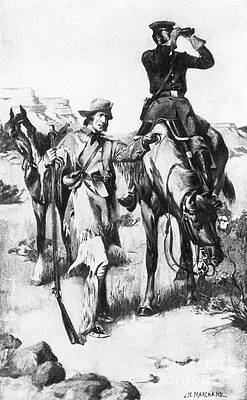
They headed west…

During the latter part of the 19th Century, the Homestead Act enabled settlers to become landowners. The Homestead Act was signed into law by President Abraham Lincoln on May 20, 1862.


Through the Homestead Act, after living on and improving their homestead for five years, a homesteader would then receive their deed by paying a $18 filing fee.


Leading up to the Civil War, southern states seceded from the Union. One year before the Homestead Act went into effect.
Southern states intended to advance the institution of slavery. Members of Congress representing the South recognized that land added to the Union which would be owned slave owners could point the country in a pro-slavery direction. Their goal being, for slavery to be established as the foundation for rural economies in the West.


In the 1860’s there was a tug of war over the institution of slavery. It was slave owners versus free-staters. As the United States pushed west, land totaling just about 10% of the country would be conveyed to homesteaders. One million homesteaders. Representing a voting block which would be integrated into the Union. One which would influence policy.

Prior to the Homestead Act, the Preemption Act of 1841 was used by settlers – those age 21 or older, and head of a household – to acquire up to 160 acres. The price? $1.25 per acre.


Through the Preemption Act, a homesteader was required to make improvements to their homestead and to live on their homestead for a minimum of five years.


Opposition to the Homestead Act – and to the Preemption Act beforehand – had largely been anchored in plantation owners of the South. Their concern? Land acquired in the West would go to stakeholders who would not be advocates of slavery. While slavery was the bedrock on which the southern economy was based.


Representing a barrier to southern interests, the Homestead Act prohibited conveyances of land to those fought against the United States in the Civil War. Which meant, land conveyed through the Homestead Act was not available to former Confederate soldiers.


Homesteading continued on as federal policy through the 1970’s. In 1976 President Gerald Ford signed the Federal Land Policy and Management Act into law. Effectively ending homesteading at the federal level.


The Federal Land Policy and Management Act governs how federal land is administered by the Bureau of Land Management.


By the end of the Civil War, some 15,000 homesteaders acquired land through the Homestead Act. Establishing their homes in what today we know to be Kansas, Colorado, Nebraska, Montana and Wyoming. Nearly 80 million United States acres, conveyed to homesteaders.

Options

As a real estate investor assesses potential properties to acquire, when a good investment has been identified, what if an extended closing is preferred? In this case, an investor might use an option contract.

The option contract enables the investor – with an option contract, the investor becomes the optionee – to lock in purchase terms with the seller. The seller is the optionor. Negotiated terms in an option contract involve the sale price as well as a timeframe in which the closing will take place. 

Terms for the purchase are presented by the optionee to the optionor, accompanied by a dollar amount – consideration.

In order for the option contract to be effectuated, consideration is given by the optionee to the optionor. Consideration is comparable to an earnest money deposit, which accompanies a real estate contract of sale in a traditional purchase.

Once the option contract is in place, the optionee has secured his or her option to purchase the home. According to terms set forth in the option contract.

The optionor can’t sell the property to another buyer. The optionor can’t enter into another option agreement with another optionee. While the optionee is not obligated to follow through and complete the purchase of the home. The optionee has an option.

Within the option period, the optionee lines up his or her financing. The optionee obtains cost estimates to renovate the home. The optionee coordinates the appraisal and inspections.

As per inspections, the optionee may want to order a tank sweep. 

A tank sweep will show the optionee whether there is an underground storage tank – a UST.

An OPRA request can be forwarded by the optionee to the township. An OPRA request could enable the optionee to obtain public records pertaining to the home.

Environmental concerns…

Let’s say a UST has been discovered. The Environmental Protection Agency does not necesssrily regulate underground tanks for residential homes. 

By definition, a UST is a tank whereby a minimum of 10% of the piping is located underground. For UST’s with storage capacity of less than 110 gallons, these fall outside federal oversight. Although states and municipalities often institute their own policies for UST’s. 

Storage tanks installed in the 1980’s – and prior to the 1980’s – were constructed with steel. Over time steel corrodes. If corrosion occurs with a steel UST, oil could leak. With an oil leak, you run the possibility of contaminating not only the subject property, but the surrounding area as well. Oil could seep into soil. And water sources too. These represent environmental hazards.

Within the due diligence phase of an option contract, as home inspections are conducted, in the event that a UST has been discovered by way of a tank sweep or an OPRA request, the option continues. While the execution of the option could be put on hold. 

Let’s assume local home values increase during the option period. While discovery of the UST negatively affects the home’s value.

One “plus” – increasing home values – and one “minus” – the UST.

When the optionee obtains financing, the home becomes the lender’s collateral. The UST will lower the market value of the home. Adversely affecting the lender’s collateral. 

The UST affects marketability. The UST culminates in a lower appraisal value. The reduced appraisal value affects loan to value. Which, in effect, affects loan terms. 

The optionee’s lender may want to get a Phase 1 Site Assessment. A Phase 1 details environmental conditions. The lender would likely schedule a Phase I prior to issuing the loan commitment.

Discoveries arrived at by the optionee during the due diligence phase through inspections – such as a discovery of a UST – could determine whether the optionee elects to follow through on the option they have to purchase the home.

American Independence…Trade Dependents


Exports from Great Britain to the Colonies doubled the first year of the Colonies’ independence. While Parliament placed tariffs on manufactured goods the newly-independent Colonies intended to export to Great Britain.

These were British tariffs. British tariffs were called Duties.

Duties represented constraints pushed onto Colonists by Great Britain. Functioning as barriers to Colonial exports which could land ashore in Great Britain, as imports.

This problem – caused by the imposition of duties on Colonial production – was compounded by an additional constraint. One meant to further restrict American exports to Great Britain. This additional restriction was centered upon shipping.

American exports to Great Britain were required to be transported by British vessels only.

Confiscatory trade policy enacted through Parliament which dampened economic growth in the new American Colonies.

Alexander Hamilton, coupled to his frustration with trade barriers, foretold of the rise of this industrial city.


We owe our beginning for Paterson, New Jersey to Alexander Hamilton. To Hamilton’s pursuit of American manufacturing independence. To Hamilton’s interest in battling prohibitions placed upon free trade.

Paterson was established in 1791. And it was in 1791 that Alexander Hamilton – then, Secretary of the Treasury – set up the Society for Establishing Useful Manufactures (SUM). Proceeding to acquire 700 acres which would be developed as a catalyst for the growth of American manufacturing.

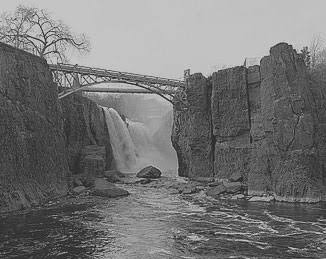
Those 700 Paterson acres are located close to a power source which is native to Paterson – the Great Falls.

Here we have our catalyst – the Society for Establishing Useful Manufactures – and our footprint – those 700 acres – for the 18th Century emergence of an American industrial center.

Hamilton’s vision for the Society for Establishing Useful Manufactures was anchored in his goal to transform Paterson into a major industrial hub.

Cotton emerged as an early product manufactured in Paterson. Soon giving way to textiles.

In time, silk would become the preeminent manufacture of Paterson. Paterson would go on to become “Silk City.”

The Great Falls of Paterson provided the power needed in “Silk City” to operate industrial sites. Industrial sites built around benefits flowing from the Falls.

Recognizing the potential in the Great Falls, Alexander Hamilton’s idea for an industrial site – and for an industrial city – could be realized through the construction of canals. Hamilton knew that canals would be able to deliver water power to industrial sites. Providing the power source – water – Paterson manufacturers could come to rely on.

A private-public corporation, the initial plan for the Society for Establishing Useful Manufactures was for the corporation to build, own and operate Paterson’s industrial sites – owner-operators.

That first strategy thought up for the Society for Establishing Useful Manufactures as an owner-operator changed. This early-day premise for the Society for Establishing Manufactures as owner-operator of industrial sites gave way to an amended blueprint. This amended blueprint being, for the Society for Establishing Useful Manufactures to become freeholder to Paterson industrial sites.

The Society for Establishing Useful Manufactures leased industrial sites around the Falls to private manufacturers. While retaining control over the power source manufacturers relied upon – the Great Falls.

The Society for Establishing Useful Manufactures transitioned from manufacturing into real estate development. Becoming a prominent real estate developer in Paterson through the early part of the 20th Century.

Paterson becoming an industrial hub was a late-18th Century goal arising from the importance Alexander Hamilton placed on manufacturing independence.

Manufacturing independence. Economic independence. Industrial independence. 

The 700-acre site acquired by the Society for Establishing Useful Manufactures around the Great Falls was a foundation upon which the emergence of an American manufacturing empire could be begin. The birth of Paterson.

The American Colonies gained their independence from Great Britain in 1783. With the signing of the Treaty of Paris. Two years after General Cornwallis surrendered at Yorktown.

The Treaty of Paris was signed. The Colonies were no longer subjects of the King. Yet these new Colonies were still reliant upon Great Britain. Hence, Hamilton’s idea for the Society for Establishing Useful Manufactures. Hence, our backdrop for the emergence of Paterson.

The year of the Treaty of Paris – 1783 – Colonial imports from Great Britain totaled just about $300,000, in 18th Century dollars.

The year after the Treaty of Paris – 1784 – Colonial imports from Great Britain totaled just about $600,000, in 18th Century dollars.

Imports from Great Britain doubled the first year of America’s independence. America did gain its independence from Great Britain. While at the same time, increasing their dependence on Great Britain. For imports.

Exports from Great Britain to the Colonies increased substantially after the Colonies’ independence. While Parliament was placing “tariffs” on manufactured goods the Colonies intended to export to Great Britain.

These British “tariffs” were called Duties. Duties represented constraints pushed onto Colonists, serving as barriers to Colonial exports to Great Britain. And this problem of duties was compounded by a stranglehold-of-a-requirement imposed on the Colonies through Parliament.

Great Britain commingled their imposition of Duties on American exports with an additional constraint. An additional constraint meant to further restrict American exports to Great Britain. This additional restriction being, American exports to Great Britain were required to be transported by British vessels only. Confiscatory trade policy enacted through Parliament which dampened manufacturing in the Colonies.

Trade restrictions placed upon Great Britain’s newly-independent “trade partner” did not stop at duties and a ship-British mandate.

Parliament permitted only the importation of non-manufactured American goods. It was non-manufactured goods only. Great Britain, as the world’s largest economy, placed restrictions on imported American manufactured products to protect manufactures at home.

In 1783, as a newly-independent country, the Colonies were “free” to export to Great Britain. So long as the Colonies did not export manufactures.

This protected British manufacturers from newfound Colonial competition. While at the same time, preventing the emergence of well-trained, English-speaking competitors to British manufacturers – American manufacturers.

Furthermore, Great Britain – through their Colonies, when they were Colonies of Great Britain – enjoyed prosperous trade with the British West Indies. A different outpost within the same British Empire.

Yes, the Colonies gained their independence from Great Britain. In 1783. The Colonies gained their independence while at the same time increasing their dependence upon Great Britain in different sort of way. This, a dependence found in reliance upon British manufactures. Manufacturers in Great Britain who exported their finished products to the Colonies. The inverse for which was highly restricted. Through Parliament.

The British West Indies remained, the British West Indies.

Britain enacted protectionist policies when dealing with the Colonies. Prohibiting free trade for the Colonies within the Empire. Which included the British West Indies.

The Colonies were “free” to trade with the British West Indies. So long as that trade was in non-manufactured goods. And so long as trade with the British West Indies involved the transportation of non-manufactured goods to the British West Indies (and to Great Britain, for that matter) on British vessels. 

American livestock? The trade of American livestock was fine…trade away. So long as American livestock was shipped within the British Empire on British vessels.

American lumber? The trade of American lumber was fine…trade away. So long as American lumber was shipped within the British Empire on British vessels.

American flour? The trade of American flour was fine…trade away. So long as American flour was shipped within the British Empire on British vessels.

The trade of American manufactures? Of American finished goods? No deal. No trade. There was to be no shipment of American manufactures to Great Britain, nor to the British West Indies. Not on British vessels. Not on American vessels.

Great Britain was protecting their global manufacturing dominance. While in the Colonies, the Secretary of the Treasury recognized challenges arising from the unfair British trade restrictions. The Secretary of the Treasury in the Colonies intended to alter an unfavorable outcome. Alexander Hamilton was the Secretary of the Treasury. 

Hence, our catalyst for Alexander Hamilton’s focus on developing the American Colonies into a manufacturing power that could one day compete with Great Britain. 

Hence, our catalyst for the emergence of American industrial cities. 

Hence, our emergence of Paterson as an industrial hub.

It had been those trade restrictions – enacted by Great Britain through Parliament after the Colonies gained their independence – which led Alexander Hamilton, as Secretary of the Treasury, to create a framework necessary for the growth of American manufacturing. Then, so too, for the growth of American industrial cities. Cities such as Paterson.

The MLS


In 1908 the National Real Estate Exchanges was first established. One of the early goals of the National Real Estate Exchanges was to facilitate an effective cooperation system which could be used by brokers to sell real estate. Early days of cooperation among REALTORS.


The National Real Estate Exchanges set out to find good ways to communicate the benefits of – and the salable features for – properties available to be purchased through National Real Estate Exchange members – cooperation among members.


Each month property information was delivered by member-brokers to offices of member-brokers – the earliest stages for REALTOR cooperation. The earliest forms of the sharing of property information.
Information drop-offs: 1) head over to the local real estate office, 2) drop off information about properties.


Preceding the dropping off of property information at real estate offices, brokers met at the office of their local trade associations to discuss properties. Participating brokers agreed to compensate one another. A collaborative effort to sell homes – Help me sell my property, I’ll help you sell yours…


MLS’s have come a long way. Today, Florida has over two-hundred twenty-thousand REALTORS – #1 in the country. California has in the range of two-hundred thousand REALTORS. In Texas, over one-hundred fifty-thousand REALTORS.


Using Texas as an example, those 150,000-plus Texas REALTORS access property information through multiple listing services managed by the Texas Real Estate Commission.


One of the oldest MLS’s in Texas is the Austin Board of REALTORS Multiple Listing Service.


The Austin Board of REALTORS began 1918. Forming ten years after the National Association of REALTORS was established. Today, the Austin Board of REALTORS Multiple Listing Service serves over 18,000 real estate professionals in eighteen Texas counties.


MLS’s are locally organized and managed. The importance for local management of MLS’s can by illustrated using Texas as our example.


In Texas, property descriptions include information about kitchens, bedrooms and property taxes. Add in oil leases and mineral rights. Considerations pertinent to oil and gas interests.


Florida property listings – or New Jersey property listings – prioritize such interests. Texas listings would. Hence, the benefit of locally managed MLS’s.


The largest MLS in Texas is the Houston Association of REALTORS Multiple Listing Service. Houston’s MLS was established in 1918 and today serves over 160,000 REALTORS. The Houston Association of REALTORS Multiple Listing Service is the 10th largest MLS in the country.


The California Regional Multiple Listing Service is the largest MLS, consisting of over 40 associations, boards and smaller MLS’s.
California REALTORS are also served by two additional MLS which are among the largest in the country – the LA/Westside MLS and the California Regional MLS. The LA/Westside MLS has over 16,000 members.
The largest MLS in New Jersey – the 39th largest MLS in the country – is the Monmouth-Ocean Regional REALTORS Multiple Listing Service. Established in 1936, Monmouth-Ocean Regional has over 11,000 members.


The second largest MLS in New Jersey is the Garden State MLS. Established in 2010, the Garden State MLS is the 89th largest MLS.
The National Association of Real Estate Exchanges became the National Association of Real Estate Boards in 1916. By 1972, the National Association of Real Estate Boards became the National Association of REALTORS. The NAR.


Of note, the National Association of REALTORS is independent of the National Association of Real Estate Brokers – NAREB.
Founded in 1947 in Tampa, Florida, members of the NAREB are REALTISTs, not REALTORS.


The NAREB is the oldest minority business association in the country. The NAREB is an equal opportunity and civil rights advocacy organization. Focusing their efforts the advancement of African-American real estate professionals.


Headquartered in Maryland, the NAREB was organized by Black real estate professionals who had a goal of forming their own real estate trade group. Incentivized to do so because at that time, Black real estate professionals were prohibited from joining the NAR.


The first NAREB convention was held in Atlantic City, New Jersey in 1948.
Today, the National Association of REALTORS establishes policies for a majority of the MLS’s.


NAR members join local boards and associations. Of which there are about 1,600.
NAR members are REALTORS. With over 1.5 million members, the NAR is the largest trade association in the United States.

Three Types of Senior Housing


In age-restricted adult communities 80% of homeowners are required to be at least 55 years old. 

In active adult communities each homeowner is required to be at least 55 years old.

In age-targeted communities homeowners do not have age restriction.

Three Types of Senior Housing


In age-restricted adult communities 80% of homeowners are required to be at least 55 years old. 

In active adult communities each homeowner is required to be at least 55 years old.

In age-targeted communities homeowners do not have age restriction.

Crossroads


Lewis and Clark arrived at the confluence of the Missouri River and the Kansas River at a time when the country was keen on opening up the west.


The best pathway west at that time was the Missouri River. Kansas City sits alongside “the Big Muddy.”


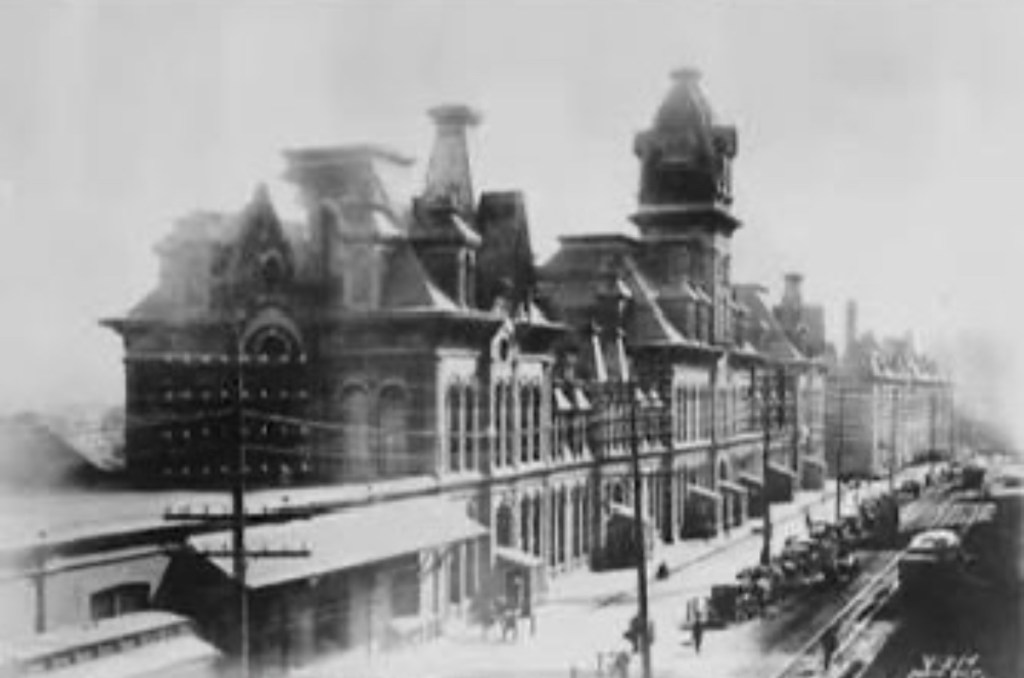
One hundred years after Lewis and Clark arrived with their team of 50 and 3 boats the first train depot opened in Kansas City – Union Depot, in 1878.


Kansas City’s Union Depot became the second of its kind. Indianapolis’ union depot was the first.

During the latter part of the 19th Century, goods making their way to the Western-most points of the United States likely came through Kansas City.

In a fast-industrializing 20th Century, Kansas City connected an industrial Northeast to the West.


At its height, 200 trains pulled into Union Depot each day. Rail was the primary method of transporting freight. And Kansas City outgrew Union Depot.


Needing additional capacity, railroad companies utilizing Union Depot decided to replace Union Depot with a larger station at a better location.

Union Depot was located in the West Bottoms. The West Bottoms was prone to flooding.

The new station would be built near the central business district, atop a hill.


Kansas City’s Union Station opened in 1914 – 850,000 square feet.


Kansas City’s Troost Avenue

Troost Avenue, a 10-mile corridor in Kansas City running from 4th to Bannister.

Among the Kansas City neighborhoods bordering Troost Avenue are Beacon Hill, Longfellow, Squier Park, Rockhill and Hyde Park.

Troost Avenue was named after a doctor. Benoist Troost. Dr. Troost, a prominent Kansas City physician, was also a civic leader.


Troost Avenue was once home to “Millionaire’s Row.” Early in the 20th Century, “Millionaire’s Row” had been a strip of stunning mansions constructed along Troost Avenue. Those mansions adorned Troost from 31st Street to 34th Street.

Today, Troost Avenue is experiencing redevelopment interest. And a tasteful renaissance.


In times past, Troost Avenue experienced a sad history written with the underpinnings of disinvestment. Leading to decline. Leading to decreased home values. This, before Troost’s renaissance.


So what led to Troost’s decline?

Disinvestment. But real estate disinvestment was not the primary catalyst which led to Troost’s mid-20th Century decline. Real estate disinvestment certainly was one catalyst. But real estate disinvestment was not the primary catalyst.

Disinvestment in public schools east of Troost was the primary catalyst which led to Troost’s decline.


Starting off in the late ‘60’s, the School Board in Kansas City, Missouri consistently requested increases in education funding for Kansas City, Missouri schools which were located east of Troost Avenue. There were in the range of twenty such education funding requests made by the Board during this time. Funding requests made throughout the ‘60’s and ‘70’s.

Those funds – if approved – would have gone to Kansas City, Missouri public schools east of Troost Avenue. Funding requests were voted down. The result? Disinvestment in schools. Culminating in “White flight.”

Families, those having the means, that is – predominantly White families – moved. White families moved out of neighborhoods which were adversely affected by the undercutting of school funding.

White flight. Neighborhood home values decreased. One prominent Kansas City mayor once referred to Troost Avenue as, “…the demarcation line in a war zone.”

The problem, east of Troost, wasn’t the legal segregation of schools. Nor was the problem segregation of schools. The problem, east of Troost, was funding for education. Or a lack thereof.


Long before round after round after round after round of failed requests to secure funding for Kansas City, Missouri public schools east of Troost were submitted, those same public schools were desegregated. Yet school desegregation didn’t really solve this problem in Kansas City east of Troost.

Because while the desegregation of schools, based upon race, was the national mandate after Brown v. the Board of Education, decisions which were made affecting education funding were made at the local level. Therein we find the problem. For why public schools east of Troost declined.


In 1954, the United States Supreme Court unanimously ruled in Brown v. The Board of Education of Topeka, Kansas that state-sanctioned segregation of public schools was unconstitutional. Prior to Brown v. The Board of Education, in Kansas City, east of Troost, Lincoln High School had been the only high school providing post-elementary education to Black students. One high school.


In 1955, one year after Brown v. The Board of Education, the Kansas City School Board enacted a “segregation” of public schools in a different way. This was a “de-facto segregation.” Not based upon race. But rather, this was a segregation based upon attendance zones.

Revisiting “White flight” east of Troost, the “White flight” which occurred as round after round of school funding requests were voted down led to the “panic selling” of homes. Leading to block busting. As White families relocated out of the Kansas City, Missouri school district. Real estate values declined.


No, Kansas City, Missouri public schools east of Troost were not segregated based upon race after the 1954 Supreme Court decision. But yet, in a practical sense, they were still segregated.


Kansas City, Missouri public schools east of Troost remained overcrowded. And underfunded. The city’s expansion just made it worse.


In real estate, developers often utilize – and benefit from – tax abatements. On Troost Avenue, and east of Troost, there is a real estate renaissance taking place.


While panic selling and block busting were factors which contributed to neighborhood destabilization east of Troost in years past, neighborhoods east of Troost today are likely to not experience the same type of disruptions as the pendulum swings the other way. Through redevelopment.


What we may see is, not decreasing property values east of Troost. We’ll likely see increasing property values east of Troost.

We likely won’t see panic selling east of Troost. We’ll likely see home sellers fetching ever-increasing prices for their homes, east of Troost.


We won’t see blockbusting, east of Troost. We’ll see continued interest in homes, east of Troost.


What we’ll also likely see, east of Troost, is community members priced out of their neighborhoods. We’ll likely see gentrification. We’ll see investment. Not disinvestment. We’ll see tax abatements.

Accompanying such, we’ll also see hundreds of millions of dollars in deferred maintenance incurred by Kansas City, Missouri public schools.


We’ll likely see challenges in education. Different education challenges. But challenges, nonetheless. Not segregation. Not the same challenges as before. But challenges.


If redevelopment on Troost Avenue and east of Troost is the #1 goal, all good. If there are other concerns to consider, maybe one should revisit Kansas City history? Focusing on this topic: public schools east of Troost.