Alexander Hamilton, coupled to his frustration with trade barriers, foretold of the rise of this industrial city.


We owe our beginning for Paterson, New Jersey to Alexander Hamilton. To Hamilton’s pursuit of American manufacturing independence. To Hamilton’s interest in battling prohibitions placed upon free trade.

Paterson was established in 1791. And it was in 1791 that Alexander Hamilton – then, Secretary of the Treasury – set up the Society for Establishing Useful Manufactures (SUM). Proceeding to acquire 700 acres which would be developed as a catalyst for the growth of American manufacturing.

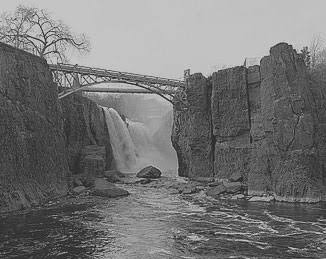
Those 700 Paterson acres are located close to a power source which is native to Paterson – the Great Falls.

Here we have our catalyst – the Society for Establishing Useful Manufactures – and our footprint – those 700 acres – for the 18th Century emergence of an American industrial center.

Hamilton’s vision for the Society for Establishing Useful Manufactures was anchored in his goal to transform Paterson into a major industrial hub.

Cotton emerged as an early product manufactured in Paterson. Soon giving way to textiles.

In time, silk would become the preeminent manufacture of Paterson. Paterson would go on to become “Silk City.”

The Great Falls of Paterson provided the power needed in “Silk City” to operate industrial sites. Industrial sites built around benefits flowing from the Falls.

Recognizing the potential in the Great Falls, Alexander Hamilton’s idea for an industrial site – and for an industrial city – could be realized through the construction of canals. Hamilton knew that canals would be able to deliver water power to industrial sites. Providing the power source – water – Paterson manufacturers could come to rely on.

A private-public corporation, the initial plan for the Society for Establishing Useful Manufactures was for the corporation to build, own and operate Paterson’s industrial sites – owner-operators.

That first strategy thought up for the Society for Establishing Useful Manufactures as an owner-operator changed. This early-day premise for the Society for Establishing Manufactures as owner-operator of industrial sites gave way to an amended blueprint. This amended blueprint being, for the Society for Establishing Useful Manufactures to become freeholder to Paterson industrial sites.

The Society for Establishing Useful Manufactures leased industrial sites around the Falls to private manufacturers. While retaining control over the power source manufacturers relied upon – the Great Falls.

The Society for Establishing Useful Manufactures transitioned from manufacturing into real estate development. Becoming a prominent real estate developer in Paterson through the early part of the 20th Century.

Paterson becoming an industrial hub was a late-18th Century goal arising from the importance Alexander Hamilton placed on manufacturing independence.

Manufacturing independence. Economic independence. Industrial independence. 

The 700-acre site acquired by the Society for Establishing Useful Manufactures around the Great Falls was a foundation upon which the emergence of an American manufacturing empire could be begin. The birth of Paterson.

The American Colonies gained their independence from Great Britain in 1783. With the signing of the Treaty of Paris. Two years after General Cornwallis surrendered at Yorktown.

The Treaty of Paris was signed. The Colonies were no longer subjects of the King. Yet these new Colonies were still reliant upon Great Britain. Hence, Hamilton’s idea for the Society for Establishing Useful Manufactures. Hence, our backdrop for the emergence of Paterson.

The year of the Treaty of Paris – 1783 – Colonial imports from Great Britain totaled just about $300,000, in 18th Century dollars.

The year after the Treaty of Paris – 1784 – Colonial imports from Great Britain totaled just about $600,000, in 18th Century dollars.

Imports from Great Britain doubled the first year of America’s independence. America did gain its independence from Great Britain. While at the same time, increasing their dependence on Great Britain. For imports.

Exports from Great Britain to the Colonies increased substantially after the Colonies’ independence. While Parliament was placing “tariffs” on manufactured goods the Colonies intended to export to Great Britain.

These British “tariffs” were called Duties. Duties represented constraints pushed onto Colonists, serving as barriers to Colonial exports to Great Britain. And this problem of duties was compounded by a stranglehold-of-a-requirement imposed on the Colonies through Parliament.

Great Britain commingled their imposition of Duties on American exports with an additional constraint. An additional constraint meant to further restrict American exports to Great Britain. This additional restriction being, American exports to Great Britain were required to be transported by British vessels only. Confiscatory trade policy enacted through Parliament which dampened manufacturing in the Colonies.

Trade restrictions placed upon Great Britain’s newly-independent “trade partner” did not stop at duties and a ship-British mandate.

Parliament permitted only the importation of non-manufactured American goods. It was non-manufactured goods only. Great Britain, as the world’s largest economy, placed restrictions on imported American manufactured products to protect manufactures at home.

In 1783, as a newly-independent country, the Colonies were “free” to export to Great Britain. So long as the Colonies did not export manufactures.

This protected British manufacturers from newfound Colonial competition. While at the same time, preventing the emergence of well-trained, English-speaking competitors to British manufacturers – American manufacturers.

Furthermore, Great Britain – through their Colonies, when they were Colonies of Great Britain – enjoyed prosperous trade with the British West Indies. A different outpost within the same British Empire.

Yes, the Colonies gained their independence from Great Britain. In 1783. The Colonies gained their independence while at the same time increasing their dependence upon Great Britain in different sort of way. This, a dependence found in reliance upon British manufactures. Manufacturers in Great Britain who exported their finished products to the Colonies. The inverse for which was highly restricted. Through Parliament.

The British West Indies remained, the British West Indies.

Britain enacted protectionist policies when dealing with the Colonies. Prohibiting free trade for the Colonies within the Empire. Which included the British West Indies.

The Colonies were “free” to trade with the British West Indies. So long as that trade was in non-manufactured goods. And so long as trade with the British West Indies involved the transportation of non-manufactured goods to the British West Indies (and to Great Britain, for that matter) on British vessels. 

American livestock? The trade of American livestock was fine…trade away. So long as American livestock was shipped within the British Empire on British vessels.

American lumber? The trade of American lumber was fine…trade away. So long as American lumber was shipped within the British Empire on British vessels.

American flour? The trade of American flour was fine…trade away. So long as American flour was shipped within the British Empire on British vessels.

The trade of American manufactures? Of American finished goods? No deal. No trade. There was to be no shipment of American manufactures to Great Britain, nor to the British West Indies. Not on British vessels. Not on American vessels.

Great Britain was protecting their global manufacturing dominance. While in the Colonies, the Secretary of the Treasury recognized challenges arising from the unfair British trade restrictions. The Secretary of the Treasury in the Colonies intended to alter an unfavorable outcome. Alexander Hamilton was the Secretary of the Treasury. 

Hence, our catalyst for Alexander Hamilton’s focus on developing the American Colonies into a manufacturing power that could one day compete with Great Britain. 

Hence, our catalyst for the emergence of American industrial cities. 

Hence, our emergence of Paterson as an industrial hub.

It had been those trade restrictions – enacted by Great Britain through Parliament after the Colonies gained their independence – which led Alexander Hamilton, as Secretary of the Treasury, to create a framework necessary for the growth of American manufacturing. Then, so too, for the growth of American industrial cities. Cities such as Paterson.
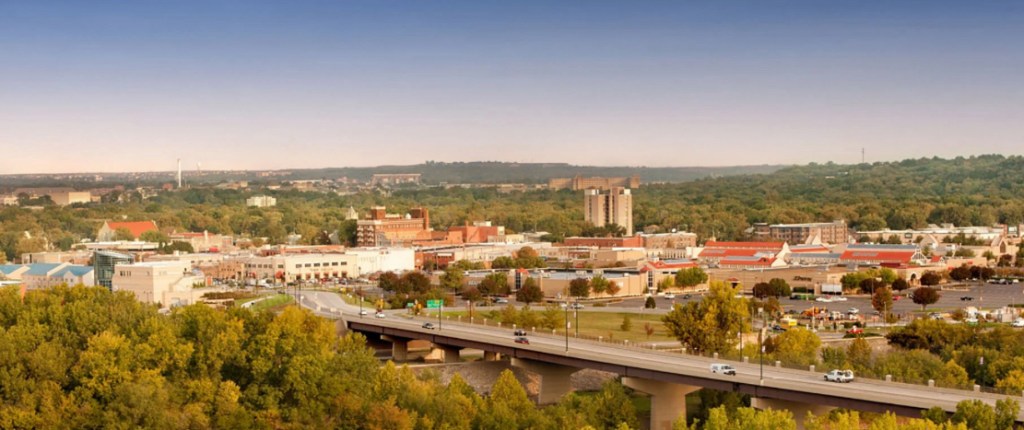
Emporia, Kansas


In east central Kansas, at the junction of the Cottonwood River and the Neosho River, you’ll find the foothills of the Flint Hills. Emporia, Kansas. The very beginning for Emporia…a $1,800 land purchase.

This original land purchase encompassed an area within Emporia which stretches from what today is Emporia’s 6th Street to 18th Avenue. Due northwest, of this article’s topic.

Founded in 1857 as a trading post along the Santa Fe Trail, one can hypothecate that “DNA” for the Emporia one sees today took hold during the 1960’s. 

In 1969, the Tyson plant in Emporia opened. Opening after a two-year period of thorough plant modernization, and expansion. That Emporia Tyson plant which opened in 1969 was not yet Tyson. This plant, at that time, had been IBP – Iowa Beef Processing. 

The decade of the ‘60’s brought with it notable innovation in the American beef business. Leading to increases in investment in America’s beef industry. Which significantly reshaped the economy for the Great Plains. In which, Emporia resides. 

IBP’s plant in Emporia opened in 1969. And it was the sale of this plant to IBP two years prior to the plant’s opening – the sale of the plant to IBP taking place in 1967 – which foretold of innovation in America’s beef processing industry.

In 1967 Armour and Company sold their Emporia-based beef processing operation to IBP. IBP’s plant modernization – completed two years later – was emblematic of this decade of innovation.

Emporia is nestled within the Great Plains along I-35. Between Wichita and Kansas City. For this piece, I’d like to cite one unique 19th Century paradigm which, one can argue, led to Emporia’s evolution as a beef processing hub. And then, so too, to the emergence of major Midwest beef processing centers situated throughout the Midwest.


One hundred years prior to the sale of that Armour and Company Emporia plant to IBP, the British Empire made up just about one quarter of the world’s GDP. In the 1860’s, a severe plague broke out in Great Britain. Curtailing Britain’s domestic beef industry. Reducing the total number of heads of cattle which could be brought to market within the British Empire.

While over half of all revenues in 1860 for the British Empire flowed to London through Great Britain’s expansive “outposts,” those living on the British Isles themselves back home loved their beef.


England. Scotland. Wales. Ireland. As well as thousands of smaller islands. The British Isles. Enter a beef shortage. Coupled to, no let-up in the demand for beef within Great Britain. 

As this epidemic ravaged Great Britain, domestically raised cattle – cattle which could have been brought to market in Great Britain – took a hit. Less cattle. Less cattle going to market in Great Britain. The beef shortage.

At this same time, across The Pond in the United States, the Great Plains was opening up to commercial interests.

Great Britain recognized this confluence of events: a) a beef shortage in Great Britain, plus b) the opening up of thousands of acres of prime cattle-grazing land in the United States.


With the beef shortage taking hold in the world’s largest economy, the price of beef shot up. Elevated beef prices lead to investment opportunities. Then. And now.

Prior to an increase in beef prices, American businessmen were already deploying capital to develop the United States cattle industry. Deployed capital which led to modernization for, and the growth of, American cattle business on the Great Plains. Enter additional capital. From London.


Increased demand. Higher prices. Investment. The build-out of the cattle industry on the Great Plains. Yet still, in 1860, transportation lines for Midwest cattle had yet to be modernized. Inhibiting efficiency for the market.

While grazing land in the Great Plains further opened up to American ranchers, a notable degree of capital was flowing to the Plains from across The Pond. Coming from British financiers. This capital infusion fueled the growth of – as well as modernization for – the American cattle industry. As investments made by Great Britain to facilitate the transportation of cattle led to investment in railroads, the very means by which the shipment of cattle took place incurred new efficiency.

While buyers of beef were (and are) concentrated in urban centers – and for Great Britain, across The Pond – United States stockyards were (and are) located in America’s Midwest. So too, is Emporia.

Investment in railroads – by the United States government, and by British financiers – connected urban centers – I.e.: buyers of beef – to beef supply – I.e.: stockyards. In fact, many early stockyards evolved through partnerships struck between railroads and the cattle industry itself.

Timing…

Emporia was founded in 1857. Thirteen years later, in 1870, Emporia was incorporated.

Emporia was founded not long before the aforementioned bout of anthrax gripped the domestic British cattle industry. Leading to…Britain’s shortage of beef.

This beef shortage checked the world’s largest economy. Driving down the number of heads of cattle which came to market in Great Britain. While at the same time, driving up the price of beef. As demand for beef remained constant.

The curtailing of production of domestic beef in Great Britain – the anthrax – coincided with the opening up of the Great Plains to ranchers in the United States. Fueling investment. Leading to improvements made in the transportation of cattle by rail. Leading to the prioritization of investments in railroads. And in beef processing centers. 

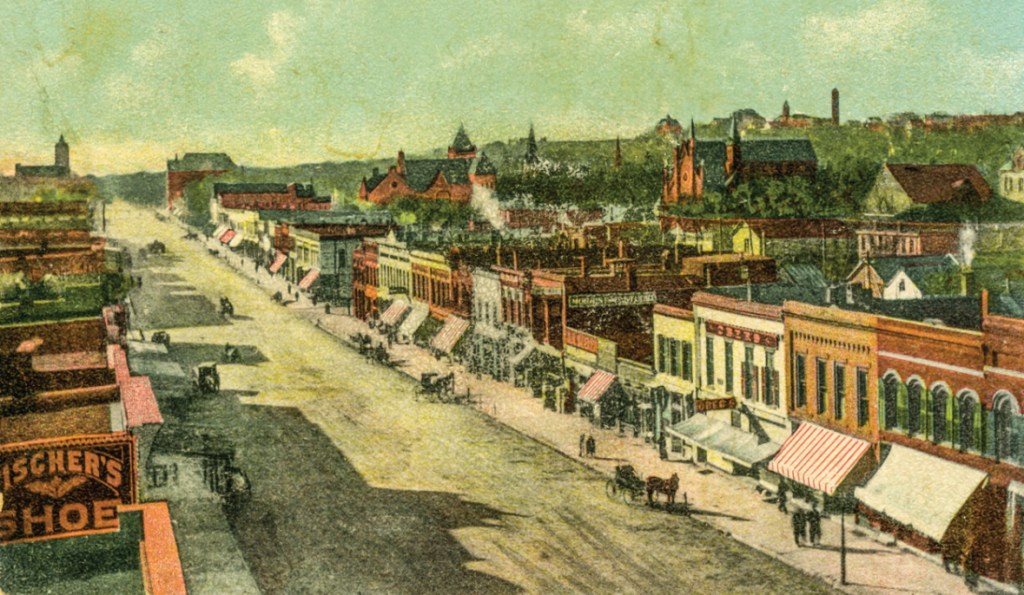
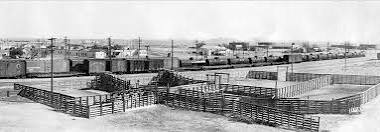
By 1870, two railroads reached Emporia. The Atchison, Topeka and Santa Fe Railway. And the Union Pacific Railway. Emporia became a booming railroad hub. As well as a cattle industry center, at that.

Railroads’ have unique American relationship to our cattle industry. And to Emporia.

Driving through Emporia today, one can’t help but recognize our correlative railroad-to-cattle industry linkage.


Cattle sales are held in Emporia every Wednesday. Held at Emporia Livestock Sales on Albert Street.


The Emporia Livestock Sales building is nearby train tracks. Tracks which are owned by BNSF. These BNSF train tracks in Emporia enable freight to be transported from California to Chicago.


Standing in front of the Emporia Livestock Sales building, looking to the south, you’ll see the Tyson plant.

That old Tyson plant in Emporia – where my aunt Rita worked for over 30 years – is, just like the Emporia Livestock Sales Building, located alongside Emporia’s BNSF train tracks. BNSF’s Southern Transcon line. 

This Midwest connection of stockyards to urban centers. The railroad and the cattle industry…

Stand atop the Prairie Street Bridge in Emporia. Look down. BNSF’s Transcon tracks. Look to the north. Emporia Livestock Sales. Look to the west. The former Armour plant. Which became the IBP plant. Which then became the Tyson plant…where Aunt Rita worked for over 30 years.


We can attribute this Emporia story to the opening of the Great Plains to ranchers. Yet there was also was that epidemic in Great Britain to think about.

As such, Great Britain, some may argue, is an unseen hand, contributing to the history for Midwest beef processing plants. Beginning in 1860’s.

Then, so too, Great Britain would be a catslyst, an oft overlooked forefather, one may say, which added their own special contributions…collectively making up Emporia’s unique and rich American story.

Manhattan, Kansas


In 1854, when President Franklin Pierce signed the Kansas-Nebraska Act into law, a new Kansas Territory was opened for settlement. That same year, seeds were planted for one such riverside settlement within this new Kansas Territory. A settlement that would go on to become “The Little Apple.”


Steps taken by pioneers to establish what would go on to become “The Little Apple” -aka, Manhattan, Kansas – should be thought about with the Kansas-Nebraska Act also in mind. This is so due to the relationship the Kansas-Nebraska Act had to the institution of slavery. To how the Act served as a catalyst for Kansas’ formation. To how the Act fueled the antislavery movement in Kansas. Then too, to how the Act served as the precipice for the early organizers of a townsite which would evolve into “The Little Apple.”


So how do we connect Manhattan’s formation to the Kansas-Nebraska Act? Then too, to the antislavery movement? This connection really begins, with a Senator from Illinois…

In 1854, Illinois Senator Stephen Douglas introduced a bill to Congress. This bill that Senator Douglas introduced to Congress was the Kansas-Nebraska Act.


Senator Douglas’ bill – which President Pierce signed into law the same year the bill was introduced – ended the Missouri Compromise. The Missouri Compromise banned slavery in states north of an established latitudinal designation. Minus, one state, Missouri. Missouri’s exclusion from the ban of slavery, being, the “Compromise.”

While doing away with the Missouri Compromise, the Kansas-Nebraska Act also organized two new territories for the United States. These two new U.S. territories being, one, the Kansas Territory, and, two, the Nebraska Territory.

Two new U.S. territories were organized. The Missouri Compromise was ended. Without the Missouri Compromise, the two new U.S.territories would be free to enact “popular sovereignty.” And this popular sovereignty, within Douglas’ Kansas-Nebraska Act, related to whether slavery would become an institutional pillar within each of the two new U.S. territories.

So, with President Pierce’s signing of the Kansas-Nebraska Act, the race was then on to settle these two new territories. And, to settle the territories with positions on slavery which would thus, in turn, be representative of the viewpoints pertaining to the institution of slavery espoused by the early framers of the territories.  

Popular sovereignty was in. The Missouri Compromise was out. The Kansas-Nebraska Act was in. What remained to be either in or out, was, the institution of slavery.

The same year the Kansas-Nebraska Act was signed into law by President Pierce, a settlement took hold in the Kansas Territory at the junction of the Kansas River and the Big Blue River. This, a riverside settlement founded by Colonel George Park. Colonel Park named his settlement, Poleska.

As Colonel Park founded Poleska, another group of pioneers heading into the new Kansas Territory – this group, cattlemen from Illinois, led by Samuel Houston – founded a neighboring settlement. Their neighboring settlement, Canton.

Popular sovereignty. No Missouri Compromise. And two new settlements in the Kansas Territory.

One year after Colonel Park founded Poleska, one year after Samuel Houston founded Canton, we find the structural framework for what would go on to become, “The Little Apple.” Manhattan.

Our framework for Manhattan, inspired by the popular sovereignty which came to be in the Kansas Territory. As the Missouri Compromise, was no more.


One year after the settlements of Poleska and Canton were founded, in 1855, a group of New England abolitionists traveled to this new Kansas Territory. From Boston. With popular sovereignty in mind, these New Englanders wanted to establish a Free State for this new Kansas Territory. They realized that they could do so. By increasing the number of antislavery voters in the Kansas Territory. Thus, with a majority of antislavery voters, ensuring that when Kansas did become a United States state, Kansas would enter the Union, as a free state. 


These abolitionists from Boston – the New England Emigrant Aid Company – selected the contiguous Poleska-Canton settlements as their new Free-State home. Their new Kansas Territory home, located alongside those two Kansas rivers. The Big Blue River. And the Kansas River. 

Recognizing how their settlement could develop reliable channels for commerce as a result of the settlement’s strategic position alongside two rivers, a river landing was built. With a river landing, then, ferries were built. Means of waterway commerce was established. A town constitution was adopted. The pioneers from Boston proceeded to acquire acreage. With their land acquisitions, the footprint of this new antislavery settlement, had been enhanced.

Yet, this antislavery settlement, was not yet a town. This settlement was not yet, Manhattan. 

Manhattan was once, Boston…

This townsite, nestled alongside the Kansas River and the Big Blue River was still known as – just as this townsite had been known to be, since its founding by Boston settlers – Boston.

The name Manhattan would indeed come…not long after.

The same year the New England Emigrant Aid Company arrived at the Poleska-Canton settlements, another group – this group, with their origin being, Cincinnati, Ohio – also arrived. And it was this second group, from which, our Manhattan name, came to be.

This second group was the Cincinnati and Kansas Land Company. The Cincinnati and Kansas Land Company arrived at the Poleska-Canton settlements, also in 1855. Making their journey to the new Kansas Territory, on a steamship.

Upon arrival, ready to put up buildings. And houses. To further develop the commerce which was still in its infancy – in year one – within the Poleska-Canton settlements.


As an inducement to advance commerce, the New Englanders offered the Cincinnati and Kansas Land Company half of their Kansas Territory townsite of Boston. 

Our new Kansas Territory group from Cincinnati accepted the stake holding offer. With one condition. This condition being, the townsite name would need to be changed. From Boston. To Manhattan.

A deal was struck. 

Manhattan, Kansas was founded in 1855. Two years later, Manhattan, Kansas was incorporated. 

The Little Apple.

Boston, a hill, limestone, abolitionists plus one rendering from a cartoonist…Lawrence, Kansas


Lawrence, Kansas was founded by a group of New England abolitionists. Abolitionists who were intent on establishing a new community where people of all races would be free. Culminating in Lawrence’s determination to ensure that Kansas – then…a territory – would be admitted to the United States as a “free state.”  

Lawrence was founded in 1854. Seven years prior to Kansas becoming the 34th State.

Nine years after the founding of Lawrence – in 1863 – then-Kansas Governor Thomas Carney signed a bill into law creating the second state university in Kansas. This university was to be built on 40 acres – the University of Kansas. Founded in 1864.

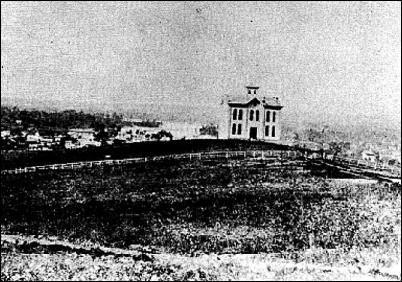
This university for Kansas – the second university within the Sunflower State – was to be constructed on Hogback Ridge. Hogback Ridge in Lawrence. Hogback Ridge, later becoming, Lawrence’s Mount Oread.


The relevance to Mount Oread? And to Mount Oread’s role in that which Lawrence is most famous for? This can be found under our feet.

Three years after Governor Carney signed into law the bill which would establish a Kansas university in Lawrence, classrooms at the University of Kansas first opened. This Lawrence university first started out as a preparatory school. With fewer than 100 students.

Back to Mount Oread…

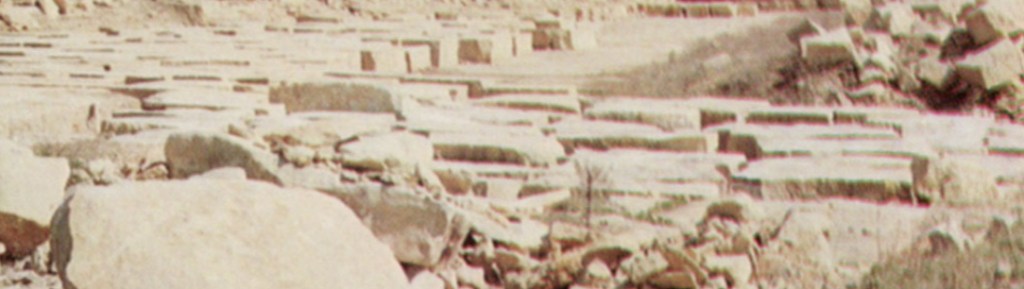
Mount Oread – that section of Lawrence on which KU was built – sits on a bed of limestone.


Limestone is chalk rock. Chalk rock – transposed – becomes rock chalk.

Hence, our famous, Rock Chalk Jayhawk.

Rock chalk. Chalk rock. Chalk rock sits below KU’s classrooms as the – quite literally… – as the foundation of the university.

Our chant? Rock Chalk? That chant – originating in the chalk rock of limestone found in Lawrence’s Mount Oread – was originally a slogan used by the university’s science club. A science club slogan.

Let’s go back to that group of New Englanders who established Lawrence…

Those New Englanders who first established Lawrence were not so much a loosely-aligned abolitionist group at all. No, Lawrence’s forefathers were actually an organized company. This company? The New England Emigrant Aid Company.

The New England Emigrant Aid Company had been a Boston-based transportation company. Established to transport those who opposed slavery into this new Kansas Territory out west.

As abolitionists, the idea espoused by the New England Emigrant Aid Company went along these lines…

Through New England Emigrant Aid Company’s transportation of anti-slavery immigrants who would settle – en masse – in the new Kansas Territory, the politics within the Kansas Territory would then favor the abolishment of slavery. Not the expansion of slavery. Abolitionists.

As such, with sentiment taking hold in the new Kansas Territory which frowned upon the institution of slavery, Kansas would then (ideally) choose to join the United States as a free state. Not as slave state. Which it indeed did. in 1861.

Rock chalk. That’s about limestone. Limestone underneath the KU campus. 

And after Rock Chalk we find…Jayhawk.

Rock chalk…limestone. So, how about the Jayhawk part of our slogan? 

Any conversation one has about the Jayhawk part of this famous slogan from Lawrence brings us back to Lawrence’s idea for Kansas to join the Union as a free state. To efforts undertaken by the New England Emigrant Aid Company. And to Lawrence’s abolitionist “DNA.”

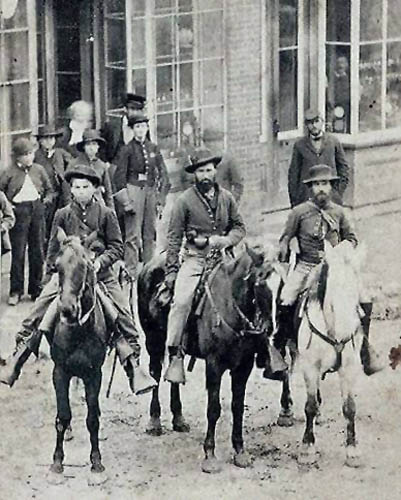
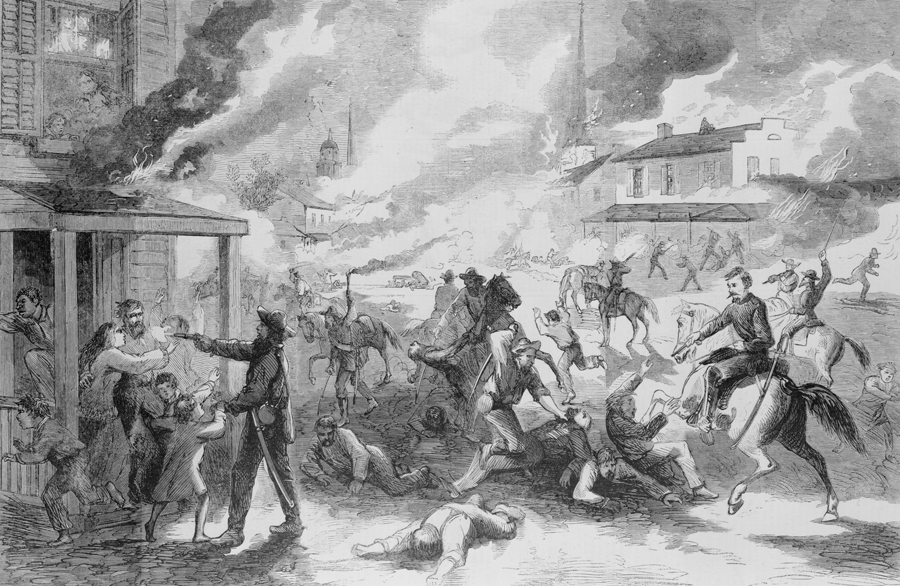
Prior to Kansas becoming a state in 1861, Kansas abolitionists battled pro-slavery factions. Factions who were intent on seeing Kansas join the Union as a slave state. Not as a free state. Those Kansas abolitionists we are referring to here were known as jayhawkers


During the 1860’s, jayhawkers were not only found in this new Kansas Territory. No, jayhawkers could also – at that time – be found throughout the Midwest. All the way down to Texas. The abolitionist movement of the 1860’s…native to the Midwest. Jayhawkers.

Yes, jayhawkers are most closely aligned with the State of Kansas. The Kansas Jayhawks. This is attributed to the Bleeding Kansas era. The period of violent conflict over the issue of slavery which took place prior to the outbreak of the Civil War.

Between 1854 and 1859, murder, violence, the destruction of property and total mayhem took hold in Eastern Kansas and Western Missouri. Bleeding Kansas.


Kansas and abolitionists. Lawrence and Kansas’s university. The University of Kansas and jayhawkers.

The University of Kansas officially adopted the Jayhawk as the school’s mascot in the year 1923. 

That duck-like bird we now know to be our KU Jayhawk? No, there is no winged-jayhawk bird flying over the beautiful prairies of Kansas. No, there is no winged-jayhawk bird which has ever flown over those beautiful Kansas prairies.

That famous duck-like bird we find under 16 Final Four banners in Allen Fieldhouse? That bird is an artistic creation.

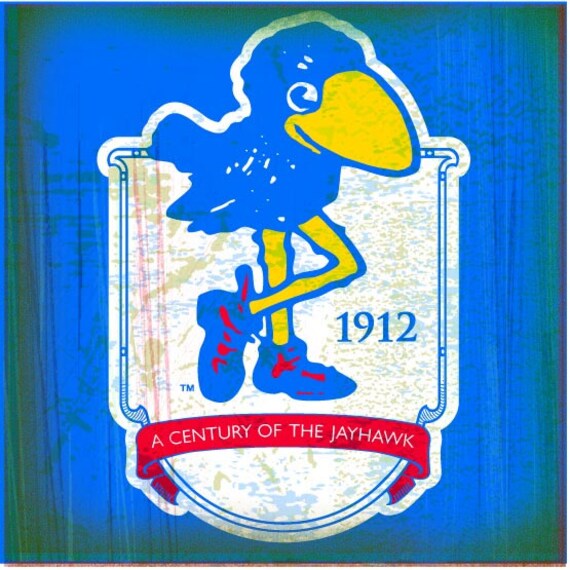
The most famous abolitionist logo in the history of sports can be traced all the way back to 1912.

In 1912 Henry Malloy was a cartoonist working for The University Daily Kansan – KU’s newspaper.

Henry Malloy – in 1912 – drew a picture of one shoe-wearing bird. And released his picture of his shoe-wearing bird in The University Daily Kansas. Our first jayhawk.


In 1923, eleven years after Henry Malloy created that very first jayhawk cartoon rendering, two KU sophomores – Jimmy O’Bryon and George Hollingbery – created the rendering more-closely based on the duck-like bird we find today in Allen Fieldhouse.

Boston…

Abolitionists…

A hill…

Limestone…

A cartoonist…

Two college sophomores…

Lawrence, Kansas.