American Independence…Trade Dependents


Exports from Great Britain to the Colonies doubled the first year of the Colonies’ independence. While Parliament placed tariffs on manufactured goods the newly-independent Colonies intended to export to Great Britain.

These were British tariffs. British tariffs were called Duties.

Duties represented constraints pushed onto Colonists by Great Britain. Functioning as barriers to Colonial exports which could land ashore in Great Britain, as imports.

This problem – caused by the imposition of duties on Colonial production – was compounded by an additional constraint. One meant to further restrict American exports to Great Britain. This additional restriction was centered upon shipping.

American exports to Great Britain were required to be transported by British vessels only.

Confiscatory trade policy enacted through Parliament which dampened economic growth in the new American Colonies.

Alexander Hamilton, coupled to his frustration with trade barriers, foretold of the rise of this industrial city.


We owe our beginning for Paterson, New Jersey to Alexander Hamilton. To Hamilton’s pursuit of American manufacturing independence. To Hamilton’s interest in battling prohibitions placed upon free trade.

Paterson was established in 1791. And it was in 1791 that Alexander Hamilton – then, Secretary of the Treasury – set up the Society for Establishing Useful Manufactures (SUM). Proceeding to acquire 700 acres which would be developed as a catalyst for the growth of American manufacturing.

Those 700 Paterson acres are located close to a power source which is native to Paterson – the Great Falls.

Here we have our catalyst – the Society for Establishing Useful Manufactures – and our footprint – those 700 acres – for the 18th Century emergence of an American industrial center.

Hamilton’s vision for the Society for Establishing Useful Manufactures was anchored in his goal to transform Paterson into a major industrial hub.

Cotton emerged as an early product manufactured in Paterson. Soon giving way to textiles.

In time, silk would become the preeminent manufacture of Paterson. Paterson would go on to become “Silk City.”

The Great Falls of Paterson provided the power needed in “Silk City” to operate industrial sites. Industrial sites built around benefits flowing from the Falls.

Recognizing the potential in the Great Falls, Alexander Hamilton’s idea for an industrial site – and for an industrial city – could be realized through the construction of canals. Hamilton knew that canals would be able to deliver water power to industrial sites. Providing the power source – water – Paterson manufacturers could come to rely on.

A private-public corporation, the initial plan for the Society for Establishing Useful Manufactures was for the corporation to build, own and operate Paterson’s industrial sites – owner-operators.

That first strategy thought up for the Society for Establishing Useful Manufactures as an owner-operator changed. This early-day premise for the Society for Establishing Manufactures as owner-operator of industrial sites gave way to an amended blueprint. This amended blueprint being, for the Society for Establishing Useful Manufactures to become freeholder to Paterson industrial sites.

The Society for Establishing Useful Manufactures leased industrial sites around the Falls to private manufacturers. While retaining control over the power source manufacturers relied upon – the Great Falls.

The Society for Establishing Useful Manufactures transitioned from manufacturing into real estate development. Becoming a prominent real estate developer in Paterson through the early part of the 20th Century.

Paterson becoming an industrial hub was a late-18th Century goal arising from the importance Alexander Hamilton placed on manufacturing independence.

Manufacturing independence. Economic independence. Industrial independence. 

The 700-acre site acquired by the Society for Establishing Useful Manufactures around the Great Falls was a foundation upon which the emergence of an American manufacturing empire could be begin. The birth of Paterson.

The American Colonies gained their independence from Great Britain in 1783. With the signing of the Treaty of Paris. Two years after General Cornwallis surrendered at Yorktown.

The Treaty of Paris was signed. The Colonies were no longer subjects of the King. Yet these new Colonies were still reliant upon Great Britain. Hence, Hamilton’s idea for the Society for Establishing Useful Manufactures. Hence, our backdrop for the emergence of Paterson.

The year of the Treaty of Paris – 1783 – Colonial imports from Great Britain totaled just about $300,000, in 18th Century dollars.

The year after the Treaty of Paris – 1784 – Colonial imports from Great Britain totaled just about $600,000, in 18th Century dollars.

Imports from Great Britain doubled the first year of America’s independence. America did gain its independence from Great Britain. While at the same time, increasing their dependence on Great Britain. For imports.

Exports from Great Britain to the Colonies increased substantially after the Colonies’ independence. While Parliament was placing “tariffs” on manufactured goods the Colonies intended to export to Great Britain.

These British “tariffs” were called Duties. Duties represented constraints pushed onto Colonists, serving as barriers to Colonial exports to Great Britain. And this problem of duties was compounded by a stranglehold-of-a-requirement imposed on the Colonies through Parliament.

Great Britain commingled their imposition of Duties on American exports with an additional constraint. An additional constraint meant to further restrict American exports to Great Britain. This additional restriction being, American exports to Great Britain were required to be transported by British vessels only. Confiscatory trade policy enacted through Parliament which dampened manufacturing in the Colonies.

Trade restrictions placed upon Great Britain’s newly-independent “trade partner” did not stop at duties and a ship-British mandate.

Parliament permitted only the importation of non-manufactured American goods. It was non-manufactured goods only. Great Britain, as the world’s largest economy, placed restrictions on imported American manufactured products to protect manufactures at home.

In 1783, as a newly-independent country, the Colonies were “free” to export to Great Britain. So long as the Colonies did not export manufactures.

This protected British manufacturers from newfound Colonial competition. While at the same time, preventing the emergence of well-trained, English-speaking competitors to British manufacturers – American manufacturers.

Furthermore, Great Britain – through their Colonies, when they were Colonies of Great Britain – enjoyed prosperous trade with the British West Indies. A different outpost within the same British Empire.

Yes, the Colonies gained their independence from Great Britain. In 1783. The Colonies gained their independence while at the same time increasing their dependence upon Great Britain in different sort of way. This, a dependence found in reliance upon British manufactures. Manufacturers in Great Britain who exported their finished products to the Colonies. The inverse for which was highly restricted. Through Parliament.

The British West Indies remained, the British West Indies.

Britain enacted protectionist policies when dealing with the Colonies. Prohibiting free trade for the Colonies within the Empire. Which included the British West Indies.

The Colonies were “free” to trade with the British West Indies. So long as that trade was in non-manufactured goods. And so long as trade with the British West Indies involved the transportation of non-manufactured goods to the British West Indies (and to Great Britain, for that matter) on British vessels. 

American livestock? The trade of American livestock was fine…trade away. So long as American livestock was shipped within the British Empire on British vessels.

American lumber? The trade of American lumber was fine…trade away. So long as American lumber was shipped within the British Empire on British vessels.

American flour? The trade of American flour was fine…trade away. So long as American flour was shipped within the British Empire on British vessels.

The trade of American manufactures? Of American finished goods? No deal. No trade. There was to be no shipment of American manufactures to Great Britain, nor to the British West Indies. Not on British vessels. Not on American vessels.

Great Britain was protecting their global manufacturing dominance. While in the Colonies, the Secretary of the Treasury recognized challenges arising from the unfair British trade restrictions. The Secretary of the Treasury in the Colonies intended to alter an unfavorable outcome. Alexander Hamilton was the Secretary of the Treasury. 

Hence, our catalyst for Alexander Hamilton’s focus on developing the American Colonies into a manufacturing power that could one day compete with Great Britain. 

Hence, our catalyst for the emergence of American industrial cities. 

Hence, our emergence of Paterson as an industrial hub.

It had been those trade restrictions – enacted by Great Britain through Parliament after the Colonies gained their independence – which led Alexander Hamilton, as Secretary of the Treasury, to create a framework necessary for the growth of American manufacturing. Then, so too, for the growth of American industrial cities. Cities such as Paterson.

The MLS


In 1908 the National Real Estate Exchanges was first established. One of the early goals of the National Real Estate Exchanges was to facilitate an effective cooperation system which could be used by brokers to sell real estate. Early days of cooperation among REALTORS.


The National Real Estate Exchanges set out to find good ways to communicate the benefits of – and the salable features for – properties available to be purchased through National Real Estate Exchange members – cooperation among members.


Each month property information was delivered by member-brokers to offices of member-brokers – the earliest stages for REALTOR cooperation. The earliest forms of the sharing of property information.
Information drop-offs: 1) head over to the local real estate office, 2) drop off information about properties.


Preceding the dropping off of property information at real estate offices, brokers met at the office of their local trade associations to discuss properties. Participating brokers agreed to compensate one another. A collaborative effort to sell homes – Help me sell my property, I’ll help you sell yours…


MLS’s have come a long way. Today, Florida has over two-hundred twenty-thousand REALTORS – #1 in the country. California has in the range of two-hundred thousand REALTORS. In Texas, over one-hundred fifty-thousand REALTORS.


Using Texas as an example, those 150,000-plus Texas REALTORS access property information through multiple listing services managed by the Texas Real Estate Commission.


One of the oldest MLS’s in Texas is the Austin Board of REALTORS Multiple Listing Service.


The Austin Board of REALTORS began 1918. Forming ten years after the National Association of REALTORS was established. Today, the Austin Board of REALTORS Multiple Listing Service serves over 18,000 real estate professionals in eighteen Texas counties.


MLS’s are locally organized and managed. The importance for local management of MLS’s can by illustrated using Texas as our example.


In Texas, property descriptions include information about kitchens, bedrooms and property taxes. Add in oil leases and mineral rights. Considerations pertinent to oil and gas interests.


Florida property listings – or New Jersey property listings – prioritize such interests. Texas listings would. Hence, the benefit of locally managed MLS’s.


The largest MLS in Texas is the Houston Association of REALTORS Multiple Listing Service. Houston’s MLS was established in 1918 and today serves over 160,000 REALTORS. The Houston Association of REALTORS Multiple Listing Service is the 10th largest MLS in the country.


The California Regional Multiple Listing Service is the largest MLS, consisting of over 40 associations, boards and smaller MLS’s.
California REALTORS are also served by two additional MLS which are among the largest in the country – the LA/Westside MLS and the California Regional MLS. The LA/Westside MLS has over 16,000 members.
The largest MLS in New Jersey – the 39th largest MLS in the country – is the Monmouth-Ocean Regional REALTORS Multiple Listing Service. Established in 1936, Monmouth-Ocean Regional has over 11,000 members.


The second largest MLS in New Jersey is the Garden State MLS. Established in 2010, the Garden State MLS is the 89th largest MLS.
The National Association of Real Estate Exchanges became the National Association of Real Estate Boards in 1916. By 1972, the National Association of Real Estate Boards became the National Association of REALTORS. The NAR.


Of note, the National Association of REALTORS is independent of the National Association of Real Estate Brokers – NAREB.
Founded in 1947 in Tampa, Florida, members of the NAREB are REALTISTs, not REALTORS.


The NAREB is the oldest minority business association in the country. The NAREB is an equal opportunity and civil rights advocacy organization. Focusing their efforts the advancement of African-American real estate professionals.


Headquartered in Maryland, the NAREB was organized by Black real estate professionals who had a goal of forming their own real estate trade group. Incentivized to do so because at that time, Black real estate professionals were prohibited from joining the NAR.


The first NAREB convention was held in Atlantic City, New Jersey in 1948.
Today, the National Association of REALTORS establishes policies for a majority of the MLS’s.


NAR members join local boards and associations. Of which there are about 1,600.
NAR members are REALTORS. With over 1.5 million members, the NAR is the largest trade association in the United States.

Three Types of Senior Housing


In age-restricted adult communities 80% of homeowners are required to be at least 55 years old. 

In active adult communities each homeowner is required to be at least 55 years old.

In age-targeted communities homeowners do not have age restriction.

Three Types of Senior Housing


In age-restricted adult communities 80% of homeowners are required to be at least 55 years old. 

In active adult communities each homeowner is required to be at least 55 years old.

In age-targeted communities homeowners do not have age restriction.

Crossroads


Lewis and Clark arrived at the confluence of the Missouri River and the Kansas River at a time when the country was keen on opening up the west.


The best pathway west at that time was the Missouri River. Kansas City sits alongside “the Big Muddy.”


One hundred years after Lewis and Clark arrived with their team of 50 and 3 boats the first train depot opened in Kansas City – Union Depot, in 1878.


Kansas City’s Union Depot became the second of its kind. Indianapolis’ union depot was the first.

During the latter part of the 19th Century, goods making their way to the Western-most points of the United States likely came through Kansas City.

In a fast-industrializing 20th Century, Kansas City connected an industrial Northeast to the West.


At its height, 200 trains pulled into Union Depot each day. Rail was the primary method of transporting freight. And Kansas City outgrew Union Depot.


Needing additional capacity, railroad companies utilizing Union Depot decided to replace Union Depot with a larger station at a better location.

Union Depot was located in the West Bottoms. The West Bottoms was prone to flooding.

The new station would be built near the central business district, atop a hill.


Kansas City’s Union Station opened in 1914 – 850,000 square feet.


Kansas City’s Troost Avenue

Troost Avenue, a 10-mile corridor in Kansas City running from 4th to Bannister.

Among the Kansas City neighborhoods bordering Troost Avenue are Beacon Hill, Longfellow, Squier Park, Rockhill and Hyde Park.

Troost Avenue was named after a doctor. Benoist Troost. Dr. Troost, a prominent Kansas City physician, was also a civic leader.


Troost Avenue was once home to “Millionaire’s Row.” Early in the 20th Century, “Millionaire’s Row” had been a strip of stunning mansions constructed along Troost Avenue. Those mansions adorned Troost from 31st Street to 34th Street.

Today, Troost Avenue is experiencing redevelopment interest. And a tasteful renaissance.


In times past, Troost Avenue experienced a sad history written with the underpinnings of disinvestment. Leading to decline. Leading to decreased home values. This, before Troost’s renaissance.


So what led to Troost’s decline?

Disinvestment. But real estate disinvestment was not the primary catalyst which led to Troost’s mid-20th Century decline. Real estate disinvestment certainly was one catalyst. But real estate disinvestment was not the primary catalyst.

Disinvestment in public schools east of Troost was the primary catalyst which led to Troost’s decline.


Starting off in the late ‘60’s, the School Board in Kansas City, Missouri consistently requested increases in education funding for Kansas City, Missouri schools which were located east of Troost Avenue. There were in the range of twenty such education funding requests made by the Board during this time. Funding requests made throughout the ‘60’s and ‘70’s.

Those funds – if approved – would have gone to Kansas City, Missouri public schools east of Troost Avenue. Funding requests were voted down. The result? Disinvestment in schools. Culminating in “White flight.”

Families, those having the means, that is – predominantly White families – moved. White families moved out of neighborhoods which were adversely affected by the undercutting of school funding.

White flight. Neighborhood home values decreased. One prominent Kansas City mayor once referred to Troost Avenue as, “…the demarcation line in a war zone.”

The problem, east of Troost, wasn’t the legal segregation of schools. Nor was the problem segregation of schools. The problem, east of Troost, was funding for education. Or a lack thereof.


Long before round after round after round after round of failed requests to secure funding for Kansas City, Missouri public schools east of Troost were submitted, those same public schools were desegregated. Yet school desegregation didn’t really solve this problem in Kansas City east of Troost.

Because while the desegregation of schools, based upon race, was the national mandate after Brown v. the Board of Education, decisions which were made affecting education funding were made at the local level. Therein we find the problem. For why public schools east of Troost declined.


In 1954, the United States Supreme Court unanimously ruled in Brown v. The Board of Education of Topeka, Kansas that state-sanctioned segregation of public schools was unconstitutional. Prior to Brown v. The Board of Education, in Kansas City, east of Troost, Lincoln High School had been the only high school providing post-elementary education to Black students. One high school.


In 1955, one year after Brown v. The Board of Education, the Kansas City School Board enacted a “segregation” of public schools in a different way. This was a “de-facto segregation.” Not based upon race. But rather, this was a segregation based upon attendance zones.

Revisiting “White flight” east of Troost, the “White flight” which occurred as round after round of school funding requests were voted down led to the “panic selling” of homes. Leading to block busting. As White families relocated out of the Kansas City, Missouri school district. Real estate values declined.


No, Kansas City, Missouri public schools east of Troost were not segregated based upon race after the 1954 Supreme Court decision. But yet, in a practical sense, they were still segregated.


Kansas City, Missouri public schools east of Troost remained overcrowded. And underfunded. The city’s expansion just made it worse.


In real estate, developers often utilize – and benefit from – tax abatements. On Troost Avenue, and east of Troost, there is a real estate renaissance taking place.


While panic selling and block busting were factors which contributed to neighborhood destabilization east of Troost in years past, neighborhoods east of Troost today are likely to not experience the same type of disruptions as the pendulum swings the other way. Through redevelopment.


What we may see is, not decreasing property values east of Troost. We’ll likely see increasing property values east of Troost.

We likely won’t see panic selling east of Troost. We’ll likely see home sellers fetching ever-increasing prices for their homes, east of Troost.


We won’t see blockbusting, east of Troost. We’ll see continued interest in homes, east of Troost.


What we’ll also likely see, east of Troost, is community members priced out of their neighborhoods. We’ll likely see gentrification. We’ll see investment. Not disinvestment. We’ll see tax abatements.

Accompanying such, we’ll also see hundreds of millions of dollars in deferred maintenance incurred by Kansas City, Missouri public schools.


We’ll likely see challenges in education. Different education challenges. But challenges, nonetheless. Not segregation. Not the same challenges as before. But challenges.


If redevelopment on Troost Avenue and east of Troost is the #1 goal, all good. If there are other concerns to consider, maybe one should revisit Kansas City history? Focusing on this topic: public schools east of Troost.

Kansas City and Soccer

Kansas City has become the national leader for soccer development in the United States. So it seems rather fitting that as the Soccer Capital of America, Kansas City is also home to one of the forefathers in the formation of American soccer, Lamar Hunt.


Inducted into the National Soccer Hall of Fame in 1982, Lamar Hunt was an early investor in the North American Soccer League – the NASL. When the NASL ran into financial headwinds in the early ‘80’s – going from 17 teams to only 5 teams – the patriarch of the Kansas City Chiefs remained committed to the future of the NASL. And to the future of soccer in the United States.


A then-NASL franchise owner himself, Lamar Hunt’s team was the Dallas Tornado.

Hunt’s ownership of the Tornado goes back to the team’s inception in 1967.


Lamar Hunt owned the Dallas Tornado until the team folded in 1981. Hunt’s Dallas Tornado won the NASL championship in 1971. One year after Hunt’s Kansas City Chiefs won Super Bowl IV.


Dallas Tornado started out as a team in the United Soccer Association. The United Soccer Association merged with the National Professional Soccer League. Leading to the formation of the NASL.


While the Hunt name is known mostly through the family’s ownership of the NFL team that has won the Lamar Hunt Trophy as champions of the AFC 5 times since Patrick Mahomes arrived in Kansas City, early on, the NFL was no fan of Hunt’s commitment to soccer.


The NFL took steps to disallow an NFL team owner – I.e.: Lamar Hunt – from owning a professional sports team in more than one sport. This was an NFL-led effort to force the Hunt family to divest their interests in a soccer franchise. The NFL’s football-only rule ultimately failed. The Hunt family stayed in soccer.

In 1996, Kansas City Chiefs Chairman Clark Hunt, together with his father, Lamar Hunt, acquired two MLS teams. The Columbus Crew and the Kansas City Wizards (now Sporting KC).

Three years later, Lamar Hunt financed the construction of what was at that time the largest soccer-only stadium in the United States. In Columbus, Ohio. Columbus Crew Stadium.


In 2003, Lamar Hunt purchased his third MLS team. The then-Dallas Burn (now FC Dallas).


Lamar Hunt’s acquisition of the Dallas Burn was anchored through his commitment to finance a soccer-only stadium in Dallas. Lamar Hunt believed that sound economics for professional soccer in North America needed to be anchored through stadium ownership.


Today, Dallas Burn are owned by Hunt Sports Group.


The Hunt family sold the Kansas City Wiz in 2006. The Kansas City Wiz went on to win the MLS Cup that same year. In 2006.


Like America’s earlier professional soccer league – the NASL – the MLS ran into financial difficulties.


By the early-2000’s, only three MLS team owners remained committed to funding ongoing MLS operations. At that time, the MLS was hemorrhaging cash. Losing $250 million since its inaugural 1996 season. One of those three still-committed team owners was Lamar Hunt.


Lamar Hunt’s commitment to soccer-only stadiums led to the financial turnaround for American soccer. And for the MLS.


Further linking the Hunt family to American soccer, in 1999, U.S. soccer’s longest standing knockout competition – the U.S. Open Cup – was renamed the Lamar Hunt U.S. Open Cup by the United States Soccer Federation. In honor of Lamar Hunt’s contributions to American soccer. While, so too, recognizing Lamar Hunt’s contributions to two American professional soccer leagues. The NASL. And later, the MLS.


The Hunt family’s FC Dallas won the Lamar Hunt U.S. Open Cup two times. In 1997 and 2016.


Under the Hunt family’s leadership, Sporting KC also won the Lamar Hunt U.S. Open Cup two times. In 2004 and 2012. While Lamar Hunt’s Kansas City Wizards won the MLS Cup in 2000.


Wichita


Darius Munger and William “Dutch Bill” Greiffenstein filed a plat in 1870 to lay out the first streets for what would go on to become Wichita, Kansas. Wichita incorporated in July of that same year.


One year later, Wichita and Southwestern Railroad Company formed. Soon thereafter, a Sedgwick County bond issuance boosted prospects for Wichita and Southwestern Railroad Company and for cattlemen.


A bond issuance was approved by Sedgwick County voters on August 11, 1871 for $200,000. These bonds enabled Wichita to finance the construction of a rail line connecting Wichita to Newton. This rail extension was a boon for Texas cattlemen who could now ship cattle to Wichita. Then along to Newton, Kansas. Where the cattle would be shipped off to markets on the East Coast.

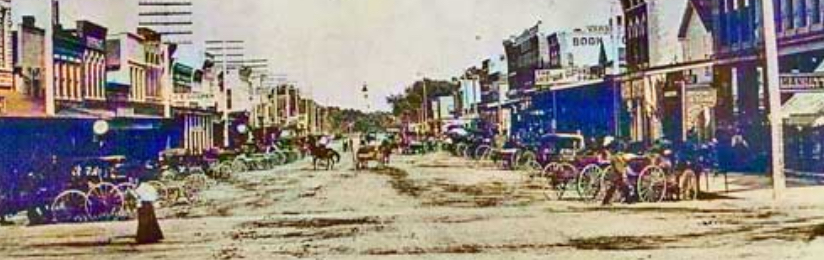
Kansas City’s Manheim Park


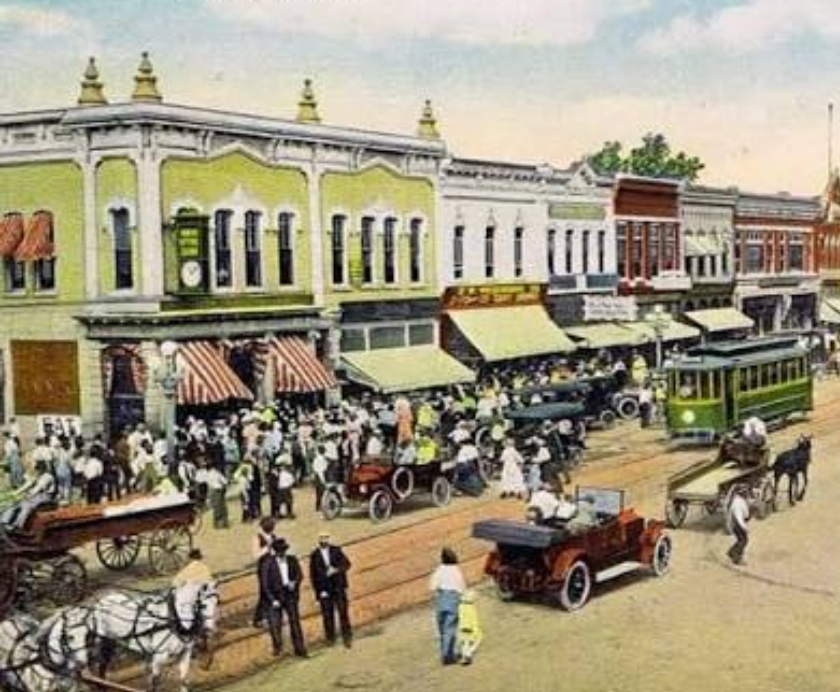
As the Twentieth Century dawned, streetcar suburbs arose in Kansas City. One streetcar line ran down Troost Avenue.


One could hope onto that streetcar, leave the hustle bustle of the city behind and arrive at a streetcar suburb.


Those new streetcar suburbs which were being built were still located in Kansas City. Yet, those new streetcar suburbs did not espouse an urban feel. Manheim Park was one of the early streetcar suburbs.


To the north, Manheim Park touches 35th Street. To the west, Manheim Park touches Troost Avenue.


Troost Avenue…where one could hop onto a streetcar early in the Twentieth Century and be dropped off in Manheim Park. A new streetcar suburb.


Construction of new homes in Manheim Park took hold during the early years of the 1900’s. Drawing upon a general distaste for how new homes were then being built on what oftentimes were run-of-the-mill, “plain-jane vanilla” roads. Roads that ran straight. East to west. North to south. Homes which were considered to be too close to one another.


In Manheim Park, things would be different. In Manheim Park, your drive to one of those streetcar suburban homes would be a drive along a road with a unique contour.


The crooked roads…


To build new homes on any undeveloped land you need roads. In Manheim Park, new roads went in. Roads which did not necessarily run east to west. Roads which did not necessarily run north to south.


Those original Manheim Park roads were crooked. Creating a staple – all its own – for Manheim Park. Its crooked roads.