The Trolley Trail in Kansas City’s Brookside


Brookside is a charming, leafy neighborhood located on the southern end of Kansas City, Missouri…the largest contiguous master planned neighborhood in the country.


Part of the Country Club District, the original plan for Brookside was new homes built for middle-income, upper middle-income and for upper-income families.


The more expensive homes in Brookside were built to the west. Higher home values in Brookside are often determined by how far east or how far west of Main Street the home is located.


Brookside’s Trolley Track Trail. The Harry Wiggins Trolley Track Trail.


The trolley which once ran through Brookside was named for a Missouri state senator who was born in Kansas City. This senator was Harry Wiggins. Brookside’s Trolley Trail is a six-mile path.


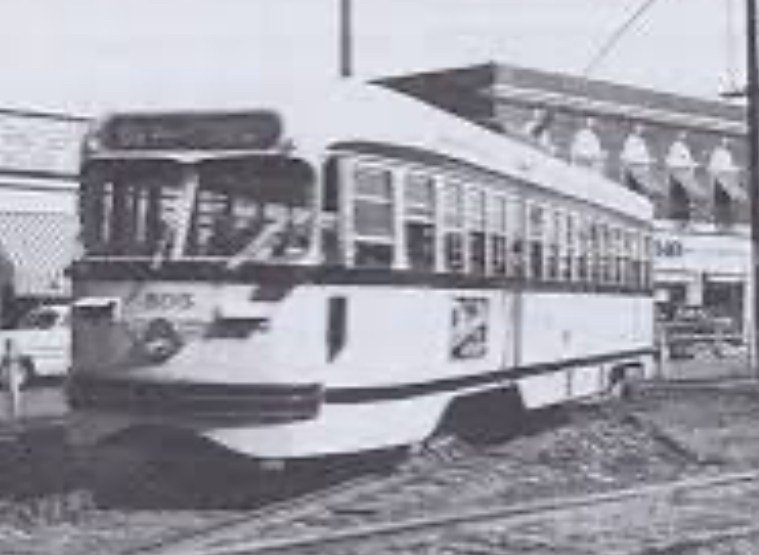
Today there is no trolley that runs along Brookside’s Trolley Trail. There are no trolley tracks on the Trolley Trail either. But at one time, long ago, there was a trolley in Brookside which ran along what today is our Harry Wiggins Trolley Track Trail.


This old trolley run in Brookside was borne in the late 19th Century.


In the late 1800’s, comparable to cable cars one would have found in San Francisco at that time, the trolleys which ran through Brookside were propelled by underground cables. The earliest Brookside trolleys operated by gripping underground cables which were installed underneath the tracks.

As the 19th Century turned into the 20th Century, the means by which trolleys were propelled changed. Underground cables were replaced. The cable system trolleys used were replaced by electricity.


Those old Brookside trolley tracks have long since been torn up. The Harry Wiggins Trolley Track Trail is now occupied by walkers, joggers, baby strollers and cyclists. There are no trolleys. Trolley travel gave way to pedestrians on the old trolley track.

At its inception, the Harry Wiggins Trolley Track Trail fostered a trackbed, wooden cross ties and a ballast. This trolley line in Brookside was the Country Club Line.


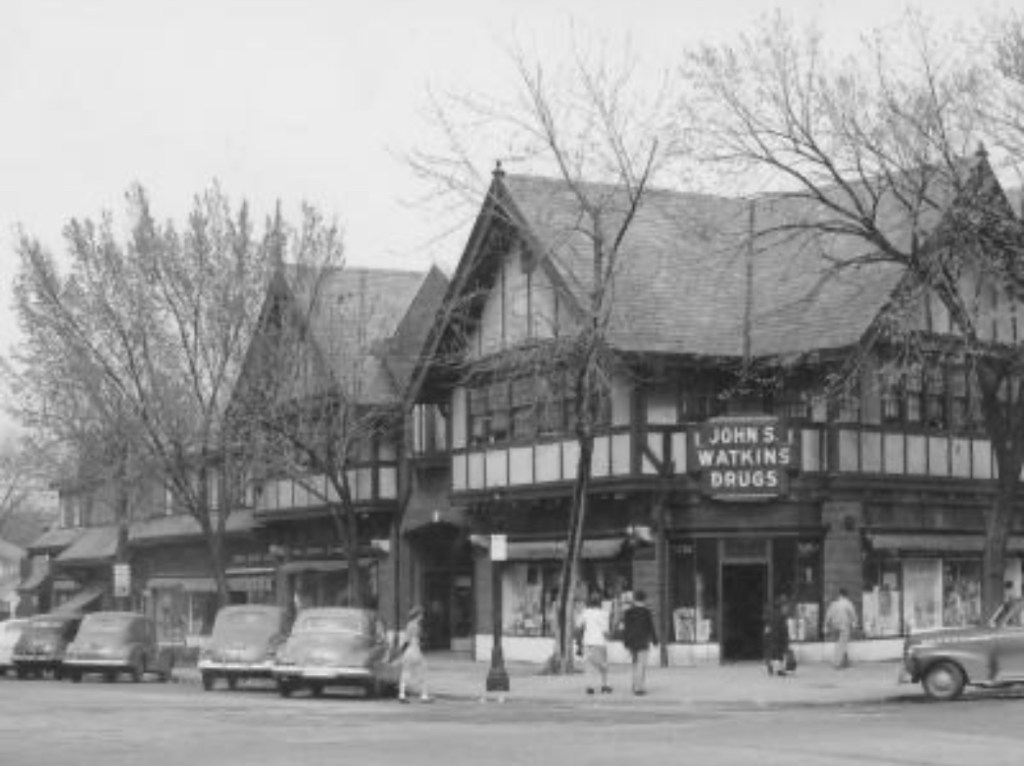
The Country Club Line took riders south to Brookside shops found in the Brookside Shopping District. Where 63rd Street meets Brookside Boulevard was the heart of Brookside’s shopping district.


Founded in 1920, the Brookside Shopping District was Kansas City’s first suburban-themed shopping center. It was thirty-seven years after the Brookside Shopping District opened that the last Country Cub Line trolley ran through Brookside. That year was 1957…the end for trolleys in Brookside.


At one time, Kansas City had one of the most extensive trolley systems in the country.


Today, Kansas City’s rich trolley history has been reawakened with the city’s streetcar.


Long ago Brookside trolleys and streetcars found in center city represented a popular mode of transportation in Kansas City.

Times changed. And Kansas City – as did most cities by the mid-20th Century – replaced their trolleys and their streetcars with buses.


In Brookside, the end of trolleys led to a new constitution for the Harry Wiggins Trolley Track Trail. The new constitution for the Trolley Track Trail has been written for walkers, joggers and cyclists.


The Harry Wiggins Trolley Track Trail.
The Monmouth Patent


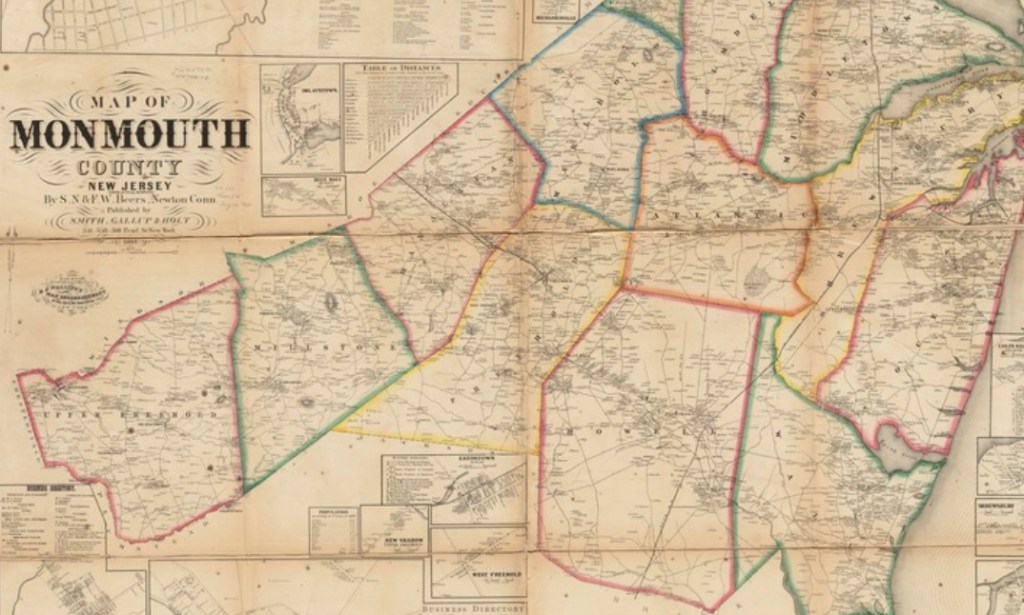
The beginning for Monmouth County, New Jersey came by way of the Monmouth Patent. The Monmouth Patent was an annexation of Dutch territory by Great Britain.


With this territory – once New Amsterdam – now part of the British Empire, conveyances of land to settlers from Great Britain took place.


In April of 1665 Great Britain’s deputy-governor for New Amsterdam granted patents for a triangular parcel of land in today’s Monmouth County. This was the Monmouth Patent.


Early families to acquire land through the Monmouth Patent were the Bowne family, the Holmes family, the Cotterell family and the Stout family.


The Holmes family’s tract of land stretched north of Ramanessin Brook to Hop Brook Farm – the Holmes Tract.


John Bowne’s tract of land touched the northernmost boundary of the Monmouth Patent triangle.


Eliezer Cotterell was the recipient of two land conveyances – 100 acres and 130 acres.
Richard Stout acquired a tract of land within the triangle east of Ramanessin Brook – the Richard Stout, Senior Tract.


Another Monmouth Patent land conveyance was the Bray Tract. Named for a Baptist minister, John Bray.


The Bray Tract consisted of 50 acres stretching from the easternmost point of the Monmouth Patent triangle – at Bray’s Brook – to the east side of Hop Book.

Rumson


Rumson, New Jersey is a seven square mile New York City bedroom community. Two of those seven square miles consist of water.


Long before Rumson became Rumson, Rumson was Navarumsunk. Or, Narumsum. And later, Ramson’s Neck.


British settlers purchased Navarumsunk/Narumsum – located between the Navesink River and the Shrewsbury River – from the Lenape Indians.

Negotiations for the sale of Navarumsunk/Narumsum began in 1663.
Two years later, Governor Richard Nicholls confirmed the sale within constructs available to British Governors through the Monmouth Patent. No longer Lenape territory, Navarumsunk/Narumsum became Ramson’s Neck.


The catalyst for this 1665 land sale was colonial expansion – a British land conveyance.


The British took New Netherlands – in which Navaramsunk/Narumsum was located – from the Dutch. Establishing framework for the land sale.


Britain was led by King Charles II. Charles II granted this land – then controlled by the Dutch – to his brother James, The Duke of York.


The Duke’s real estate holdings stretched from Connecticut to Delaware. Expansive, yet undeveloped. So the Duke enlisted Governor Richard Nicholls to establish settlements.


The Monmouth Patent bestowed upon Governor Nichols the responsibility to attract one hundred settlers within three years to the region. These settlements were to be established in a section of the Duke’s territory which today is Monmouth County, Ocean County and Middlesex County.
Governor Nicholls needed one hundred settlements to take hold to prevent the territory from reverting back to the Duke.


To attract settlers Governor Nicholls marketed a benefit: self governance.
Settlers were Patentees. Aptly named, as settlements were established according to the Monmouth Patent.


The establishment of British settlements according to the Monmouth Patent ran into a road block in 1674 when the Dutch retook New Netherlands. One year later, the English regained control of New Netherlands. Restarting settlements.


Seven years later, the goal set for Governor Nicholls by The Duke of York – one hundred settlements – was exceeded.


Rumson…


By 1682, four settlements were established near Ramson’s Neck. Ramson’s Neck at that time consisted of thousands of acres of plantations. These Ramson’s Neck settlements, over time, evolved into boroughs. Such as Rumson.


Up through the Revolutionary War, Ramson’s Neck (known as Rumson), Fair Haven, Red Bank, Little Silver and Shrewsbury were part of Shrewsbury Township.


Rumson was part of Shrewsbury until becoming an independent borough in 1907.

Rutgers


In 1766 Benjamin Franklin’s son William founded a college along New Jersey’s Raritan River.


William Franklin founded Queens College. Queens College was later changed to Rutgers. Named for Revolutionary War hero Colonel Henry Rutgers.


Henry Rutgers was born in New York City in 1745. A graduate of King’s College, Henry Rutgers went on to become a New York assemblyman.


A wealthy New Yorker, Henry Rutgers donated land to schools, charities and churches. Manhattan’s Henry Street and Rutgers Street are named for Henry Rutgers.

Across the Hudson in New Jersey, Queens College was struggling. Closing its doors to students due to financial difficulties. Henry Rutgers provided a financial lifeline to Queens College. After which, Queens College became Rutgers College. The year was 1825.
Rutgers is the second oldest university in New Jersey…20 years younger than Princeton.

The Trolley Trail in the Bookside Neighborhood of Kansas City


Brookside is a charming, leafy neighborhood located on the southern end of Kansas City, Missouri…the largest contiguous master planned neighborhood in the country. 

Part of the Country Club District, the original plan for Brookside was new homes built for middle-income, upper middle-income and for upper-income families. 

The more expensive homes in Brookside were built to the west. Higher home values in Brookside are often determined by how far east or how far west of Main Street the home is located.

Brookside’s Trolley Track Trail. The Harry Wiggins Trolley Track Trail. 

The trolley which once ran through Brookside was named for a Missouri state senator who was born in Kansas City. This senator was Harry Wiggins. Brookside’s Trolley Trail is a six-mile path.

Today there is no trolley that runs along Brookside’s Trolley Trail. There are no trolley tracks on the Trolley Trail either. But at one time, long ago, there was a trolley in Brookside which ran along what today is our Harry Wiggins Trolley Track Trail. 

This old trolley run in Brookside was borne in the late 19th Century. 

In the late 1800’s, comparable to cable cars one would have found in San Francisco at that time, the trolleys which ran through Brookside were propelled by underground cables. The earliest Brookside trolleys operated by gripping underground cables which were installed underneath the tracks. 

As the 19th Century turned into the 20th Century, the means by which trolleys were propelled changed. Underground cables were replaced. The cable system trolleys used were replaced by electricity.  

Those old Brookside trolley tracks have long since been torn up. The Harry Wiggins Trolley Track Trail is now occupied by walkers, joggers, baby strollers and cyclists. There are no trolleys.

Trolley travel gave way to pedestrians on the old trolley track. 

At its inception, the Harry Wiggins Trolley Track Trail fostered a trackbed, wooden cross ties and a ballast. This trolley line in Brookside was the Country Club Line. 

The Country Club Line took riders south to Brookside shops found in the Brookside Shopping District. Where 63rd Street meets Brookside Boulevard was the heart of Brookside’s shopping district.

Founded in 1920, the Brookside Shopping District was Kansas City’s first suburban-themed shopping center. It was thirty-seven years after the Brookside Shopping District opened that the last Country Cub Line trolley ran through Brookside. That year was 1957…the end for trolleys in Brookside.

At one time, Kansas City had one of the most extensive trolley systems in the country.

 Today, Kansas City’s rich trolley history has been reawakened with the city’s streetcar.

Long ago Brookside trolleys and streetcars found in center city represented a popular mode of transportation in Kansas City. Times changed. And Kansas City – as did most cities by the mid-20th Century – replaced their trolleys and their streetcars with buses.  

In Brookside, the end of trolleys led to a new constitution for the Harry Wiggins Trolley Track Trail. The new constitution for the Trolley Track Trail has been written for walkers, joggers and cyclists. 

The Harry Wiggins Trolley Track Trail. 
Kansas City’s first Chief was a Boy Scout leader, a pianist and a debate champion

The original Kansas City Chief never donned a crimson helmet endowed with an arrowhead.


The original Kansas City Chief never played in a Super Bowl. The original Kansas City Chief never was a quarterback. The original Kansas City Chief did not play defensive end. Even though the original Kansas City Chief – standing 6’4 feet in height and weighing nearly 400 pounds – was larger than Chris Jones.


The original Kansas City Chief did win a championship. The original Kansas City Chief was a championship debater in college. He was also a Boy Scout leader. And a skilled pianist.


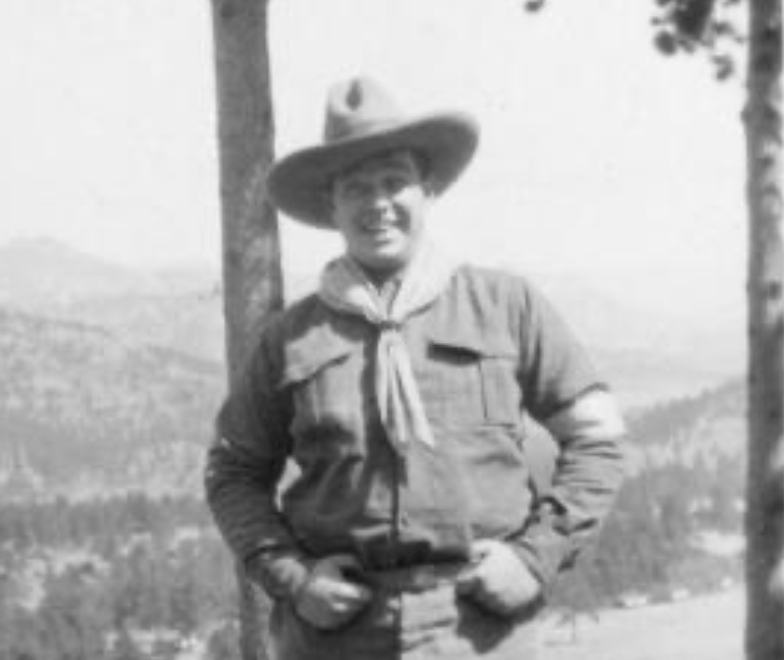
The original Kansas City Chief was Kansas City’s two-term mayor, Harold Roe Bartle. The 47th mayor of Kansas City, Missouri.


Harold Roe Bartle. a gentleman who, when he became Kansas City’s mayor in 1956, was well-known as an in-demand public speaker. The original Kansas City Chief participated in hundreds of speaking engagements each year. And on any given Sunday in the Fall, the original Kansas City Chief would likely have opted to host a Boy Scout camping trip rather than to head over to Arrowhead to catch a football game.


A little about Kansas City’s original Chief and his accomplishments as mayor.


During Harold Roe Bartle’s two terms as mayor, Kansas City’s hospitals were desegregated. And African-Americans were for the first time able to pursue a career as a police officer or as a firefighter. Causes Harold Roe Bartle held close to his heart. Choosing to throw his political weight as mayor behind each socioeconomic advancement for African Americans.

The football team’s nickname, Chiefs…


According to legend, when Harold Roe Bartle was living in Wyoming, he was inducted into a Arapaho tribe. As the story has been told, the Arapaho bestowed upon Harold Roe Bartle the nickname of Lone Bear. That nickname of Lone Bear for Harold Roe Bartle was later changed to Chief Lone Bear. And here we have the origin for Harold Roe Bartle becoming “Chief.” He was given this alias of “Chief” by an Indian tribe.


Born in Richmond, Virginia, Harold Roe Bartle relocated to Missouri. In time, becoming Kansas City’s 47th mayor. With his physically imposing 6’4, near 400-pound frame, Kansas Citians called their mayor Chief.


Kansas City’s football team…


The Kansas City Chiefs started out as a Texas team – the Dallas Texans. The Dallas Texans were an AFL team. The Texans-Chiefs won the AFL championship three times. In 1962 as the Dallas Texans. And in 1966 and 1969 as the Kansas City Chiefs.


In 1960, the AFL’s Dallas Texans encountered a National Football League interested in getting their own team in Dallas. That NFL team went on to become the Dallas Cowboys.


In 1950, Dallas’ population was 434,000. Dallas was growing. The NFL recognized Dallas this.


By 1960, Dallas’ population was closing in on 700,000. Dallas was a growing market. The NFL wanted in.


In 1960 Lamar Hunt’s Dallas Texans were the only football team in Dallas. But Lamar Hunt’s Dallas Texans were an AFL team. Not an NFL team. With an NFL team coming to Dallas – two football teams – fan loyalty would be split. The NFL would have the Dallas Cowboys. The AFL would have the Dallas Texans.


Lamar Hunt decided to move his team. First, Lamar Hunt considered moving his Texans to Atlanta. Hunt also considered Miami. Enter Kansas City’s Chief.

Harold Roe Bartle proposed an idea to Lamar Hunt, the Texas oil tycoon. The idea Harold Roe Bartle presented to Lamar Hunt was to forget about Atlanta. To forget about Miami.

Rather, Harold Roe Bartle suggested a Midwest home for Hunt’s team. Harold Roe Bartle spoke of how advantageous it could be to attract a fan base from a multi-state region in the Midwest. Lamar Hunt could do this by relocating his Texans to Kansas City.


Kansas City would be the perfect home for the Texans. The Texans could play their home games in Kansas City’s Municipal Stadium.


The Kansas City Athletics played in Municipal Stadium from 1955 until their relocation to Oakland in 1967. The A’s old stadium in Kansas City – Municipal Stadium – sat empty.


The proposal Harold Roe Bartle made to Lamar Hunt involved a lease. Hunt’s team would pay the City of Kansas City, Missouri $1.00 per year in rent. While 14,000 additional seats would be added to the old stadium located at 2133 Brooklyn Avenue. The additional seating would accommodate a ready, waiting and eager fan base.

In a grass roots effort undertaken to recruit the Texans to Kansas City, Harold Roe Bartle launched a citizen’s outreach program. His program involved selling season tickets to Chiefs.

Lamar Hunt’s Dallas team did relocate to Kansas City. The Texans moved to Kansas City in the Spring of 1963. As a tribute to how hard Harold Roe Bartle worked to recruit the Texans to Kansas City, Lamar Hunt’s team was rebranded in honor of Harold Roe Bartle contributions. The Texans were now the Kansas City Chiefs.


Harold Roe Bartle served as Kansas City’s mayor from 1956 to 1963. Lamar Hunt’s Kansas City Chiefs played their home games on Brooklyn Avenue in Municipal Stadium from 1963 (Bartle’s last year as mayor) until 1971. Before the Chiefs moved to Arrowhead.


Bartle’s role in bringing the Chiefs to Kansas City notwithstanding, the passions of Harold Roe Bartle, who was born in Virginia and was a lawyer by trade, were less routed in football than they were in children. Which brings us to the Boy Scouts.


Harold Roe Bartle organized the Boy Scouts’ Tribe of Mic-O-Say. Tribe of Mic-O-Say was started in Agency, Missouri.

Today, Tribe of Mic-O-Say is a Boy Scout honor society. Harold Roe Bartle served as a Scout executive at the St. Joseph Council for the Boy Scouts (now the Pony Express Council).

The camp Harold Roe Bartle established is the Bartle Scout Reservation. Mic-O-Say. At Mic-O-Say, Boy Scouts prove their competency in camping, while demonstrating leadership skills.


Attendance at Harold Roe Bartle’s Boy Scout camp increased year-by-year. Boy Scouts attending Harold Roe Bartle’s camp shared in customs, trends and activities of Native Americans. The curriculum for Mic-O-Say, routed in Harold Roe Bartle’s love of Native American culture. It was, after all, Native Americans who bestowed upon Bartle his handle of Chief.


Bartle’s Mic-O-Say camp is still in operation today. The camp is now located in Osceola, Missouri.


The Kansas City Chiefs now play at GEHA Field at Arrowhead Stadium.


The Order of the Arrow is a Boy Scouts of America honor society.

The “ingredient” to use with outdoor kitchens


Bluestone…

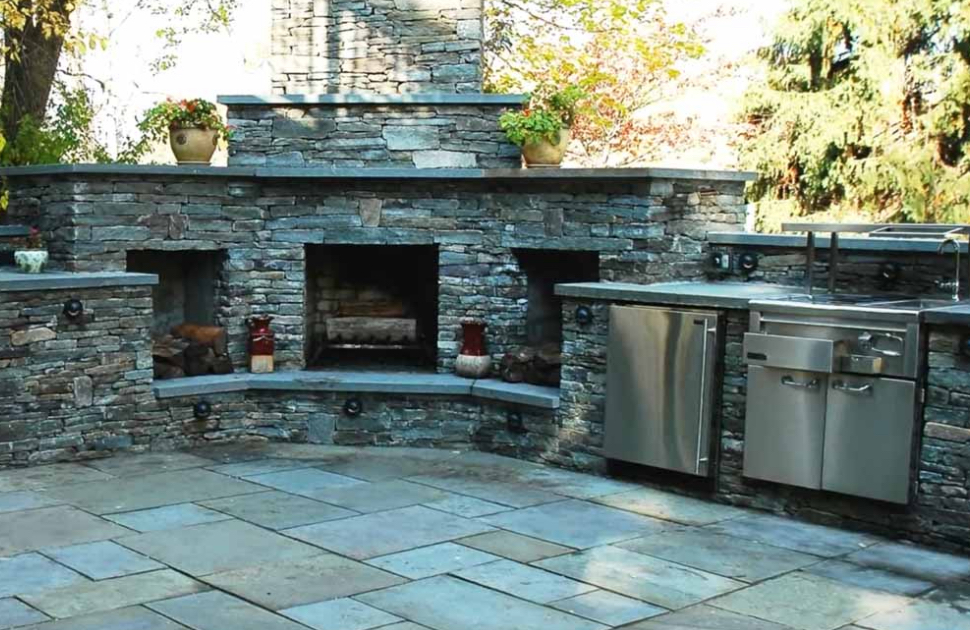
Bluestone is a weather resistant natural stone removed from the ground by drilling, blasting and excavating. Naturally aesthetic and slip-resistant, bluestone is a popular choice for outdoor kitchens, patios, driveways, and walkways.

Bluestone is a type of flagstone. Flagstone is sedimentary rock that can be split into flat, rectangular pieces. Sedimentary rock is formed through the accumulation of deposits along waterways.

The word “flagstone” emanates from Old English – flagge.

Flagge means turf. Flagstone – red, bluff or blue in color – is sandstone. Its composition? Fieldspar and quartz.

Impact Fees: New Jersey

New Jersey’s Municipal Development Impact Fee Authorization Act, if enacted, could broaden municipalities’ ability to collect from developers. To offset costs municipalities incur because a project is approved.


The way impact fees are levied tilts too far in favor of developers. At the expense of municipalities.


For example, the hiring of additional teachers accompanies more kids in schools. Which is one byproduct of the building of more homes – more kids in schools.


A) Homes are built.
B) Families move in.
C) Families have kids.
D) Kids go to school.


Yet, in New Jersey, increases in education funding are not able to be passed through to developers by way of impact fees. Though they should be.


Because increases in education funding to accommodate larger classroom sizes – and the hiring of more teachers – is as much of a development-related cost as one can think of. It’s attributed to the building of new homes.


Education funds for a New Jersey municipality collected through impact fees imposed upon developers should be permissible.


Larger classrooms. More teachers. Potentially, the construction of a brand new school. These are costs a municipality will incur when student counts increase.
One proposed solution? Broadening the scope for the collection of impact fees by municipalities.


Whereas critics view additional impact fees as impediments to growth, that argument is easily overcome.


Impact fees can be collected in lieu of property tax hikes.


Furthermore, impact fees are specific to the development at-hand. And to the area being developed. As such, using impact fees enables existing homeowners to not be unduly burdened by increases in property taxes which go towards funding development which really does not directly affect them.

Springtime in Kansas


It is suggested that one should wait until wind gusts are less than fifteen miles per hour. 

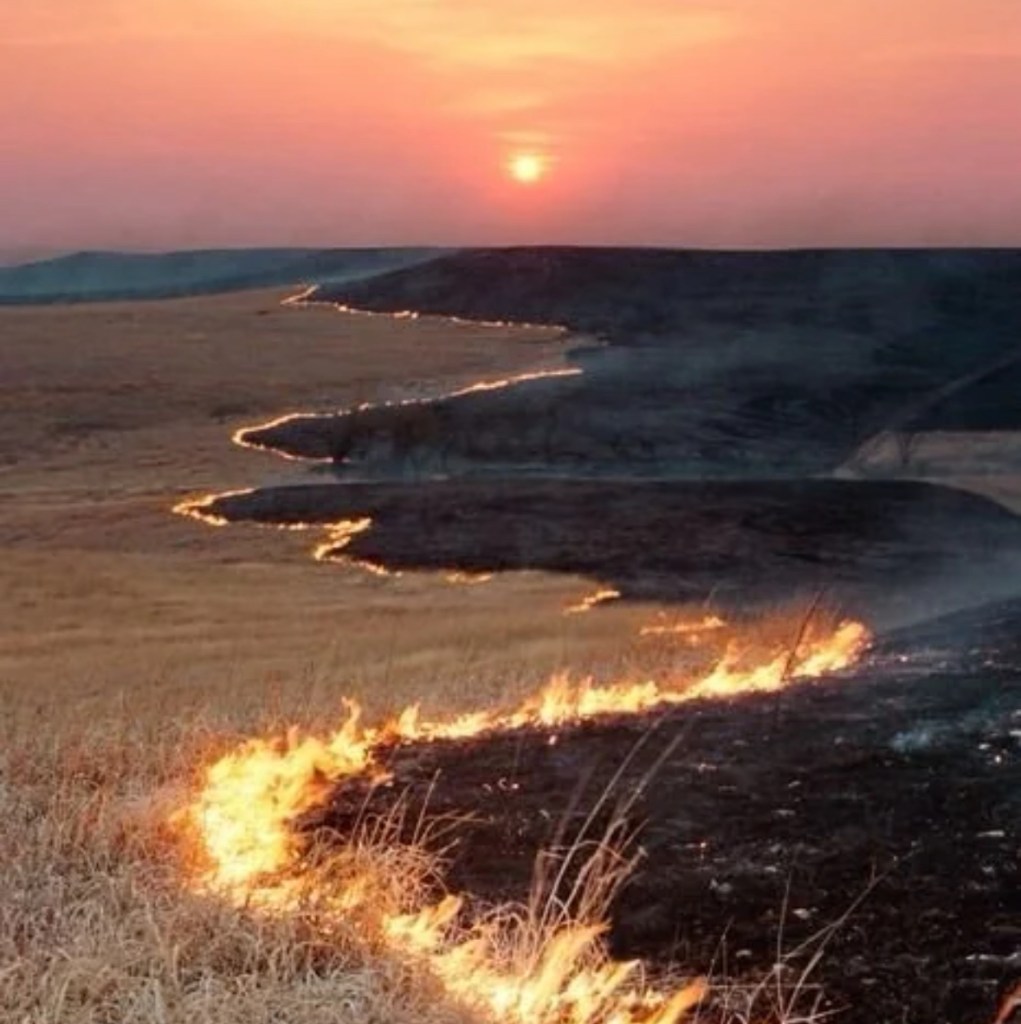
The fertile soil under our boots in the largest natural tallgrass prairie in the United States – The Flint Hills of Kansas – undergoes a replenishment every few years. Occurring when dead prairie tallgrass – dead tallgrass which has accumulated, and now lays dormant – is burned off. Right before Spring arrives.

The ignition of acres upon acres of tallgrasses culminates in quite the scene. Nighttime walls of fire, cascading the prairie’s landscape. Ablaze. Reaching up to twenty feet in height. It’s quite the site to see.

For those driving as the prairie burns, expect to encounter thick smoke. Christened with ash.

Strong winds create a dangerous situation while a prairie burns. Fires are erratic. Winds blowing in excess of 30 mph, coupled to low humidity, could lead to unintended consequences. Such as, a “firenado.Hence, wise planning. As coordinating burning off dead prairie grasses with tame wind gusts is necessary. “Tame” meaning, wind gusts which max out at less than fifteen miles per hour.

Ranchers patroling fence lines so as to ensure that flames don’t cross over into their pasteurs. Just one of many nuances which come, hand in hand, with Springtime in The Flint Hills of Kansas.

Unplowed slopes of rolling hills. Beset by shallow rocky soil. You may see bison, off in the distance. Topography of TheFlint Hills. Anchored through erosion-resistant limestone.

Tallgrass prairie of the Flint Hills today covers roughly four million acres. With the majority of those nearly-four million acres, found in Kansas. Making The Flint Hills the largest remaining tall grass prairie in the United States.

At one time, tallgrass prairie blanketed 170 million acres of the country. Once extending from the tallgrass prairie’s home today in Kansas – and, to a lesser extent, in Oklahoma – over into Nebraska, Texas, Iowa, Missouri, South Dakota, North Dakota, Illinois. And parts of Canada. 

Burning of Flint Hills grasses precedes the planting season each year in Kansas. Taking place in late March. Or early April.

The primary purpose for the annual igniting of the prairie is to enrich the soil. While so too, preventing the encroachment of trees. 

Fire-adaptive grasses thrive in The Flint Hills. These grasses, fortified by nutrients which are absorbed by the soil. This absorption of nutrients by the soil is one byproduct of the igniting of the prairie during the Spring.

The prairie is burned. Trees don’t thrive. Nutrient-rich grasses do. Therein lies the point. 

Those fires we see in the Flint Hills each Spring eliminate dead grasses. Ridding the prairie of dead grasses – barren of nutritional value – facilitates rapid growth of nutrient-rich grasses. High in protein. A high-protein diet is required in the cattle business.

Switchgrass…

Golden in the Fall, with a greenish-blue color in the Spring. The optimal grazing height of switchgrass is one-and-a-half feet to two feet. In the summer, as traditional grasses stop producing, Flint Hills switchgrass remains rich in protein. Perfect for cattle.

The cattle-to-person ratio in Kansas is two-to-one. Two head of cattle, one person. Cattle is a stalwart in the Kansas economy. There are, give or take, six million head of cattle in Kansas. Needless to say, the cattle industry is firmly entrenched in the economy of Kansas. Contributing $10 billion each year to the State’s GDP. 

One secret to the success of Kansas beef would be, weight gains. I.e.: rapid putting on of pounds, which Kansas cattle are able to do. Thanks in large part to rich grasses found throughout The Flint Hills.  Those nutrient-rich grasses in Kansas, making up the lion’s share of the diet for cattle.

In Kansas, cattle add most of their pounds, beginning in April – which coincides with the burning of the tallgrass prairie  – running through July. 

Cattle’s gains…

Kansas cattle can put on up to four pounds of weight – each day – within that April-to-July window. This rapid bulking up by cattle – fueled by nutrients found in Flint Hills tallgrass – contributes to an interest held by out of state ranchers of shipping their cattle to the Sunflower State.

Mature Kansas beef bulls can clock in at between 2,000 to 2,400 pounds. Mature bulls consume up to 45 pounds of dry matter (nutrient content without water) everyday.  Possessing such appetites, 4,000 acres of unobstructed nutrient-rich tall grass presents a very nice resource. For ranchers.

With a bull’s substantial daily consumption requirements, cattle from as far away as Florida often make their way up to Kansas’ Flint Hills.. Those nutrient-rich grasses? Attractive to ranchers. Even ranchers beefing up cattle as far away as the Sunshine State.

Strong City, Kansas


…for the next time you see one of those long BNSF freight trains chugging along the tracks. Whether you see one of those BNSF freight trains in Los Angeles. Or in New York City. Or in Dallas. Or in Chicago. The next time you see one of those BNSF freight trains, you can think about a town located along the Flint Hills Scenic Byway in Chase County, Kansas. You can think about Strong City. Population, 388.

Five years after the Kansas Territory was first organized… Two years prior to Kansas becoming our 34th U.S. State…Chase County, Kansas was born. That year? 1859.

Twenty-two years after that – in 1881 – the railroad in the United States entered Chase County, Kansas. The Chase County town which was the benefactor of this rail extension in Kansas had been Cottonwood. 


And in Cottonwood, a new train station was built. That new train station – built in 1881 in Cottonwood – became, the Cottonwood Station. 

The very next year – in 1882 – the town of Cottonwood would change its name. Becoming, Strong. Later becoming, Strong City

Our Strong City name took hold much, much later. Sixty-three years later, to be precise. In 1945.

Strong City

Yet, let’s go back to the beginning of it all. To the very beginning of Strong City’s – then, Strong’s – imprint on U.S. rail. 

The beginning, which brings us to a New Englander. A New Englander, who was born in Vermont. A New Englander by the name of William Barlow Strong. W.B. Strong. As W.B. Strong is where our Strong City-BNSF connection begins. 

W.B. Strong. Our namesake for Strong. Our namesake for Strong City. W.B. Strong. W.B.Strong, the man on whom a petition had been set forth to change a Chase County town’s name. From Cottonwood to Strong.

When that railroad –  the Atchison, Topeka and Santa Fe Railway – was extended into Cottonwood in 1881, W.B. Strong served as president at Atchison, Topeka and Santa Fe Railway.


The year Cottonwood Station first opened- in 1881 – would be the same year W.B. Strong took over the reins at Atchison, Topeka and Santa Fe Railway. As president. Atchison, Topeka and Santa Fe Railway. ATSF, for short.

Expanding on from the opening of that Cottonwood Station in 1881, under W.B. Strong’s leadership, ATSF significantly grew its train routes. To cover 7,000 miles. 7,000 miles of Atchison, Topeka and Santa Fe Railway routes. Throughout the United States.

Headed by W.B. Strong, Atchison, Topeka and Santa Fe Railway went on to become part of what is today the largest railroad in the United States. ATSF’s growth spurt coincided with the opening of that Cottonwood Station. In our Chase County town that would go on to bear W.B. Strong’s name. In Cottonwood. Later becoming, Strong. Later becoming, Strong City. 

Strong City. The Chase County town named after our railroad executive, W.B. Strong.

Whenever we see a freight train, we no doubt will see the letters “BNSF” on those freight cars. And on those, once-steam, now diesel or electric, engines. BNSF is our modern-day evolution for Atchison, Topeka and Santa Fe Railway.

Atchison, Topeka and Santa Fe Railway went on to merge with Burlington Northern Railroad in 1995. Out of this merger, we had, Burlington Northern & Santa Fe Railway. 


Later becoming, simply, BNSF.


The prevalence of those BNSF freight trains we see throughout the United States…transporting goods from the West Coast to the East Coast. From the Midwest into Canada. From the Midwest into Mexico. The prevalence of those BNSF freight trains we see…we see those BNSF freight trains, arguably, as the modern day result of the expansion-oriented mindset which had been espoused by the man whose name is forever linked to our Chase County town. W.B. Strong. Our namesake, for Strong City. 

In the late 19th Century, then-Cottonwood, later becoming Strong and later still, becoming Strong City, had a population of, between, a few hundred to one thousand people. Strong City’s population today is just about where it had been in its earliest days. A few hundred people.

Just as our Strong City forefather – W.B. Strong – laid the late 19th Century “tracks” for a company which would go to become the largest rail company in the United States – with over 32,000 miles of track, across 28 U.S. States – Strong City would proceed to make a second notable contribution to the freight-by-rail system we now have. 

Beginning in the late-19th Century, Strong quarries supplied large quantities of the stone which had been used for U.S. railway expansion. While at the same time, Strong stonemasons handled a good deal of the stone-work which had been necessary in order for that that late-19th Century/early-20th Century rail expansion to take place. 


While Strong stonemasons performed according to their names – as stonemasons, handling stone-work for railroads – Strong stonemasons extended their contributions to the growth of late-19th Century/early-20th Century rail in the U.S. beyond their stone-work. In fact, Strong stonemasons went on to enter into numerous phases of late-19th Century/early-20th Century railroad construction. Far beyond stone-work.

The laying of track. Building the bridges on which track was laid. Building train stations. Roadhouses. 


Each being one such category of railroad construction that Strong stonemasons placed their signatures upon.

So…our Chase County town of 300-or-so residents, located a little less than a two hour’s drive west of Kansas City. Our Chase County town can be thought of whenever we do see one of those BNSF freight trains.

W.B. Strong. Strong. Later becoming, Strong City. Strong stonemasons. United States rail. BNSF. 

For me, it’s quite difficult, moreso, impossible, to see a freight train and to not think about those picturesque drives I’ve taken, oh so many, many times, along Highway 177 in Kansas. Onto Main Street. Along the Flint Hills National Scenic Byway. Into…Strong City.

Strong City. Our Chase County town of 300-or-so people which has left its not so-little-at-all “Strong City signature” – in more ways than one – on U.S.cargo, shipped by rail.