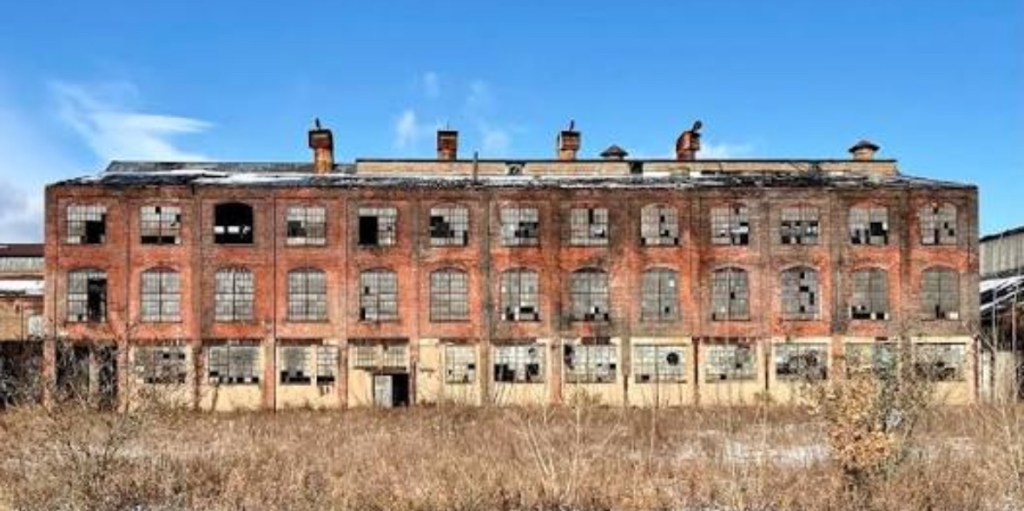
Alexander Hamilton, coupled to his frustration with trade barriers, foretold of the rise of this industrial city.


We owe our beginning for Paterson, New Jersey to Alexander Hamilton. To Hamilton’s pursuit of American manufacturing independence. To Hamilton’s interest in battling prohibitions placed upon free trade.

Paterson was established in 1791. And it was in 1791 that Alexander Hamilton – then, Secretary of the Treasury – set up the Society for Establishing Useful Manufactures (SUM). Proceeding to acquire 700 acres which would be developed as a catalyst for the growth of American manufacturing.

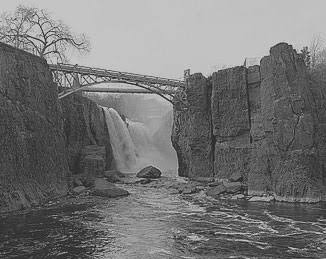
Those 700 Paterson acres are located close to a power source which is native to Paterson – the Great Falls.

Here we have our catalyst – the Society for Establishing Useful Manufactures – and our footprint – those 700 acres – for the 18th Century emergence of an American industrial center.

Hamilton’s vision for the Society for Establishing Useful Manufactures was anchored in his goal to transform Paterson into a major industrial hub.

Cotton emerged as an early product manufactured in Paterson. Soon giving way to textiles.

In time, silk would become the preeminent manufacture of Paterson. Paterson would go on to become “Silk City.”

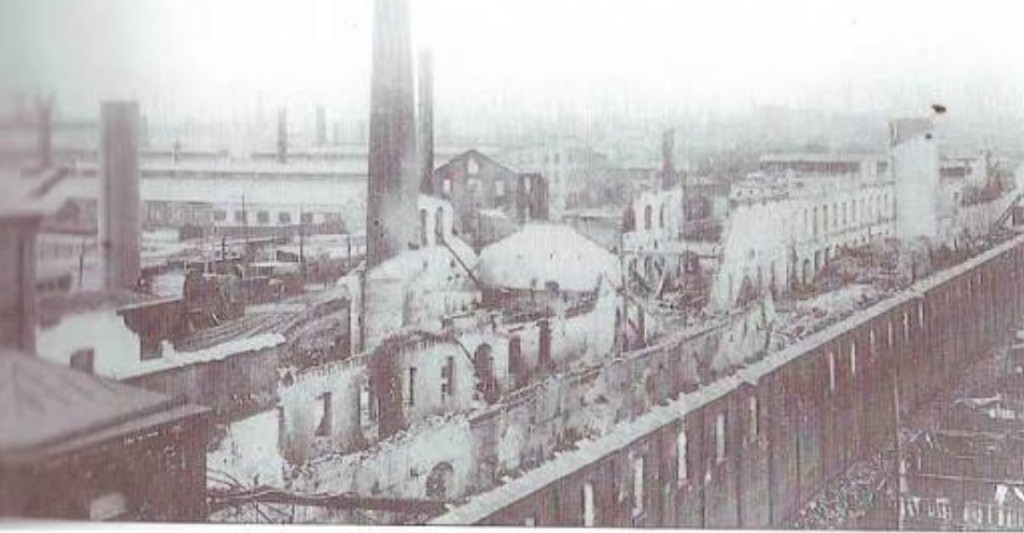
The Great Falls of Paterson provided the power needed in “Silk City” to operate industrial sites. Industrial sites built around benefits flowing from the Falls.

Recognizing the potential in the Great Falls, Alexander Hamilton’s idea for an industrial site – and for an industrial city – could be realized through the construction of canals. Hamilton knew that canals would be able to deliver water power to industrial sites. Providing the power source – water – Paterson manufacturers could come to rely on.

A private-public corporation, the initial plan for the Society for Establishing Useful Manufactures was for the corporation to build, own and operate Paterson’s industrial sites – owner-operators.

That first strategy thought up for the Society for Establishing Useful Manufactures as an owner-operator changed. This early-day premise for the Society for Establishing Manufactures as owner-operator of industrial sites gave way to an amended blueprint. This amended blueprint being, for the Society for Establishing Useful Manufactures to become freeholder to Paterson industrial sites.

The Society for Establishing Useful Manufactures leased industrial sites around the Falls to private manufacturers. While retaining control over the power source manufacturers relied upon – the Great Falls.

The Society for Establishing Useful Manufactures transitioned from manufacturing into real estate development. Becoming a prominent real estate developer in Paterson through the early part of the 20th Century.

Paterson becoming an industrial hub was a late-18th Century goal arising from the importance Alexander Hamilton placed on manufacturing independence.

Manufacturing independence. Economic independence. Industrial independence. 

The 700-acre site acquired by the Society for Establishing Useful Manufactures around the Great Falls was a foundation upon which the emergence of an American manufacturing empire could be begin. The birth of Paterson.

The American Colonies gained their independence from Great Britain in 1783. With the signing of the Treaty of Paris. Two years after General Cornwallis surrendered at Yorktown.

The Treaty of Paris was signed. The Colonies were no longer subjects of the King. Yet these new Colonies were still reliant upon Great Britain. Hence, Hamilton’s idea for the Society for Establishing Useful Manufactures. Hence, our backdrop for the emergence of Paterson.

The year of the Treaty of Paris – 1783 – Colonial imports from Great Britain totaled just about $300,000, in 18th Century dollars.

The year after the Treaty of Paris – 1784 – Colonial imports from Great Britain totaled just about $600,000, in 18th Century dollars.

Imports from Great Britain doubled the first year of America’s independence. America did gain its independence from Great Britain. While at the same time, increasing their dependence on Great Britain. For imports.

Exports from Great Britain to the Colonies increased substantially after the Colonies’ independence. While Parliament was placing “tariffs” on manufactured goods the Colonies intended to export to Great Britain.

These British “tariffs” were called Duties. Duties represented constraints pushed onto Colonists, serving as barriers to Colonial exports to Great Britain. And this problem of duties was compounded by a stranglehold-of-a-requirement imposed on the Colonies through Parliament.

Great Britain commingled their imposition of Duties on American exports with an additional constraint. An additional constraint meant to further restrict American exports to Great Britain. This additional restriction being, American exports to Great Britain were required to be transported by British vessels only. Confiscatory trade policy enacted through Parliament which dampened manufacturing in the Colonies.

Trade restrictions placed upon Great Britain’s newly-independent “trade partner” did not stop at duties and a ship-British mandate.

Parliament permitted only the importation of non-manufactured American goods. It was non-manufactured goods only. Great Britain, as the world’s largest economy, placed restrictions on imported American manufactured products to protect manufactures at home.

In 1783, as a newly-independent country, the Colonies were “free” to export to Great Britain. So long as the Colonies did not export manufactures.

This protected British manufacturers from newfound Colonial competition. While at the same time, preventing the emergence of well-trained, English-speaking competitors to British manufacturers – American manufacturers.

Furthermore, Great Britain – through their Colonies, when they were Colonies of Great Britain – enjoyed prosperous trade with the British West Indies. A different outpost within the same British Empire.

Yes, the Colonies gained their independence from Great Britain. In 1783. The Colonies gained their independence while at the same time increasing their dependence upon Great Britain in different sort of way. This, a dependence found in reliance upon British manufactures. Manufacturers in Great Britain who exported their finished products to the Colonies. The inverse for which was highly restricted. Through Parliament.

The British West Indies remained, the British West Indies.

Britain enacted protectionist policies when dealing with the Colonies. Prohibiting free trade for the Colonies within the Empire. Which included the British West Indies.

The Colonies were “free” to trade with the British West Indies. So long as that trade was in non-manufactured goods. And so long as trade with the British West Indies involved the transportation of non-manufactured goods to the British West Indies (and to Great Britain, for that matter) on British vessels. 

American livestock? The trade of American livestock was fine…trade away. So long as American livestock was shipped within the British Empire on British vessels.

American lumber? The trade of American lumber was fine…trade away. So long as American lumber was shipped within the British Empire on British vessels.

American flour? The trade of American flour was fine…trade away. So long as American flour was shipped within the British Empire on British vessels.

The trade of American manufactures? Of American finished goods? No deal. No trade. There was to be no shipment of American manufactures to Great Britain, nor to the British West Indies. Not on British vessels. Not on American vessels.

Great Britain was protecting their global manufacturing dominance. While in the Colonies, the Secretary of the Treasury recognized challenges arising from the unfair British trade restrictions. The Secretary of the Treasury in the Colonies intended to alter an unfavorable outcome. Alexander Hamilton was the Secretary of the Treasury. 

Hence, our catalyst for Alexander Hamilton’s focus on developing the American Colonies into a manufacturing power that could one day compete with Great Britain. 

Hence, our catalyst for the emergence of American industrial cities. 

Hence, our emergence of Paterson as an industrial hub.

It had been those trade restrictions – enacted by Great Britain through Parliament after the Colonies gained their independence – which led Alexander Hamilton, as Secretary of the Treasury, to create a framework necessary for the growth of American manufacturing. Then, so too, for the growth of American industrial cities. Cities such as Paterson.
Crossroads


Lewis and Clark arrived at the confluence of the Missouri River and the Kansas River at a time when the country was keen on opening up the west.


The best pathway west at that time was the Missouri River. Kansas City sits alongside “the Big Muddy.”


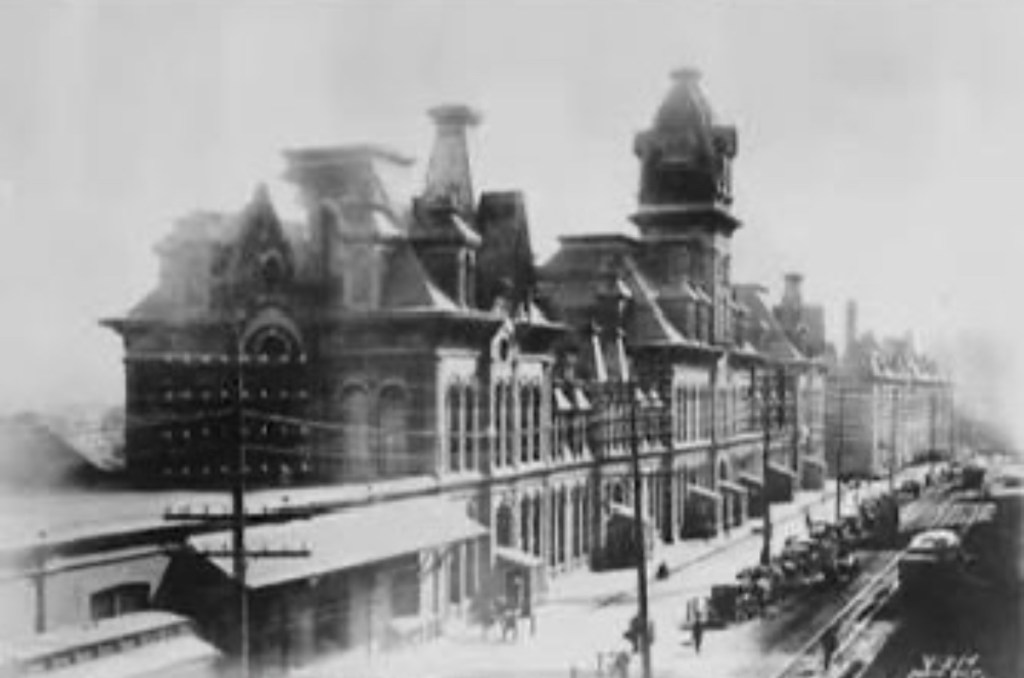
One hundred years after Lewis and Clark arrived with their team of 50 and 3 boats the first train depot opened in Kansas City – Union Depot, in 1878.


Kansas City’s Union Depot became the second of its kind. Indianapolis’ union depot was the first.

During the latter part of the 19th Century, goods making their way to the Western-most points of the United States likely came through Kansas City.

In a fast-industrializing 20th Century, Kansas City connected an industrial Northeast to the West.


At its height, 200 trains pulled into Union Depot each day. Rail was the primary method of transporting freight. And Kansas City outgrew Union Depot.


Needing additional capacity, railroad companies utilizing Union Depot decided to replace Union Depot with a larger station at a better location.

Union Depot was located in the West Bottoms. The West Bottoms was prone to flooding.

The new station would be built near the central business district, atop a hill.


Kansas City’s Union Station opened in 1914 – 850,000 square feet.


Kansas City’s Troost Avenue

Troost Avenue, a 10-mile corridor in Kansas City running from 4th to Bannister.

Among the Kansas City neighborhoods bordering Troost Avenue are Beacon Hill, Longfellow, Squier Park, Rockhill and Hyde Park.

Troost Avenue was named after a doctor. Benoist Troost. Dr. Troost, a prominent Kansas City physician, was also a civic leader.


Troost Avenue was once home to “Millionaire’s Row.” Early in the 20th Century, “Millionaire’s Row” had been a strip of stunning mansions constructed along Troost Avenue. Those mansions adorned Troost from 31st Street to 34th Street.

Today, Troost Avenue is experiencing redevelopment interest. And a tasteful renaissance.


In times past, Troost Avenue experienced a sad history written with the underpinnings of disinvestment. Leading to decline. Leading to decreased home values. This, before Troost’s renaissance.


So what led to Troost’s decline?

Disinvestment. But real estate disinvestment was not the primary catalyst which led to Troost’s mid-20th Century decline. Real estate disinvestment certainly was one catalyst. But real estate disinvestment was not the primary catalyst.

Disinvestment in public schools east of Troost was the primary catalyst which led to Troost’s decline.


Starting off in the late ‘60’s, the School Board in Kansas City, Missouri consistently requested increases in education funding for Kansas City, Missouri schools which were located east of Troost Avenue. There were in the range of twenty such education funding requests made by the Board during this time. Funding requests made throughout the ‘60’s and ‘70’s.

Those funds – if approved – would have gone to Kansas City, Missouri public schools east of Troost Avenue. Funding requests were voted down. The result? Disinvestment in schools. Culminating in “White flight.”

Families, those having the means, that is – predominantly White families – moved. White families moved out of neighborhoods which were adversely affected by the undercutting of school funding.

White flight. Neighborhood home values decreased. One prominent Kansas City mayor once referred to Troost Avenue as, “…the demarcation line in a war zone.”

The problem, east of Troost, wasn’t the legal segregation of schools. Nor was the problem segregation of schools. The problem, east of Troost, was funding for education. Or a lack thereof.


Long before round after round after round after round of failed requests to secure funding for Kansas City, Missouri public schools east of Troost were submitted, those same public schools were desegregated. Yet school desegregation didn’t really solve this problem in Kansas City east of Troost.

Because while the desegregation of schools, based upon race, was the national mandate after Brown v. the Board of Education, decisions which were made affecting education funding were made at the local level. Therein we find the problem. For why public schools east of Troost declined.


In 1954, the United States Supreme Court unanimously ruled in Brown v. The Board of Education of Topeka, Kansas that state-sanctioned segregation of public schools was unconstitutional. Prior to Brown v. The Board of Education, in Kansas City, east of Troost, Lincoln High School had been the only high school providing post-elementary education to Black students. One high school.


In 1955, one year after Brown v. The Board of Education, the Kansas City School Board enacted a “segregation” of public schools in a different way. This was a “de-facto segregation.” Not based upon race. But rather, this was a segregation based upon attendance zones.

Revisiting “White flight” east of Troost, the “White flight” which occurred as round after round of school funding requests were voted down led to the “panic selling” of homes. Leading to block busting. As White families relocated out of the Kansas City, Missouri school district. Real estate values declined.


No, Kansas City, Missouri public schools east of Troost were not segregated based upon race after the 1954 Supreme Court decision. But yet, in a practical sense, they were still segregated.


Kansas City, Missouri public schools east of Troost remained overcrowded. And underfunded. The city’s expansion just made it worse.


In real estate, developers often utilize – and benefit from – tax abatements. On Troost Avenue, and east of Troost, there is a real estate renaissance taking place.


While panic selling and block busting were factors which contributed to neighborhood destabilization east of Troost in years past, neighborhoods east of Troost today are likely to not experience the same type of disruptions as the pendulum swings the other way. Through redevelopment.


What we may see is, not decreasing property values east of Troost. We’ll likely see increasing property values east of Troost.

We likely won’t see panic selling east of Troost. We’ll likely see home sellers fetching ever-increasing prices for their homes, east of Troost.


We won’t see blockbusting, east of Troost. We’ll see continued interest in homes, east of Troost.


What we’ll also likely see, east of Troost, is community members priced out of their neighborhoods. We’ll likely see gentrification. We’ll see investment. Not disinvestment. We’ll see tax abatements.

Accompanying such, we’ll also see hundreds of millions of dollars in deferred maintenance incurred by Kansas City, Missouri public schools.


We’ll likely see challenges in education. Different education challenges. But challenges, nonetheless. Not segregation. Not the same challenges as before. But challenges.


If redevelopment on Troost Avenue and east of Troost is the #1 goal, all good. If there are other concerns to consider, maybe one should revisit Kansas City history? Focusing on this topic: public schools east of Troost.

The Trolley Trail in Kansas City’s Brookside


Brookside is a charming, leafy neighborhood located on the southern end of Kansas City, Missouri…the largest contiguous master planned neighborhood in the country.


Part of the Country Club District, the original plan for Brookside was new homes built for middle-income, upper middle-income and for upper-income families.


The more expensive homes in Brookside were built to the west. Higher home values in Brookside are often determined by how far east or how far west of Main Street the home is located.


Brookside’s Trolley Track Trail. The Harry Wiggins Trolley Track Trail.


The trolley which once ran through Brookside was named for a Missouri state senator who was born in Kansas City. This senator was Harry Wiggins. Brookside’s Trolley Trail is a six-mile path.


Today there is no trolley that runs along Brookside’s Trolley Trail. There are no trolley tracks on the Trolley Trail either. But at one time, long ago, there was a trolley in Brookside which ran along what today is our Harry Wiggins Trolley Track Trail.


This old trolley run in Brookside was borne in the late 19th Century.


In the late 1800’s, comparable to cable cars one would have found in San Francisco at that time, the trolleys which ran through Brookside were propelled by underground cables. The earliest Brookside trolleys operated by gripping underground cables which were installed underneath the tracks.

As the 19th Century turned into the 20th Century, the means by which trolleys were propelled changed. Underground cables were replaced. The cable system trolleys used were replaced by electricity.


Those old Brookside trolley tracks have long since been torn up. The Harry Wiggins Trolley Track Trail is now occupied by walkers, joggers, baby strollers and cyclists. There are no trolleys. Trolley travel gave way to pedestrians on the old trolley track.

At its inception, the Harry Wiggins Trolley Track Trail fostered a trackbed, wooden cross ties and a ballast. This trolley line in Brookside was the Country Club Line.


The Country Club Line took riders south to Brookside shops found in the Brookside Shopping District. Where 63rd Street meets Brookside Boulevard was the heart of Brookside’s shopping district.


Founded in 1920, the Brookside Shopping District was Kansas City’s first suburban-themed shopping center. It was thirty-seven years after the Brookside Shopping District opened that the last Country Cub Line trolley ran through Brookside. That year was 1957…the end for trolleys in Brookside.


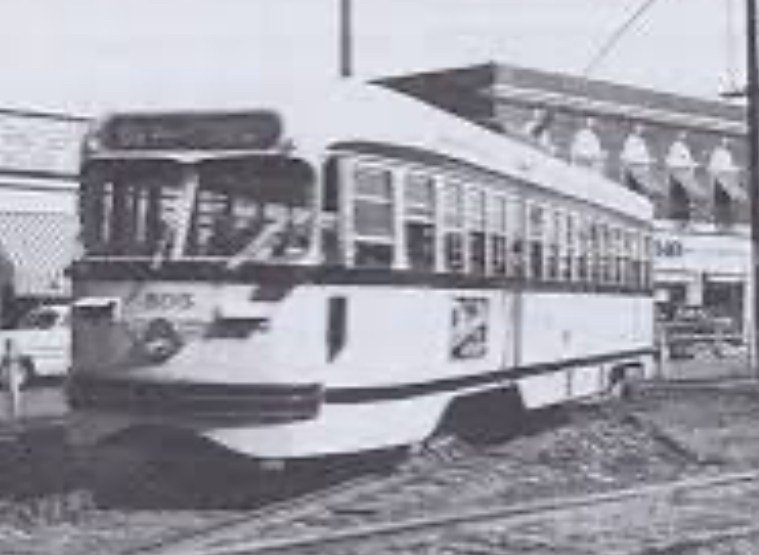
At one time, Kansas City had one of the most extensive trolley systems in the country.


Today, Kansas City’s rich trolley history has been reawakened with the city’s streetcar.


Long ago Brookside trolleys and streetcars found in center city represented a popular mode of transportation in Kansas City.

Times changed. And Kansas City – as did most cities by the mid-20th Century – replaced their trolleys and their streetcars with buses.


In Brookside, the end of trolleys led to a new constitution for the Harry Wiggins Trolley Track Trail. The new constitution for the Trolley Track Trail has been written for walkers, joggers and cyclists.


The Harry Wiggins Trolley Track Trail.

Rumson


Rumson, New Jersey is a seven square mile New York City bedroom community. Two of those seven square miles consist of water.


Long before Rumson became Rumson, Rumson was Navarumsunk. Or, Narumsum. And later, Ramson’s Neck.


British settlers purchased Navarumsunk/Narumsum – located between the Navesink River and the Shrewsbury River – from the Lenape Indians.

Negotiations for the sale of Navarumsunk/Narumsum began in 1663.
Two years later, Governor Richard Nicholls confirmed the sale within constructs available to British Governors through the Monmouth Patent. No longer Lenape territory, Navarumsunk/Narumsum became Ramson’s Neck.


The catalyst for this 1665 land sale was colonial expansion – a British land conveyance.


The British took New Netherlands – in which Navaramsunk/Narumsum was located – from the Dutch. Establishing framework for the land sale.


Britain was led by King Charles II. Charles II granted this land – then controlled by the Dutch – to his brother James, The Duke of York.


The Duke’s real estate holdings stretched from Connecticut to Delaware. Expansive, yet undeveloped. So the Duke enlisted Governor Richard Nicholls to establish settlements.


The Monmouth Patent bestowed upon Governor Nichols the responsibility to attract one hundred settlers within three years to the region. These settlements were to be established in a section of the Duke’s territory which today is Monmouth County, Ocean County and Middlesex County.
Governor Nicholls needed one hundred settlements to take hold to prevent the territory from reverting back to the Duke.


To attract settlers Governor Nicholls marketed a benefit: self governance.
Settlers were Patentees. Aptly named, as settlements were established according to the Monmouth Patent.


The establishment of British settlements according to the Monmouth Patent ran into a road block in 1674 when the Dutch retook New Netherlands. One year later, the English regained control of New Netherlands. Restarting settlements.


Seven years later, the goal set for Governor Nicholls by The Duke of York – one hundred settlements – was exceeded.


Rumson…


By 1682, four settlements were established near Ramson’s Neck. Ramson’s Neck at that time consisted of thousands of acres of plantations. These Ramson’s Neck settlements, over time, evolved into boroughs. Such as Rumson.


Up through the Revolutionary War, Ramson’s Neck (known as Rumson), Fair Haven, Red Bank, Little Silver and Shrewsbury were part of Shrewsbury Township.


Rumson was part of Shrewsbury until becoming an independent borough in 1907.

The Trolley Trail in the Bookside Neighborhood of Kansas City


Brookside is a charming, leafy neighborhood located on the southern end of Kansas City, Missouri…the largest contiguous master planned neighborhood in the country. 

Part of the Country Club District, the original plan for Brookside was new homes built for middle-income, upper middle-income and for upper-income families. 

The more expensive homes in Brookside were built to the west. Higher home values in Brookside are often determined by how far east or how far west of Main Street the home is located.

Brookside’s Trolley Track Trail. The Harry Wiggins Trolley Track Trail. 

The trolley which once ran through Brookside was named for a Missouri state senator who was born in Kansas City. This senator was Harry Wiggins. Brookside’s Trolley Trail is a six-mile path.

Today there is no trolley that runs along Brookside’s Trolley Trail. There are no trolley tracks on the Trolley Trail either. But at one time, long ago, there was a trolley in Brookside which ran along what today is our Harry Wiggins Trolley Track Trail. 

This old trolley run in Brookside was borne in the late 19th Century. 

In the late 1800’s, comparable to cable cars one would have found in San Francisco at that time, the trolleys which ran through Brookside were propelled by underground cables. The earliest Brookside trolleys operated by gripping underground cables which were installed underneath the tracks. 

As the 19th Century turned into the 20th Century, the means by which trolleys were propelled changed. Underground cables were replaced. The cable system trolleys used were replaced by electricity.  

Those old Brookside trolley tracks have long since been torn up. The Harry Wiggins Trolley Track Trail is now occupied by walkers, joggers, baby strollers and cyclists. There are no trolleys.

Trolley travel gave way to pedestrians on the old trolley track. 

At its inception, the Harry Wiggins Trolley Track Trail fostered a trackbed, wooden cross ties and a ballast. This trolley line in Brookside was the Country Club Line. 

The Country Club Line took riders south to Brookside shops found in the Brookside Shopping District. Where 63rd Street meets Brookside Boulevard was the heart of Brookside’s shopping district.

Founded in 1920, the Brookside Shopping District was Kansas City’s first suburban-themed shopping center. It was thirty-seven years after the Brookside Shopping District opened that the last Country Cub Line trolley ran through Brookside. That year was 1957…the end for trolleys in Brookside.

At one time, Kansas City had one of the most extensive trolley systems in the country.

 Today, Kansas City’s rich trolley history has been reawakened with the city’s streetcar.

Long ago Brookside trolleys and streetcars found in center city represented a popular mode of transportation in Kansas City. Times changed. And Kansas City – as did most cities by the mid-20th Century – replaced their trolleys and their streetcars with buses.  

In Brookside, the end of trolleys led to a new constitution for the Harry Wiggins Trolley Track Trail. The new constitution for the Trolley Track Trail has been written for walkers, joggers and cyclists. 

The Harry Wiggins Trolley Track Trail. 

Strong City, Kansas


…for the next time you see one of those long BNSF freight trains chugging along the tracks. Whether you see one of those BNSF freight trains in Los Angeles. Or in New York City. Or in Dallas. Or in Chicago. The next time you see one of those BNSF freight trains, you can think about a town located along the Flint Hills Scenic Byway in Chase County, Kansas. You can think about Strong City. Population, 388.

Five years after the Kansas Territory was first organized… Two years prior to Kansas becoming our 34th U.S. State…Chase County, Kansas was born. That year? 1859.

Twenty-two years after that – in 1881 – the railroad in the United States entered Chase County, Kansas. The Chase County town which was the benefactor of this rail extension in Kansas had been Cottonwood. 


And in Cottonwood, a new train station was built. That new train station – built in 1881 in Cottonwood – became, the Cottonwood Station. 

The very next year – in 1882 – the town of Cottonwood would change its name. Becoming, Strong. Later becoming, Strong City

Our Strong City name took hold much, much later. Sixty-three years later, to be precise. In 1945.

Strong City

Yet, let’s go back to the beginning of it all. To the very beginning of Strong City’s – then, Strong’s – imprint on U.S. rail. 

The beginning, which brings us to a New Englander. A New Englander, who was born in Vermont. A New Englander by the name of William Barlow Strong. W.B. Strong. As W.B. Strong is where our Strong City-BNSF connection begins. 

W.B. Strong. Our namesake for Strong. Our namesake for Strong City. W.B. Strong. W.B.Strong, the man on whom a petition had been set forth to change a Chase County town’s name. From Cottonwood to Strong.

When that railroad –  the Atchison, Topeka and Santa Fe Railway – was extended into Cottonwood in 1881, W.B. Strong served as president at Atchison, Topeka and Santa Fe Railway.


The year Cottonwood Station first opened- in 1881 – would be the same year W.B. Strong took over the reins at Atchison, Topeka and Santa Fe Railway. As president. Atchison, Topeka and Santa Fe Railway. ATSF, for short.

Expanding on from the opening of that Cottonwood Station in 1881, under W.B. Strong’s leadership, ATSF significantly grew its train routes. To cover 7,000 miles. 7,000 miles of Atchison, Topeka and Santa Fe Railway routes. Throughout the United States.

Headed by W.B. Strong, Atchison, Topeka and Santa Fe Railway went on to become part of what is today the largest railroad in the United States. ATSF’s growth spurt coincided with the opening of that Cottonwood Station. In our Chase County town that would go on to bear W.B. Strong’s name. In Cottonwood. Later becoming, Strong. Later becoming, Strong City. 

Strong City. The Chase County town named after our railroad executive, W.B. Strong.

Whenever we see a freight train, we no doubt will see the letters “BNSF” on those freight cars. And on those, once-steam, now diesel or electric, engines. BNSF is our modern-day evolution for Atchison, Topeka and Santa Fe Railway.

Atchison, Topeka and Santa Fe Railway went on to merge with Burlington Northern Railroad in 1995. Out of this merger, we had, Burlington Northern & Santa Fe Railway. 


Later becoming, simply, BNSF.


The prevalence of those BNSF freight trains we see throughout the United States…transporting goods from the West Coast to the East Coast. From the Midwest into Canada. From the Midwest into Mexico. The prevalence of those BNSF freight trains we see…we see those BNSF freight trains, arguably, as the modern day result of the expansion-oriented mindset which had been espoused by the man whose name is forever linked to our Chase County town. W.B. Strong. Our namesake, for Strong City. 

In the late 19th Century, then-Cottonwood, later becoming Strong and later still, becoming Strong City, had a population of, between, a few hundred to one thousand people. Strong City’s population today is just about where it had been in its earliest days. A few hundred people.

Just as our Strong City forefather – W.B. Strong – laid the late 19th Century “tracks” for a company which would go to become the largest rail company in the United States – with over 32,000 miles of track, across 28 U.S. States – Strong City would proceed to make a second notable contribution to the freight-by-rail system we now have. 

Beginning in the late-19th Century, Strong quarries supplied large quantities of the stone which had been used for U.S. railway expansion. While at the same time, Strong stonemasons handled a good deal of the stone-work which had been necessary in order for that that late-19th Century/early-20th Century rail expansion to take place. 


While Strong stonemasons performed according to their names – as stonemasons, handling stone-work for railroads – Strong stonemasons extended their contributions to the growth of late-19th Century/early-20th Century rail in the U.S. beyond their stone-work. In fact, Strong stonemasons went on to enter into numerous phases of late-19th Century/early-20th Century railroad construction. Far beyond stone-work.

The laying of track. Building the bridges on which track was laid. Building train stations. Roadhouses. 


Each being one such category of railroad construction that Strong stonemasons placed their signatures upon.

So…our Chase County town of 300-or-so residents, located a little less than a two hour’s drive west of Kansas City. Our Chase County town can be thought of whenever we do see one of those BNSF freight trains.

W.B. Strong. Strong. Later becoming, Strong City. Strong stonemasons. United States rail. BNSF. 

For me, it’s quite difficult, moreso, impossible, to see a freight train and to not think about those picturesque drives I’ve taken, oh so many, many times, along Highway 177 in Kansas. Onto Main Street. Along the Flint Hills National Scenic Byway. Into…Strong City.

Strong City. Our Chase County town of 300-or-so people which has left its not so-little-at-all “Strong City signature” – in more ways than one – on U.S.cargo, shipped by rail. 

Lee’s Summit…in the very beginning.


In 1865, at the conclusion of the Civil War, William B. Howard filed a plat to establish a new Missouri town. This new Missouri town would be located 25 miles to the southeast of Kansas City. The platting for Howard’s new town would become the Town of Strother.

Growth prospects for the Town of Strother, as well as planning for the economies of numerous towns which would emerge (or reemerge) in post-Civil War times, had been triggered by post-War Reconstruction. 

The founder of the Town of Strother – I.e.: Lee’s Summit – is William Bullitt Howard.

The name for the Town of Strother, paying homage to William Bullit Howard’s late wife, Maria Strother. 

Maria Strother died the same year William B. Howard filed his plat to establish the Town of Strother – 1865.

Land on which this new Missouri town would be erected totaled 70 acres. This 70-acre allotment which would go on to become Lee’s Summit was parceled out from the 800-plus acre Missouri plantation owned by William B. Howard.

Born and raised in Kentucky, William B. Howard moved to Jackson County, Missouri in the 1840’s. Coming from a wealthy family in the South, William B. Howard did not serve in the Civil War. As the War raged on, William B. Howard left Missouri. Returning to his native Kentucky. Preceding his later return to Missouri. Preceding the establishment of Lee’s Summit.

At War’s end, Howard did indeed return to his adopted Missouri. Returning to Missouri, while holding a belief that a pending rail connection of St. Louis to Kansas City would create opportunities in commerce. Opportunities which were sure to benefit William B. Howard. A large landowner. 

When the Civil War came to a close, recognizing the role rail was certain to play in a post-War economy – and in opportunities for growth in and around Kansas City – William B. Howard entered into negotiations with Missouri Pacific Railroad. Howard negotiated the construction of a new depot. A new depot which was to be built alongside Missouri Pacific Railroad tracks. Just south of Kansas City. On Howard’s land.

Missouri Pacific Railroad proceeded to build their new depot on Howard’s land in Strother.

Upon the incorporation of the Town of Strother in 1868, there was a name change for the town. From the Town of Strother. To Lee’s Summit.

Construction of a second Lee’s Summit depot – the all-brick Missouri Pacific Depot which, still, is located in downtown Lees’s Summit, to this day – was completed years later. In 1905. 

The current Missouri Pacific Depot replaced the older, original boxcar station which had been built in the Town of Strother by Missouri Pacific. That old Missouri Pacific boxcar station, and one famous old boxcar parked at that old station, played a humorous yet important role in the town’s name. 

The Missouri Pacific Depot which would be built on Howard’s land enabled passengers to travel from Lee’s Summit to St. Louis. That railway connection, having been completed two years after Howard filed his original plat for the Town of Strother in 1865. The Kansas City-to-St. Louis rail connection was completed in 1867. Two years after Howard filed his plat to establish the Town of Strother. One year prior to the incorporation of Lee’s Summit.

The name change from the Town of Strother to Lee’s Summit is attributed to William B. Howard learning of another Missouri town which had also been named “Strother.”

The “Lee” in Lee’s Summit.

Upon relocating to Missouri, from Kentucky, William B. Howard resided in Big Cedar. In Jackson County. Among Howard’s neighbors and friends in Big Cedar had been the Leas. Pleasant and Lucinda Lea. 

Pleasant Lea was the local doctor. And postmaster. The Lea family and the Howard family grew to become close friends. Sharing more than their adjacent Missouri addresses. They shared also, their southern pasts.

The Leas moved to Jackson County from Tennessee. The Howards moved to Jackson County from Kentucky. Each family had been a wealthy, transplanted southern family. Establishing new homes for themselves just outside of Kansas City. In Civil War times. 

Pleasant Lea died in 1862. Three years before William B. Howard filed his plat to establish his Town of Strother. Which had originally been named for his late wife.

The change in the town’s name from the Town of Strother to Lee’s Summit involved another close relationship of Howard’s. His neighbor and friend, Pleasant Lee. 

Pleasant Lea, the origin for our “Lee” in Lee’s Summit.

Pleasant Lea resided in Big Cedar, to the south of Kansas City, prior to the Howards’ arrival. Pleasant Lea. The local doctor. The local postmaster. Pleasant Lea, William B. Howard’s close friend. 

It’s Pleasant Lea, spelled L – E – A , so why is it Lee’s Summit, spelled L – E – E?

What should have been spelled out as “Lea’s Summit” – Lea – on a boxcar at that old Missouri Pacific Depot in the Town of Strother, was simply a misspelling. 

That boxcar should have had Lea’s Summit” painted on it. L – E – A. The “Lea” denoting the correct spelling for Pleasant Lea’s last name – Lea.

Rather, that boxcar had “Lee’s Summit” painted on it. A misspelling. And so, going forward, the “a” in Lea’s was dropped. Replaced with the “e.” To arrive at, Lee’s Summit.

The “Summit” in Lee’s Summit.

The definition of summit is, the highest point of a hill or mountain.

The “Summit” in Lee’s Summit was coined in recognition of Lee’s Summit being the highest point on the Missouri Pacific line which ran from St. Louis to Omaha, Nebraska.

Lee’s Summit. The name for which we find a wealthy landowner, originally from Kentucky. The railroad. A neighbor. And an elevation point. 

Asbury Park…architecture named for the Queen


Queen Anne style architecture in Asbury Park, New Jersey can be spoken of as late-19th Century Victorian-styled homes. Victorian homes boasting of seaside-inspired asymmetrical designs.

The building of Queen Anne-styled homes in Asbury Park enjoyed a 30-year run in popularity. Beginning in 1880.

Originally, home for a Queen Anne-style home, was England.

Americans speak English. The British speak English. Yet, in taking a Shakespeare course in college, I discovered that while Shakespeare did indeed write in English, Shakespeare’s English required a translation.

So, in order to translate Early Modern English, Professor Carey read Shakespeare while translating the Early Modern English to a context that I could follow.

Historically, sometimes that of old English origin isn’t exactly the same as it is upon arrival in the United States. Even when it is “the same.”

This can be said of architecture.

In one such case, English architecture which ended up coming to the United States – architecture known by the same name in Great Britain as it was in the States – followed that storyline.

Shakespearean English. American English. Queen Anne-style architecture in England. Queen Anne-style architecture in the United States. English-inspired Queen Anne architecture in Asbury Park. In each case, the labels match. Yet, the products…not exact matches.

Ocean Grove, Avon-by-the-Sea, Long Branch and Asbury Park. Each, a Jersey Shore seaside gem established long, long ago along the coast of Monmouth County.

Asbury Park…

In Asbury Park, a segment of the city’s architecture tastes of a Victorian flavor. These being homes built in Asbury Park near Deal Lake.

Following the pattern of Victorian homes which were then being built on the East Coast during the latter stages of the 18th Century, three floors were the standard in a Queen Anne home. Following that trend, three-floor Queen Anne homes would be built in Asbury Park.


Whereas Queen Anne homes being built on the West Coast at this time tended to have two floors.

In Asbury Park, the Queen had her say…

Beginning late in the 1800’s, and extending on through the early part of the 20th Century, a New World Queen Anne Revival in architecture was becoming quite popular on the Jersey Shore. And Asbury Park was incorporated, right around this time.

First developed as a residential resort in 1871, Asbury Park was incorporated three years later. Asbury Park’s beginning, occurring just as this architectural trend from England – a style, named for a Queen – took hold.

Queen Anne-style architecture was a popular choice in the United States from 1880 through 1910.

Queen Anne, an 18th Century English Queen. She, a Queen holding the throne from 1702 through 1714. Asbury Park adopted their own version of this trend in architecture which had been named for the queen.


Homes built in Asbury Park utilized a style found within the Queen Anne architectural movement. These designs, which found their way onto 19th Century Asbury Park blue prints, not being mirror images of those used for Queen Anne homes built in Great Britain.

Queen Anne homes of Great Britain were more closely aligned with the Arts and Crafts movement than were their Asbury Park sister homes.

Distinct brickwork. Corner towers. Wide porches. Asymmetrical fronts. Red-brick walls which were commonly offset by pale stone. White-painted woodwork. Bay windows. Characteristics found in a Queen Anne home built in Great Britain late in the 19th Century. And early in the 20th century.

In the midst of Great Britain’s Industrial Age, one British architect’s Queen Anne imprint was famously being cast upon the English landscape. He, an English architect whom many an American has heard of – Norman Shaw.


Born in Scotland, Norman Shaw is widely considered to be one of the very finest architects Great Britain has ever produced. Or, the world has produced, for that matter. 

Norman Shaw is responsible for a consortium of Queen Anne structures which, to this day, still proudly stand in Great Britain. Among Shaw’s 19th Century Queen Anne Revival contributions to Great Britain? Albert Hall Mansions.


Shaw’s Albert Hall Mansions was built in 1878. Four years after Asbury Park was established.

Queen Anne masterpieces designed by Shaw were famous for blending characteristics taken from Arts and Crafts homes. As well as from Tudor homes.

With regard to Asbury Park’s version of Queen Anne architecture, when one looks, one will see an inspiration drawn from this style. Inspired by, yet not an exact match.

Asbury Park’s Queen Anne-styled influence can best be seen when walking near Deal Lake. Seen in the turrets. Seen in the towers. Towers and turrets of a Queen Anne design. First thought up in England.

Several of the towers affixed to Asbury Park homes prominently stand three stories tall. Just as a comparable tower which had been added to a Queen Anne blue print in England by Shaw, so too, still stands.

Named for the Queen, made popular in England by one of the world’s most renowned architects, Asbury Park’s version of a Queen Anne home adopted distinct Asbury Park features.

For example…

In Asbury Park, the stateliness of a Queen Anne home often included a wrap-around porch. Also, we’ll see the bay windows in an Asbury Park Queen Anne home. Norman Shaw also liked bay windows. Yet in Asbury Park, the bay windows we’d see would have been below a cedar shingled-roof. Wood shingled-roofs were quite popular in Asbury Park Queen Anne homes.


Not so for a Queen Anne home designed by Norman Shaw in England.

Norman Shaw favored roofs owning a very steep pitch. A favorite of Shaw, his roofs were often finished with red tile. Not wood shingles. With Shaw roofs often married to handsome gables. And to decorative chimneys.

Whereas Shaw went with a deep pitch for his roofs, Queen Anne roofs in Asbury Park had uniquely irregular shapes. Less-reliant upon a steep pitch.

While cedar shingle roofs were commonly found in Asbury Park, such a roof might also have had terracotta tiles. Or metal cornices. Neither of which, Shaw would have used.

The facades…

Norman Shaw’s facades felt fortress-like. Stone-clad. Classic. Old English. Shaw’s facades, inspired by medieval times.

While in Asbury Park, the facade of a Queen Anne home took a different direction.

Asbury Park Queen Anne architecture is known for asymmetrical fronts. And in comparison to Shaw’s homes, for lighter color schemes.

An Asbury Park Queen Anne home would also have had more windows than a Queen Anne home built by Shaw. With lighter color schemes – as well as higher window counts – reflective of Asbury Park being an oceanside community.

Old English – much like Queen Anne architecture – was translated. And in so for each, exactness accompanied not, the translations.

The Texas longhorn: Colorful. Distinct. Expensive.


The origin of the name? Their distinct, pronounced long horns. Long horns which can exceed 8 feet in width. From tip to tip.

Bulls weigh between 1,500 to 2,000 pounds. Cows weigh less. On average, 1,000 pounds. 

The Texas longhorn.

Texas longhorn color is unique to the breed. Texas longhorn colors vary. And vary they do. Quite a bit. 

Just about four-out-of-ten Texas longhorns proudly wear their light red coat. The Texas longhorn coat might also be black. Or yellow. Or brown. Or white. Or brindle. The Texas longhorn coat could also be blue. Blue, that is, with a gray-ish tint.

At auction, the color category of the Texas longhorn have bestows a distinct identity.With rarity in color for the Texas longhorn correlating to a higher price fetched at auction. 

Facing near-extinction one hundred years ago, thinning during the 1960’s to a dangerously-low head count, while today the Texas longhorn is primarily found in Texas, the breed confidently grazes – no longer facing extinction – on ranches throughout the United States. A “trophy” on any ranch.

Long, long ago, the Texas longhorn was known as “Texas cattle.” Ancestors of “Texas cattle?” “Mexican cattle.”

Descendants of the Texas longhorn were first introduced to North America during the 1400’s. Finding their way here, thanks to Spanish explorers. The introduction of the Texas longhorn to our prairies dates back to the days of Christopher Columbus. To the days when Columbus led his expedition to the Americas.

With regard to the introduction of the Texas longhorn to North America, the Texas longhorn came ashore in Mexico. From Mexico, as Spanish explorers ventured north into what would go on to become Texas, the Texas longhorn accompanied Spaniards on their northern ventures. Hence, the introduction of “Mexican cattle” to a territory which would one day go on to become Texas.

Cattle brought to North America by Spaniards. “Mexican cattle” led north to Texas. “Mexican cattle” renamed “Texas cattle.” “Texas cattle” renamed “Texas longhorns.”

As more Spanish settlements in the Americas took hold, as the number of settlements established in the Americas by additional European countries grew, so too did grow cattle head count on the continent. Head count for the Texas longhorn increased.

Spaniards reached today’s Texas by the end of the 17th Century. With Spaniards arriving in Texas, along too, came their longhorns. 

The Texas longhorn footprint expanded. North into Texas. To the east, into Louisiana. 

As cattle head increased, inevitably, some head were bound to escape from captivity. And escape, some did.

Found among escaping Spanish cattle in Texas, our foundation for the history of the Texas longhorn in the United States begins.

Escaping longhorns…

The Texas Longhorn roamed Texas – roaming freely, upon their escape from captivity – through the final days of the 19th Century. At which time, the cattle industry changed Texas longhorn fate.

Late in the 19th Century, the Texas longhorn began to be rounded up en masse. Rounded up and loaded onto rail cars. To be shipped off. Shipped north, that is. To Kansas City slaughterhouses.

Ten-year totals for head of cattle shipped north to slaughterhouses during the last decades of the 1800’s exceeded 5,000,000 head. Over 5,000,000 head of cattle shipped north, per decade.

Those prairies the Texas longhorn escaped to were perfect for grazing. Upon the escape of the Texas longhorn from captivity, the Texas longhorn was not alone on the prairie. The longhorn had company.

The Texas longhorn escaped to what had been “bison country.” In “bison country” the Texas longhorn lived free as, as the bison’s neighbor. Bison and the Texas longhorn, alongside one another for centuries. 

That neighborly existence of bison and longhorn began in the 15th Century. When the longhorn was first brought to the western hemisphere. Brought from Europe. Aboard Spanish ships. 

In the 15th Century, longhorn count in North America had been low. North American settlement by Europeans – as well as the introduction of cattle to North America – was in its infancy.

Fast forward a few hundred years to the Texas longhorn’s prime. The last days of the 19th Century. 

As the 19th Century drew to a close, that “bison country” the Texas longhorn escaped to was subjected to an extermination. This was an extermination at the hands of the United States government.

In the late 1800’s, “bison country” was in the process of being cleared. Cleared of bison. Cleared by the government of the United States.

United States prairies cleared of bison. This, a concerted effort undertaken by the United States to rid the western corridor of the country of the primary food source of Native Americans. Native Americans, whom the United States government was intent on removing from their land, hunted bison. Eliminating the bison. Eliminating Native Americans. Opening up the west for United States expansion.

The Texas longhorn thrived in “bison country” when they arrived. The Texas longhorn thrived in “bison country” for hundreds of years. Thriving alongside bison.

The removal of the Texas longhorn’s competition for rich prairie grasses – this removal being the extermination of bison by the United States government – as the Civil War was coming to a close led to what would turn into the United States’ southwest becoming blanketed by cattle. 

Head count of cattle increased. Head count of the Texas longhorn increased. 

Prime years which encompassed the run for the Texas longhorn as a major contributor to the economy of Texas – and to bottom lines for Kansas City slaughterhouses – would be late in the 18th Century through the first two decades of the 20th Century. 

By the 1920’s, the United States southwest was undertaking a notable increase in private property ownership. Private property, that is, which would now be fenced off. 

The increase in private land ownership by individuals in Texas – as well as in the United States’ southwest – by the 1920’s substantially curtailed the Texas longhorn’s once unimpeded access to thousands of acres of rich grassland. The Texas longhorn’s food source – that open grassland – was significantly altered. 

Between 500,000 to 1,000,000 head of cattle were shipped by train from Texas to Kansas City annually during the latter days of the 19th Century. 

By the mid-1960’s there were fewer than 2,000 Texas longhorns in the United States. Total.

Once nearly wiped from existence entirely, today, Texas longhorn head count exceeds 300,000. 

The reemergence of the Texas longhorn in Texas, as well as on privately-owned ranches throughout the United States, firmly re-established.

Today, if you are looking to purchase one Texas longhorn, you can expect to write a check for between $2,000 to $5,000. At a minimum.

For breeds of the Texas longhorn, breeds with a horn width considered to be wide, tip-to-tip (T2T), the price paid for one head will increase. The wider the T2T, the higher the price for one Texas longhorn.

The color of a Texas longhorn also affects its price. 

The coat of the Texas longhorn sports an interesting array of desirable color coordinations. 

Three Texas longhorn coat categories have traditionally been acknowledged to be the most highly-sought after: 1) White Roan, 2) Brindle, and 3) Grulla.

The Texas longhorn with the White Roan coat also possesses a red-ish pigment. Influenced by a roan gene. The result? The Texas longhorn whose coat is blue-ish in color. 

The Texas longhorn with the Brindle coat? That Texas longhorn will own vertical black stripes.

The Texas longhorn with the Grulla coat? That Texas longhorn would be silver-ish in color. 

Should you decide to purchase one Texas longhorn, one whose genetic history can be documented to be of “championship pedigree,” that $2,000 to $5,000 check you’d write to buy one head would increase. Increase substantially. To a few hundred thousand dollars. For one head.

The top price paid for one Texas longhorn?  $700,000.