The slogan – “Trenton Makes, the World Takes” – is stamped to Lower Trenton Bridge. Illuminated. Bold. “Trenton Makes, the World Takes” is a testament to Trenton’s past manufacturing glory. “Trenton Makes, the World Takes,” hung on the first bridge ever built across the Delaware River. The bridge was built in 1935. In the City which would, for a very short time, that is, be our nation’s capital.
Trenton was the nation’s capital. From November 1, 1784 to December 24, 1784.
This confident slogan of Trenton’s originated in 1917. Justifiably so. What Trenton was really good at was manufacturing. The City thrived. Trenton’s manufacturing prowess was the foundation for the City’s successes.
Trenton built an economy based on exports. Attributed to the City’s strong manufacturing base. Trenton’s industrial might was coupled to the City’s expertise in the manufacture of finished products such as wire rope and rubber. Trenton became a booming Mid-Atlantic industrial hub.
Wrought iron beams. The very same beams used to build the dome in the U.S. Capital at the east end of the National Mall. Those were manufactured in Trenton.
Wire rope. The very same wire rope used to build the Brooklyn Bridge, the George Washington Bridge, the Golden Gate Bridge and the Wheeling Bridge (the bridge which connects West Virginia to Ohio). That bridge-building wire rope came from Trenton.
Mechanicals used in San Francisco’s first streetcars? Manufactured in Trenton.
The cable, spark plugs and electrical wire used in Charles Lindbergh’s single-engine Spirit of St Louis? Manufactured in Trenton.
The cable used for the Wright Brother first airplane? Manufactured in Trenton.
Prior to Akron, Ohio claiming the “Rubber Capital of the World” title early on in the Twentieth Century, Trenton was the nation’s tire capital.
John A. Roebling established his steel wire empire – The Roebling Steel Company – in Trenton.
In 1849 Roebling set out to build his company alongside the Delaware Canal and the Raritan Canal. John A. Roebling’s company would go on to become a manufacturing stalwart. Becoming Trenton’s largest employer. Built on the 25 acres Roebling purchased in 1848.
Twenty years after John A. Roebling laid the groundwork for Roebling Steel Company, a father and son team placed their signatures upon Trenton’s industrial past.
Alan and Frank Magowan founded the oldest rubber mill in the United States – Trenton Rubber Company. By the late/1800’s, Trenton was a major production center for rubber…while Roebling went on to become the world’s largest manufacturer of wire rope.
Wire rope, shipping, mining, construction, electrical power transmission, cable cars, tramways, aircraft, submarine netting, musical instruments, elevators, logging, oil drilling. At one time, each representing products proudly made in Trenton.
Trenton’s industrial prominence was routed in the City’s ability to harness productivity gains attributed to the canals and the railroads built in Trenton. Trenton’s expansive network of canals and railroads enabled the City to ship finished manufactures off to New York City and Philadelphia.
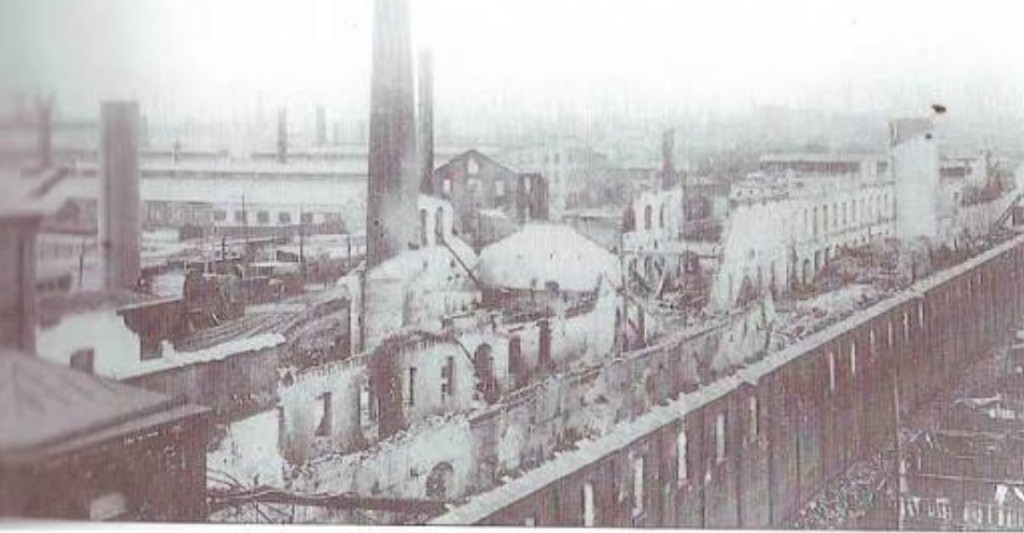
While Trenton enjoyed its long and storied run as an American manufacturing center, in June of 1974, a Trenton chapter was forever closed.
In June of that year the final 1,400 employees of what had once been the Roebling industrial empire lost their jobs. These final Roebling layoffs coming after numerous failed attempts to revive the Trenton plant. The plant, that time, a subsidiary of Colorado Fuel & Iron.
Both Roebling manufacturing plants closed their doors for good in Trenton in 1974. Marking the formal ending of Roebling’s presence in Trenton. The closing of Roebling…poetic justice in that this end to an era was representative of Trenton’s last days as a manufacturing center.
Cheap foreign goods. Foreign competition. The hollowing out of the City’s property tax base due the demise of manufacturing. Suburbanization. Each contributed in their own unique way to Trenton’s decline. Declining productivity. Bleeding over into a decline in the City’s population. A decade-by-decade descent.
Long before Trenton’s descent, the City’s population steadily increased. Year-by-year. Beginning in the latter part of the 18th Century through the 1950’s. Topping off at just about 128,000 in 1955.
By 2022 Trenton’s population was down to 90,000.
 Thinking About Becoming a Real Estate Developer?