The MLS


In 1908 the National Real Estate Exchanges was first established. One of the early goals of the National Real Estate Exchanges was to facilitate an effective cooperation system which could be used by brokers to sell real estate. Early days of cooperation among REALTORS.


The National Real Estate Exchanges set out to find good ways to communicate the benefits of – and the salable features for – properties available to be purchased through National Real Estate Exchange members – cooperation among members.


Each month property information was delivered by member-brokers to offices of member-brokers – the earliest stages for REALTOR cooperation. The earliest forms of the sharing of property information.
Information drop-offs: 1) head over to the local real estate office, 2) drop off information about properties.


Preceding the dropping off of property information at real estate offices, brokers met at the office of their local trade associations to discuss properties. Participating brokers agreed to compensate one another. A collaborative effort to sell homes – Help me sell my property, I’ll help you sell yours…


MLS’s have come a long way. Today, Florida has over two-hundred twenty-thousand REALTORS – #1 in the country. California has in the range of two-hundred thousand REALTORS. In Texas, over one-hundred fifty-thousand REALTORS.


Using Texas as an example, those 150,000-plus Texas REALTORS access property information through multiple listing services managed by the Texas Real Estate Commission.


One of the oldest MLS’s in Texas is the Austin Board of REALTORS Multiple Listing Service.


The Austin Board of REALTORS began 1918. Forming ten years after the National Association of REALTORS was established. Today, the Austin Board of REALTORS Multiple Listing Service serves over 18,000 real estate professionals in eighteen Texas counties.


MLS’s are locally organized and managed. The importance for local management of MLS’s can by illustrated using Texas as our example.


In Texas, property descriptions include information about kitchens, bedrooms and property taxes. Add in oil leases and mineral rights. Considerations pertinent to oil and gas interests.


Florida property listings – or New Jersey property listings – prioritize such interests. Texas listings would. Hence, the benefit of locally managed MLS’s.


The largest MLS in Texas is the Houston Association of REALTORS Multiple Listing Service. Houston’s MLS was established in 1918 and today serves over 160,000 REALTORS. The Houston Association of REALTORS Multiple Listing Service is the 10th largest MLS in the country.


The California Regional Multiple Listing Service is the largest MLS, consisting of over 40 associations, boards and smaller MLS’s.
California REALTORS are also served by two additional MLS which are among the largest in the country – the LA/Westside MLS and the California Regional MLS. The LA/Westside MLS has over 16,000 members.
The largest MLS in New Jersey – the 39th largest MLS in the country – is the Monmouth-Ocean Regional REALTORS Multiple Listing Service. Established in 1936, Monmouth-Ocean Regional has over 11,000 members.


The second largest MLS in New Jersey is the Garden State MLS. Established in 2010, the Garden State MLS is the 89th largest MLS.
The National Association of Real Estate Exchanges became the National Association of Real Estate Boards in 1916. By 1972, the National Association of Real Estate Boards became the National Association of REALTORS. The NAR.


Of note, the National Association of REALTORS is independent of the National Association of Real Estate Brokers – NAREB.
Founded in 1947 in Tampa, Florida, members of the NAREB are REALTISTs, not REALTORS.


The NAREB is the oldest minority business association in the country. The NAREB is an equal opportunity and civil rights advocacy organization. Focusing their efforts the advancement of African-American real estate professionals.


Headquartered in Maryland, the NAREB was organized by Black real estate professionals who had a goal of forming their own real estate trade group. Incentivized to do so because at that time, Black real estate professionals were prohibited from joining the NAR.


The first NAREB convention was held in Atlantic City, New Jersey in 1948.
Today, the National Association of REALTORS establishes policies for a majority of the MLS’s.


NAR members join local boards and associations. Of which there are about 1,600.
NAR members are REALTORS. With over 1.5 million members, the NAR is the largest trade association in the United States.

St. Louis


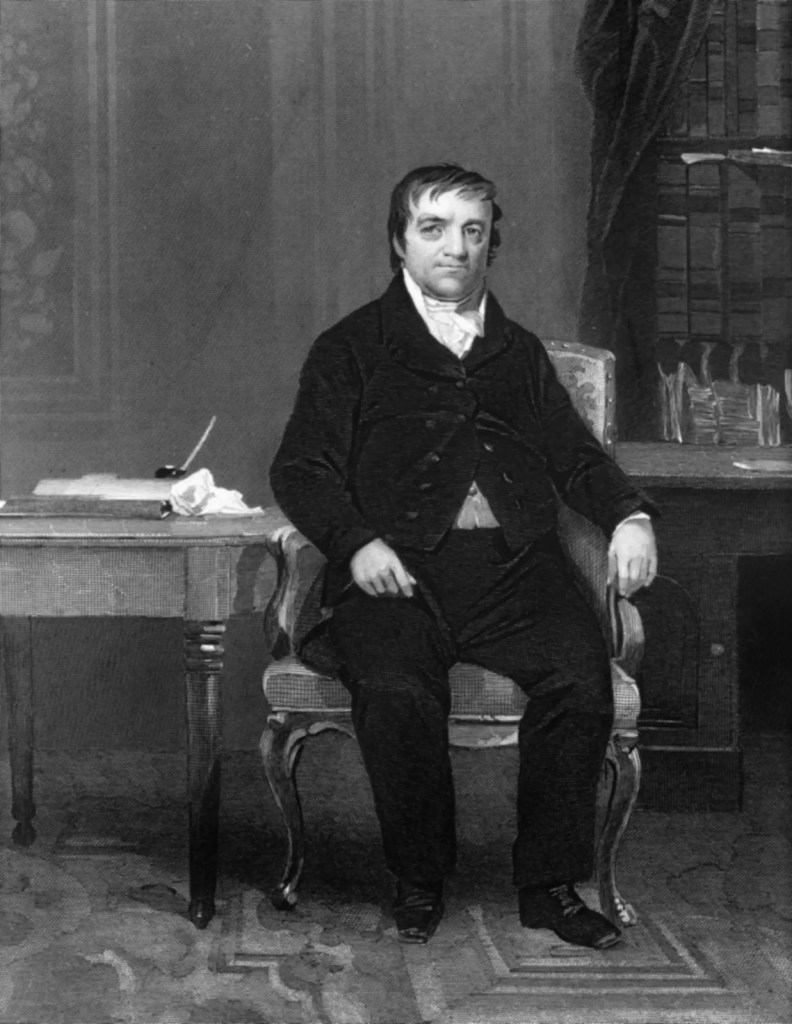
“Buy on the fringe and wait. Buy land near a growing city! Buy real estate when other people want to sell. Hold what you buy!” – John Jacob Astor

When investing in real estate, ideally, one hopes to attain benefits such as: a) low acquisition cost, b) limited tenant problems, and, c) steady appreciation. A-B-C. One way to arrive at A-B-C is often overlooked.

A-B-C created America’s first multi-millionaire, John Jacob Astor. However, pursuing a real estate strategy comparable to the one America’s first multimillionaire utilized to become America’s first multimillionaire is not common.

For savvy investors, prioritizing the acquisition of nonperforming properties can be a good route to take. While this is not a process utilized by a majority of owner-occupying home buyers, owning the home you live in correlates to building net worth. For investors. For families.

Equity built up in homes (over time) makes up in excess of 75% of the total net worth for American families.

“Real Estate cannot be lost or stolen, nor can it be carried away. Purchased with common sense, paid for in full, and managed with reasonable care, it is about the safest investment in the world.” – Franklin D. Roosevelt


Identifying nonperforming properties available at great prices…

With regard paid to neighborhood stabilization and community development, land banks play an important role. They acquire – then convey – non-performing properties to those who can transition nonperforming properties into performing properties. Land bank properties can be acquired at prices which are less than market rate prices.

According to a report put forth by the Brookings Institute a few years ago, just about 15% of land in American cities is vacant. Vacant land can be categorized as nonperforming. In that vacant land does not generate property tax revenue. All the while, property taxes function as a vital source of revenue for cities.

Property taxes. A lack thereof?

Reduced property tax receipts impede the sustainability of any city. Reduced property tax receipts are one byproduct of nonperforming properties.

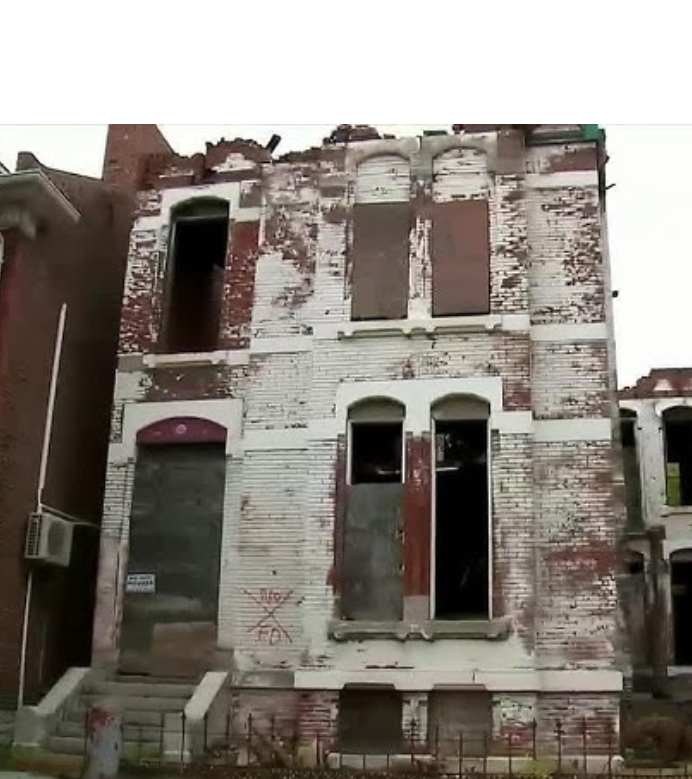
Nonperforming properties…let’s look at St. Louis.

Over the years, St. Louis took possession of in excess of 10,000 nonperforming properties. Residential homes. Vacant lots. Vacant buildings.

By conveying properties the city took possession of to developers, St. Louis alleviated having to operate as a de-facto property manager. Snow removal. Mowing lawns. Boarding up buildings. Tasks transferred in St. Louis to developers.

How so?

Not the conventional way. Neither St. Louis nor land banks use Realtors to sell properties. So let’s look at how St. Louis conveys properties.

Land Reutilization Authority…

The origin for St. Louis’s Land Reutilization Authority – LRA – is found in Title 1 of the Housing and Community Development Act of 1974. In the beginning, funding for the Land Reutilization Authority came through HUD.


The process in St. Louis…

To acquire a Land Reutilization Authority property, buyers complete an Offer To Purchase Form. Buyers submits Offer To Purchase Forms to the LRA, along with two most recent pay stubs, the prior year’s W2 and tax return and the buyer’s most recent bank statement. Buyers also discloses their funding source. A bank. mortgage company. Cash on hand. A Planning Sheet is attached to each buyer’s Offer To Purchase Form.

The Planning Sheet is an overview. The Planning Sheet provides details pertaining to the buyer’s vision for how they plan to improve the property.

The conveyance of city-owned properties and land banks properties happens at the local level. Procedures vary. City by city. Town by town.

At the federal level, an important “tool” used to facilitate the conveyance of properties through land banks became available in 2008.

Resulting from the Financial Crisis, Congress passed the Housing and Economic Recovery Act of 2008. The Housing and Economic Recovery Act appropriated $4 billion to address abandoned and foreclosed properties.

The Housing And Economic Recovery Act of 2008 later became the Neighborhood Stabilization Program. Commonly known as NSP.

One year after the NSP went into effect, Congress appropriated an additional $2 billion to address vacant and abandoned properties. Through the NSP.

The NSP provided the framework – and the funding mechanism – cities relied upon to create programs designed to combat problems arising from increasing numbers of nonperforming properties. A problem amplified by the Financial Crisis.


One approach used in St. Louis to lessen neighborhood blight was the Dollar House Program. To provide the Dollar House Program with inventory, the LRA placed properties in the Program which were owned by the LRA for at least five years.

The Dollar House Program provided owner-occupant applicants with an opportunity to inspect LRA homes. Upon completing inspections, buyers then established rehab budgets. After which, buyers were able to submit their applications to the LRA.

Buyer applications underwent board review. Should a buyer have been deemed to have met Program qualifications, with board approval, within 120 days buyers were expected to, a) stabilize the home, b) improve the facade, and c) follow building codes.

Renovation of Dollar House Program homes needed to be completed within 18 months. Furthermore, the buyer of the LRA home was required to live in their home for at least three years. Once they completed the rehab.

The LRA held a quitclaim deed to properties. Enabling the LRA to regain possession of properties should requirements established by the LRA not be met by buyers. The LRA was able to extend timelines for rehabs which took longer than 18 months to complete.

Buying a distressed home in St. Louis? Buying vacant land in St. Louis? Buying a rundown apartment building in St. Louis?

Some perspective…

Long, long ago, John Jacob Astor saw something he liked in an overlooked, sneered-upon, not-too-desirable piece of land. That then nonperforming piece of land that John Jacob Astor liked – then purchased – proved to be a decision which anchored his trajectory towards becoming America’s first multi-millionaire. This was a piece of land all know quite well.

Where was this land located?


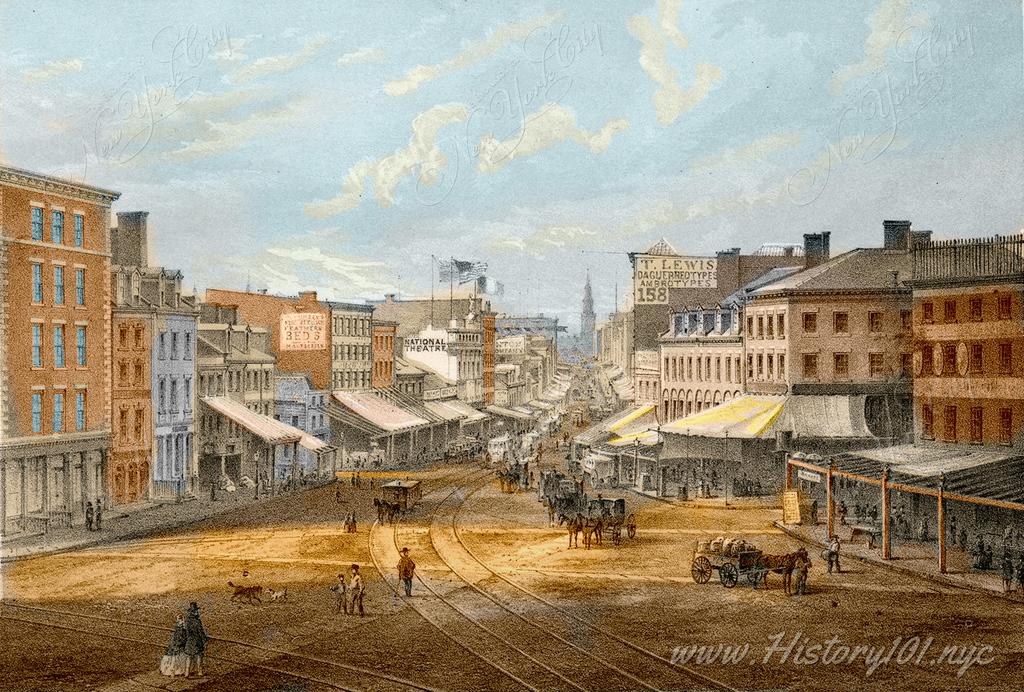
Beginning in 1799, John Jacob Astor began to acquire vast amounts of land in New York City. Astor went on to become New York’s biggest landlord. Astor owned land in what today we know to be Times Square. And the East Village.

John Jacob Astor’s real estate was the backbone to his wealth.

When John Jacob Astor began buying Manhattan real estate, the population of New York City was 60,000. Fifty years later, New York City’s population exceeded 500,000.

“Buy on the fringe and wait. Buy land near a growing city! Buy real estate when other people want to sell. Hold what you buy!” – John Jacob Astor

ROI – outdoor kitchens and fire pits


Think of those captivating outdoor kitchen designs you fell head-over-heels in love with while you were scrolling through the pages of Unique Homes. Or while being online through Dwell. Or Dezeen. Or Home and Design.

When thinking through ideas which enhance outdoor living space, your wallet – I.e.: economics – is a factor. Economics will affect your decision. The proverbial… “Yes, we should…” Or, “No, we shouldn’t …”

Rather than allowing your wallet to prevent you from converting your backyard into THE destination point for friends, for family and for admiringly-curious neighbors, transitioning your backyard into the local must-see, data suggests,  can be a wise financial move on your part.

To this effect, let’s look at how two trend-setting hardscaping ideas in 2025 not only enable your interior living space to seamlessly flow into your now-great outdoors. Let’s also look at how smart hardscaping decisions also equate to…GOOD ECONOMICS.

For example…

Throwing burgers on the grill while you take in the crispness of fresh evening air? This is an experience best brought to life for you with an outdoor kitchen. Yes, start preparing your steaks outside. Confidently knowing that the fabulous outdoor living features you now own are the fruition of money well spent. 

Your inset grill. Those stainless steel drawers. The built-in ice chest and sink. Touched off by the granite or the concrete – your choice – counter space.

According to Remodeling Magazine and CNN Money, adding an outdoor kitchen can yield between a 100% and 200% ROI. Dependent upon, of course, how extensive your design is.

In the 2023 Remodeling Impact Report – published by the National Association of Realtors – by adding that outdoor kitchen you’ve been thinking about, what can you expect as your return on investment? A 100% ROI.

Or…think about an evening with the adults out back. Enjoying cocktails-and-conversation on a cool, brisk autumn evening. With a fire safely and brightly simmering in your fire pit.


Come to think of it, it is truly a wonder how any backyard at all doesn’t have a fire pit.

According to the National Association of Realtors, as well as the National Association of Landscape Professionals, the ROI you can expect by adding a fire pit? A 56% ROI.

Enhancing memories in your backyard? Check.

Loving your home even a little bit more? Check.

A good ROI? Check.

All that’s left is…to start dreaming about your very own customized design.

Shadow Inventory


Uninhabited real estate. Vacant homes. Vacant lots. Distressed homes. Each, categorized as shadow inventory.

Properties in foreclosure. Bank REO’s. Properties which will soon be listed for sale…but have not yet been listed for sale. Shadow inventory. City-owned properties? These properties should be included in the same category – shadow inventory. But they’re not. 

Shadow inventory is all too often overlooked as a property category through which the provision of increased access to affordable homes can be expanded in neighborhoods where limited opportunities to find affordable housing now exists.

Distressed properties make up a significant portion of shadow inventory. Distressed properties sell at lower prices than do properties which are in good condition. Accordingly, sales of shadow inventory homes can contribute to lower area home values. Yet these lower shadow inventory sale prices create affordable housing opportunities. Through the lower sale prices. As such, the acquisition of a shadow inventory home could enable a buyer to gain access to affordable housing..

Properties in foreclosure. Bank REO’s. Shadow inventory. Once again, how about city-owned properties? 

City-owned properties would not necessarily be classified as “shadow inventory.” Classifications aside, one upside found in purchasing a foreclosed home – or a bank REO – can also be found in purchasing a city-owned property. This upside being, an opportunity to get into a home of your own. Affordably.

Benefits found in shadow inventory homes are not bestowed only upon those who are looking to find affordable housing opportunities. 

Acquiring shadow inventory – and city-owned properties – creates a nice opportunity for real estate developers. As developers are able to acquire shadow inventory and city-owned properties at less-than-market sale prices.

Then, as developers reposition shadow inventory and city-owned properties to “performing properties,” developers are able to put the now-performing properties on the market. Selling the properties they purchased at less-than-market prices at market prices. In a limited inventory market. A profitable exercise.

Affordable housing advocates…this is one good path to consider.

Real estate developers…this is one good path to consider. 

It’s rather ironic, yet factually accurate, that for-profit real estate developers are able to benefit by following along the same pathway that affordable housing advocates travel. Yet this is a unique situation we do have, within the space of identifying benefits attributed to purchasing shadow inventory and city-owned properties.

Is what we are talking about here a liberal real estate path? Or is this a conservative real estate path? Is this a real estate path for FOX viewers? Or is this a real estate path for MSNBC viewers. The answer is, All of the above

Land banks in New York…it’s working


There are just about 4 million total residential homes in state of New York. So, with all of the upheaval in our real estate business today – the NAR settlement, changes to buyers agency compensation, high mortgage rates, increased competition, limited inventory…among all of the other “normal” business challenges in real estate – if one is looking for a unique real estate specialty to consider focusing their efforts upon, as we head into 2025, here is something to consider…

Thirteen years after New York’s Land Bank Law went into effect, there are still in excess of, somewhere in the neighborhood of, 40,000 vacant residential homes situated within municipalities throughout The Empire State.

Two general truths…

Truth “A”:  a land bank has procedures available to the land bank which enable the land bank to acquire vacant and abandoned properties. 

Truth “B”:  Developers look for opportunities to acquire, then, to redevelop, properties.

Once redeveloped, and thus, in turn, once transitioned from its former status as a “non-performing” property to a new status – “performing” property – that property can be sold. Thus, returning what once had been a neighborhood liability to the community…coupled to a handsome, new classification: performing property. A community asset. A property which has now been added onto the municipality’s property tax roll.

As such, performing properties create newly-found property tax revenue for municipalities. Additional property tax revenue – now coming into the coffers of municipalities – ease budgetary constraints municipalities face.

Through New York’s Land Bank Law, in The Empire State, a New York municipality possesses the ability to create their own land bank. By establishing a land bank, resources, direction, vision, personnel – coupled to leveraged capital – enable New York redevelopment to take place. In essence, New York land banks create passageways whereby, as this passageway is followed, adverse conditions attributed to non-performing properties which are nestled, often times, for far too, too long, within New York State tax districts…are lessened.


The New York Land Bank Law was signed by Governor Cuomo on July 29,2011. New York’s first land bank was established the following year.. in 2012. Today, there are over 30 land banks in operation in New York State.

Here are some regional New York land bank statistics to think about. These are local land bank statistics…taken from the area of New York State where Josh Allen plays quarterback. And, albeit, as a KC Chiefs fan, I must say, he plays QB pretty darn excellently up there too:

A. 230 properties acquired

B. 44 renovations completed

C. $2.4 million in assessed Values returned to communities

D. $14 million in leveraged investment

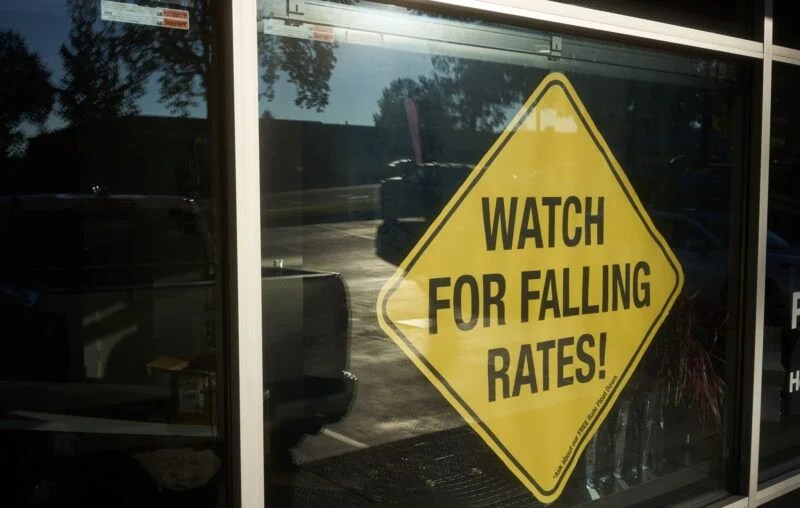
Do we see two Fed rate cuts through the end of the year? My guess? Yes we do.

Over the past few years, yields on 10-year Treasuries rose. So too did mortgage rates. Those higher yields…benefitting investors who purchased Treasury bonds. By way of higher earned interest income. Yet these higher bond yields functioned as a “tax” on home buyers. Driving up the cost of homeownership. Due to higher mortgage rates. Due to higher monthly mortgage payments. Arguably, having the same effect as a “consumer tax” placed upon homeownership.

Remember, during this recent environment of increased – and increasing – bond yields, coupled to elevated mortgage rates, home prices rose. Home prices did not go down. Housing inflation got worse: 1) higher home prices, and 2) higher interest rates.

As monthly mortgage payments rose for home buyers as a result of higher mortgage rates (coupled to increasing home prices), what simultaneously so too did rise were earned income opportunities for bondholders. Bondholders benefitted…at the expense of home buyers.


If the Fed does indeed enact two rate cuts through the end of 2024, mortgage rates are likely to drop. As too will yields bondholders attain, through their purchase of newly-issued 10-year Treasuries.

A trade-off is in the making. A much-welcomed rebalancing.

When a loan officer complains about “inventory” or “their clients losing out on offers,”a humble suggestion: hand the loan officer Census data and a mirror.

According to the U.S. Census, over 12 million American households were formed between January 2012 and June 2021…whereas only 7 million new single-family homes were built.

As housing demand continues to far outpace supply, this demand could more adequately be financed…if there was an adequate supply of homes to purchase.

Arguably, home loan providers could increase their profits if and when the supply of homes catches up with the demand for homes…coupled to an available supply of mortgage money which is available to finance homes.

This being said, new home construction lending has tended to not be a primary focus for a uniquely high portion of loan officers. Construction loans which are used to finance new home builds continue to be an area of expertise for traditional banks.

So then, a think through. Should (or could) focusing on financing new home builds make sense for more loan officers, notwithstanding the fact that the majority of commission income for loan officers is derived by arranging financing for homes that already exist?

In other words, Why build a home loan origination platform as a mortgage lender to service only a small fraction of the market, comparing sales of new homes – i.e.: new home construction – to sales of existing homes – i.e.: resales?

Answers: 1) lower overall inventory levels = lower commission levels for loan officers, 2) financing what the market actually needs is usually a good business idea for salespeople, 3) less competition – the loan officer’s job will not succumb to automation.

What’s behind mortgage rates?

When there is an elevated level of demand for 10-year Treasury notes, investor bids for the notes would most likely come in at or above a bond’s face value. These higher offer prices for bonds drive bond yields down. This is so due to investors’ willingness to accept lower coupon rates for bonds in exchange for the de-facto loans they are making to the United States government by way of their purchase of 10-year Treasuries.

When investors determine that there is market volatility, investors may be inclined to accept lower yields on their “loans” to the United States government. An investor’s determination of a “volatile” market could lead the investor to arrive at their conclusion that government bonds are a safe place to park their money, as compared to other available investment vehicles they have available to select from (i.e.: the stock market).