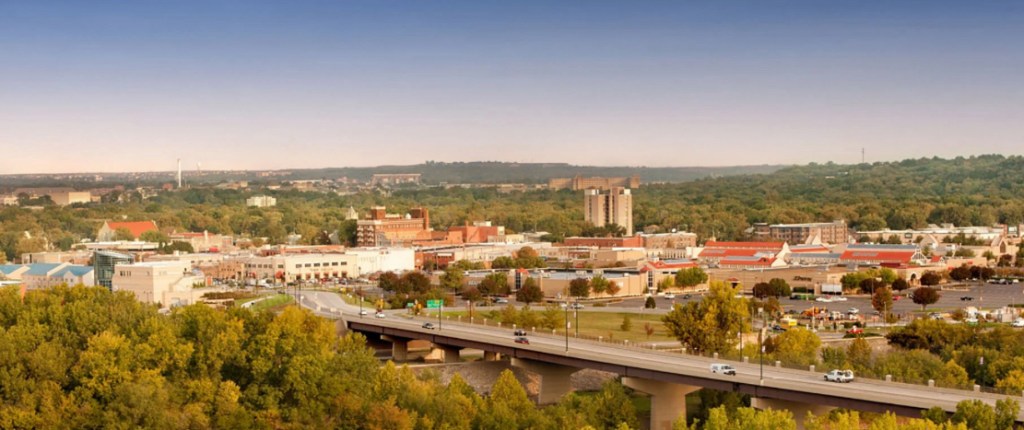
Emporia, Kansas


In east central Kansas, at the junction of the Cottonwood River and the Neosho River, you’ll find the foothills of the Flint Hills. Emporia, Kansas. The very beginning for Emporia…a $1,800 land purchase.

This original land purchase encompassed an area within Emporia which stretches from what today is Emporia’s 6th Street to 18th Avenue. Due northwest, of this article’s topic.

Founded in 1857 as a trading post along the Santa Fe Trail, one can hypothecate that “DNA” for the Emporia one sees today took hold during the 1960’s. 

In 1969, the Tyson plant in Emporia opened. Opening after a two-year period of thorough plant modernization, and expansion. That Emporia Tyson plant which opened in 1969 was not yet Tyson. This plant, at that time, had been IBP – Iowa Beef Processing. 

The decade of the ‘60’s brought with it notable innovation in the American beef business. Leading to increases in investment in America’s beef industry. Which significantly reshaped the economy for the Great Plains. In which, Emporia resides. 

IBP’s plant in Emporia opened in 1969. And it was the sale of this plant to IBP two years prior to the plant’s opening – the sale of the plant to IBP taking place in 1967 – which foretold of innovation in America’s beef processing industry.

In 1967 Armour and Company sold their Emporia-based beef processing operation to IBP. IBP’s plant modernization – completed two years later – was emblematic of this decade of innovation.

Emporia is nestled within the Great Plains along I-35. Between Wichita and Kansas City. For this piece, I’d like to cite one unique 19th Century paradigm which, one can argue, led to Emporia’s evolution as a beef processing hub. And then, so too, to the emergence of major Midwest beef processing centers situated throughout the Midwest.


One hundred years prior to the sale of that Armour and Company Emporia plant to IBP, the British Empire made up just about one quarter of the world’s GDP. In the 1860’s, a severe plague broke out in Great Britain. Curtailing Britain’s domestic beef industry. Reducing the total number of heads of cattle which could be brought to market within the British Empire.

While over half of all revenues in 1860 for the British Empire flowed to London through Great Britain’s expansive “outposts,” those living on the British Isles themselves back home loved their beef.


England. Scotland. Wales. Ireland. As well as thousands of smaller islands. The British Isles. Enter a beef shortage. Coupled to, no let-up in the demand for beef within Great Britain. 

As this epidemic ravaged Great Britain, domestically raised cattle – cattle which could have been brought to market in Great Britain – took a hit. Less cattle. Less cattle going to market in Great Britain. The beef shortage.

At this same time, across The Pond in the United States, the Great Plains was opening up to commercial interests.

Great Britain recognized this confluence of events: a) a beef shortage in Great Britain, plus b) the opening up of thousands of acres of prime cattle-grazing land in the United States.


With the beef shortage taking hold in the world’s largest economy, the price of beef shot up. Elevated beef prices lead to investment opportunities. Then. And now.

Prior to an increase in beef prices, American businessmen were already deploying capital to develop the United States cattle industry. Deployed capital which led to modernization for, and the growth of, American cattle business on the Great Plains. Enter additional capital. From London.


Increased demand. Higher prices. Investment. The build-out of the cattle industry on the Great Plains. Yet still, in 1860, transportation lines for Midwest cattle had yet to be modernized. Inhibiting efficiency for the market.

While grazing land in the Great Plains further opened up to American ranchers, a notable degree of capital was flowing to the Plains from across The Pond. Coming from British financiers. This capital infusion fueled the growth of – as well as modernization for – the American cattle industry. As investments made by Great Britain to facilitate the transportation of cattle led to investment in railroads, the very means by which the shipment of cattle took place incurred new efficiency.

While buyers of beef were (and are) concentrated in urban centers – and for Great Britain, across The Pond – United States stockyards were (and are) located in America’s Midwest. So too, is Emporia.

Investment in railroads – by the United States government, and by British financiers – connected urban centers – I.e.: buyers of beef – to beef supply – I.e.: stockyards. In fact, many early stockyards evolved through partnerships struck between railroads and the cattle industry itself.

Timing…

Emporia was founded in 1857. Thirteen years later, in 1870, Emporia was incorporated.

Emporia was founded not long before the aforementioned bout of anthrax gripped the domestic British cattle industry. Leading to…Britain’s shortage of beef.

This beef shortage checked the world’s largest economy. Driving down the number of heads of cattle which came to market in Great Britain. While at the same time, driving up the price of beef. As demand for beef remained constant.

The curtailing of production of domestic beef in Great Britain – the anthrax – coincided with the opening up of the Great Plains to ranchers in the United States. Fueling investment. Leading to improvements made in the transportation of cattle by rail. Leading to the prioritization of investments in railroads. And in beef processing centers. 

By 1870, two railroads reached Emporia. The Atchison, Topeka and Santa Fe Railway. And the Union Pacific Railway. Emporia became a booming railroad hub. As well as a cattle industry center, at that.

Railroads’ have unique American relationship to our cattle industry. And to Emporia.

Driving through Emporia today, one can’t help but recognize our correlative railroad-to-cattle industry linkage.


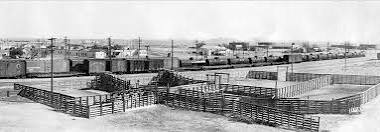
Cattle sales are held in Emporia every Wednesday. Held at Emporia Livestock Sales on Albert Street.


The Emporia Livestock Sales building is nearby train tracks. Tracks which are owned by BNSF. These BNSF train tracks in Emporia enable freight to be transported from California to Chicago.


Standing in front of the Emporia Livestock Sales building, looking to the south, you’ll see the Tyson plant.

That old Tyson plant in Emporia – where my aunt Rita worked for over 30 years – is, just like the Emporia Livestock Sales Building, located alongside Emporia’s BNSF train tracks. BNSF’s Southern Transcon line. 

This Midwest connection of stockyards to urban centers. The railroad and the cattle industry…

Stand atop the Prairie Street Bridge in Emporia. Look down. BNSF’s Transcon tracks. Look to the north. Emporia Livestock Sales. Look to the west. The former Armour plant. Which became the IBP plant. Which then became the Tyson plant…where Aunt Rita worked for over 30 years.


We can attribute this Emporia story to the opening of the Great Plains to ranchers. Yet there was also was that epidemic in Great Britain to think about.

As such, Great Britain, some may argue, is an unseen hand, contributing to the history for Midwest beef processing plants. Beginning in 1860’s.

Then, so too, Great Britain would be a catslyst, an oft overlooked forefather, one may say, which added their own special contributions…collectively making up Emporia’s unique and rich American story.
Holmdel Township in the very beginning…


What one could say was the dawn for New Jersey’s Holmdel Township finds its beginning verse in the Monmouth Patent.

The onset for Holmdel Township started off with the annexation by Great Britain of territory formerly possessed by the Dutch.


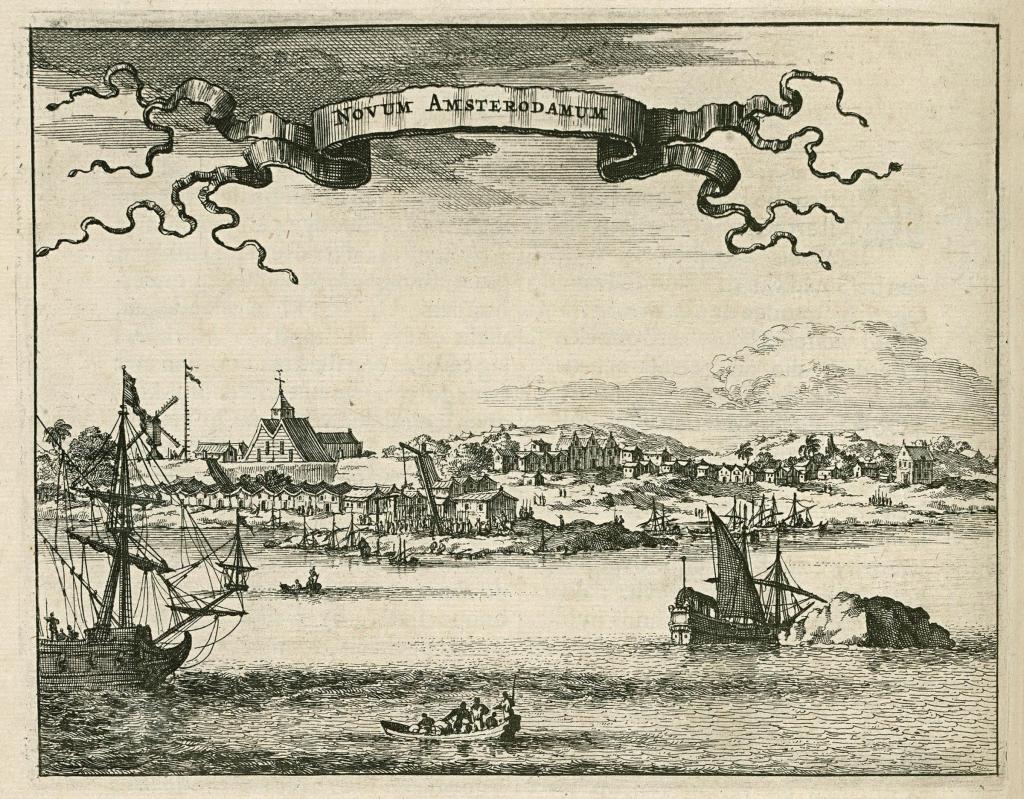
This territory – that which had once been the Netherlands’ New Amsterdam – was put under the control of Great Britain’s Royal Crown. As such, the Monmouth Patent enabled conveyances of land to settlers by Great Britain in this new British territory.

In April of 1665, Great Britain’s deputy-governor for New Amsterdam granted “patents” for a triangular parcel of land located in today’s Monmouth County. This was the Monmouth Patent. This, the tract of land in Great Britain’s New Amsterdam territory which would later become New Jersey’s Monmouth County.


The earliest families to acquire land through the Monmouth Patent in what today we recognize as Holmdel Township had been the Bowne family, the Holmes family, the Cotterell family and the Stout family.

The Holmes family’s tract of land stretched north of Ramanessin Brook to Hop Brook Farm – the Holmes Tract.

John Bowne’s tract of land touched the northernmost boundary of the Monmouth Patent “triangle.”

Eliezer Cotterell received two land conveyances. Cotterell’s first conveyance totaled 100 acres. Cotterell’s second conveyance totaled 130 acres.

Richard Stout acquired a tract of land within the “triangle” which was situated to the east of Ramanessin Brook – the Richard Stout, Senior Tract.

One other such early land conveyance through the Monmouth Patent was the Bray Tract. This, the conveyance of land to a Baptist minister. John Bray.

Fifty acres was the Bray Tract…running from the easternmost portion of the Monmouth Patent “triangle” – at Bray’s Brook – to the east side of Hop Book Farms. 

And it was this 1687 purchase of territory by John Bray which led to the establishment of the first Baptist church in the State of New Jersey. Which was rather symbolically supportive of the Monmouth Patent “exercise” in the first place. As the Monmouth Patent codified religious freedom in this new British territory of New Amsterdam.

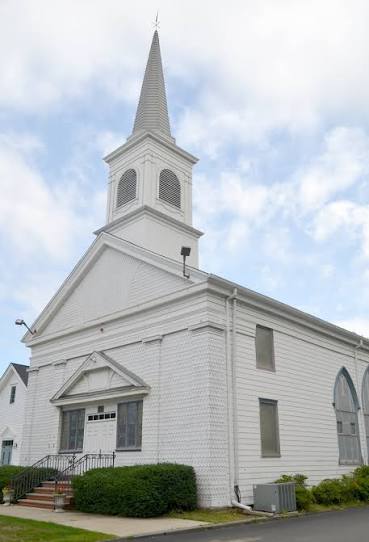
New Jersey’s first Baptist church evolved from this Bray Tract. In time, becoming Middletown Baptist Church. A church located in today what we know to be, Holmdel Township. As Baptists throughout New Jersey can point to their New Jersey origin as being, the Bay Tract.

On land John Bray acquired through the Monmouth Patent, John Bray proceeded to set up Bray’s Meeting House. 

Bray’s Meeting House became a congregation for Baptists. Local Baptists whose house of worship became…Bray’s Meeting House. At the corner what today would be Main Street and Holmdel Road. In Holmdel Township.


As the number of Baptists who resided within and near this new British territory of New Amsterdam in today what we call “Holmdel” grew, in 1709 John Bray donated a portion of his land to the Baptist Church. This land donation by John Bray led to New Jersey’s first Baptist church. This first Baptist church in New Jersey was, at first, known as The Upper Meeting House


With The Upper Meeting House established, during the first half of the 18th Century, this farming community of what one day would one become Holmdel Township experienced an increase in the migration of Baptists to the area.

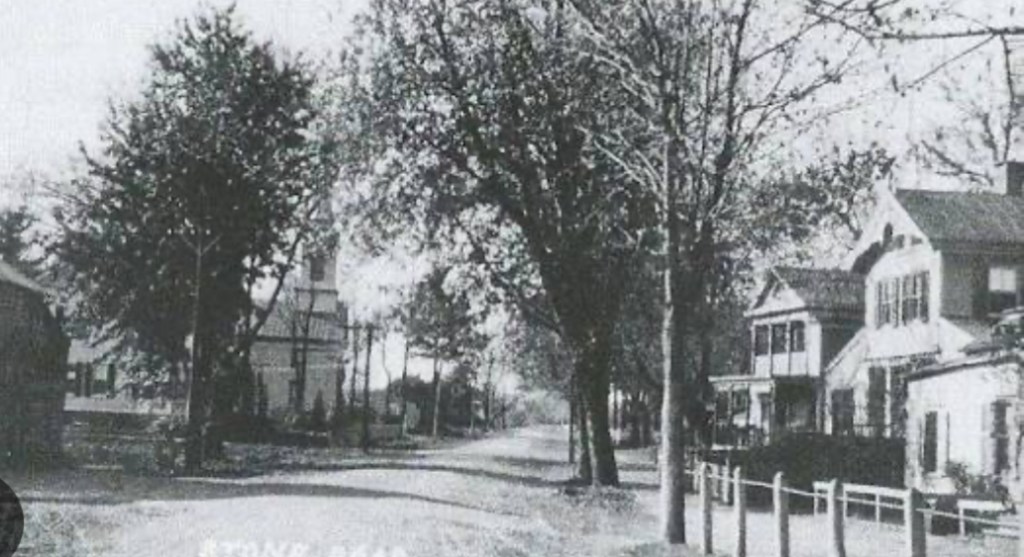
First, at John Bray’s Meeting House, then later, at what would become The Upper Meeting House, Baptists weren’t yet meeting in Holmdel Township. Where Holmdel Road meets Main Street, as Baptists joined together, this was not yet Holmdel Township. At that time, Baptists were meeting in Middletown. There was not yet a “Holmdel.”

What had been Middletown then consisted of all of the territory in Monmouth County north of the Navesink River. And east of today’s Freehold Township. So for nearly 150 years, The Upper Meeting House – at the corner of Main Street and Holmdel Road – was located in Middletown.

In 1848, the expansiveness of what was then Middletown was altered. Middletown was broken up. And parceled out. 


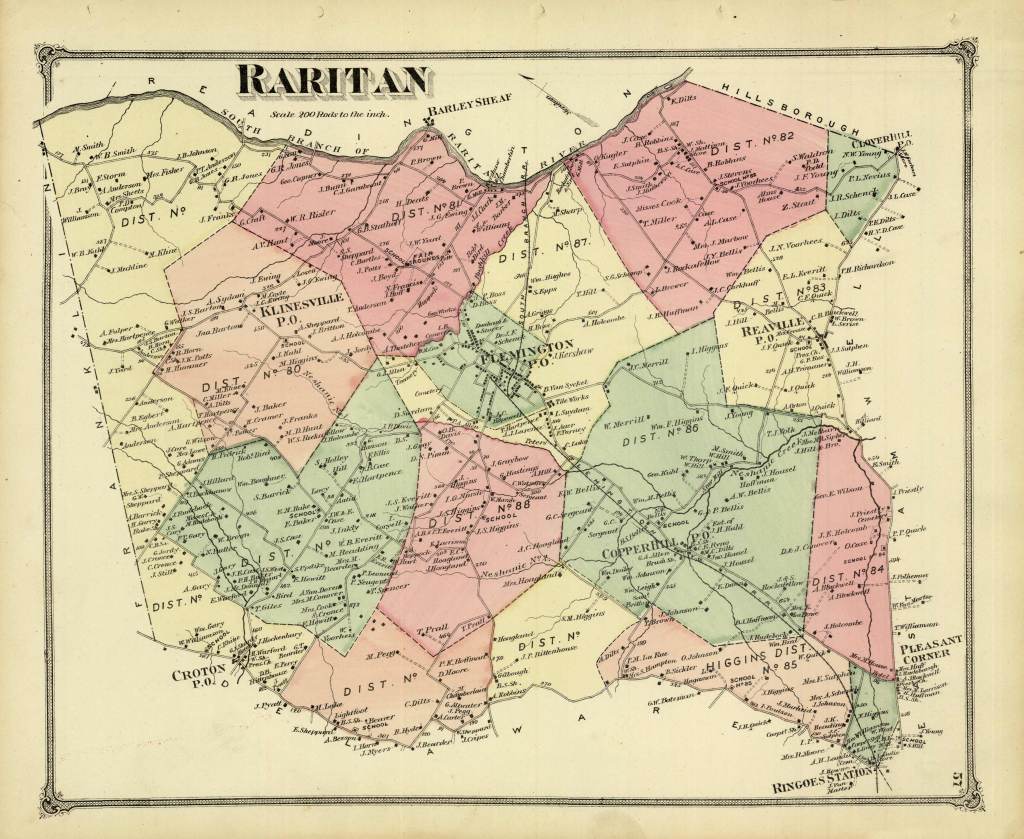
In 1848, Raritan Township was spun off from Middletown. This new Raritan Township consisted of what later would become Hazlet, Aberdeen, Union Beach, Keansburg, Keyport, and Matawan. As well as…Holmdel.

Nine years after Middletown was restructured, in 1857, Holmdel Township officially formed. Formed, through an act of the New Jersey Legislature. 

John Bray originally settled in today’s Holmdel Township in 1684. Three years later, John Bray received his 50 acres. Granted to Bray by New Amsterdam’s acting governor.

The earliest land conveyances made possible through the Monmouth Patent were not enacted through the acts of a full-fledged territory governor. 

In 1664, the British territory made up of what would one day become New Jersey – then, being, New Amsterdam – was governed by a British deputy governor. This British deputy governor in 1664 was Richard Nicolls.


A few years after settling in Monmouth County, John Bray increased his land holdings. Bray purchased two additional tracts of land. These purchases took place in 1688.

The first of John Bray’s subsequent land purchases totaled 130 acres. Bray’s second land purchase in 1688 totaled 30 acres.

Johm Bray’s land holdings – the land grant he received from Deputy Governor Richard Nicolls, coupled to his subsequent land purchases – foretold of the pathway to Bray’s later establishment of his Meeting House. While also foretelling of Bray’s later land donation. To the Baptist church. Leading to, New Jersey’s first Baptist church.

On the corner of Main Street and Holmdel Road.

Belleville, New Jersey

The name Belleville has a French connotation. In French, Belleville means “beautiful town.” To those of us here in the United States, Belleville means, “birthplace of the Industrial Revolution in America.”


Outside of Belleville’s earlier days, well-earned setting within our Industrial Revolution, the origin for what today we know to be Belleville can be traced back to the late-18th Century. Yet then, in those waning years of the 18th Century, today’s Belleville was once, Second River.

In 1797 Belleville’s name was changed. From Second River. To Washington. But that name change – to Washington – didn’t last very long.

This new name – Washington – proved to be unsatisfactory to inhabitants of the old Second River settlement. As such, shortly thereafter, the name change – from Second River to Washington – proved to be the first of two name changes for Second River.

Second River’s name was changed, once again. This time, changed to Belleville. Yet at that time, Belleville was moreso a settlement than it was an organized town.  That changed.

Belleville was incorporated as a New Jersey township 42 years after receiving its name – as Belleville. The year was 1839. This once-a-settlement completed its evolution into becoming a full fledged township in New Jersey by way of an act of the State legislature. The year was 1839. 

Forty-some years prior to the thrice renamings – from Second River, to Washington to Belleville – an occurrence of historical significance took place in this township. An occurrence which cemented Belleville’s place within the annals of an emerging industrial economy in the New World.

You see, Belleville is the official birthplace of America’s Industrial Revolution. Belleville’s position, as such, brought to be through the workings of an 18th Century New World newcomer. A newcomer who arrived in Belleville by way of Great Britain. Josiah Hornblower.


In 1753, Josiah Hornblower was commissioned by his company across The Pond – his company being, Newcomen – to build what would become the first steam engine assembled in the New World. 

And it was the result of this first steam engine that Josiah Hornblower’s link to Belleville, and thus, Belleville’s position as the birthplace of America’s Industrial Revolution, was formed.

Josiah Hornblower traveled from Great Britain to the New World to build a Newcomen steam engine. A steam engine he’d build for the owners of what was then the oldest copper mine in the New World. A copper mine located in Belleville. The Schuyler Copper Mine. 


The Schuyler Copper Mine traces its history all the way back to 1710. 

In 1710 Arent Schuyler purchased a tract of land on which the future Schuyler Copper Mine would be built. The construction of this mine…the byproduct a discovery. This discovery being, copper ore. Copper ore discovered on Schuyler’s land.

This discovery of copper ore coming three years after Arent Schuyler completed his land purchase. This discovery of copper ore taking place in 1713.

The purchase of a large tract of land… The discovery of copper ore… Yet, neither the land purchase, nor the subsequent copper ore discovery directly led to Josiah Hornblower’s arrival in Belleville. Nor did the land purchase, nor the discovery of copper ore, directly lead to Belleville’s designation as the birthplace of America’s Industrial Revolution.

Belleville – as the birthplace of America’s Industrial Revolution – and Belleville – as the Josiah Hornblower’s home- came about because of an act of God. It was a flood.

In 1748, a flood decommissioned the Schuyler Copper Mine. In order to continue on with mining operations, Schuyler Copper Mine – then run by Arent Schuyler’s sons – was in need of a steamship. A Newcomen steam engine, that is.


Newcomen steam engines were manufactured in England. The Schuyler mine was in Belleville. Therein, we find our Belleville link to Josiah Hornblower. And thus, to Belleville becoming the birthplace of our Industrial Revolution.


Schuyler Copper Mine contracted England’s Newcomen to build the steam engine they needed.

Newcomen, located in Cornwall, England, sent Josiah Hornblower across The Pond to assemble this steam engine for the Schuyler Copper Mine. 

Thus arriving, Josiah Hornblower established himself as a Belleville resident. To assemble the Newcomen steam engine for Schuyler Copper Mine. A steam engine which would be used to pump flood water out of Schuyler’s mine.

Thirty-nine years later, the first steam engine was manufactured in the United States. That year was 1794. Tellingly so, the very first steam engine manufactured in the United States was manufactured in Belleville.

In 1797 – three years after the manufacture of the first steam engine in the United States – the first steamboat produced in New Jersey was built by Josiah Hornblower. New Jersey’s first steamboat was built in Belleville.

Two-hundred years after Josiah Hornblower built that first steam engine in Belleville, the Congress passed a resolution recognizing Belleville’s historical role in a then-industrializing United States.

Congress’s 1994 resolution: Belleville, birthplace of our Industrial Resolution.

The late, great Congressman Bill Pascrell was responsible for our Belleville resolution. 

Overland Park


In real estate, developers acquire land, then plat a subdivision. For Overland Park, Kansas, that is how it all began. As a platted subdivision. 

This platted Kansas subdivision – the one which evolved into today’s Overland Park – came to be through entrepreneurship espoused by a Johnson County entrepreneur. This entrepreneur, William B. Strang, Jr., his contributions to the Kansas City region coming through his establishment of a local rail service which connected Kansas City to Olathe, Kansas. Leading to the formation of Overland Park.


William B. Strang, Jr. founded the Missouri and Kansas Interurban Railway. Strang founded his railroad in 1906. Two years prior to Henry Ford’s Model T entering into production. 

When Strang founded his Missouri and Kansas Interurban Railway, there were no cars on Kansas City roads. One could not drive in to Kansas City, Missouri from Johnson County, Kansas. And in 1906, train travel in Kansas City was a luxury. A luxury with longer distance routes. A train to St. Louis. A train to Chicago. When Strang founded his Missouri and Kansas Interurban Railway there was no specific train route which took passengers from Kansas City, Missouri to Johnson County. No railroad was offering this local service. Yet Strang believed this could be an economically viable route. Hence, the origin of the Strang Line


Headquarters for Strang’s Missouri and Kansas Interurban Railway could be found in downtown Kansas City, Missouri. At the corner of 7th and Walnut. In the Railway Exchange Building.


With Missouri and Kansas Interurban Railway headquartered in Kansas City, Missouri, Strang proceeded to build several depots in Johnson County, Kansas. The largest of Strang’s depots was the one he built at what is today the corner of 80th Street and Santa Fe Drive. In Overland Park.  


William B. Strang, Jr. was a 20th Century railroad entrepreneur. He was also a real estate developer. A speculator. Strang built spec homes. The sale price for one of Strang’s spec homes – as well as demand for spec homes built by Strang – was driven by an idea: you can own your own new home in Johnson County.

To this point, Strang’s rail service enabled city dwellers in Kansas City, Missouri to gain access to the Johnson County suburbs. And, so too, to new homes built in Johnson County by William B. Strang, Jr. New homes being built where today we find Overland Park. 

William B. Strang, Jr.’s Olathe-to-KCMO Missouri and Kansas Interurban Railway contributed to the success Strang attained as a real estate developer. In that Stang’s Missouri and Kansas Interurban Railway increased access to new suburban Kansas homes Strang was then building. In turn, driving up demand for Strang’s homes. The result? Higher sale prices for Strang’s homes.

William B. Strang, Jr. arrived in what would go on to become Overland Park in the earliest days of the 20th Century. He arrived in Johnson County 1905. Upon his arrival, Strang proceeded to acquire land on which the downtown for today’s Overland Park now sits. Strang’s initial Johnson County land acquisition – the land acquisition which led to an Overland Park – totaled 600 acres.

A 600-acre acquisition…

A real estate developer…

The coupling of an idea: new homes/increased access to new homes…

A railroad entrepreneur…

The makings of Overland Park…

As a city, Overland Park was incorporated 55 years after William B. Strang, Jr. set foot in Johnson County. Overland Park was incorporated in 1960. Yet, by 1960, the railroad which laid the groundwork for the formation of Overland Park was no longer. The last Missouri and Kansas Interurban Railway train car pulled into Olathe in 1940…20 years prior to the incorporation of Overland Park.

Those 600 acres William B. Strang, Jr. purchased in Johnson County in 1905… Those subdivisions to the southwest of Kansas City, Missouri, those out in the Johnson County suburbs… One of those subdivisions was named “Overland Park.” 

Overland Park… Originally, one of William B. Strang, Jr’s subdivisions. The undertaking of one Johnson County real estate developer who became a railroad entrepreneur. 

A railroad entrepreneur whose subdivisions ignited the construction of new homes to the southwest of Kansas City. New homes which increased in value as a result of new access – by rail, circa the Missouri and Kansas Interurban Railway – to these new homes which were being built. Several of which were being built by William B. Strang, Jr. The train entrepreneur who was also the real estate developer.

William B. Strang, Jr. Real estate developer. Railroad entrepreneur. Founder of Overland Park. 

Montclair, New Jersey


The township name for Montclair – Montclair, “Where the suburb meets the city.”– originates from France. From a French term. This term, mont clair. Meaning, clear mountain.

An elevated position, nestled alongside a mountain in Essex County. Mont clair.

On a clear day, with clear skies, you can see Manhattan from this New Jersey suburb. Mont clair.

In French, “mont” translates to “mountain.” In French, “clair” translates to “clear.”

Mont clair. Montclair. 

Early settlements which led to the formation of today’s Montclair took hold during the 17th Century. I’d like to speak to two such settlements. Each of the two, having notable relevance to the formation of Montclair. 

One of these two settlements took hold in what today is the northern part of Montclair. And the other of these two settlements took hold in what today is the southern part of Montclair. The 17th Century settlement in what today is southern Montclair, was Cranetown.

In 1679, Cranetown was established. Cranetown…a settlement named for Azriah and Mary Treat Crane. Azriah and Mary Treat Crane, two migrants of English descent who traveled south to Newark. From Connecticut.

While Cranetown was located in, today, what would be the southern section of Montclair, in the northern section of today’s Montclair, during the latter part of the 17th Century, we would have found our second settlement. That second settlement was Speertown. 

But first, a little about the Cranes…

Azriah and Mary Treat Crane. The Crane family. Going on in years, long past the 17th Century, the Crane family remained relevant to Montclair’s formation.. 

Two centuries removed from the early days of 17th Century Cranetown, in the 19th Century, descendants of Azriah and Mary Treat Crane raised capital to obtain an important charter from the State of New Jersey. This, a charter of historical importance to Montclair.

This State charter facilitated the construction of the Newark Pompton Turnpike. Once built, as the Newark Pompton Turnpike entered into what would become Montclair, the Turnpike became Bloomfield Avenue. Bloomfield Avenue…a thoroughfare created as a result of the charter the Crane family secured. Bloomfield Avenue, in time, becoming the main thoroughfare coming into central Montclair.

At the time, along Bloomfield Avenue, there was not yet a Montclair. Along Bloomfield Avenue, the Turnpike brought with it an increase in commerce. Coupled to an increase in population. Many of those residents, both then, in the earliest days, as well as today, were commuters. The increase in the local population which took place after the Newark Pompton Turnpike was built led to an increase in commuters.

Yet Cranetown was still, at that time, part of Bloomfield. And Bloomfield was still, at that time, a ward of Newark.

In 1812, when Bloomfield became an independent township – no longer a ward of Newark – this settlement, then known as Cranetown, joined with Speertown. Together, Cranetown and Speertown became Bloomfield.

Still, Montclair was not yet an independent township. While no longer a settlement which existed as a ward of Newark, what today is Montclair, was then still part of Bloomfield. Crantown, together with Speertown, were at that time known as West Bloomfield. Part of Bloomfield. 

Going back to Speertown…

Today, Upper Montclair – while Upper Montclair does have its own zip code – is part of Montclair Township. It’s the section of Montclair, situated to the north of Watchung Avenue. What Upper Montclair had been – in its earliest days – was Speertown. 

Speertown, established by the Dutch settler, John Speer. Speertown is today’s Upper Montclair. John Speer’s original home still, to this day, stands – 612 Upper Mountain Avenue.

There was Cranetown. There was Speertown. Two important early settlements which evolved into today’s Montclair. Yet, with those early settlements, it was really the railroad that can be pointed to as the catalyst for Montclair’s independent status as a township.

During the second half of the 19th Century, West Bloomfield – West Bloomfield being, Speertown and Cranetown – was a commuter community. West Bloomfield, during the 19th Century was laden with those who trekked into New York City. Just as Montclair today has many NYC commuters. Montclair is – just as West Bloomfield then was- a commuter town.

And while still a part of Bloomfield, West Bloomfield enjoyed (and celebrated) its own distinct identity. So while those living in West Bloomfield enjoyed their own apparatus – apart from Bloomfield (yet, still part of Bloomfield) – it proved to be a disagreement concerning rail service which led to the fraying of the Bloomfield – West Bloomfield union. 

Upon Bloomfield residents voting down a referendum which would have brought a second rail line into Bloomfield, West Bloomfield – then being, primarily, a community of commuters – did not appreciate the “no” vote. West Bloomfield wanted that second rail line. And it was that disagreement – triggered by the voting down of increased rail service – which led to Montclair’s independence. 

In 1868, residents of West Bloomfield secured a charter through the State. This charter authorized West Bloomfield to form their own township. Enabling West Bloomfield to become independent of Bloomfield. 

In 1868, coming through the charter obtained by West Bloomfield residents, West Bloomfield seceded from Bloomfield. With this secession, the Township of Montclair was formed.

Mont clair.

Montclair, New Jersey

The township name for Montclair – Montclair, “Where the suburb meets the city.”– originates from France. From a French term. This term, mont clair. Meaning, clear mountain.

An elevated position, nestled alongside a mountain in Essex County. Mont clair.

On a clear day, with clear skies, you can see Manhattan from Montclair. Mont clair.

In French, “mont” translates to “mountain.” In French, “clair” translates to clear.

Mont clair. Montclair. 

Early settlements which led to the formation of today’s Montclair took hold during the 17th Century. I’d like to speak to two such settlements. Each of the two, having notable relevance to the formation of Montclair. 

One of these two settlements took hold in what today is the northern part of Montclair. And the other of these two settlements took hold in what today is the southern part of Montclair. The settlement in what today is southern Montclair, was Cranetown.

In 1679, Cranetown was established. Cranetown…a settlement named for Azriah and Mary Treat Crane. Azriah and Mary Treat Crane, two migrants of English descent who traveled south to Newark. From Connecticut.

While Cranetown was located in, today, what would be the southern section of Montclair, in the northern section of today’s Montclair, during the latter part of the 17th Century, we would have found our second settlement. That second settlement was Speertown. 

Azriah and Mary Treat Crane. The Crane family. Going on in years, long since removed from the 17th Century, when Cranetown was formed, the Crane family remained notable with regard to events which led to the settlements’ evolution into becoming, Montclair. 

Fast forward in time. From the 17 Century – when the Cranes established Cranetown. To the 19th Century. In doing so, we find that descendants of Azriah and Mary Treat Crane raised capital to obtain an important charter from the State of New Jersey. This charter was of historical importance to Montclair. This charter, made possible through the efforts of the Crane family.

This State charter secured by the Crane family facilitated the construction of the Newark Pompton Turnpike. Once built, as the Newark Pompton Turnpike entered into what would go on to become Montclair, that Turnpike became Bloomfield Avenue. 

At the time, along Bloomfield Avenue, there was not yet a Montclair. And along Bloomfield Avenue, the Turnpike brought with it an increase in commerce. Coupled to an increase in population. Many of those residents, both then, in the earliest days, as well as today in Montclair, were commuters. The increase in population, resulting from the construction of the Newark Pompton Turnpike, was an increase in a commuting populace. Commuters.

Yet Cranetown was still, at that time, part of Bloomfield. And Bloomfield was still a ward of Newark.

In 1812, when Bloomfield became its own independent township – and no longer a ward of Newark – this settlement, then known as Cranetown, joined with Speertown. Together, becoming a section of Bloomfield.

Still, Montclair was not yet an independent township. While no longer a settlement which existed as a ward of Newark, what today is Montclair, was then still part of Bloomfield. Crantown, together with Speertown, were at that time known as West Bloomfield. Part of Bloomfield. 

Going back to Speertown…

Today, Upper Montclair – while Upper Montclair does have its own zip code – is still part of Montclair Township. It’s the section of Montclair, situated to the north of Watchung Avenue. What Upper Montclair had been – in its earliest form – was Speertown. 

Speertown, established by the Dutch settler, John Speer. Speertown is today’s Upper Montclair. John Speer’s original home still, to this day, stands – 612 Upper Mountain Avenue.

There was Cranetown. There was Speertown. Two important early settlements which evolved into today’s Montclair. Yet, with those early settlements, it was really the railroad that can be pointed to as the catalyst for Montclair’s independent status as a township.

During the second half of the 19th Century, West Bloomfield – and West Bloomfield being, Speertown and Cranetown – was a commuter community. West Bloomfield, during the 19th Century was laden with those who reached into New York City. Just as Montclair today is laden with NYC commuters. Montclair is today – just as West Bloomfield waa then – a commuter town.

And while still a part of Bloomfield, West Bloomfield enjoyed (and celebrated) its own distinct identity. So while West Bloomfield-ites noted their distinctive aparatus, apart from Bloomfield (yet, still part of Bloomfield), it proved to be one notable disagreement about rail service which led to the fraying of this Bloomfield – West Bloomfield union. 

Upon Bloomfield residents voting down a referendum which would have brought a second rail line into Bloomfield, West Bloomfield – then being, primarily, a community of commuters – was in disagreement with the “no” vote. West Bloomfield wanted that second rail line. And it was that disagreement – triggered by the voting down of increased rail service – which led to Montclair’s independence. 

In 1868, residents of West Bloomfield secured a charter through the State. This charter authorized West Bloomfield to form their own township. Enabling West Bloomfield to become independent of Bloomfield. 

In 1868, through a charter obtained by West Bloomfield residents, the Township of Montclair was formed.

Mont clair.

Manhattan, Kansas


In 1854, when President Franklin Pierce signed the Kansas-Nebraska Act into law, a new Kansas Territory was opened for settlement. That same year, seeds were planted for one such riverside settlement within this new Kansas Territory. A settlement that would go on to become “The Little Apple.”


Steps taken by pioneers to establish what would go on to become “The Little Apple” -aka, Manhattan, Kansas – should be thought about with the Kansas-Nebraska Act also in mind. This is so due to the relationship the Kansas-Nebraska Act had to the institution of slavery. To how the Act served as a catalyst for Kansas’ formation. To how the Act fueled the antislavery movement in Kansas. Then too, to how the Act served as the precipice for the early organizers of a townsite which would evolve into “The Little Apple.”


So how do we connect Manhattan’s formation to the Kansas-Nebraska Act? Then too, to the antislavery movement? This connection really begins, with a Senator from Illinois…

In 1854, Illinois Senator Stephen Douglas introduced a bill to Congress. This bill that Senator Douglas introduced to Congress was the Kansas-Nebraska Act.


Senator Douglas’ bill – which President Pierce signed into law the same year the bill was introduced – ended the Missouri Compromise. The Missouri Compromise banned slavery in states north of an established latitudinal designation. Minus, one state, Missouri. Missouri’s exclusion from the ban of slavery, being, the “Compromise.”

While doing away with the Missouri Compromise, the Kansas-Nebraska Act also organized two new territories for the United States. These two new U.S. territories being, one, the Kansas Territory, and, two, the Nebraska Territory.

Two new U.S. territories were organized. The Missouri Compromise was ended. Without the Missouri Compromise, the two new U.S.territories would be free to enact “popular sovereignty.” And this popular sovereignty, within Douglas’ Kansas-Nebraska Act, related to whether slavery would become an institutional pillar within each of the two new U.S. territories.

So, with President Pierce’s signing of the Kansas-Nebraska Act, the race was then on to settle these two new territories. And, to settle the territories with positions on slavery which would thus, in turn, be representative of the viewpoints pertaining to the institution of slavery espoused by the early framers of the territories.  

Popular sovereignty was in. The Missouri Compromise was out. The Kansas-Nebraska Act was in. What remained to be either in or out, was, the institution of slavery.

The same year the Kansas-Nebraska Act was signed into law by President Pierce, a settlement took hold in the Kansas Territory at the junction of the Kansas River and the Big Blue River. This, a riverside settlement founded by Colonel George Park. Colonel Park named his settlement, Poleska.

As Colonel Park founded Poleska, another group of pioneers heading into the new Kansas Territory – this group, cattlemen from Illinois, led by Samuel Houston – founded a neighboring settlement. Their neighboring settlement, Canton.

Popular sovereignty. No Missouri Compromise. And two new settlements in the Kansas Territory.

One year after Colonel Park founded Poleska, one year after Samuel Houston founded Canton, we find the structural framework for what would go on to become, “The Little Apple.” Manhattan.

Our framework for Manhattan, inspired by the popular sovereignty which came to be in the Kansas Territory. As the Missouri Compromise, was no more.


One year after the settlements of Poleska and Canton were founded, in 1855, a group of New England abolitionists traveled to this new Kansas Territory. From Boston. With popular sovereignty in mind, these New Englanders wanted to establish a Free State for this new Kansas Territory. They realized that they could do so. By increasing the number of antislavery voters in the Kansas Territory. Thus, with a majority of antislavery voters, ensuring that when Kansas did become a United States state, Kansas would enter the Union, as a free state. 


These abolitionists from Boston – the New England Emigrant Aid Company – selected the contiguous Poleska-Canton settlements as their new Free-State home. Their new Kansas Territory home, located alongside those two Kansas rivers. The Big Blue River. And the Kansas River. 

Recognizing how their settlement could develop reliable channels for commerce as a result of the settlement’s strategic position alongside two rivers, a river landing was built. With a river landing, then, ferries were built. Means of waterway commerce was established. A town constitution was adopted. The pioneers from Boston proceeded to acquire acreage. With their land acquisitions, the footprint of this new antislavery settlement, had been enhanced.

Yet, this antislavery settlement, was not yet a town. This settlement was not yet, Manhattan. 

Manhattan was once, Boston…

This townsite, nestled alongside the Kansas River and the Big Blue River was still known as – just as this townsite had been known to be, since its founding by Boston settlers – Boston.

The name Manhattan would indeed come…not long after.

The same year the New England Emigrant Aid Company arrived at the Poleska-Canton settlements, another group – this group, with their origin being, Cincinnati, Ohio – also arrived. And it was this second group, from which, our Manhattan name, came to be.

This second group was the Cincinnati and Kansas Land Company. The Cincinnati and Kansas Land Company arrived at the Poleska-Canton settlements, also in 1855. Making their journey to the new Kansas Territory, on a steamship.

Upon arrival, ready to put up buildings. And houses. To further develop the commerce which was still in its infancy – in year one – within the Poleska-Canton settlements.


As an inducement to advance commerce, the New Englanders offered the Cincinnati and Kansas Land Company half of their Kansas Territory townsite of Boston. 

Our new Kansas Territory group from Cincinnati accepted the stake holding offer. With one condition. This condition being, the townsite name would need to be changed. From Boston. To Manhattan.

A deal was struck. 

Manhattan, Kansas was founded in 1855. Two years later, Manhattan, Kansas was incorporated. 

The Little Apple.

Indiana University at the very beginning.


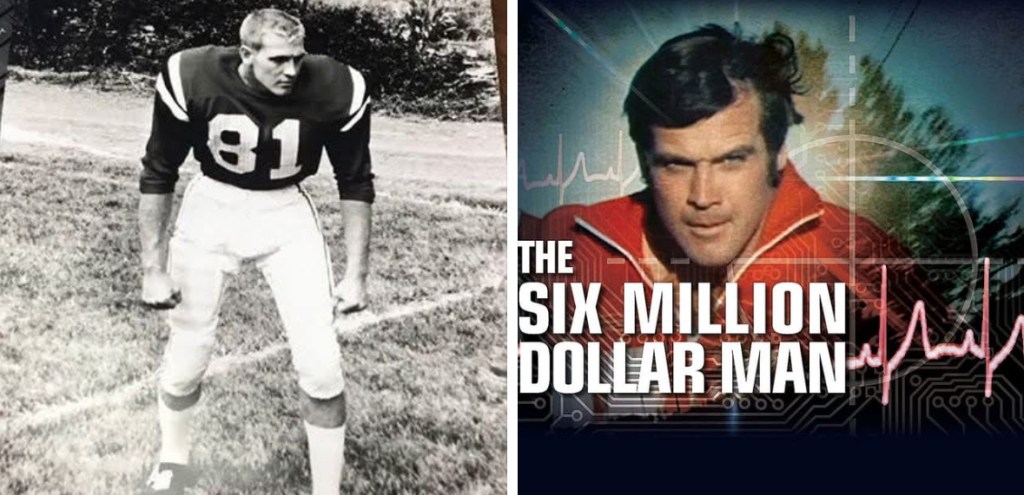
In 1820, the academic institution at which the Six Million Dollar Man first began his college football career as a defensive end, thanks to an IU athletic scholarship, was founded. This Midwest school with nine campuses and 90,000 students today was founded as a seminary

Classes began at this Hoosier seminary four years after the school’s founding.

Those early classes were held in Bloomington. Just as IU classes are held in Bloomington today.

Before Indiana University became Indiana University, Indiana University was educating Hoosiers as Indiana College. After first educating Hoosiers as Indiana Seminary.

Our Hoosier school. First, Indiana Seminary. Then, Indiana College. Then, Indiana University.

Indiana Seminary became Indiana College in 1828…four years after those first classes were held in Bloomington. At Indiana Seminary. Eight years after the school which would go on to become Indiana University was established. Twelve years after an Indiana university was to be established. According to Indiana’s state constitution.

Indiana’s university became Indiana University twenty two years after Indiana’s state constitution called for the establishment of an Indiana university.

Indiana’s state constitution was written in 1816. Written at the state capital. Written in Cordyn.

Indianapolis is Indiana’s capitol today. in 1816 Cordyn was the capital in the Hoosier State. Written in Cordyn in 1816, Indiana’s state constitution paved the way for the transformative history of IU.

Indiana’s university…

Indiana Seminary. Later becoming Indiana College. Later becoming Indiana University, where the Bionic Man once played defensive end.

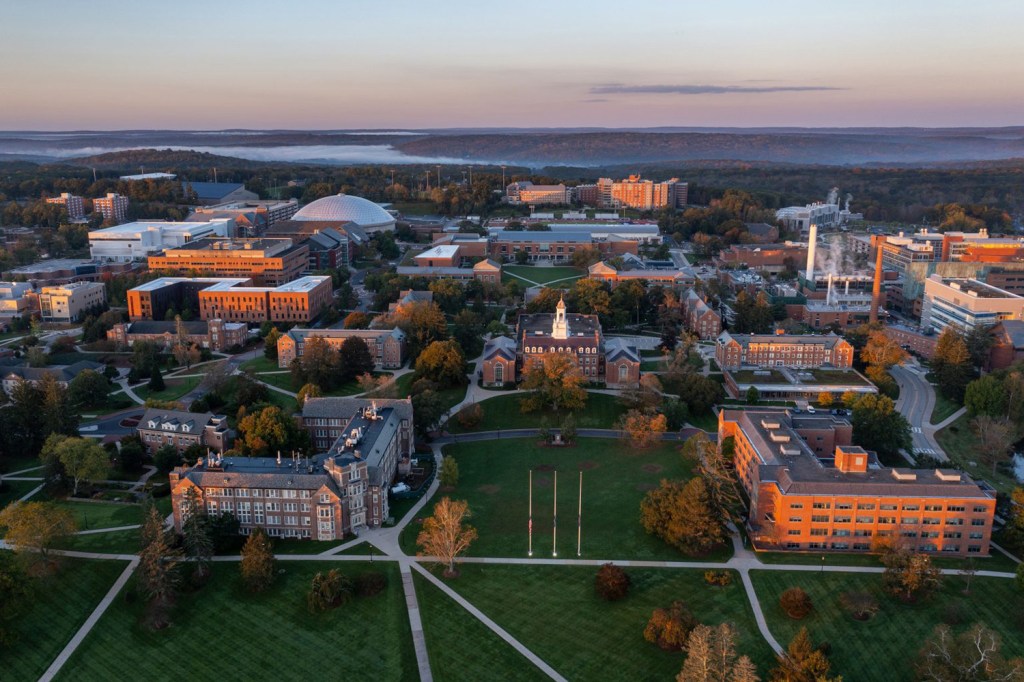
UCONN, and how the Huskies’ school came to be


In the year 1822, a boy by the name of Charles Storrs had been born into a world of Mansfield, Connecticut agriculture. The Storrs family…a family of Mansfield farmers.

While Charles Storrs’ 19th Century life found its origin in agriculture, Charles Storrs ventured out. Beyond his family’s humble Mansfield farm.

Charles Storrs migrated from an agricultural world, into Connecticut mercantilism. Going on to sell silk. For a Hartford manufacturer.

While Charles Storrs started out on a family farm in Mansfield, he attained his wealth by way of successes found in Connecticut mercantilism.

And, to the benefit of Charles Storrs’ home state of Connecticut, Charles Storrs turned back from his mercantile successes. Turning back to where it all began in Mansfield for Charles Storrs. Turning back, to agriculture.


The success of Charles Storrs…

In 1854, Charles Storrs ascended from silk salesman, to entrepreneur. By partnering with his older brother Augustus Storrs to establish Storrs Brothers. 

Charles Storrs headed the company he founded, the company which bore his name, from the company’s inception in 1854, on through 1879.

In 1880 Charles and Augustus Storrs donated 170 acres – along with several buildings – to the State of Connecticut. This land that Charles and Augustus Storrs granted to Connecticut was conveyed with a condition. The condition being, for Storrs’ farmland to become the ground on which a Connecticut agricultural school would be established. A college. An agricultural college.

These 170 Mansfield acres went on to become a Connecticut village. Storrs, Connecticut.

The agricultural school intentioned through the Storrs’ land conveyance went on to become a college – Storrs Agricultural College. Charles and Augustus Storrs, being the College’s founders.

Storrs Agricultural College evolved into the University of Connecticut. I.e.: UCONN.

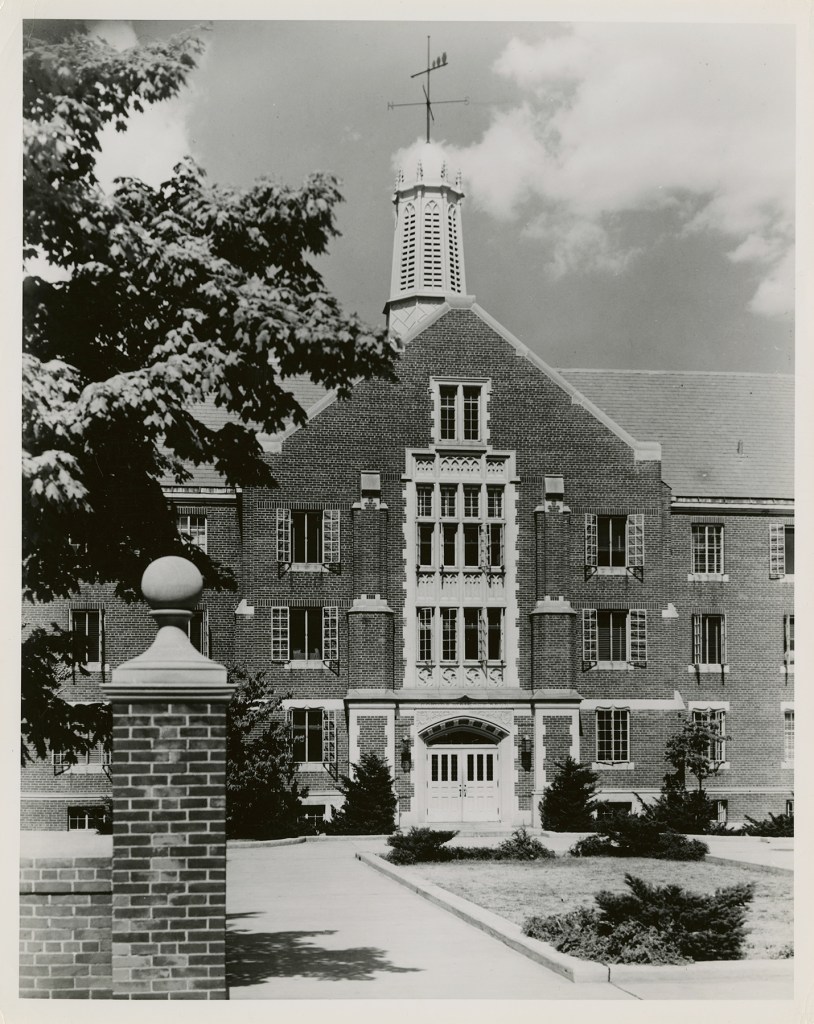
One of those old buildings which had been given by the Storrs Brothers to the State of Connecticut went on to become the very first Storrs Agricultural College campus building – Edwin Whitney Hall. Which today, on UCONN’s campus, is the Edwin Whitney Residence and Dining Hall.

Today, the village of Storrs, Connecticut remains anchored in academia. The village’s stalwarts being UCONN. As well as the Connecticut Repository Theatre.

UCONN’s address? 110 Storrs Road, Storrs, Connecticut.

Wichita, Kansas


During the latter part of the 19th Century, at the Kansas end of the Texas-to-Kansas Chisholm Trail, an unruly establishment arose from the dusty streets of this frontier town.

This frontier town, located just outside of Wichita. A town, laden with gambling and gun fights. A place where saloons and brothels far outnumbered any churches. At the Kansas end of our Chisholm Trail, this raucous town was a place where cowboys – weary from long cattle drives – could rest up. Enjoy their bourbon. Gamble. Before embarking on their return trip, along the Chisholm Trail. This congregation of cowboys at the northern end of our Chisholm Trail was a Kansas town known to be Delano.

Let’s look at how this town, situated on the western banks of the Arkansas River, came to be.


The emergence of Delano traces its origin to what had been a convergence in the 1870’s. Our convergence being, an overabundance of cattle in Texas. Coupled to a shortage of cattle on the East Coast. 

As one part of the country – Texas – had more than enough cattle, while another part of the country – the East Coast – had a shortage of cattle, a business opportunity presented itself. Hence, our Chisholm Trail. Hence, Jesse Chisholm.


Arising from the business of moving Texas cattle up to Wichita, then over to the East Coast, we find our catslyst for the growth of Delano.

To optimize this opportunity in the cattle business, Jesse Chisholm realized that the establishment of a trail starting out in Texas, and ending up in Wichita, would enable cattle to be transported. First, to Wichita. Then, to the East Coast.

Delano was built around the cattle industry in Wichita. Delano’s growth, made possible because of Jesse Chisholm’s 500-plus mile trail. A “cattle highway” which began in San Antonio.

Attributed to the growth of Wichita’s cattle industry, cowboys trekked into Wichita. Wichita was the established city next to Delano which had rules, a sheriff, laws, and a jail. Delano had no such checkpoints. 

As our convergence of cowboys, cattle drives and the Chisholm Trail – coupled to a Wichita with rules – grew, growing around the shipment of cattle off to the East Coast from Wichita, so too did Delano grow.

The growth of Delano took place lock step with the growth of Wichita.


Cattle drives from Texas, ending up in Wichita. Wichita cattle, then transported by rail to the East Coast. And in that…we have our inputs which triggered Delano’s stature during the 1870’s.


Facilitating the growth of Wichita’s cattle industry, Atchison, Topeka and Santa Fe Railroad routes were extended to Wichita in 1882. Access to the ability to now transport cattle by rail increased Wichita’s capacity to ship cattle to the East Coast. Wichita became “Cowtown.” 

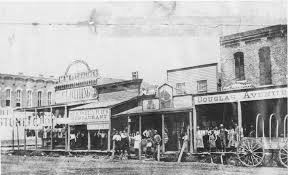
Just across the Arkansas River from Cowtown, cowboys enjoyed their bourbon. And their gambling. With no sheriff. With no jail. In Delano.

Delano, the perfect “wild west city.” With no law enforcement. With no sheriff. With no jail. With saloons. With brothels. With gambling. The perfect watering hole for Wichita cowboys who traveled the Chisholm Trail.

Today, the Historic Delano District in Wichita is a trendy neighborhood with restaurants and shopping. Wichita annexed Delano in 1880.

Through Delano’s annexation by Wichita, as 1870’s came to a close, Delano was no longer an independent town. Becoming West Wichita. Delano adopted Wichita’s rules.

Delano, as a raucous playground for cowboys – with no sheriff, with no jail – was no more.