Little Sallie and a Haunted Kansas Lair

Just about 60 miles northwest of Kansas City, on the western bank of the Missouri River you’ll find Atchison, Kansas, a cute riverside town. Hometown of Amelia Earhart.

Atchison is known for its majestic collection of Victorian homes and for being home to one of Kansas’s famous ghosts.

Dr. Charles Finney lived in Atchison. The town’s doctor lived in an Atchison home built in 1867. A prominent physician in his day, our practioner unintentionally extended an invitation to his house to a forsaken, tormented visitor.

For nearly two-hundred years, the Finney house has been haunted, this haunting, the aftermath of a tragedy. A calamity befallen a young girl.

The hapless girl’s name was Sallie. The foredoomed dwelling, this haunted lair, did it become.

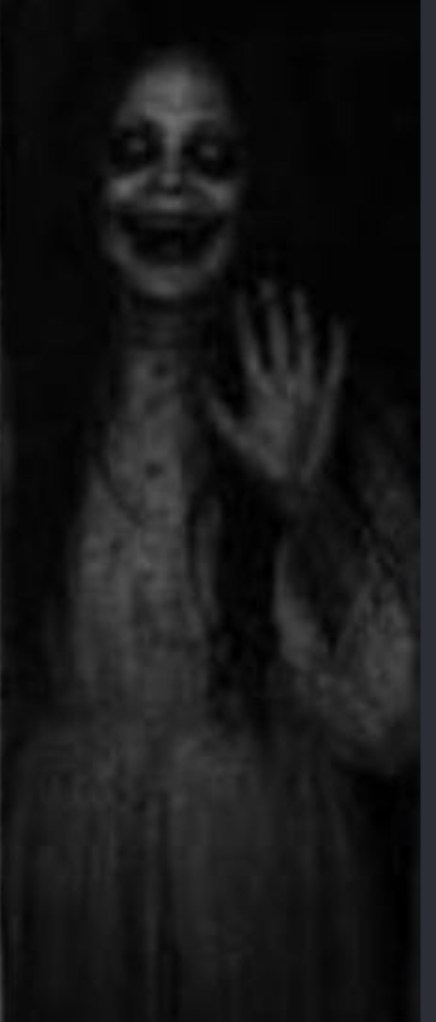
This ghost of Sallie delegates a twisted facade, a facade which gives rise to a basket of events. A collection, far more demonic than the presence of one prancing little soul.

Sallie was brought to the Finney house for a medical procedure. Dr. Finney practiced medicine in his house. There was no hospital in Atchison.

Young Sallie’s procedure encountered complications. Sallie screamed in agony, she passed away amidst her afflicted procedure. Taking her last breath in that hexed house.

This young girl’s death depicted a context far more demonic than one prancing ghost.

In the 90s, there was a young family who moved into the Sallie House, intending to make this Atchison dwelling the family lair. Yet there was a quandary which arose…the house’s orderly uninvited soul.

Household kinfolk atoll to having been scratched and clawed at night. Abraded skin, those wounds drew blood. Marrings of an unseen assailant. It was as if those attacks were engineered…by a little girl.

Appliances turned on by themselves. Household objects, took to flight.

As rumor has it, that tragic death of an unfortunate young girl named Sallie served not as a precursor to Sallie’s recurrence. But rather, as an invitation to a fiend.

The life estate affixed to this Atchison home is party to a demonic infernal. A dark being. Offspring, no doubt, of the devil himself.

This incubus who calls upon the old doctor’s home takes pleasure in mimicking behavior espoused by a young girl. One whose biography is marked by its torturous epilogue.

The Demon Roaming South Jersey Forests…

Its face resembles a horse’s face. The head found atop a long, thin, fur-covered torso could be mistaken for the head of a collie. Those wings? Wings of a bat, and leathery too, measuring two-and-a-half to three feet, from wing tip to shoulder. Its thick snake-like tail? This is a tail, fitting a demon. It’s horns…the devil’s horns, no doubt, resting above piercing red-orange eyes.

Standing nearly six feet tall and weighing close to 200 pounds, the Jersey Devil prowls the dense pine forest, cedar swamps and sandy back roads we find in New Jersey’s Pine Barrens…searching for its favorite delicacies, bellowing out a high-pitched scream, if by some chance, encountered.

Although tracked by fugitives, deserting soldiers, Hessian mercenaries from Revolutionary War times and escaped slaves – each group possessing finely-tuned hunting-and-gathering skills – no soul has ever caught the Jersey Devil. The swiftness and agility of this demon has allowed it to evade trackers for centuries.

On the menu for the Jersey Devil is poultry and livestock. If it’s very, very lucky, this malevolent spirit loves to feast on pigs.

Born in the early part of the 18th Century in Estellville, the Jersey Devil is the 13th child of a witch, Deborah Leeds. Its father, the devil himself.

Mother Leeds cursed her 13th child in frustration, already tired and worn, having raised her twelve other children. Deborah Leeds cried out, “Let it be the devil.” And it was…

This curse a mother cast upon her child came to fruition. Leading to a legendary and, unfortunately, a ghoulish transformation.

This damned boy grew cloven hooves, clawed hands and wings. The doomed little boy was no longer a boy. This ill-fated boy became New Jersey’s afflicted demon.

The Jersey Devil is nocturnal. This Tempter resides in forsaken towns found among the southernmost points of the Garden State.

Desolate Pine Barrens swamps and wetlands once facilitated low-grade ore needed to manufacture Revolutionary War munitions. “Bog-iron” towns took hold.

These “bog-iron” towns are long since abandoned, left untouched within one million harrowing Pine Barrens acres.

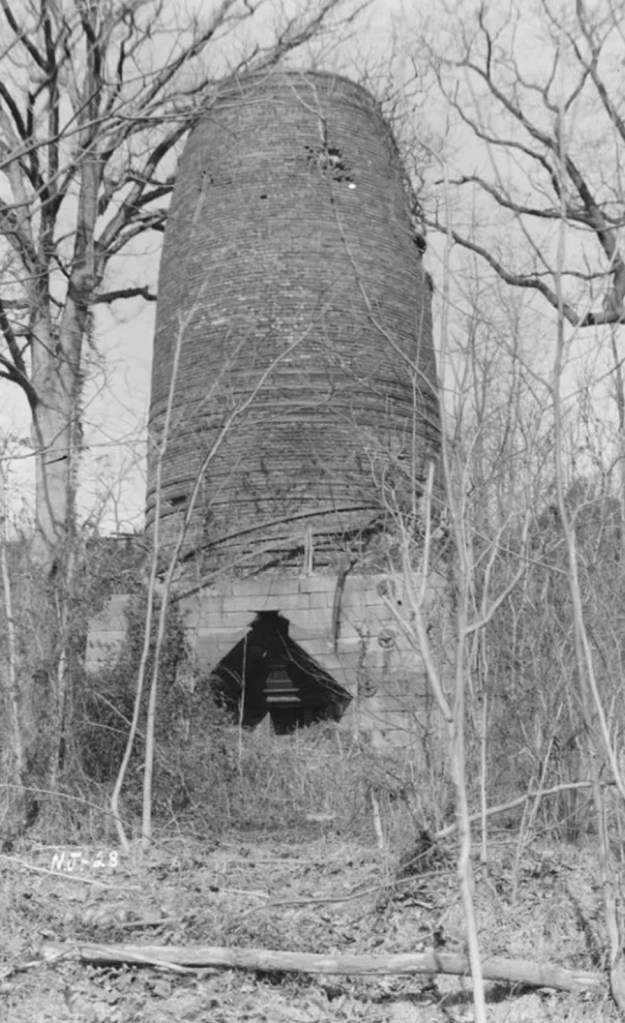
Decrepit buildings, outmoded blast furnaces, disused and crumbling 18th Century homes – all sitting quietly and uninterrupted for decades – became perfect neighborhoods for our Jersey Devil.

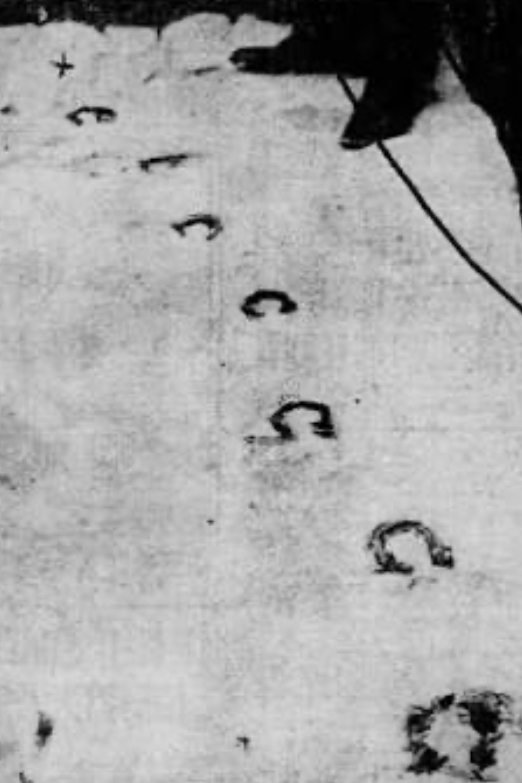
In 1909, several household pets were mysteriously killed. Hundreds of locals reported Jersey Devil sightings. Tracks matching no known animal were discovered in the snow. Schools and mills wisely closed, as cautionary measures. The Jersey Devil was nearby.

With over 1,700 square Pine Barrens miles to trek through, the Jersey Devil remains free to roam his forlorn terrain.

Few rile enough courage to venture through lonesome swamplands and forests blanketing in excess of 20% of New Jersey’s land area in pursuit of this furtive, skittish gargoyle.

Belleville, New Jersey

The name Belleville has a French connotation. In French, Belleville means “beautiful town.” To those of us here in the United States, Belleville means, “birthplace of the Industrial Revolution in America.”


Outside of Belleville’s earlier days, well-earned setting within our Industrial Revolution, the origin for what today we know to be Belleville can be traced back to the late-18th Century. Yet then, in those waning years of the 18th Century, today’s Belleville was once, Second River.

In 1797 Belleville’s name was changed. From Second River. To Washington. But that name change – to Washington – didn’t last very long.

This new name – Washington – proved to be unsatisfactory to inhabitants of the old Second River settlement. As such, shortly thereafter, the name change – from Second River to Washington – proved to be the first of two name changes for Second River.

Second River’s name was changed, once again. This time, changed to Belleville. Yet at that time, Belleville was moreso a settlement than it was an organized town.  That changed.

Belleville was incorporated as a New Jersey township 42 years after receiving its name – as Belleville. The year was 1839. This once-a-settlement completed its evolution into becoming a full fledged township in New Jersey by way of an act of the State legislature. The year was 1839. 

Forty-some years prior to the thrice renamings – from Second River, to Washington to Belleville – an occurrence of historical significance took place in this township. An occurrence which cemented Belleville’s place within the annals of an emerging industrial economy in the New World.

You see, Belleville is the official birthplace of America’s Industrial Revolution. Belleville’s position, as such, brought to be through the workings of an 18th Century New World newcomer. A newcomer who arrived in Belleville by way of Great Britain. Josiah Hornblower.


In 1753, Josiah Hornblower was commissioned by his company across The Pond – his company being, Newcomen – to build what would become the first steam engine assembled in the New World. 

And it was the result of this first steam engine that Josiah Hornblower’s link to Belleville, and thus, Belleville’s position as the birthplace of America’s Industrial Revolution, was formed.

Josiah Hornblower traveled from Great Britain to the New World to build a Newcomen steam engine. A steam engine he’d build for the owners of what was then the oldest copper mine in the New World. A copper mine located in Belleville. The Schuyler Copper Mine. 


The Schuyler Copper Mine traces its history all the way back to 1710. 

In 1710 Arent Schuyler purchased a tract of land on which the future Schuyler Copper Mine would be built. The construction of this mine…the byproduct a discovery. This discovery being, copper ore. Copper ore discovered on Schuyler’s land.

This discovery of copper ore coming three years after Arent Schuyler completed his land purchase. This discovery of copper ore taking place in 1713.

The purchase of a large tract of land… The discovery of copper ore… Yet, neither the land purchase, nor the subsequent copper ore discovery directly led to Josiah Hornblower’s arrival in Belleville. Nor did the land purchase, nor the discovery of copper ore, directly lead to Belleville’s designation as the birthplace of America’s Industrial Revolution.

Belleville – as the birthplace of America’s Industrial Revolution – and Belleville – as the Josiah Hornblower’s home- came about because of an act of God. It was a flood.

In 1748, a flood decommissioned the Schuyler Copper Mine. In order to continue on with mining operations, Schuyler Copper Mine – then run by Arent Schuyler’s sons – was in need of a steamship. A Newcomen steam engine, that is.


Newcomen steam engines were manufactured in England. The Schuyler mine was in Belleville. Therein, we find our Belleville link to Josiah Hornblower. And thus, to Belleville becoming the birthplace of our Industrial Revolution.


Schuyler Copper Mine contracted England’s Newcomen to build the steam engine they needed.

Newcomen, located in Cornwall, England, sent Josiah Hornblower across The Pond to assemble this steam engine for the Schuyler Copper Mine. 

Thus arriving, Josiah Hornblower established himself as a Belleville resident. To assemble the Newcomen steam engine for Schuyler Copper Mine. A steam engine which would be used to pump flood water out of Schuyler’s mine.

Thirty-nine years later, the first steam engine was manufactured in the United States. That year was 1794. Tellingly so, the very first steam engine manufactured in the United States was manufactured in Belleville.

In 1797 – three years after the manufacture of the first steam engine in the United States – the first steamboat produced in New Jersey was built by Josiah Hornblower. New Jersey’s first steamboat was built in Belleville.

Two-hundred years after Josiah Hornblower built that first steam engine in Belleville, the Congress passed a resolution recognizing Belleville’s historical role in a then-industrializing United States.

Congress’s 1994 resolution: Belleville, birthplace of our Industrial Resolution.

The late, great Congressman Bill Pascrell was responsible for our Belleville resolution.