St. Louis


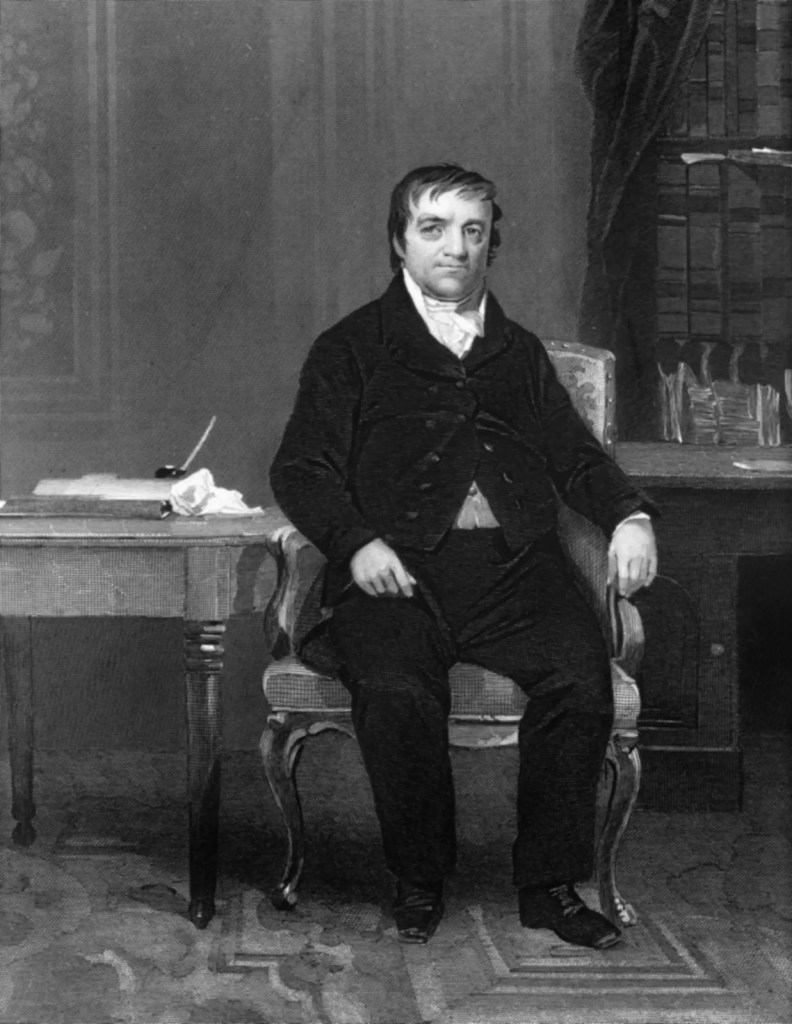
“Buy on the fringe and wait. Buy land near a growing city! Buy real estate when other people want to sell. Hold what you buy!” – John Jacob Astor

When investing in real estate, ideally, one hopes to attain benefits such as: a) low acquisition cost, b) limited tenant problems, and, c) steady appreciation. A-B-C. One way to arrive at A-B-C is often overlooked.

A-B-C created America’s first multi-millionaire, John Jacob Astor. However, pursuing a real estate strategy comparable to the one America’s first multimillionaire utilized to become America’s first multimillionaire is not common.

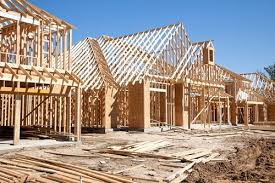
For savvy investors, prioritizing the acquisition of nonperforming properties can be a good route to take. While this is not a process utilized by a majority of owner-occupying home buyers, owning the home you live in correlates to building net worth. For investors. For families.

Equity built up in homes (over time) makes up in excess of 75% of the total net worth for American families.

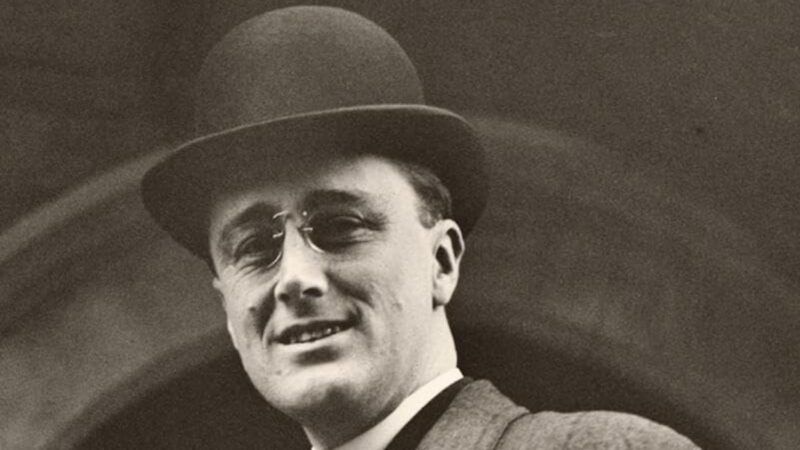
“Real Estate cannot be lost or stolen, nor can it be carried away. Purchased with common sense, paid for in full, and managed with reasonable care, it is about the safest investment in the world.” – Franklin D. Roosevelt

Identifying nonperforming properties available at great prices…

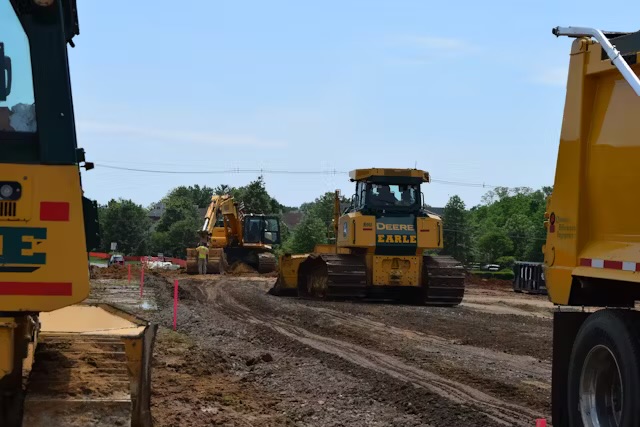
With regard paid to neighborhood stabilization and community development, land banks play an important role. They acquire – then convey – non-performing properties to those who can transition nonperforming properties into performing properties. Land bank properties can be acquired at prices which are less than market rate prices.

According to a report put forth by the Brookings Institute a few years ago, just about 15% of land in American cities is vacant. Vacant land can be categorized as nonperforming. In that vacant land does not generate property tax revenue. All the while, property taxes function as a vital source of revenue for cities.

Property taxes. A lack thereof?

Reduced property tax receipts impede the sustainability of any city. Reduced property tax receipts are one byproduct of nonperforming properties.

Nonperforming properties…let’s look at St. Louis.
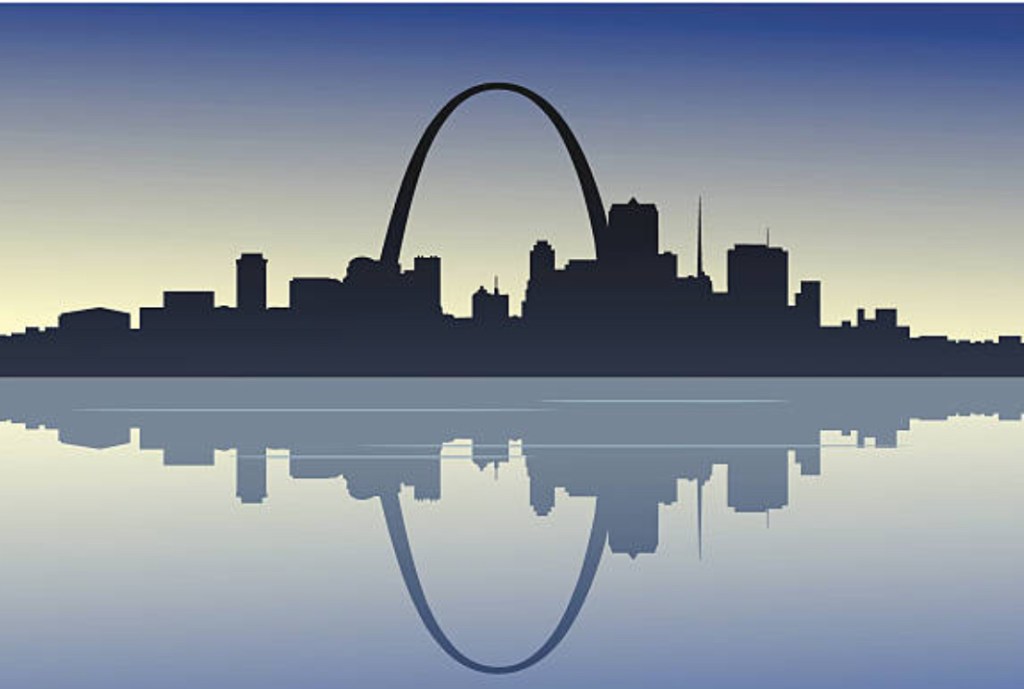
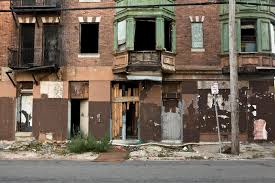
Over the years, St. Louis took possession of in excess of 10,000 nonperforming properties. Residential homes. Vacant lots. Vacant buildings.

By conveying properties the city took possession of to developers, St. Louis alleviated having to operate as a de-facto property manager. Snow removal. Mowing lawns. Boarding up buildings. Tasks transferred in St. Louis to developers.

How so?

Not the conventional way. Neither St. Louis nor land banks use Realtors to sell properties. So let’s look at how St. Louis conveys properties.

Land Reutilization Authority…

The origin for St. Louis’s Land Reutilization Authority – LRA – is found in Title 1 of the Housing and Community Development Act of 1974. In the beginning, funding for the Land Reutilization Authority came through HUD.
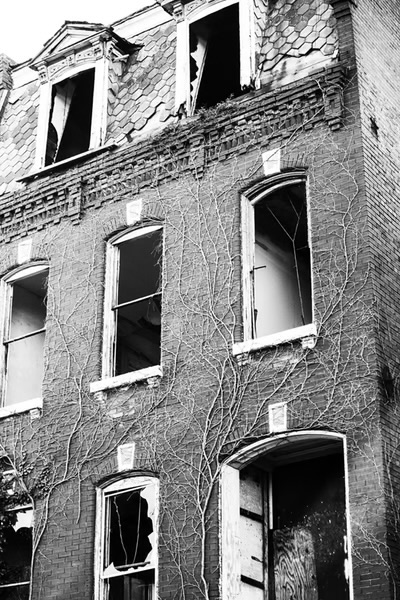

The process in St. Louis…

To acquire a Land Reutilization Authority property, buyers complete an Offer To Purchase Form. Buyers submits Offer To Purchase Forms to the LRA, along with two most recent pay stubs, the prior year’s W2 and tax return and the buyer’s most recent bank statement. Buyers also discloses their funding source. A bank. mortgage company. Cash on hand. A Planning Sheet is attached to each buyer’s Offer To Purchase Form.

The Planning Sheet is an overview. The Planning Sheet provides details pertaining to the buyer’s vision for how they plan to improve the property.

The conveyance of city-owned properties and land banks properties happens at the local level. Procedures vary. City by city. Town by town.

At the federal level, an important “tool” used to facilitate the conveyance of properties through land banks became available in 2008.

Resulting from the Financial Crisis, Congress passed the Housing and Economic Recovery Act of 2008. The Housing and Economic Recovery Act appropriated $4 billion to address abandoned and foreclosed properties.

The Housing And Economic Recovery Act of 2008 later became the Neighborhood Stabilization Program. Commonly known as NSP.

One year after the NSP went into effect, Congress appropriated an additional $2 billion to address vacant and abandoned properties. Through the NSP.

The NSP provided the framework – and the funding mechanism – cities relied upon to create programs designed to combat problems arising from increasing numbers of nonperforming properties. A problem amplified by the Financial Crisis.
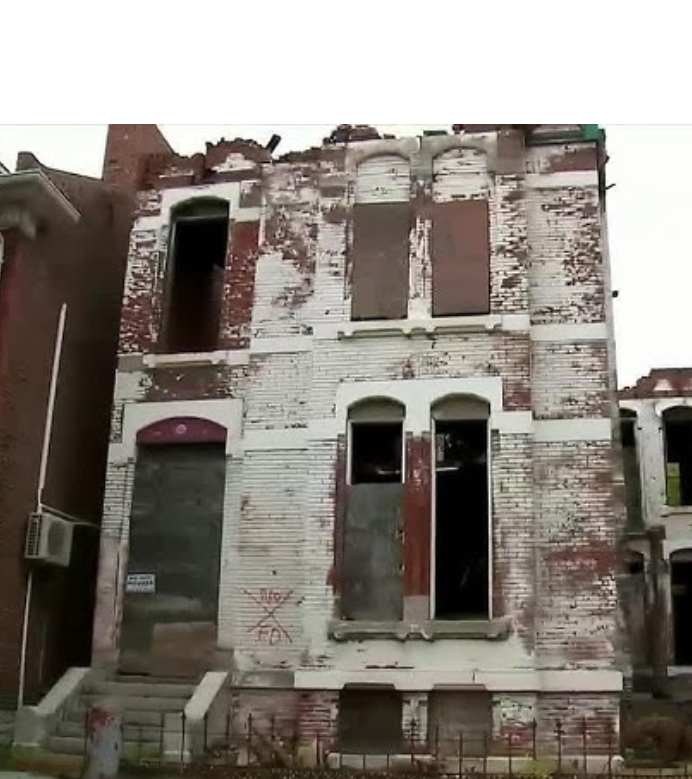

One approach used in St. Louis to lessen neighborhood blight was the Dollar House Program. To provide the Dollar House Program with inventory, the LRA placed properties in the Program which were owned by the LRA for at least five years.

The Dollar House Program provided owner-occupant applicants with an opportunity to inspect LRA homes. Upon completing inspections, buyers then established rehab budgets. After which, buyers were able to submit their applications to the LRA.

Buyer applications underwent board review. Should a buyer have been deemed to have met Program qualifications, with board approval, within 120 days buyers were expected to, a) stabilize the home, b) improve the facade, and c) follow building codes.

Renovation of Dollar House Program homes needed to be completed within 18 months. Furthermore, the buyer of the LRA home was required to live in their home for at least three years. Once they completed the rehab.

The LRA held a quitclaim deed to properties. Enabling the LRA to regain possession of properties should requirements established by the LRA not be met by buyers. The LRA was able to extend timelines for rehabs which took longer than 18 months to complete.

Buying a distressed home in St. Louis? Buying vacant land in St. Louis? Buying a rundown apartment building in St. Louis?

Some perspective…

Long, long ago, John Jacob Astor saw something he liked in an overlooked, sneered-upon, not-too-desirable piece of land. That then nonperforming piece of land that John Jacob Astor liked – then purchased – proved to be a decision which anchored his trajectory towards becoming America’s first multi-millionaire. This was a piece of land all know quite well.

Where was this land located?
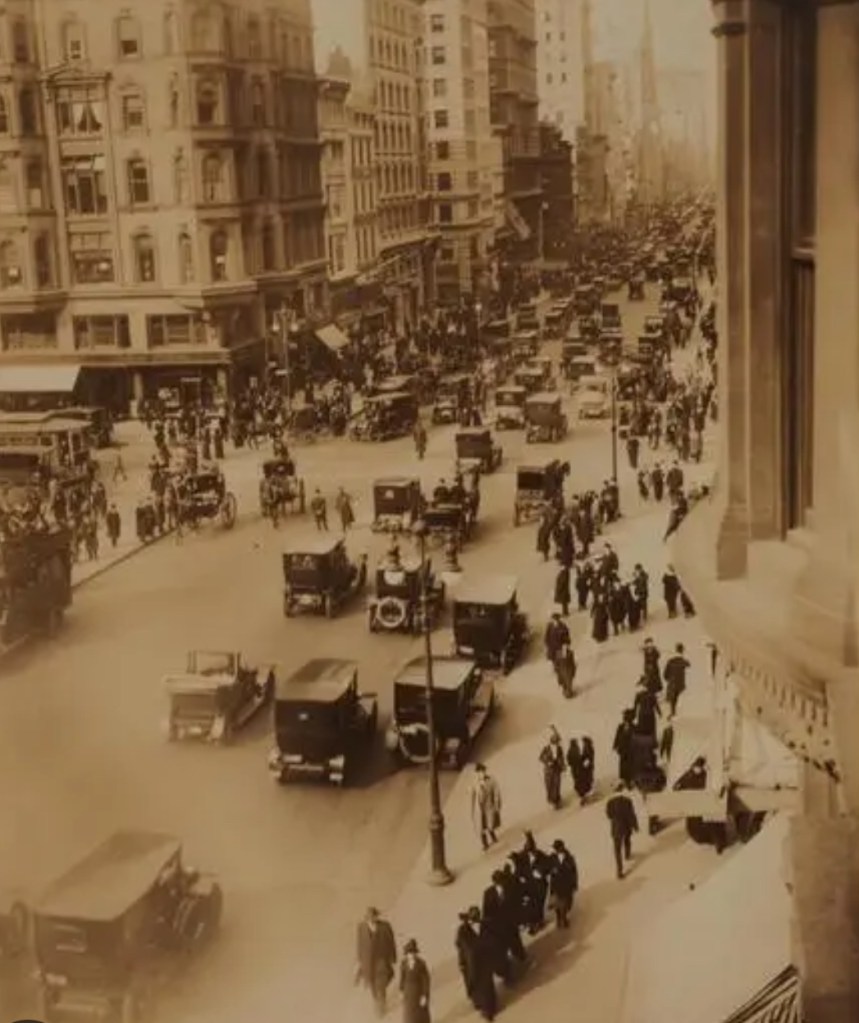

Beginning in 1799, John Jacob Astor began to acquire vast amounts of land in New York City. Astor went on to become New York’s biggest landlord. Astor owned land in what today we know to be Times Square. And the East Village.

John Jacob Astor’s real estate was the backbone to his wealth.

When John Jacob Astor began buying Manhattan real estate, the population of New York City was 60,000. Fifty years later, New York City’s population exceeded 500,000.
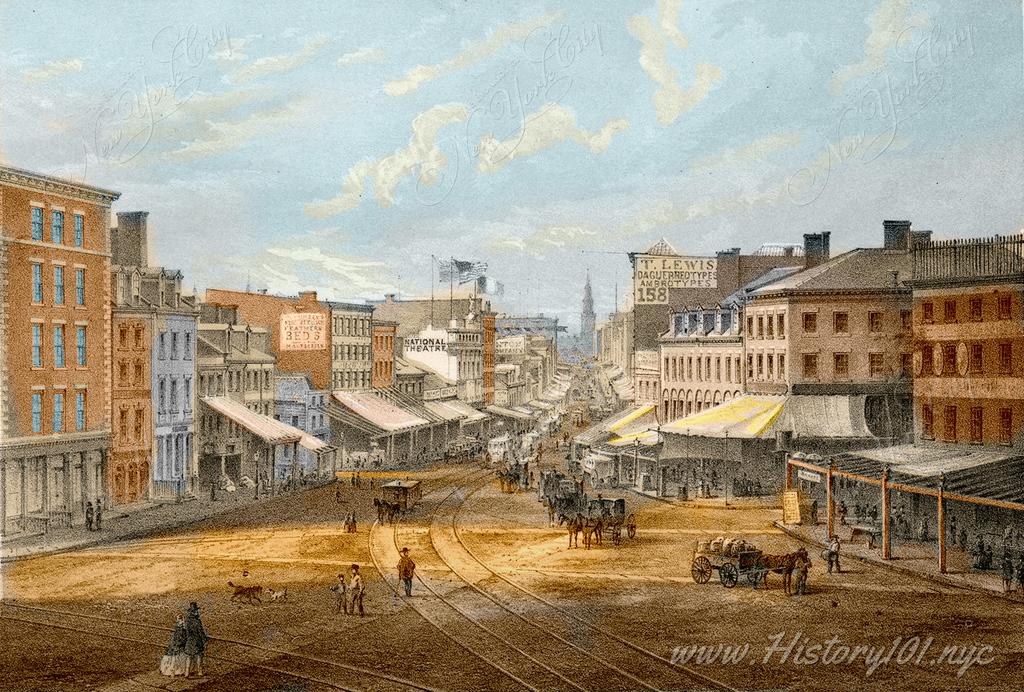
“Buy on the fringe and wait. Buy land near a growing city! Buy real estate when other people want to sell. Hold what you buy!” – John Jacob Astor
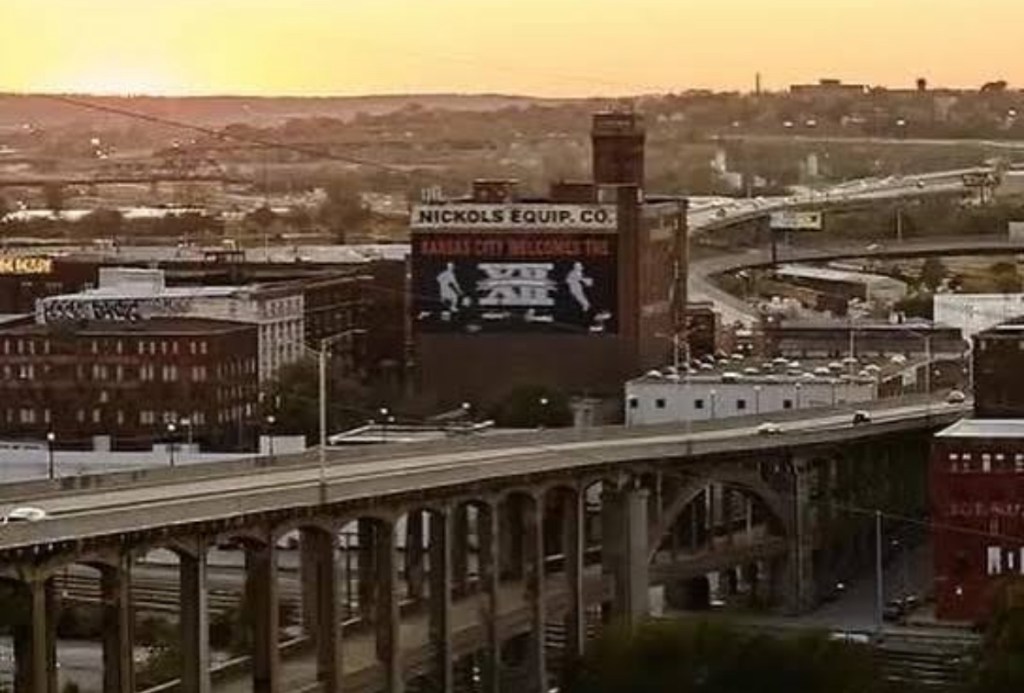
Kansas City


As a city, Kansas City trails only Paris with regard to each’s fountains count. The City of Fountains, as Kansas City is lovingly known to be, has over 200 fountains.

Some of those beautiful fountains in KC can be found near Kansas City’s majestic Union Station. From Union Station, take The Link over Grand Boulevard, and you arrive in the very heart of Crown Center.

At Christmastime, the beauty we find in Crown Center’s collection of fountains is accentuated by a special, special scene. Christmastime skaters.

For over fifty years Crown Center has been home to Kansas City’s original ice skating rink, Crown Center Ice Terrace. A staple for all who enjoy a Paris of the Plains Christmas.

Crown Center…

One of Kansas City’s true crown jewels would indeed be Crown Center. Another of Kansas City’s crown jewels would be the iconic corporation to which the fortunes of Crown Center Ice Terrace – as well as Crown Center itself – are owed. Hallmark. 

Each of our two Kansas City treasures – Crown Center and Hallmark – find their histories’ foundations in J.C. Hall. 

J.C. Hall…

As Kansas City continues to redevelop its downtown into one of the very finest downtowns in all of America, the wave of downtown redevelopment we see in Kansas City today also adopts into the club of downtown redevelopment leaders our forefather to Crown Center and to Hallmark, J.C. Hall.

While the focus of this article is not “redevelopment,” today’s Crown Center is very much emblematic of what can happen for a city when a corporate leader – in this case, J.C. Hall – opts to remain within a city’s downtown. Rather than follow (at that time) a trend of abandoning one’s center city roots by relocating to the suburbs.

The very beginning for Kansas City’s Crown Center goes back to a late 1960’s redevelopment plan. A redevelopment plan anchored through J.C Hall’s Crown Center businesses. A redevelopment plan which also received contributions from another iconic Kansas Citian, Walt Disney.

J.C. Hall. The one time door-to-door Avon salesman from Norfolk, Nebraska. Our Crown Center forefather.

J.C. Hall’s career evolved. From selling makeup, door-to-door. To selling postcards. And it was those postcards that J.C. Hall sold early on in his career that would bring J.C. Hall from his Cornhusker youth to Kansas City. And to forefather of Crown Center.

Yet, before we arrive at the company for which J.C. Hall’s “American signature” is forever most commonly linked, a prior step in his Kansas City business sequence

From postcards. To store. From store, to a grand department store. A grand department store in Crown Center.

Halls Department Store…

J.C. Hall began his career in Kansas City by selling his postcards. Later, adding greeting cards to his product offering. In time, J.C. Hall would go on to open that first store in Kansas City. The store from which he could sell his postcards. And his greeting cards too. This store that J.C. Hall opened in Kansas City would go on to become Halls Department Store.

Halls Department Store started out as a specialty store. With J.C. Halls offering much more of a retail collection than simply postcards and greeting cards. Yet those postcards and those greeting cards would certainly prove to be stalwarts to a J.C. Hall Crown Center icon. An icon that would go on to become a global brand. Hallmark.


At its origin, Halls Department Store stocked expensive, high-quality items. Favorites for upper echelon Kansas City patrons. In time, Halls Department Store had themselves a prime Country Club Plaza storefront.

Halls Department Store arrived in The Plaza in 1965. Later migrating from The Plaza to the hub of J.C.Hall’s enterprises. To where we find Halls Department Store today. Crown Center. 

Shoppers who visit Halls Department Store – Halls Department Store is owned by Hallmark – are heading over to Grand Boulevard. Halls Department Store. Grand Boulevard. Level 3. In Crown Center.

Crown Center, which also houses the headquarters for the centerpiece to J.C. Hall’s collection. That centerpiece, the “Crown Center nucleus” which benefitted from the experience J.C. Hall attained early on by selling his postcards? And his greeting cards? That centerpiece, is Hallmark.

J.C. Halls founded Hallmark Cards in 1910. 

Hallmark Cards has the same origin as does that of its founder, J.C. Hall. Greeting cards. Postcards.

Hallmark did not start out as Hallmark. Hallmark did not start out in Kansas City.

Hallmark Cards began in 1907 in Norfolk, Nebraska. Originally, as Norfolk Postcard Company.

The iconic Hallmark label was introduced as a stand-alone Norfolk Postcard Company brand eighteen years after J.C. Halls founded his Norfolk Postcard Company in Nebraska. Use of the Hallmark name began in 1928. 

In 1954, the original Norfolk Postcard Company – the company whose origin was the sale of those postcards in Nebraska by J.C.Hall – changed its company name. From its name at that time – Hall Brothers – to Hallmark. 

With Hallmark’s headquarters in Crown Center, with Halls Department Store in Crown Center, with J.C. Hall opting to keep his company in center city Kansas City rather than relocate to the suburbs, the underpinnings for Crown Center’s late-‘60’s redevelopment had been established. Redevelopment for Crown Center officially began in 1968. 

The beginning phase for the redevelopment of Crown Center involved construction of underground parking. As well as the central square. The central square in Crown Center, which is where we find our skaters.

Through redevelopment, Crown Center went on to become a truly unique mixed-use district. Offices. Retail. Theatres. Hotels… Crown Center opened to the public in 1971. Three years after redevelopment commenced.


Today, Crown Center encompasses 85 acres in Kansas City. Union Station. Our National World War I Museum and Memorial. Halls Department Store. Hallmark. Each, located in Crown Center.

Yet, at Christmastime, for so many, the Crown Center experience is best brought home by the ice skating. Ice skating made possible, that is, because one American corporate chief in Kansas City chose benefits bestowed upon his companies through redevelopment. Over a move out of Kansas City, to the suburbs.


So those happy skaters in Kansas City can thank a former door-to-door Avon salesman from Nebraska for their ice time fun.

They can thank J.C. Hall. Forefather of Crown Center.

Overland Park


In real estate, developers acquire land, then plat a subdivision. For Overland Park, Kansas, that is how it all began. As a platted subdivision. 

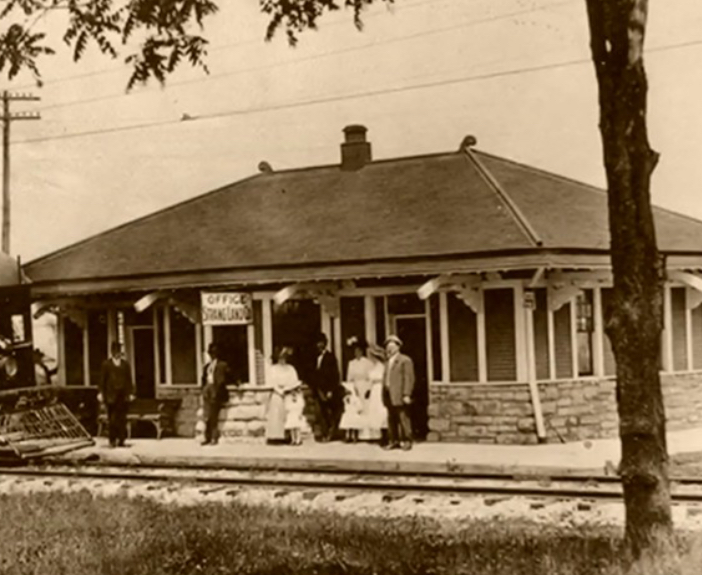
This platted Kansas subdivision – the one which evolved into today’s Overland Park – came to be through entrepreneurship espoused by a Johnson County entrepreneur. This entrepreneur, William B. Strang, Jr., his contributions to the Kansas City region coming through his establishment of a local rail service which connected Kansas City to Olathe, Kansas. Leading to the formation of Overland Park.


William B. Strang, Jr. founded the Missouri and Kansas Interurban Railway. Strang founded his railroad in 1906. Two years prior to Henry Ford’s Model T entering into production. 

When Strang founded his Missouri and Kansas Interurban Railway, there were no cars on Kansas City roads. One could not drive in to Kansas City, Missouri from Johnson County, Kansas. And in 1906, train travel in Kansas City was a luxury. A luxury with longer distance routes. A train to St. Louis. A train to Chicago. When Strang founded his Missouri and Kansas Interurban Railway there was no specific train route which took passengers from Kansas City, Missouri to Johnson County. No railroad was offering this local service. Yet Strang believed this could be an economically viable route. Hence, the origin of the Strang Line


Headquarters for Strang’s Missouri and Kansas Interurban Railway could be found in downtown Kansas City, Missouri. At the corner of 7th and Walnut. In the Railway Exchange Building.


With Missouri and Kansas Interurban Railway headquartered in Kansas City, Missouri, Strang proceeded to build several depots in Johnson County, Kansas. The largest of Strang’s depots was the one he built at what is today the corner of 80th Street and Santa Fe Drive. In Overland Park.  


William B. Strang, Jr. was a 20th Century railroad entrepreneur. He was also a real estate developer. A speculator. Strang built spec homes. The sale price for one of Strang’s spec homes – as well as demand for spec homes built by Strang – was driven by an idea: you can own your own new home in Johnson County.

To this point, Strang’s rail service enabled city dwellers in Kansas City, Missouri to gain access to the Johnson County suburbs. And, so too, to new homes built in Johnson County by William B. Strang, Jr. New homes being built where today we find Overland Park. 

William B. Strang, Jr.’s Olathe-to-KCMO Missouri and Kansas Interurban Railway contributed to the success Strang attained as a real estate developer. In that Stang’s Missouri and Kansas Interurban Railway increased access to new suburban Kansas homes Strang was then building. In turn, driving up demand for Strang’s homes. The result? Higher sale prices for Strang’s homes.

William B. Strang, Jr. arrived in what would go on to become Overland Park in the earliest days of the 20th Century. He arrived in Johnson County 1905. Upon his arrival, Strang proceeded to acquire land on which the downtown for today’s Overland Park now sits. Strang’s initial Johnson County land acquisition – the land acquisition which led to an Overland Park – totaled 600 acres.

A 600-acre acquisition…

A real estate developer…

The coupling of an idea: new homes/increased access to new homes…

A railroad entrepreneur…

The makings of Overland Park…

As a city, Overland Park was incorporated 55 years after William B. Strang, Jr. set foot in Johnson County. Overland Park was incorporated in 1960. Yet, by 1960, the railroad which laid the groundwork for the formation of Overland Park was no longer. The last Missouri and Kansas Interurban Railway train car pulled into Olathe in 1940…20 years prior to the incorporation of Overland Park.

Those 600 acres William B. Strang, Jr. purchased in Johnson County in 1905… Those subdivisions to the southwest of Kansas City, Missouri, those out in the Johnson County suburbs… One of those subdivisions was named “Overland Park.” 

Overland Park… Originally, one of William B. Strang, Jr’s subdivisions. The undertaking of one Johnson County real estate developer who became a railroad entrepreneur. 

A railroad entrepreneur whose subdivisions ignited the construction of new homes to the southwest of Kansas City. New homes which increased in value as a result of new access – by rail, circa the Missouri and Kansas Interurban Railway – to these new homes which were being built. Several of which were being built by William B. Strang, Jr. The train entrepreneur who was also the real estate developer.

William B. Strang, Jr. Real estate developer. Railroad entrepreneur. Founder of Overland Park. 

Indiana University at the very beginning.


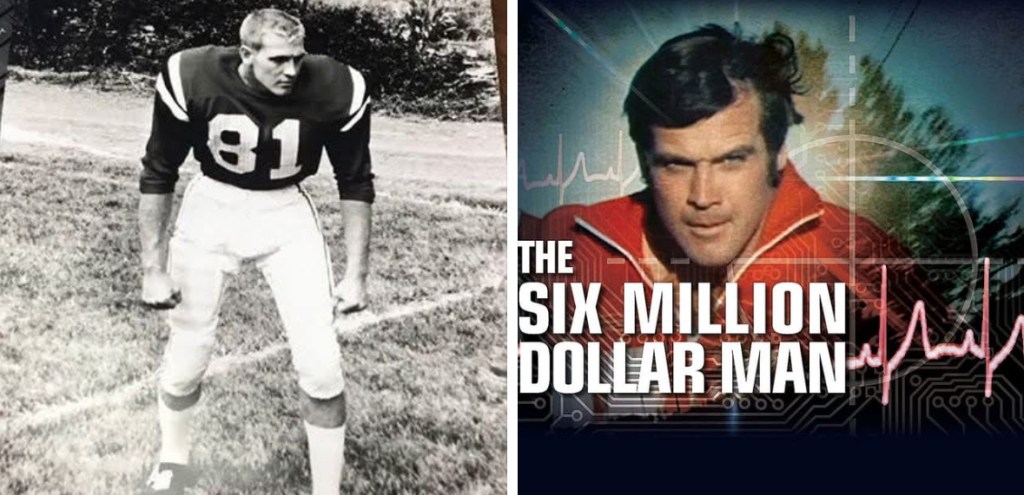
In 1820, the academic institution at which the Six Million Dollar Man first began his college football career as a defensive end, thanks to an IU athletic scholarship, was founded. This Midwest school with nine campuses and 90,000 students today was founded as a seminary

Classes began at this Hoosier seminary four years after the school’s founding.

Those early classes were held in Bloomington. Just as IU classes are held in Bloomington today.

Before Indiana University became Indiana University, Indiana University was educating Hoosiers as Indiana College. After first educating Hoosiers as Indiana Seminary.

Our Hoosier school. First, Indiana Seminary. Then, Indiana College. Then, Indiana University.

Indiana Seminary became Indiana College in 1828…four years after those first classes were held in Bloomington. At Indiana Seminary. Eight years after the school which would go on to become Indiana University was established. Twelve years after an Indiana university was to be established. According to Indiana’s state constitution.

Indiana’s university became Indiana University twenty two years after Indiana’s state constitution called for the establishment of an Indiana university.

Indiana’s state constitution was written in 1816. Written at the state capital. Written in Cordyn.

Indianapolis is Indiana’s capitol today. in 1816 Cordyn was the capital in the Hoosier State. Written in Cordyn in 1816, Indiana’s state constitution paved the way for the transformative history of IU.

Indiana’s university…

Indiana Seminary. Later becoming Indiana College. Later becoming Indiana University, where the Bionic Man once played defensive end.

Kansas City Board of Trade


The price of wheat…

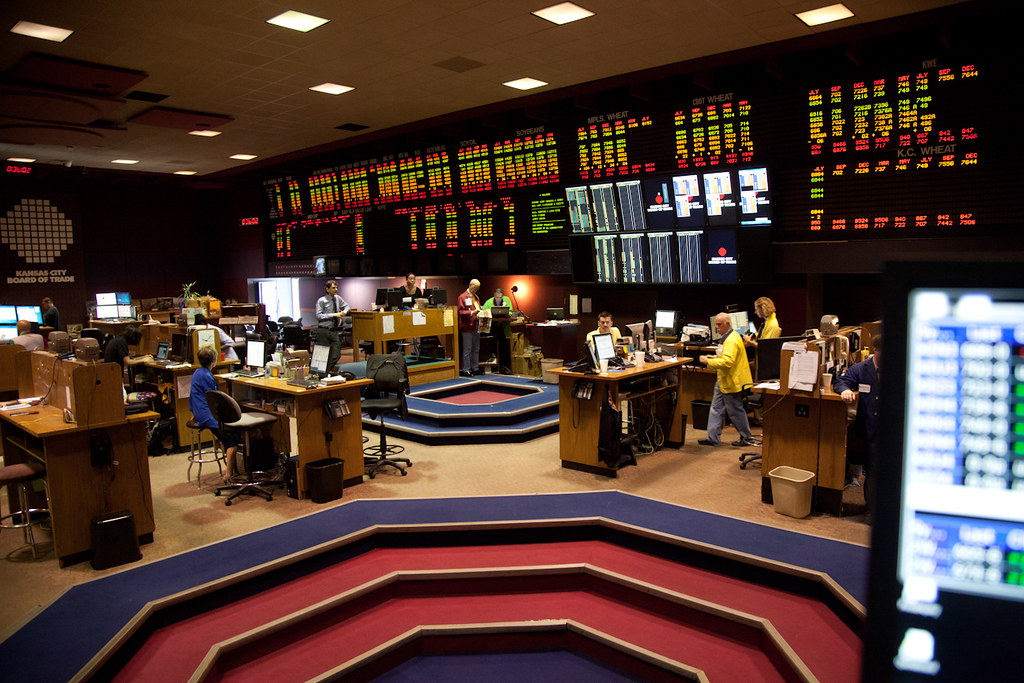
Beginning in the earliest years of the Twentieth Century, and carrying onward through 2013, from a trading pit in the heart of Kansas City, Missouri, the price of wheat, first, in the United States, then later, for countries the United States traded with, was influenced. Influenced by Kansas City traders. Traders who barked out “buy” and “sell” orders. Buy and sell orders correlated to futures contracts for Hard Red Winter Wheat.

Hard Red Winter Wheat futures contracts – the Kansas City Board of Trade.

Why was this exchange located Kansas City in the first place?

Soil and climate conditions in the Great Plains are perfect for growing wheat. So the trading operation for Hard Red Winter Wheat contracts was going to be based in the Midwest. 

Wheat requires specific conditions in order to grow. Ample sunlight. Well-drained soil. Sufficient water. One additional requirement needed – with Hard Red Winter Wheat – is, exposure to the cold. To each point, Kansas City’s neighboring state to the west is…ideal.

So…Kansas City?

In the late-19th Century, the, “Why Kansas City?” question had a lot to do with where the wheat the traders were trading was coming from – Kansas.


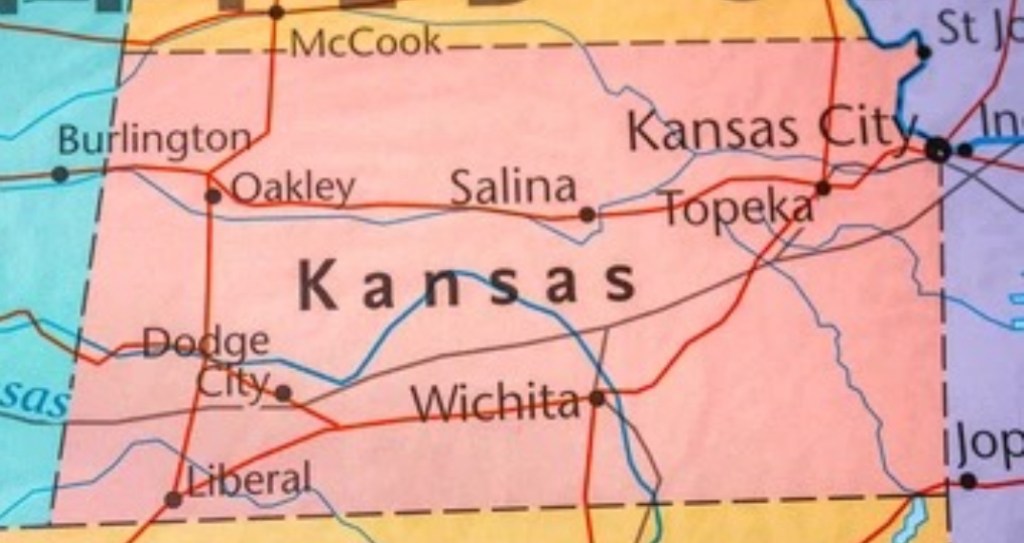
Known as the “Wheat State,” Kansas as a state -along with North Dakota – consistently leads the United States in wheat production. 

For example…

Last year, Kansas had 7,600,000 acres allocated to the planting of wheat. Coupled to 7,150,00 acres of harvested wheat. That was last year. And one of the things that I personally love most about my home state of Kansas is, Kansas just doesn’t radically swing, from whim to whim, all that much. Well, to be more precise, Kansas doesn’t really swing from whim to whim, at all. Which brings us to the question of, “Why Kansas City?” for the Hard Red Winter Wheat exchange.

While there were 7,150,000 harvested acres of Kansas wheat in 2024, 106 years prior – in 1918 – there were 7,250,000 harvested acres of wheat in Kansas. Pretty much the same acreage total. In 1918. And in 1924. 7,000,000 acres.

Step out of 1918 for a moment. And into 2024. While those small Kansas farm houses (and small Kansas farms) would no longer be. And while you will now see high-tech John Deere Combine Harvesters on those Kansas farms – complete with Wi-Fi…and a John Deere price tag, per Harvester, of between $700,000 and $1,000,000 – the “DNA” of the land from which Hard Red Winter Wheat had been harvested – and is still harvested today -pretty much, stayed the same. 

7,000,000 Kansas acres of harvested wheat in 1918. 7,000,000 Kansas acres of harvested wheat in 2024.


Logistically, an exchange for the trading of Hard Red Winter Wheat contracts -and, for that matter, for a board of trade – which was based in Kansas City, just made sense. Long, long ago. And today as well. Kansas City was (and is) the “big city” for Kansas farmers. Perfect for a Hard Red Winter Wheat exchange. 

The origin of the Kansas City Board of Trade traces back to its founding in the year 1856. Founded by a group of local merchants. Led by one Edward H. Allen.

Elected as the 10th mayor of Kansas City, Missouri, Edward H. Allen held the office in 1867 and 1868.

The idea for an exchange taking hold in Kansas City three years after Kansas City, Missouri itself was incorporated as a city. Which happened in 1853. 

The trading of Hard Red Winter Wheat contracts…

Just as the trading floor at the New York Stock Exchange in Manhattan is no longer a crowded hub of frantic traders, scurrying their trades about, those traders who once roamed the pit at the Kansas City Board of Trade – early in the Twentieth Century, and up through 2013 – have so too been replaced. By automation.

In 2012, the Kansas City Board of Trade was purchased by the CME Group – formerly, the Chicago Mercantile Exchange.


One year later, Kansas City’s trading floor – I.e.: the pit – was merged into the trading floor in Chicago. The trading of Hard Red Winter Wheat futures contracts on a Kansas City trading floor was no more. 


Two years later – in 2015 – CME’s trading floor itself was shut down. Replaced by automation. No pit in Kansas City. No pit in Chicago. The trading of Hard Red Winter Wheat futures contracts became… automated. 

While that old trading floor for Hard Red Winter Wheat in Kansas City – and those busy wheat traders in the pit – is no longer in operation, whenever you add cold cuts and mayonnaise to your sandwich, the price of the wheat – which makes up about 15% of the total cost of the bread you use to surround your cold cuts – is still set in Kansas City at the Kansas City Board of Trade.

In 2025, the Kansas City Board of Trade continues to function as the primary trading platform for Hard Red Winter Wheat futures contracts. Hard Red Winter Wheat futures contracts are a determinant in the price of wheat. Then too, in the price that we ultimately pay a loaf of bread.

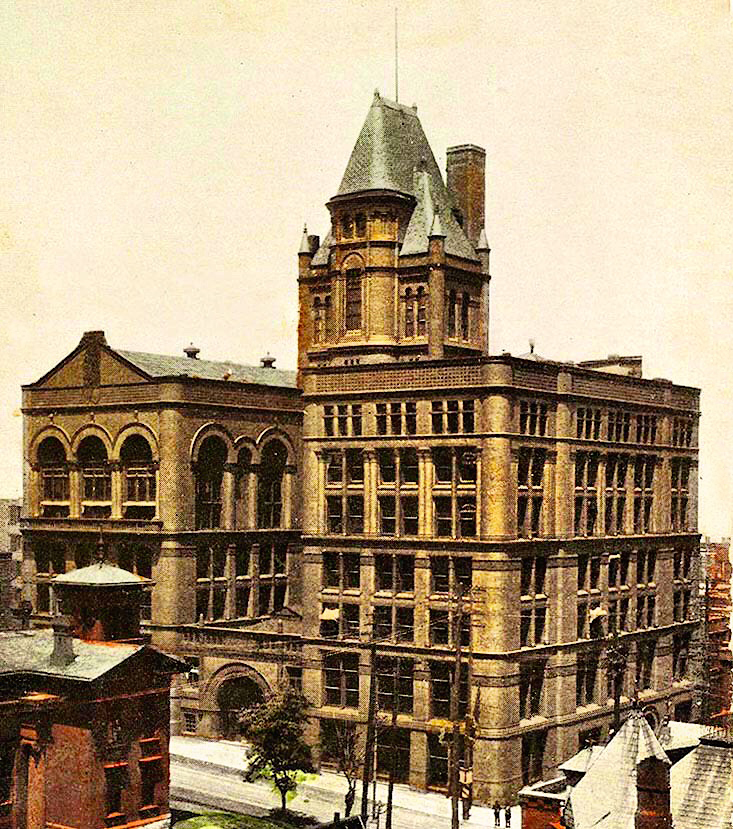
Interestingly, the Kansas City Board of Trade had been Kansas City’s original chamber of commerce. So, the origin for the trading of Hard Red Winter Wheat contracts in Kansas City started off as – and in – a chamber of commerce. At 8th and Wyandotte. In Kansas City, Missouri. 

Local growers of Hard Red Winter Wheat. Local traders of Hard Red Winter Wheat. Local buyers of Hard Red Winter Wheat. 

While the local growers of Hard Red Winter wheat are still there – Kansas produces over 300 million bushels of wheat each year…equating to roughly 20% of total wheat production in the United States…there is not much else which is entirely “local” when it comes to the Kansas City Board of Trade. And Hard Red Winter Wheat. 

While 300 million bushels of Hard Red Winter Wheat is produced by 15,000 Kansas farmers each year. While the price of Hard Red Winter Wheat is set in Kansas City at the Kansas City Board of Trade. When it comes to the Kansas City Board of Trade – and Hard Red Winter Wheat – today, it would be wise to substitute the word “global” for “local.”


Local buyers of wheat? Kansas is an exporter. Each year, Kansas exports just about half of the 300 million bushels of Hard Red Winter Wheat harvested in the “Wheat State.”

As the world’s largest contiguous producer of winter wheat – that’s Kansas – having the price of Hard Red Winter Wheat still set in Kansas City is itself, poetic justice.

And establishing the exchange for the trading of wheat contracts in Kansas City – in the late stages of the 19th Century – turned out to be, rather fortuitous…

7,000,0000 acres of harvested wheat in Kansas in 1918. The price of Hard Red Winter Wheat set in Kansas City in 1918.

7,000,000 acres of harvested wheat in Kansas in 2024. The price of Hard Red Winter Wheat set in Kansas City in 2024.

Other than those $1,000,000 John Deere Combine Harvesters that you’ll see on Kansas farms in 2025 – coupled to the fact that Kansas, while a local grower, is really an international exporter – much, does look, feel and operate the same.

Acreage. Crop. Exchange. 1918. 2024. When in comes to American wheat, the more things change the more things stay the same – Kansas City.

The price of wheat in 1918…

The price of wheat in 2025…

The Kansas City Board of Trade.

…how Rutgers University came to be.


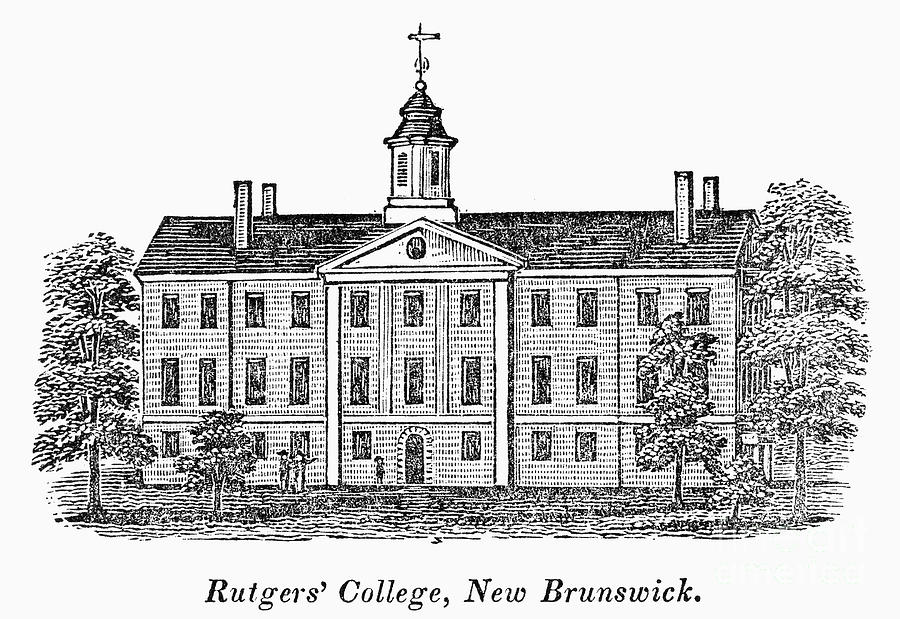
Rutgers, The State University of New Jersey was founded – originally as a seminary – in 1766.

Founded by William Franklin. William Franklin, son of Benjamin Franklin.

Although, upon its founding, this college, located in New Brunswick along the Raritan River, was not known as Rutgers.

The name Rutgers was affixed to the New Brunswick college 59 years after its founding. In 1825. “Rutgers,” selected to honor Revolutionary War veteran Colonel Henry Rugers. Between the year of its founding – in 1766 – and the year Rutgers was selected as the college’s name, in the honor of Henry Rutgers – in 1825 – Rutgers had been Queens College. Then, for the next one hundred years, it was Rutgers College.


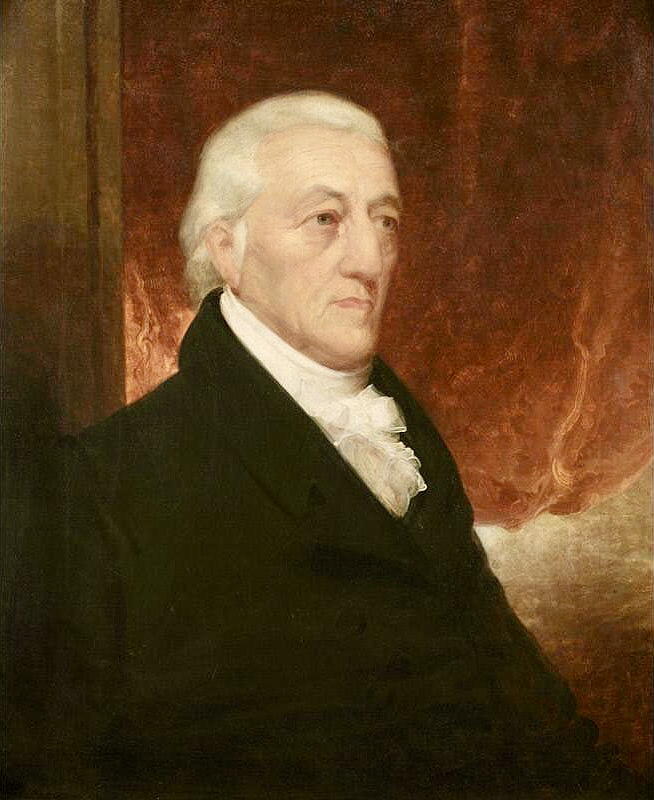
Henry Rutgers…

Born in New York City in 1745 – and in 1745, that would have been, the Province of New York, British America, as New York was still under British rule when Henry Rutgers was born – Henry Rutgers served as a New York state assemblyman. He was a graduate of Columbia University (then, King’s College),

A prominent New York landowner, Henry Rutgers donated much of his land to local New York City schools, charities, and churches. In Manhattan, if you have ever driven down Henry Street or Rutgers Street, those streets were named after Henry Rutgers.

Rutgers College – then Queens College – adopted Henry Rutgers’ name upon receiving a much needed financial infusion from Henry Rutgers.

Through Henry Rutgers’ generosity, prospects for the then-struggling Queens College to continue on as an institution of higher learning, brightened.

At the time of Henry Rutgers’ financial contribution, Queens College had incurred a multi-year shutdown. Its finances, and its future, cast astray as a byproduct of the challenging economic times the United States went through upon the conclusion of the War of 1812.

The University of Newark joined the Rutgers family in 1946. As Rutgers University-Newark.

The College of South Jersey joined the Rutgers family in 1950. As Rutgers University- Camden.

Rutgers is the second oldest university in New Jersey. Founded 20 years prior to Queens College’s founding, Princeton – which had been the College of New Jersey from 1746 until 1896 – is the oldest New Jersey university.

Rutgers’ Board of Trustees consists of 41 voting members. Rutgers’ Border of Trustees functions in an advisory capacity to Rutgers’ Board of Governors.

Rutgers’ Board of Governors consists of 15 voting members. Rutgers’ president is a non voting Board member.

Three of the 15 members of Rutgers’ Board of Governors are voting members, selected by the Rutgers University Senate. Three representatives – selected by the University Senate – are non voting representatives.

Eight members of Rutgers’ Board of Governors are appointed by the New Jersey governor. Seven members are selected by the Board of Trustees. For the 8 members appointed by the New Jersey Governor, confirmation for each member by the New Jersey Senate is required.

The president of Rutgers is a nonvoting Board of Trustees member. Rutgers’ University Senate selects two members of the faculty – as well as two students – as non voting representatives.

The selection of the 41 voting members of the Board of Trustees is done in accordance with State law.

There are 20 charter members. Three of the 20 charter members must be women.

Sixteen Trustees are Rutgers alumni, each of whom is nominated for Board membership by the Nominating Committee of the Board of Trustees.

Five Trustees are public members, appointed by the governor. The five public members who are appointed by the governor require confirmation by the New Jersey State Senate.

The president of Rutgers is selected by the university’s Board of Governors. The Board of Governors oversees the process of identifying the president, while overseeing the Presidential Search Committee.

Rutgers’ Presidential Search Committee develops a profile of prospective candidates…submitting recommendations of potential university presidents to Rutgers’ Board of Governors.

Rutgers’ Board of Governors, upon receiving recommendations and feedback from the Presidential Search Committee, ultimately selects the university president.

On two separate occasions – resulting from acts taken by the New Jersey Legislature – Rutgers was designated as the official state university of New Jersey. New Jersey’s legislature granted Rutgers this distinction in 1945. And once again, in 1956.

New Brunswick is a city in Middlesex County, New Jersey, United States

IMPACT FEES


Come January 31st, each of New Jersey’s 564 municipalities is required to file their own resolution with the State, adopting affordable housing obligations for their municipality.

Come June 30th, each of New Jersey’s 564 municipalities is required to submit their affordable housing plan to the State, for their municipality.

Last October, the New Jersey Department of Community Affairs released New Jersey affordable housing requirements. These will need to be completed by 2035. And here they are…

A) Create 84,698 new affordable housing units.

B) Preserve an additional 65,410 existing housing units.

140,00 homes built or renovated over the next ten years. That’s a lot of homes. That’s a lot of infrastructure needed.

Impact fees…and Trenton.

The Municipal Development Impact Fee Authorization Act – presently in committee in Trenton – would, if passed, broaden New Jersey municipalities’ ability to pass through development-related costs to real estate developers. By broadening the scope for how impact fees can be collected by municipalities.


New Jersey is one of 22 states which presently authorizes the collection of impact fees by a municipality. Different states may refer to “impact fees” though their own state vernacular. For example, in Kansas – Kansas does authorize impact fees – impact fees are also referred to as adequate facility taxes. Or excise taxes.

At the present time, in New Jersey, the impact fees which can be passed along by municipalities to developers are pretty much limited to off-site improvements which arise as a direct consequence of the development. Direct consequence?

My humble opinion…

The way impact fees are levied upon developers in New Jersey today seems a bit…unjust. Tilted too far in favor of developers. At the expense of municipalities. See, direct consequence.

For example, an increased allocation of funds – and personnel – will likely be required in order to accommodate the higher number of classroom students which will be arrived at through the construction of new homes within any municipality. New homes are built. New families move in. Families have kids. Kids go to school.

Yet, in New Jersey, this increase in education funding which will be required by a municipality – as a result of new development – is not able to be passed through to real estate developers by way of impact fees. Though they should be able to be so.

Because any increase in education funding needed in order to accommodate larger classroom sizes – or additional teachers – which comes about as a direct result of development is as much of a direct development-related cost as one can think of. It’s attributed to…the building of new homes. Isn’t it?

Education funds for a New Jersey municipality – collected through impact fees charged to real estate developers – should be permissible.

Larger classrooms. Additional teachers. Potentially, the construction of a brand new school. These are a few of the costs – real costs – that a municipality will incur as a result of an increase in the student population. Because new homes were built in the municipality.

One proposed solution? A boardening of the scope for the collection of impact fees by New Jersey municipalities.

Whereas critics of increasing impact fees may view additional impact fees charged to developers as impediments to growth, that argument is easily overcome.

Impact fees can be collected in lieu of local property tax hikes. Furthermore, impact fees are specific to the development at hand. To the area being developed. As such, the implantation of impact fees enables the broader property tax-paying populace to not be unduly burdened through an increased annual property tax bill. To fund development in town…which really does not directly affect them.

ABANDONED HOMES

Processes to consider when thinking through how to transition abandoned homes from absentee owners to developers could include: a) land banking, b) spot blight eminent domain, and c) receivership. Tools. Why focus on this problem? Why cultivate ideas? Why develop solutions? 

Abandoned homes become financial drains on a city’s resources. For example, the cost to demolish an abandoned home?Demolition costs could reach up to $20,000. Per home.

And there are social costs as well…

Neighborhoods with abandoned homes become breeding grounds for crime. For drug use. For violence. Social costs.

But social costs are not always correlated to dollars and cents. Furthermore, social costs are often viewed as someone else’s problem.

But are social costs easy to understand? Are social costs someone else’s problem?

Social costs attributed to abandoned homes correlate to financial costs. Financial costs incurred by the city. Financial costs incurred by the city’s stakeholders. Financial costs incurred by the city’s taxpayers.

Social costs attributed to abandoned homes affect city residents who may – at first – believe abandoned homes would not be a problem affecting them.

For example…

A New Yorker living in Tribeca or on the Upper East Side is part of New York City. As such, they pay New York City taxes. So, while there may be few abandoned homes in their neighborhood, Tribeca and the Upper East Side are still coupled to the poorest neighborhoods in New York City. To the Morrisania and the Crotona neighborhoods in the Bronx.

In Morrisania and Crotona, nearly 4-out-of-10 live below the poverty line.

Let’s say socioeconomic challenges in Morrisania or Crotona lead to a foreclosure in either neighborhood. That foreclosure, then becoming an abandoned home.

Increased police patrolling is one byproduct of abandoned homes. Enacted to prevent neighborhoods from spiraling into crime magnets.

Increased New York City police patrolling in the Bronx is a financial cost. Which addresses the social cost. And that is a New York City cost. A cost which is bourne by…Morrisania residents. A cost which is bourne by…residents on the Upper East Side. A cost which is bourne by…residents in Tribeca. A cost which is bourne by…Crotona residents.

Redevelopment

Within a Redevelopment Area, a municipality’s goal could be to transition residential, commercial and industrial properties within the Redevelopment Area into vibrant community assets. The pursuit of which could take on a community-centric theme. Renovations, repurposing properties, new home construction… Goals pursuant to the redevelopment of properties within a Redevelopment Area.


Redevelopment of properties within a Redevelopment Area could start out with a city council resolution. To redevelop properties. With the resolution, a planning board might then choose to construct a Redevelopment map. With a Redevelopment map – and upon notification to the public of an upcoming hearing – a planning board could then look to adopt a Redevelopment resolution. The resolution could recommend the establishment of a Redevelopment Area within the municipality.

Potential steps a municipality could consider beginning with in order to establish a Redevelopment Area within the municipality…


You can direct any comments or questions to Ted Ihde.

email: authortedihde@gmail.com

direct: 816-699-6804

Tax Incremental Financing


When you are considering whether to pursue a real estate development project, reaching out to local government officials regarding the availability of tax incremental financing is one step you can take.

Tax incremental financing – TIF –is a development subsidy whereby the municipality diverts future property tax revenue towards economic development. The origin of tax incremental financing traces back to the State of California. And to 1952.

In order to establish a TIF subsidy, an urban renewal district – a TIF district – is first drawn up by the municipality.

With tax incremental financing, the municipality will be diverting increases in property taxes within the urban renewal district from the municipality, to development. It’s a subsidy. With a lifespan of twenty or twenty-five years.

The foundation for TIF? Development leads to increases in property values within the TIF district. As well as in surrounding neighborhoods. The theory? Increasing property values, which lead to an increase in property tax receipts collected by the municipality, offset TIF subsidies.