The request for information – I.e.: RFI – is the formal communication channel within real estate development which is utilized by individual stakeholders to obtain additional details about a project’s materials, processes, plans and/or specifications.
The RFP is issued. The RFI is requested…
The Respondent to a request for proposals (“RFP”) – the RFP being an entry point for proposed stakeholders who aspire to supply their products, their services and/or their processes to the project for which the RFP had been issued – benefits through the RFI. In that, through the RFI, the Respondent is able to gain information about construction. Enabling the Respondent to enhance or to amend their Response. In a manner which is aligned with additional “project directions” gathered by the Respondent through the RFI. The outcome being…?
The Respondent will more aptly be able to provide the real estate developer with project specifications which facilitate progression through each stage of development.
Project details gathered by a Respondent through the RFI may have initially been unclear to the Respondent when the RFP was first issued. Potentially, questions presented to the developer by a Respondent through the RFI – as well as answers sought by the Respondent in the RFI – may not necessarily have been spoken to, within the original RFP, at the onset of the RFP issuance. I.e.: when the site plan was first able to be studied by the Respondent.
In such a case, the most effective way for a real estate developer to provide clarity sought by a Respondent – and, as such, the most effective way for a Respondent to supplement (or amend) their Proposal for the developer – is through a request for information. The RFI.
When reviewing RFP development specifications, in order to be able to accurately understand how to best address site plan requirements for the developer, a Respondent may elect to submit their own RFI. Submitted to developer. Or to the architect. Or to the general contractor. And so on. Doing so lets the Respondent notify a particular project stakeholder – for example, the developer, the architect, or the general contractor… – that RFP provision clarification, as has been requested by the Respondent through the Respondent’s RFI, will be helpful at this stage of the project. Helpful, insomuchas, with the named clarification(s) provided, the Respondent will be able to progress towards satisfying their stated commitment to the project’s success. In alignment with goals established through the RFP.
Throughout development, as a project progresses, the RFI is an important tool which can be introduced by several different people. Issued by several different people. Each of whom remain independently, yet, through the process, collectively – through the RFP, through the RFI – involved in construction.
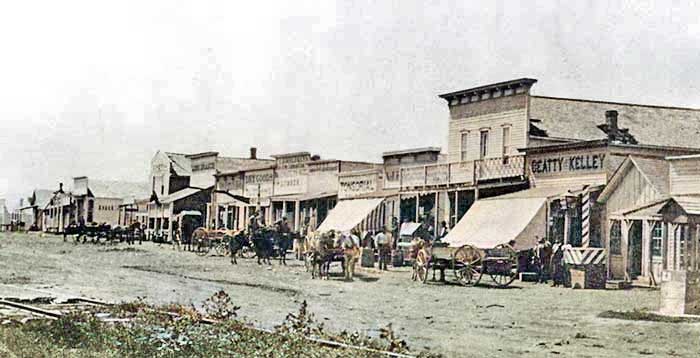
A town where buffalo hunters rested their weary legs, liquored-up, gambled and told their tales of adventures on the plains.
A town in Kansas which, to this day, is a cultural metaphor for violence and anarchy. The town which brings us our famous, “Get out of Dodge…”. Dodge City
.
But how did Dodge City – the onetime buffalo capital of the west – come to be…?
During the latter part of the 19th Century, alongside the Santa Fe Trail out in western Kansas there once stood a destination point for buffalo hunters. A destination point which history has allotted with fables, tales and lore.
Late in the 19th Century, this settlement became a favorite among those who were brave enough (or maybe, crazy enough) to seek out potential fortunes that westward expansion held in store.
This destination point – frequented by some of the roughest and toughest characters our country has ever seen – became Dodge City.
Dodge City is the product of a confluence of circumstances. So let’s look at a few of those interesting circumstances…
One early congregation point for buffalo hunters – located in what would go on to become Dodge – was, a modest three-bedroom house.
Henry Sitler constructed his three-bedroom house near Fort Dodge in Kansas. Stiter’s home became known as a place where buffalo hunters’ could stop by. For a stay over.
Circumstance…
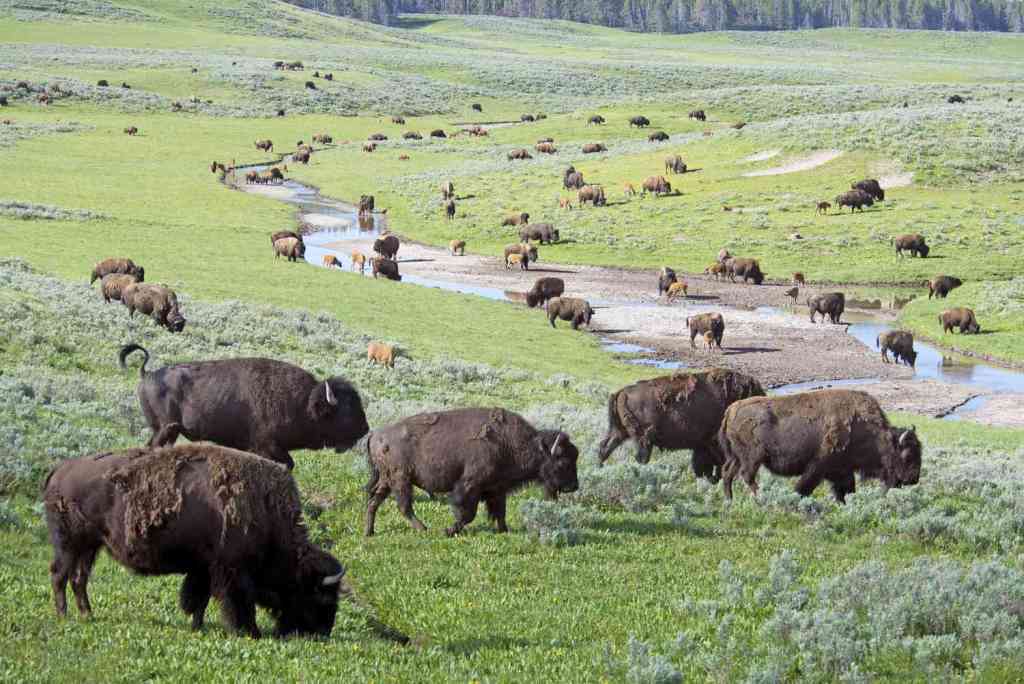
Within a few years of Stitler building his house in what would go on to become Dodge City, over 1 million buffalo were being loaded onto trains – near Fort Dodge, near Stitler’s home – and being shipped east.
While hunters and traders were drawn to buffalo hunts by the profit they could realize through buffalo leather – used for boots and belts – the federal government promoted bison hunting.
In Washington D.C. – as the thinking went in D.C. late in the 19th Century – America was intent on further expanding to the west. So, by reducing the buffalo population in the west, native peoples – people who stood in the way of America’s westward expansion – would lose their primary food source. Bison. Thus, turning – I.e.: forcing – natives towards an American product as their main food source.
The thinking in D.C. at that time went something like this… Too many natives. And too many buffalos.
So we’ve established some foundational framework for how – and why – Dodge City emerged.
The American government wanting to reduce the bison population…
Though D.C.’s endorsement, military forts facilitated the extinguishment of bison…
Traders profiteering from buffalo leather…
The inevitable confrontations with native tribes that buffalo hunters – as well as soldiers – were certain to encounter as they slaughtered bison – the primary food source of an indigenous people…
Those, a few of the situational circumstances encountered by visiters to Henry Sitler’s house.
One million buffalo being extinguished…
Alongside Atchison, Topeka and Santa Fe Railroad tracks…laden with train cars loaded with bison, en route to the east, Dodge City emerged as a major shipping center. While simultaneously becoming an American media darling.
Attracting rugged hunters and traders from all over the nation, American newspapers were gobbling up tales of Dodge City’s bedlam and belligerence. So, Americans’ introduction to Dodge City came by way of stories which made their way to printing presses. Churned out to American newspapers. Sensationalism sells news. Dodge City, in its raw, rough and wild manner, was sensational. Tales of Dodge City’s wildness – the hunters, the traders… – sold newspapers. Dodge City became a favorite topic among American media.
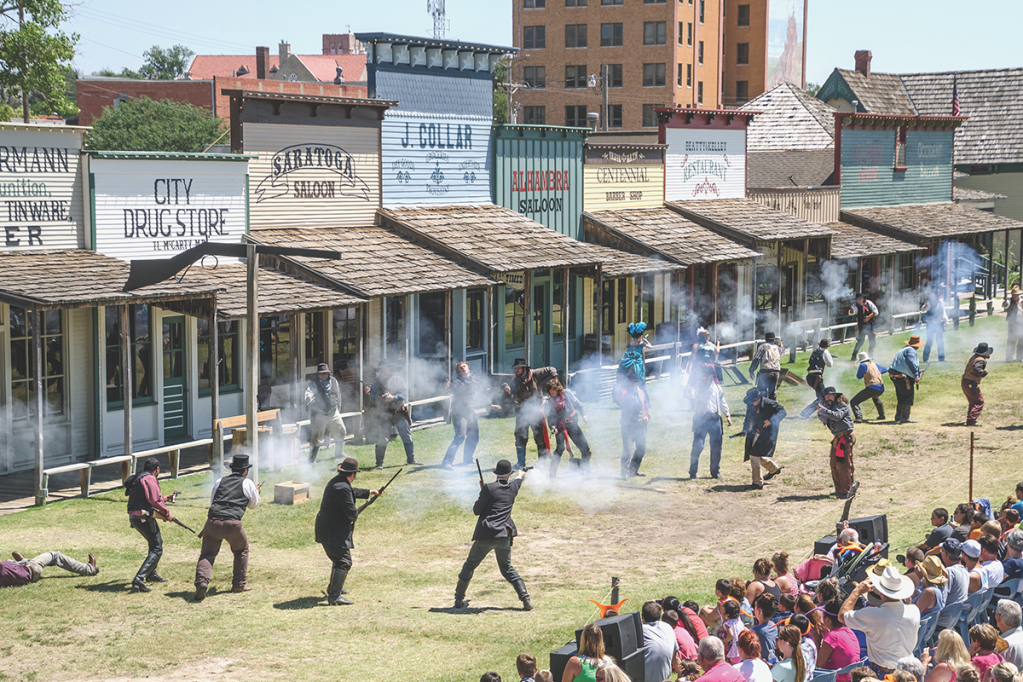
As Dodge City was growing, at its earliest stages, there had been no law enforcement. Buffalo hunters, railroad men and fisticuffs. Coupled to saloons. The perfect elixir for lawlessness. And lawlessness did prevail. In fact, the origin for the name of Dodge City’s famous cemetery – Boot Hill Cemetery – emanates from Dodge City gunfighters who died with their boots on. In raucous Dodge City.
Dodge City, a town built on an economy which had been linked to buffalo. The buffalo trade and Dodge City. The prevalence of buffalo to Dodge City’s story is dynamic…yet short lived.
As Dodge City was growing – as a result of the buffalo trade – back east, in Washington D.C., the American government was intent on permanently putting down Indian resistance to American expansion. Orders were sent to one noted general, General William Sherman. Those orders? Slaughter the bison. Wipe out the natives’ primary food source. Drive natives onto reservations.
Within a few years, the buffalo population was reduced from millions to hundreds. Driving Dodge City’s buffalo hunters out of business. But not driving Dodge City out of business. The extinguishment of American bison simply served to function as a prelude to Dodge City continuing on as a real rough place out west.
With buffalo having been removed from the plains, the cattle business took off in Dodge. Dodge City became a cowboy town. A still-lawless cowboy town, at that.
The burgeoning lawlessness of the former buffalo capital of the west needed some sort of order to be established. As a more formal American cattle business replaced the informal buffalo trade in Dodge. And this need for order paved the way for Dodge City’s place within the curiosity of newspaper writers, Hollywood producers and, more broadly, American culture.
Tame Dodge City…
So an old buffalo hunter was brought in to do the job. He himself then proceeded to bring in his friend. Another old buffalo hunter. Together, they were going to temp down this unhinged town.
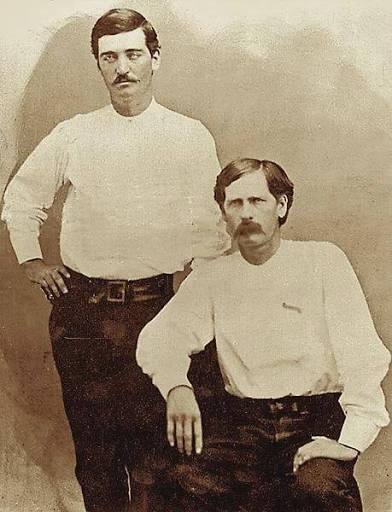
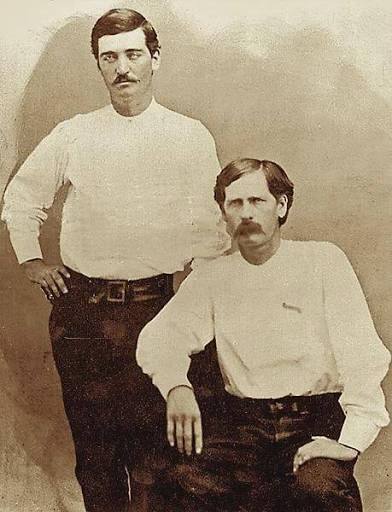
The man brought in to get Dodge under wraps became the deputy marshall. That man – the former buffalo hunter – was Wyatt Earp.
And the man Wyatt Earp brought in to help him to tame Dodge. The man Wyatt Earp appointed as his deputy marshall? That man – another former buffalo hunter – was Bat Masterson.
A town where buffalo hunters rested their weary legs, liquored-up, gambled and told their tales of adventures on the plains.
A town in Kansas which, to this day, is a cultural metaphor for violence and anarchy. The town which brings us our famous, “Get out of Dodge…”. Dodge City.
But how did Dodge City – the onetime buffalo capital of the west -come to be…?
During the latter part of the 19th Century, alongside the Santa Fe Trail out in western Kansas there once stood a destination point for buffalo hunters. A destination point which history has allotted with fables, tales and lore.
Late in the 19th Century, this settlement became a favorite among those who were brave enough (or maybe, crazy enough) to seek out potential fortunes that westward expansion held in store.
This destination point – frequented by some of the roughest and toughest characters our country has ever seen – became Dodge City.
Dodge City is the product of a confluence of circumstances. So let’s look at a few of those interesting circumstances…
One early congregation point for buffalo hunters – located in what would go on to become Dodge – was, a modest three-bedroom house.
Henry Sitler constructed his three-bedroom house near Fort Dodge in Kansas. Stiter’s home became known as a place where buffalo hunters’ could stop by. For a stay over.
Circumstance…
Within a few years of Stitler building his house in what would go on to become Dodge City, over 1 million buffalo were being loaded onto trains – near Fort Dodge, near Stitler’s home – and being shipped east.
While hunters and traders were drawn to buffalo hunts by the profit they could realize through buffalo leather – used for boots and belts – the federal government promoted bison hunting.
In Washington D.C. – as the thinking went in D.C. late in the 19th Century – America was intent on further expanding to the west. So, by reducing the buffalo population in the west, the native peoples – people who stood in the way of America’s westward expansion – would lose their primary food source. Bison. Thus, turning – I.e.: forcing -the natives towards an American product as their main food source.
The thinking in D.C. at that time went something like this… Too many natives. And too many buffalos.
So we’ve established some foundational framework for how – and why – Dodge City emerged.
The American government wanting to reduce the bison population…
Though D.C.’s endorsement, military forts then facilitated the extinguishment of bison…
Traders profiteering from buffalo leather…
The inevitable confrontations with native tribes that buffalo hunters – as well as soldiers – were certain to encounter as they slaughtered bison – the primary food source of an indigenous people…
Those, a few of the situational circumstances encountered by visiters to Henry Sitler’s house.
One million buffalo being extinguished…
Alongside Atchison, Topeka and Santa Fe Railroad Kansas train tracks…laden with train cars loaded with bison, en route to the east…Dodge City emerged as a major shipping center. While simultaneously becoming an American media darling.
Attracting rugged hunters and traders from all over the nation, American newspapers were gobbling up tales of Dodge City’s bedlam and belligerence. So, Americans introduction to Dodge City came by way of stories which made their way to printing presses. Churned out to American newspapers. Sensationalism sells news. Dodge City, in its raw, rough and wild manner, was sensational. Tales of Dodge City’s wild-ness – the hunters, the traders… – sold newspapers. Dodge City became a favorite topic among American media.
As Dodge City was growing, at its earliest stages, there had been no law enforcement. Buffalo hunters, railroad men and fisticuffs. Coupled to saloon. The perfect elixir for lawlessness. As lawlessness did prevail. In fact, the origin for the name of Dodge City’s famous cemetery – Boot Hill Cemetery – emanates from Dodge City gunfighters who died with their boots on. In raucous Dodge City.
Dodge City was a town built on an economy linked to buffalo…
The buffalo trade and Dodge City. The prevalence of buffalo to Dodge City’s story is dynamic…yet short lived.
As Dodge City was growing – the result of the buffalo trade – back east, in Washington D.C., the American government was intent on permanently putting down Indian resistance to American expansion. Orders were sent to one noted general – General William Sherman. Those orders? Slaughter the bison. Wipe out the natives’ primary food source. Drive natives onto reservations.
Within a few years, the buffalo population was reduced from millions to hundreds. Driving Dodge City’s buffalo hunters out of business. But not driving Dodge City out of business. The extinguishment of American bison simply served to function as a prelude to Dodge City continuing on as a real rough place out west.
With buffalo having been removed from the plains, the cattle business took off in Dodge. Dodge City became a cowboy town. A still-lawless cowboy town, at that.
The burgeoning lawlessness of the former buffalo capital of the west needed some sort of order to be established. As a more formal American cattle business replaced the informal buffalo trade in Dodge. And this need for order paved the way for Dodge City’s place within the curiosity of newspaper writers, Hollywood producers and, more broadly, American culture.
Tame Dodge City…
So an old buffalo hunter was brought in to do the job. He himself then proceeded to bring in his friend. Another old buffalo hunter. Together, they were going to temp down this unhinged town.
The man brought in to get Dodge under wraps became the deputy marshall. That man – the former buffalo hunter – was Wyatt Earp.
And the man Wyatt Earp brought in to help him to tame Dodge. The man Wyatt Earp appointed as his deputy marshall? That man – another former buffalo hunter – was Bat Masterson.
Two of the goals at the onset of a Florida idea. An idea held by a visionary who would go on to become quite instrumental in the origin of Venice, Florida.
An idea. That idea? To construct a Florida town consisting of those wide boulevards. And lots of parks.
That is what Dr. Fred Albee had in mind when he purchased his Florida acres from a local landowner early in the 20th Century.
Turning his Florida idea into his Florida plan…
To transition his undeveloped Florida land – I.e.: Albee’s idea – into what would go on to become Venice, and into a developed community, since he now owned his land, Fred Albee decided that he would best be able advance his vision by bringing in a prominent landscape architect.
Fred Albee needed a formal, organized plan. To bring his idea to life. So Albee did go on to bring in his landscape architect. Albee brought in a landscape architect whose professional career began way up north. Along the East Coast. In Cambridge, Massachusetts.
To be more specific, Albee brought in a landscape architect whose career began in Harvard Square. This landscape architect from Massachusetts that Fred Albee brought in? John Nolen.
John Nolen, upon completing earlier coursework at Wharton – at Wharton, where Nolen’s academic focus had been centered upon economics – later enrolled in Harvard University. It was while Nolen had been attending Harvard that he honed an intent to pursue landscape architecture. His craft, a craft Fred Albee later sought out. To advance his Florida idea.
John Nolen’s penchant for planning and design was fine tuned through experience Nolen attained while building his Harvard Square landscape architecture business. Distinct outdoor design emanating from Massachusetts. New England craftsmanship that Fred Albee would later rely upon as he embarked upon a career in Florida real estate development.
Whereas Fred Albee brought John Nolen to Florida to provide planning – as well as design – for Albee’s idea, the early build-up of what would go on to become Venice, Florida progressed without Fred Albee in “the director’s chair.”
Albee? Exit stage left. Now taking center stage? A labor union. And train people.
The Brotherhood of Locomotive Engineers…
Organized in 1863 in the United States and Canada, the Brotherhood of Locomotive Engineers – still an active union today – decided that they wanted to diversify their holdings by getting into Florida real estate. So, the Brotherhood of Locomotive Engineers proceeded to acquire Fred Albee’s Florida land from Fred Albee. This, the land on which Albee had based his idea for what would go on to become Venice.
Through Nolen’s keen touch when it came to design, through Nolen’s city planning acumen, that land Fred Albee sold to the Brotherhood of Locomotive Engineers would go on to become, rather quickly, needless to say, developed.
With the Brotherhood of Locomotive Engineers Florida land acquisition, John Nolen – originally brought to Florida by Fred Albee – was retained. Retained by the locomotive union. Retained for the very same reason John Nolen was brought to Florida in the first place. To design a Florida community.
So these new Florida real estate developers – I.e: the locomotive labor union – were at the forefront of what would go on to become a town – Venice.
The year was 1925 when these earliest stages of Venice development began to take hold. And in no time, through the guided eye of the man whose expertise lay in city planning and landscape architecture – that man, John Nolen – the labor union’s idea became an organized blueprint. Then, the idea became hotels. Homes. Paved roads. And commercial space.
These, the earliest stages for what we now know to be, Venice, Florida.
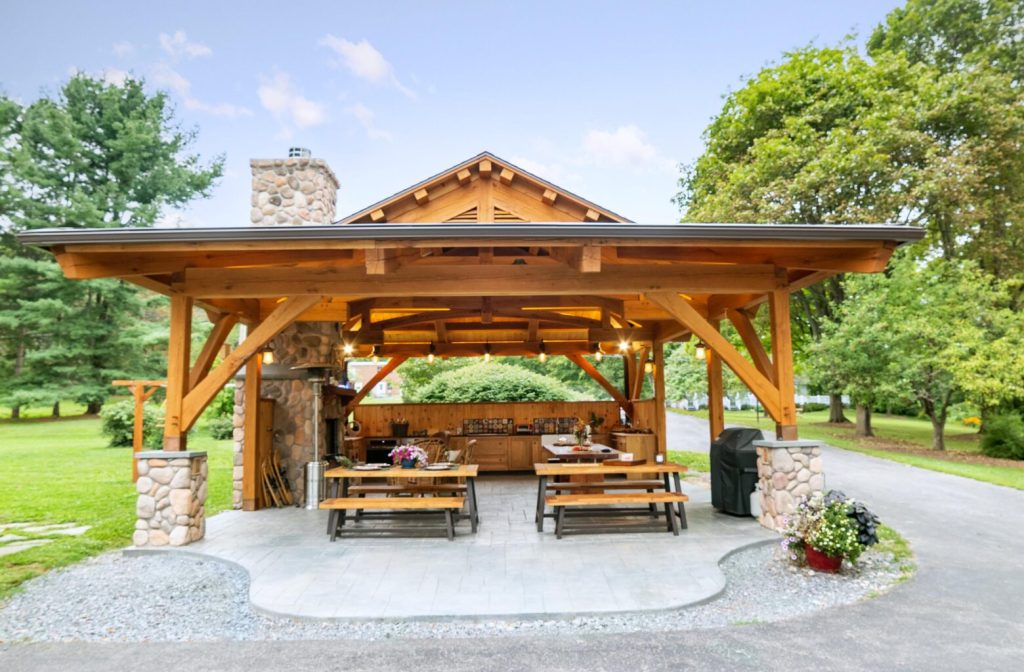
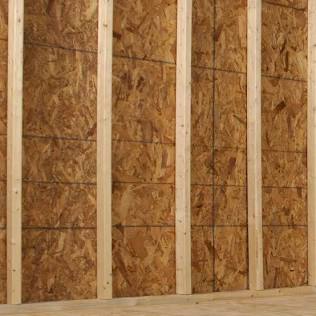
When it comes time to build your new outdoor kitchen, pressure treated lumber will be one of your building materials. Pressure treated lumber for your framing. Pressure treated lumber for your studs.
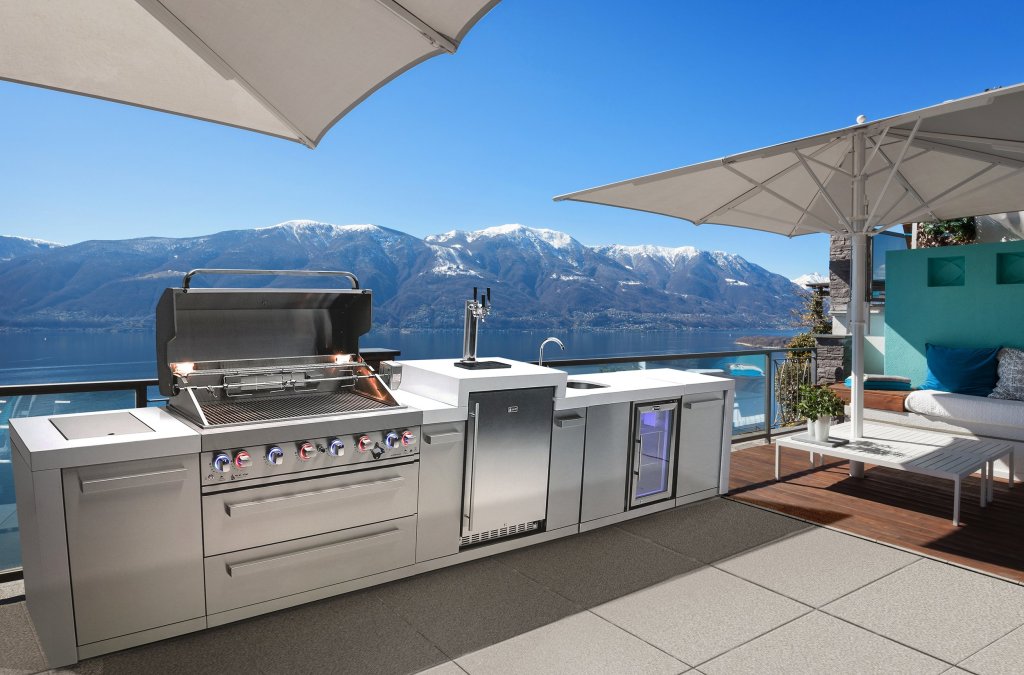
Pressure treated lumber is combustible. You’ll be adding appliances. So, when you are building your outdoor kitchen, it’s a good idea to purchase liners. Your liners will be installed before your appliances go in.
Liners protect lumber from heat. Heat which will be generated when you enjoy benefits bestowed upon you when you fire up the grill out back. In your new, custom-built outdoor kitchen.
Appliance liners can be delivered – onsite – by the manufacturer. With pre-cut holes already built into the liners. These pre-cut holes accommodate your gas line. And your electric line. Concerning yourself with how you will be plugging in your new wine cooler, once your outdoor kitchen has been completed, is a concern which you simply will not have.
In regard to liners you can use with your appliances, Utah-based Blackstone, or Ontario, Canada-based Napoleon, or EdgeStar (one of the retail brands under Virginia-based Ferguson) are some of the popular choices that I see today.
We started with lumber, which brought us to appliance liners. Due to the fact that lumber is combustible. Let’s segue back to lumber. To one of the major components involved in building your outdoor kitchen: framing.
When it comes to framing your outdoor kitchen, 24” framing – I.e.: 24” on center – is a likely selection. With this type of framing, your wall studs will be 24 inches apart. As measured from the center of one stud to the center of the next stud.
24” on center is advisable when building your outdoor kitchens. There are a few good reasons for this. So let’s speak to a few of those…
With 24” on center – compared to 16” on center – you will use fewer studs.
With 16” on center, you measure 16 inches from the center of one stud to the center of your next stud. That distance – with 16” on center – is 16 inches. A distance of 16 inches – from the center of one stud, to the center of the next stud – is 8 inches less than you have with 24” on center.
With 24” on center, it’s simple. You need fewer studs. With 16” on center – due to the reduced distance between studs – you use more studs.
Choosing to go with 24”on center enables you to reduce material costs. As well as labor costs. Fewer studs. Fewer hours spent erecting studs.
One determinant for going with either 16” on center or 24” on center is load bearing walls.
With your home, you have load bearing walls. Your outdoor kitchen won’t have load-bearing walls. No need to go with 16” on center. 24” on center is fine.
So…a fun recommendation. How about using the savings you get by going with 24” on center to consider adding a “Rolex of a grill” to your enhanced outdoor living space. A Mont Albi.
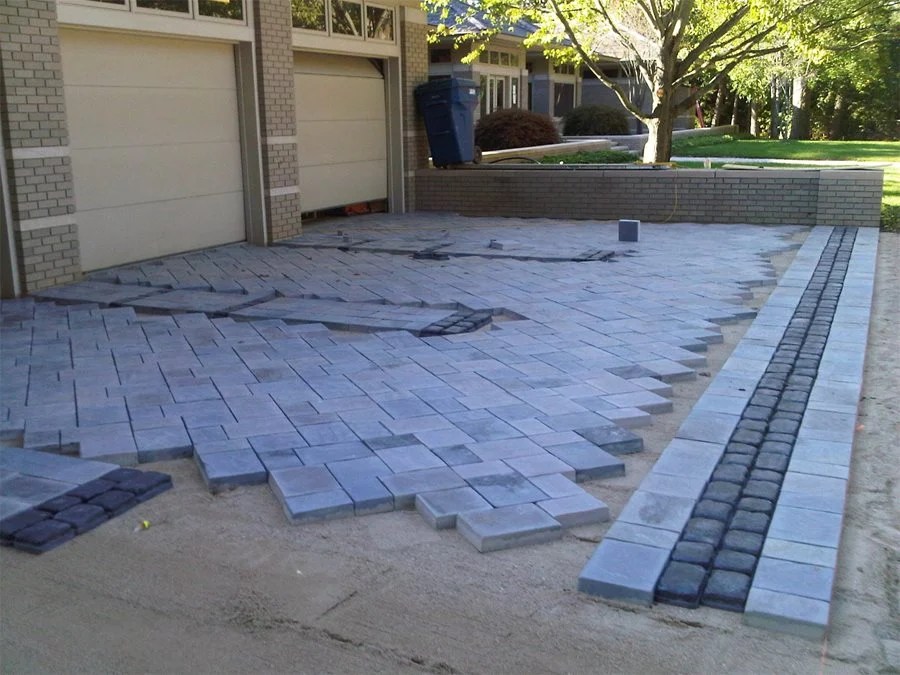
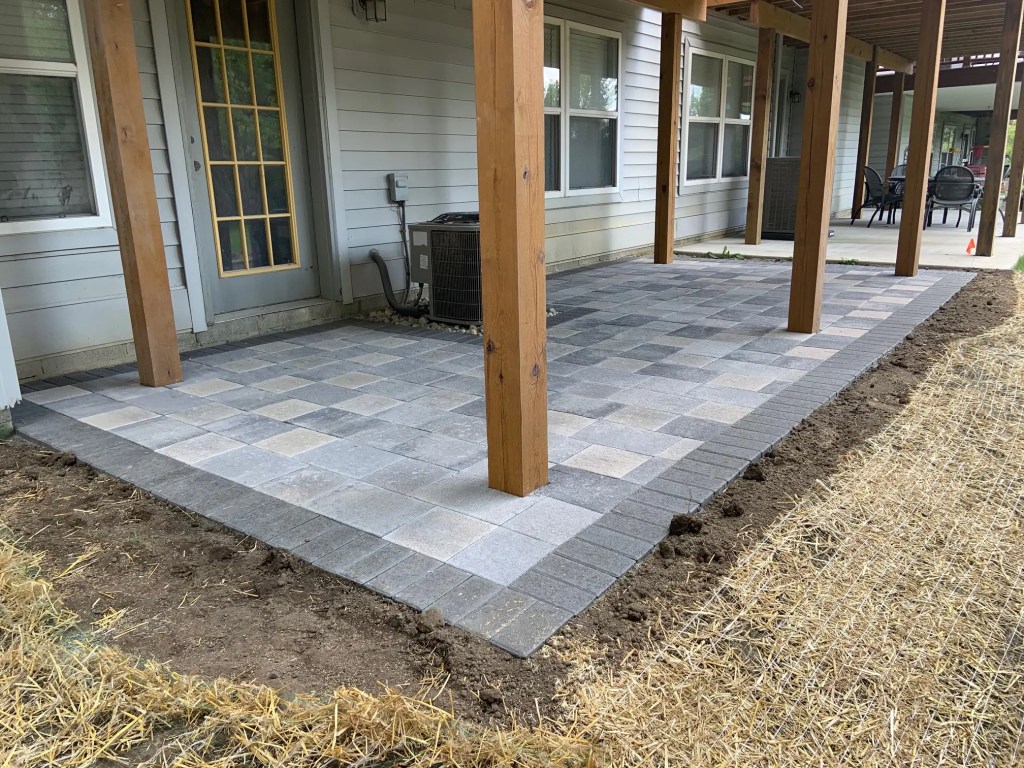
A well-prepared patio subsurface is crucial for long-term stability and drainage. Your patio subsurface is your patio’s foundation. With the proper foundation, you will ensure that your patio stays level. Preventing pavers from shifting. The result? You will have a durable, aesthetically pleasing patio.
So what goes into a strong patio foundation? QP, DGA, 1” blend, crusher run.
Quarry process (“QP”), Dense Graded Aggregate (“DGA”), 1″ blend and crusher run. Four denominations used to identify an ingredient which is necessary in order to create the strong patio subbase you are looking for. An ingredient which is tantamount to the creation of the strong patio subbase you will want (and need) when you add that new paver patio to your outdoor living space.
So, let’s talk a little bit about this important construction ingredient…
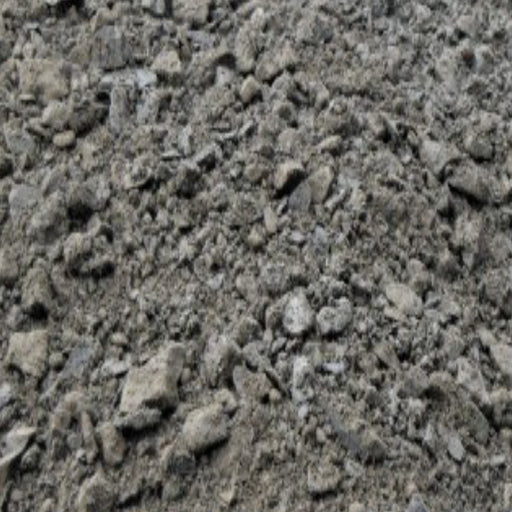
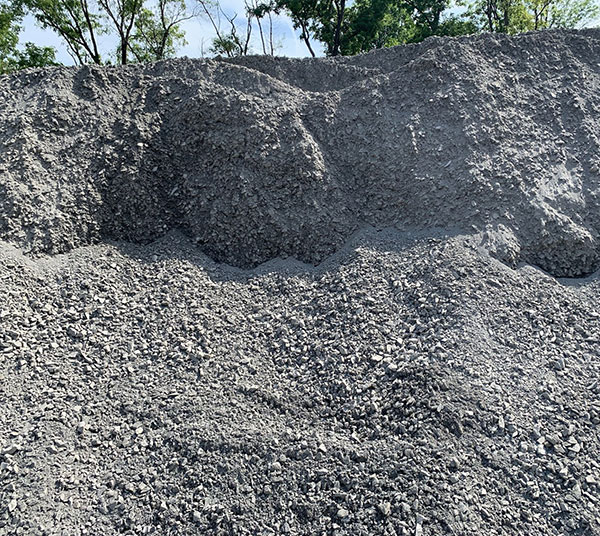
QP – DGA – 1” blend – crusher run is an aggregate which has been crushed and re-sized. Its altered composition? With QP – DGA – 1” blend, you have a collection of stones, 1” and smaller. With crusher run? Re-sized stones with a range in sizes which can be a tad larger than QP, DGA or 1” blend. With crusher run, you have an aggregate consisting of stones up to 1 1/2 inches in diameter…down to minuscule dust particles.
Your paver patio subbase will consist of a foundation which is made up of filtered, re-sized stones – up to either 1” or 1 1/2” in diameter, stone dust and gravel. Your patio subbase.
What are some of the benefits you will attain by using QP, DGA, 1” blend or crusher run when you construct your paver patio?
QP – DGA – 1” blend – crusher run are load bearing aggregates. By using a load bearing aggregate – coupled to adherence to the recommended level for your QP – DGA – 1” blend – crusher run subbase, your Cambridge, or Unilock or Techo-Bloc pavers will require a lower level of future maintenance. Translation? Fewer patio repairs. Less money spent on patio upkeep.
Furthermore, QP – DGA – 1” blend – crusher run is resistant to damage to your patio resulting from cold weather and frost. On top of this, using QP – DGA – 1” blend – crusher run as an ingredient for your patio’s subsurface will lessen concerns about erosion.
How does QP – DGA – 1” blend – crusher run work? This aggregate stabilizes your compacted base. In a nutshell, QP – DGA – 1” blend –crusher run establishes your optimal patio subgrade.
Stability, support and drainage…
QP – DGA – 1” blend – crusher run also creates an efficient drainage system. While preventing settlement.
Sold by the ton, you’ll want to purchase at least one ton of QP – DGA – 1” blend – crusher run for every 30 square feet of paver patio that you intend to construct.
For example…
If your hardscaping calls for building a 2,000 square foot patio – so as to accentuate the beauty within your backyard blueprint – you’ll want a delivery of 67 tons of QP – DGA – 1” blend – crusher run.
The ideal thickness of the QP – DGA – 1” blend – crusher run you will have beneath your new paver patio? Between four to six inches.
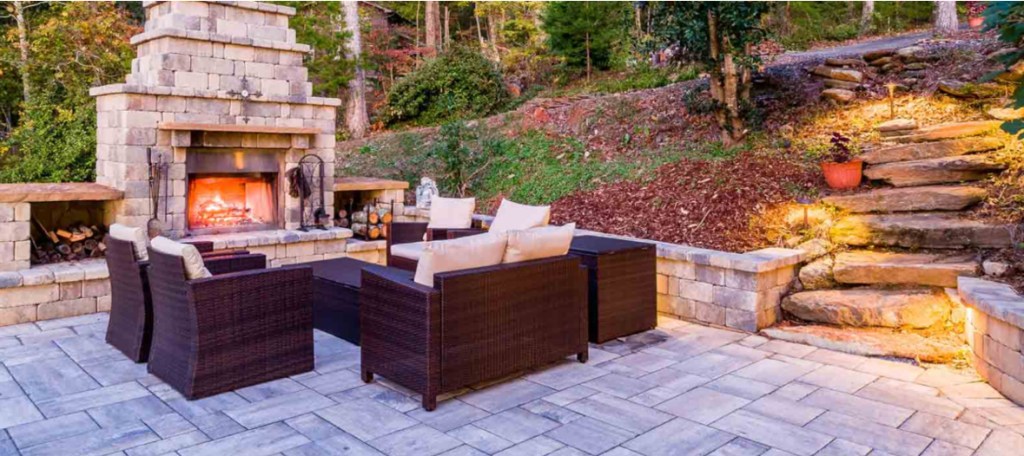
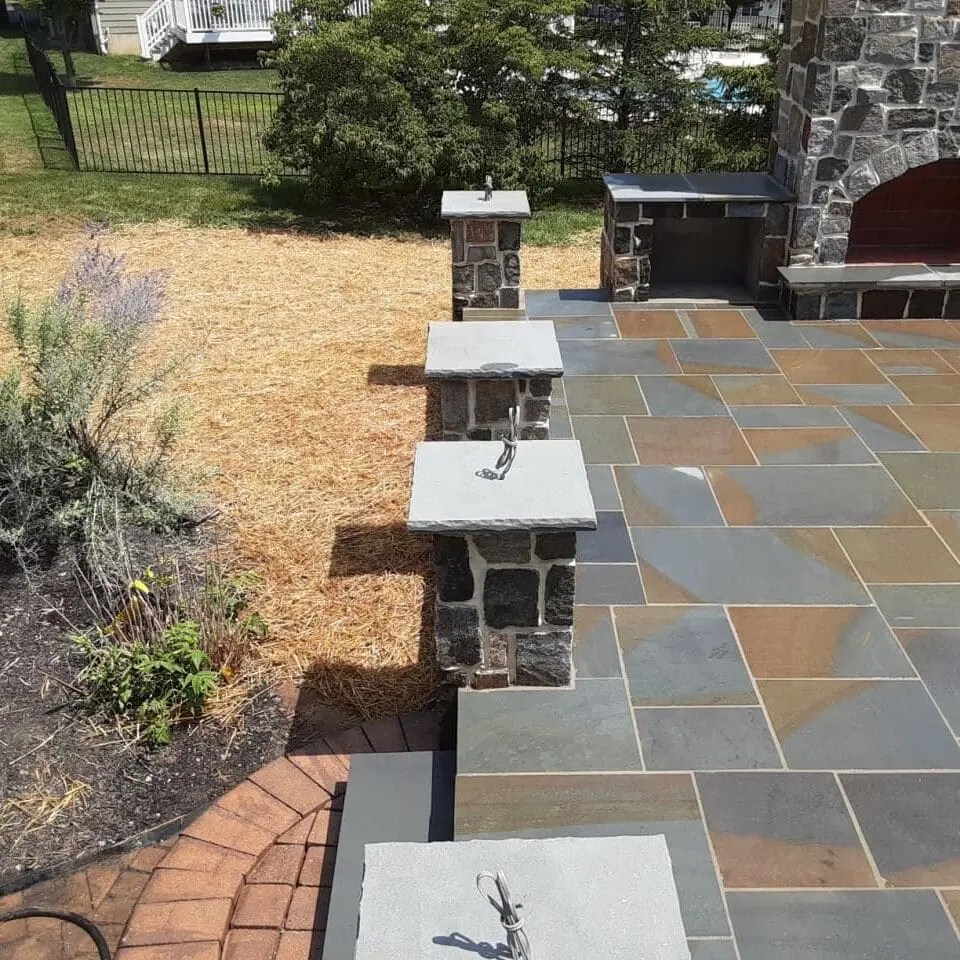
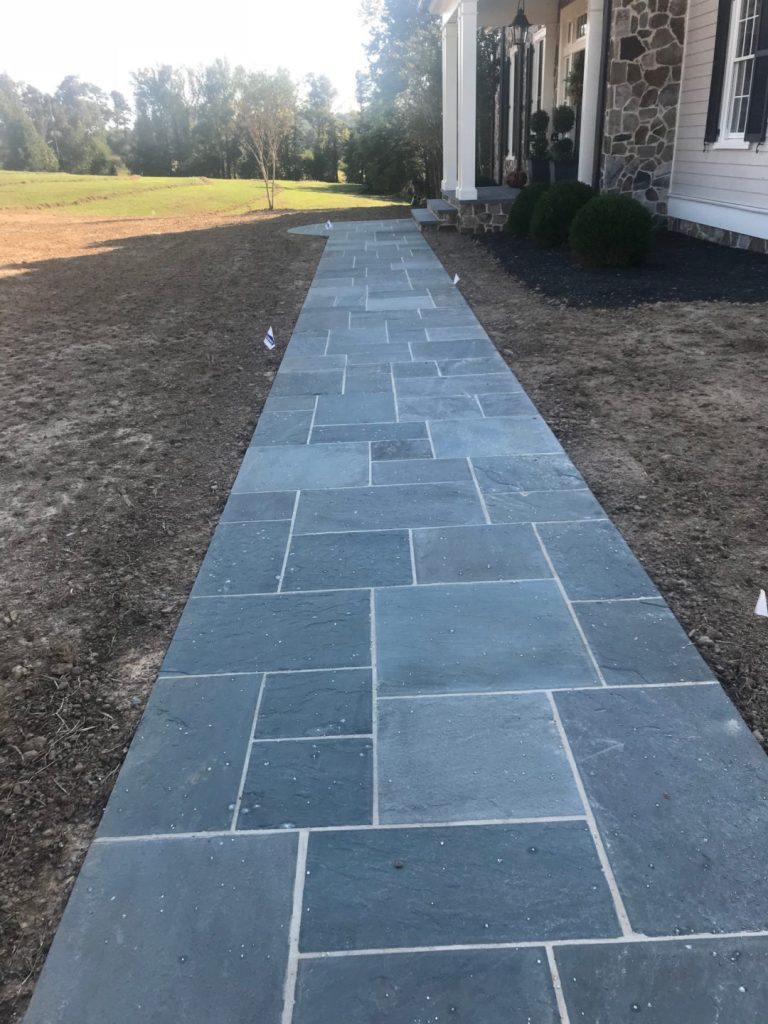
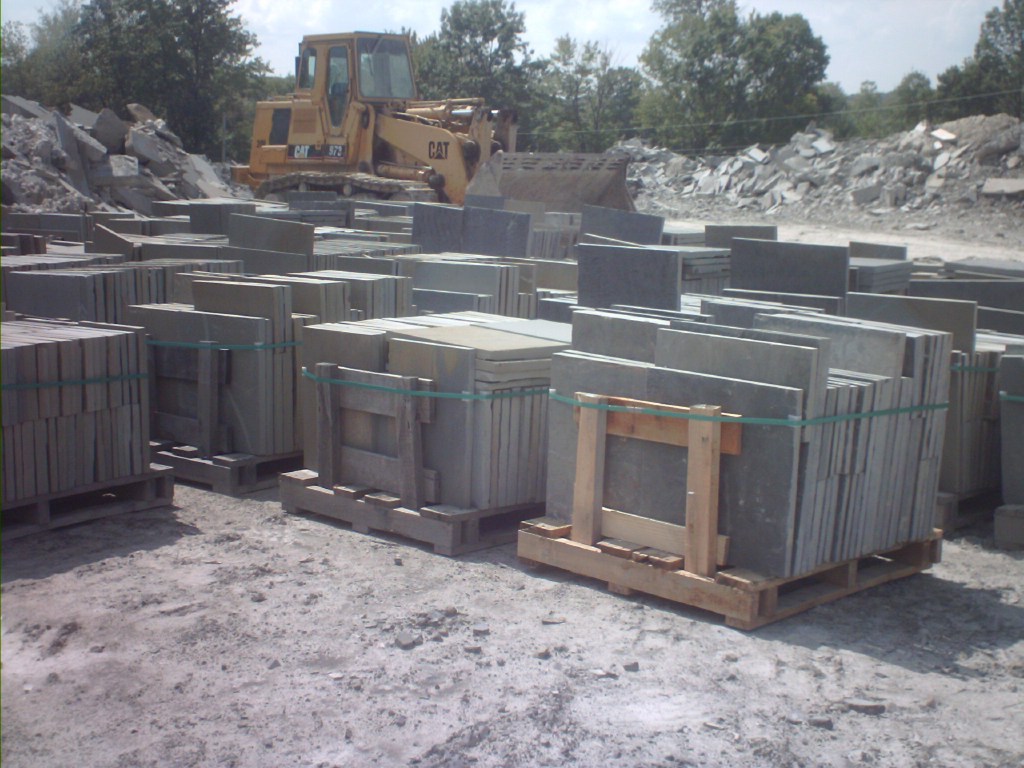
Bluestone is a natural stone which is found in the United States. First discovered in New York State during the 1820’s, many a pool setting – many an outdoor kitchen – is adorned in the beauty of Bluestone.
Bluestone – removed from the ground by either drilling, blasting or excavating – is weather-resistant. With its aesthetic bluish – grayish tone, the ornate features of Bluestone anoints this “American sarsen” as a popular selection when it comes to outdoor living. And hardscaping. Leading to the ascension of Bluestone as the stone-of-choice for millions of homeowners who embark upon the fun task of crafting a customized design plan for their patio. For their outdoor kitchen. For their walkway.
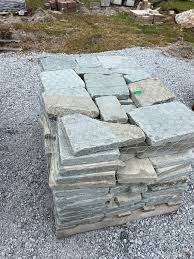
Bluestone is a type of flagstone. A fine-grained variation of flagstone.
So, what then is flagstone?
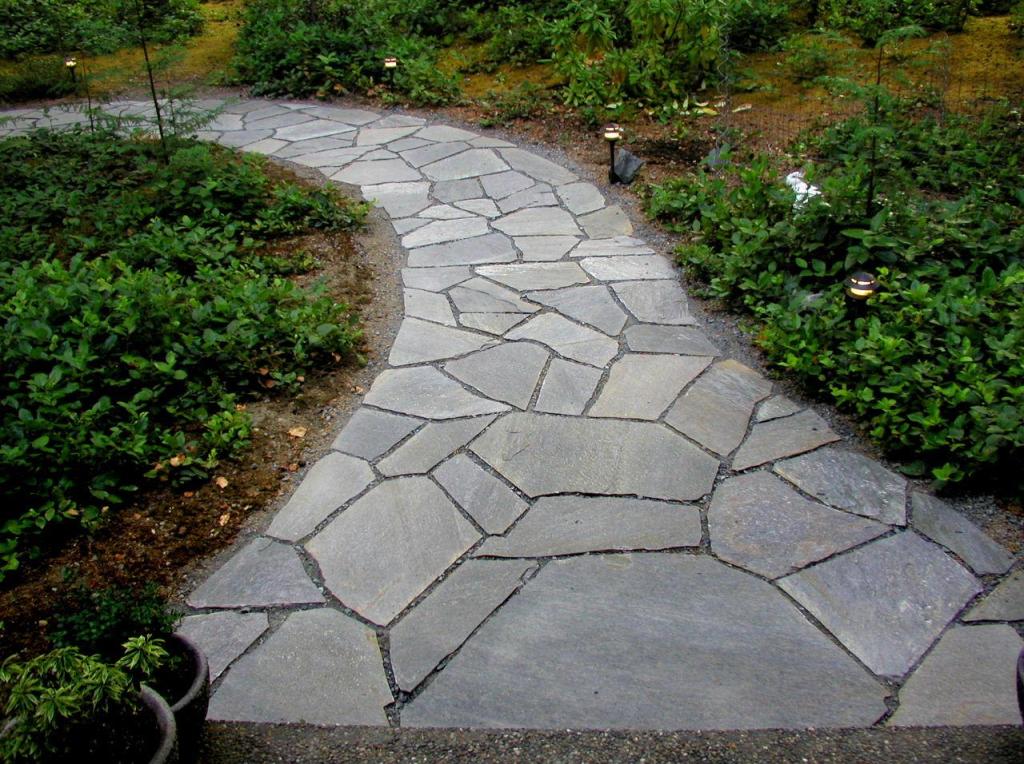
Flagstone is the broad term for sedimentary rock that is able to be split into flat, rectangular pieces.
Sedimentary rock – I.e.: flagstone – is formed through the accumulation of deposits. Formed by the fusion of particles. Particles brought together by waterways. For example, by the natural flow of a river.
Flagstone is derived from Middle English vernacular… its birth, traced back to the Old English word, flagge. Which means, turf.
Flagstone is a form of sandstone. The composition of flagstone? Fieldspar and quartz. Bluestone is flagstone. Flagstone is a form of sandstone.
So, what then is sandstone?
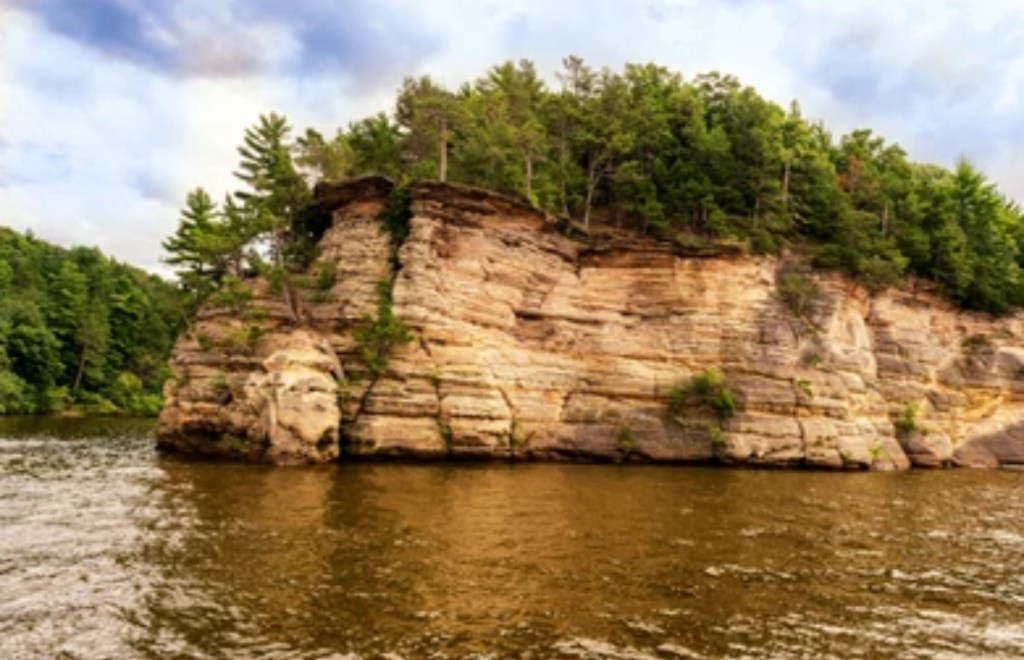
Sandstone is sedimentary rock, composed of grains of sand. Grains of sand cemented together.
While sandstone grains are adjoined, the grains in sandstone remain unfused.
Sandstone can be seen alongside rivers, lakes and coastlines. Areas where sand has been carried and deposited. Deposited sand – over time – leads to the formation of sandstone.
Flagstone – which mostly will be either red, buff or blue in color – is bound together by iron oxide. Or by calcite.
The state in which Bluestone was first discovered early in the 19th Century – New York State – is one of the two states which, to this day, supplies the majority of the Bluestone that Americans have come to love when it comes to hardscaping.
The other state being, New York’s neighbor, Pennsylvania.
Bluestone is also excavated in the Shenandoah Valley of Virginia.
Today, there are just a tad under 100 Bluestone quarries in New York State.
Author, Ted Ihde – Ted is a real estate broker, a real estate developer as well as co-CEO of Team With
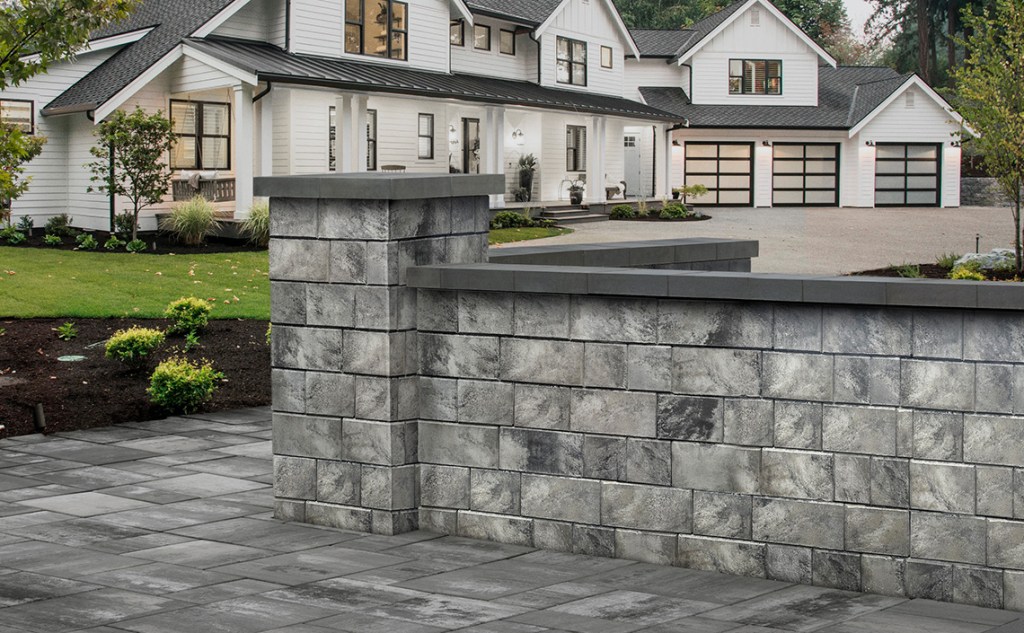
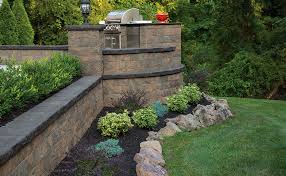
Retaining walls can be built using concrete blocks, bricks, wood or natural stone. Let’s assume that you come to the decision that you just love how a concrete block retaining wall will contribute to the organic flow of your backyard. Ok. So your next step is to determine how many blocks you need.
In order to determine the number of blocks you need for your retaining wall, first, figure out your measurements.
You need the total length of the retaining wall you intend to build. You also need to determine the height of the retaining wall you intend to build. You now have the length and the height for your project.
With your retaining wall length and height determined, you will now be able to figure out how many pavers you need.
One visually appealing – and durable – option to consider when building your retaining wall will be Cambridge pavers. Here is why…
The core ingredient of Cambridge pavers is high-density concrete. The engineering behind Cambridge pavers -behind the idea of using high- density concrete pavers – offers the combination of strength and a smooth, non-porous surface.
The smooth, non-porous surface of Cambridge pavers prevents water from seeping in. While at the same time, the high-density composition makes these pavers resistant to wear-and-tear. And to weather damage.
How many Cambridge pavers do I need to build my retaining wall?
Divide the length of your finished retaining wall by the length of one Cambridge paver. Let’s say you elect to go with Cambridge Ledgestone pavers. Cambridge Ledgestone pavers have a total length of 9 inches, per paver. Divide the length of your retaining wall by 9 inches (the length of the Cambridge Ledgestone paver). The number you arrive at provides you with the number of Cambridge Ledgestone pavers you will need – per course – to build your retaining wall.
The height of your retaining wall…
Divide the height of your finished retaining wall by the height of one Cambridge Ledgestone paver. Cambridge Ledgestone pavers have a height of 2 3/8 inches, per paver. Wall height, divided by 2 3/8. Now you have the number of courses in your retaining wall.
You figured out length…check. You figured out height…check. You have two numbers…
Next, multiply these two numbers together. You now have the number of Cambbridge Ledgestone pavers you need to build your retaining wall.
Your foundation…
First, ensure that you will be building your retaining wall on a level base. Then, dig a trench. The trench is for your first course of pavers.
The depth of your dig…
The trench you dig should be deep enough so that, when you set your Cambridge pavers, half of each paver is visible, above ground.
We know that the height of one Cambridge Ledgestone paver is 2 3/8 inches. And your retaining wall will be set upon a paver base. You’ll need at least three inches of paver base.
Cambridge pavers height – 2 3/8 inches.
Paver base – 3 inches.
By adding three inches – your paver base – to 2 3/8 – the height of one Cambridge Ledgestone paver – you arrive at 5 3/8 inches. And you know you will want at least half of your first course of pavers to be exposed, above ground level.
So, you figured it out for yourself…
The depth of the trench you will dig to build your new retaining wall – using Cambridge Ledgedtone pavers – is between 4 to 5 inches.
Time to start enjoying how that beautiful retaining wall you built created aesthetic non-intrusive boundaries in “your American Picasso” – your exquisitely-designed American backyard.
Bluestone is a natural stone…domestic to the United States. First discovered in New York State during the 1820’s, many a pool setting – many an outdoor kitchen – is adorned in the beauty of Bluestone.
Bluestone – removed from the ground by either drilling, blasting or excavating – is weather-resistant. With its aesthetic bluish – greyish tone, the ornate features of Bluestone anoint this “American sarsen”as a popular selection when it comes to outdoor living, and hardscaping. Having led to the ascension of Bluestone as the stone-of-choice for millions of homeowners who embark upon the fun task of crafting a customized design plan for their new patio. For their new outdoor kitchen. Or for their new walkway.
Bluestone is a type of flagstone. A fine-grained variation of flagstone.
So, what then is flagstone?
Flagstone is the broad term for sedimentary rock that is able to be split into flat, rectangular pieces.
Sedimentary rock – I.e: flagstone – is formed through an accumulation of deposits. Formed by the fusion of particles. Particles brought together by waterways. For example, by the natural flow of a river.
“Flagstone” is derived from Middle English vernacular… it’s birth traced back to the Old English word, flagge. Which means, turf.
Flagstone is a form of a sandstone. The composition of flagstone? Fieldspar and quartz.
Bluestone is flagstone. Flagstone is a form of sandstone.
So, what then is sandstone?
Sandstone is sedimentary rock, composed of grains of sand. Grains of sand nature has cemented together. While sandstone grains are adjoined, the grains in sandstone remain unfused.
Sandstone can be seen alongside rivers, lakes and coastlines. Areas where sand has been carried and deposited. Deposited sand – over time – leads to the formation of sandstone.
Flagstone – which mostly will be either red, buff or blue in color – is bound together by iron oxide. Or by calcite.
The state in which Bluestone was first discovered early in the 19th Century – New York State – is one of the two states which supply the majority of the Bluestone Americans rely upon when it comes to hardscape design. The other state being, New York’s neighbor, Pennsylvania.
Bluestone is also excavated in the Shenandoah Valley of Virginia.
Today, there are a just a tad under 100 Bluestone quarries in New York State.
When you are updating your home, let’s say plans and specs for your project will cost $3,000. Within your Schedule of Values (“S.O.V.”), the $3,000 cost for plans and the specs will be labeled as a dollar amount within the project – “plans and specs, $3,000.” Within your S.O.V. this $3,000 cost for plans and specs will also be categorized as a percentage of your overall project.
Let’s say your home updates will cost $125,000 in order to complete. Your plans and specs cost $3,000. So within your S.O.V., plans and specs will be categorized as 2.4% of your overall project. Itemized as a dollar amount – $3,000 – and then itemized once again as a percentage – 2.4% – within your S.O.V.




 Thinking About Becoming a Real Estate Developer?