Kansas City, in the very beginning

Kansas City… Kansas City, Missouri. Kansas City, Kansas. 


There had been a few different beginnings for what we now know to be Kansas City. The very first one?  

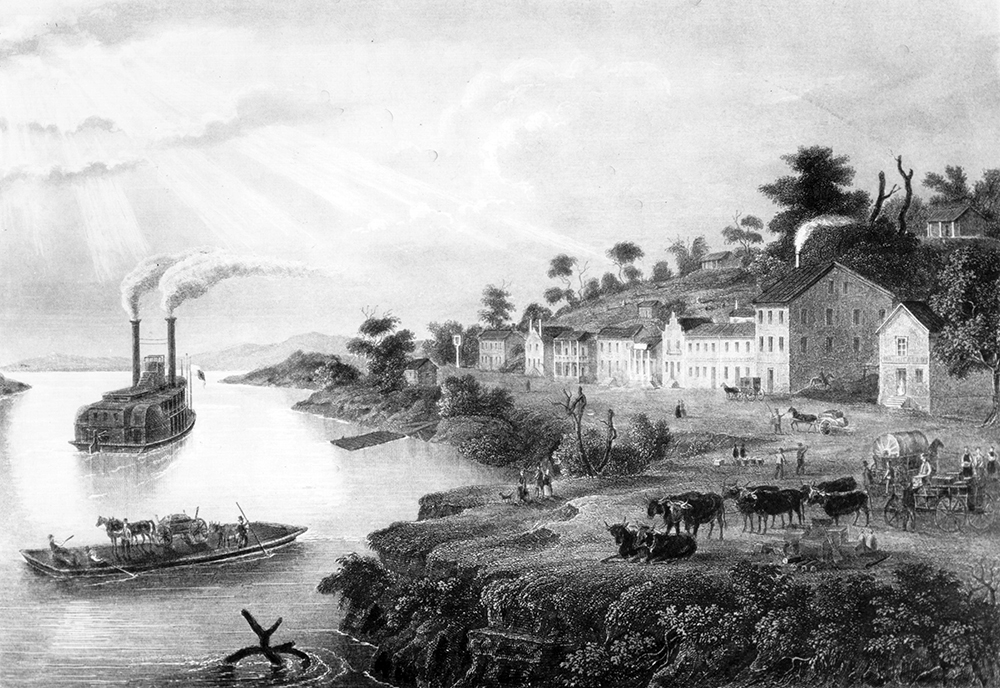
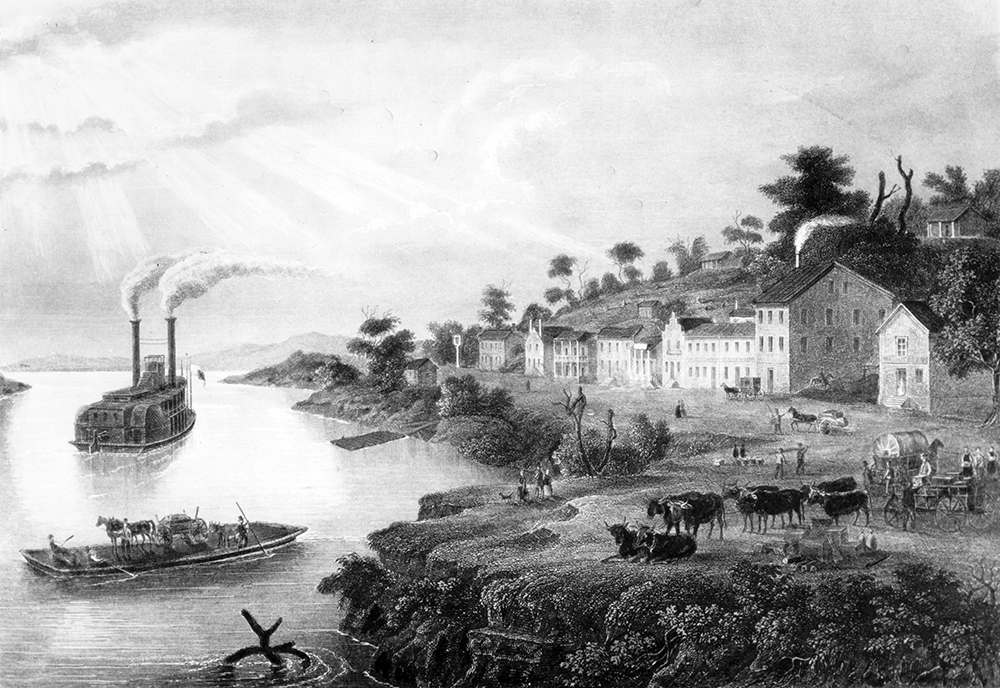
In the 1830s, we had the first one – Westport Landing. 

Westport Landing was established on a section of 257 acres which would evolve into what would become Kansas City, Missouri. 

The 257 acres had been sold by the federal government to a man of French ancestry…Gabriel Prudhomme. This land sale took place in 1831. 

Whereas the land Gabriel Prudhomme purchased from the federal government would go on to become Kansas City, Missouri, Westport Landing was the early, pre-Kansas City, Kansas City development.

Westport Landing – strategically set up alongside the heavily-trafficked Santa Fe Trail – was an unincorporated collection of merchants. These were merchants who established their businesses in Westport Landing to provide Santa Fe Trail travelers with supplies. 

The merchants were inland. And the Westport Landing merchants figured out they could reduce their costs by receiving supplies by way of the Missouri River. Rather than by land. And they did.

The waterway entry point at which Westport Landing merchants were able to receive supplies shipped to them on the Missouri River was located where what is now Grand Boulevard in Kansas City, Missouri intersects with the Missouri River. And it is at this intersection – where Grand Boulevard meets the “Big Muddy” – where we found Westport Landing. 

Twenty years later – in 1850 – Westport Landing was incorporated as the Town of Kansas. 

Three years after that – in 1853 – the Town of Kansas was reincorporated and renamed. The new name for the Town of Kansas? The City of Kansas. And this renaming – as the City of Kansas – took place eight years before the State of Kansas became the 34th state of the United States. In 1861. 

In 1889, the name for the city – the City of Kansas – was changed. Changed to Kansas City. The very, very first Kansas City – that first Kansas City being, Westport – was annexed by Kansas City, Missouri eight years later. In 1897.

All the while, on the other side of the Missouri River – in the new Kansas Territory – small Kansas settlements were forming. And growing. Growing into small Kansas towns.

In 1872, a consortium of small Kansas towns – on the other side of the river – merged. And incorporated. Therein – in 1872 – we have the origin for Kansas City, Kansas.

Wherein the larger Kansas City – and the older Kansas City, too – is the one which is located in Missouri, and not in Kansas, the “Kansas” in Kansas City is not derived from the State of Kansas.

The name of the city – Kansas City, Missouri – was named after a river. Not a state. Not Kansas. That river being…the Kanza River. 

The Kanza River would go on to become the Kansas River. The Kansas River provided the name – “Kansas” – for the city – Kansas City, Missouri.

So the city – Kansas City – which originally formed as Westport Landing, which would later go on to become the Town of Kansas, which would later go on to become the City of Kansas, which would later go on to become Kansas City…does not derive its name from its neighbor to the west – the State of Kansas.

Kansas City…in the very beginning


Kansas City… Kansas City, Missouri. Kansas City, Kansas.
There had been a few different beginnings for what we now know to be Kansas City. The very first one?  

In the 1830s, we had the first one – Westport Landing. 

Westport Landing was established on a section of 257 acres which would evolve into what would become Kansas City, Missouri.

The 257 acres had been sold by the federal government to a man of French ancestry…Gabriel Prudhomme. This land sale took place in 1831.

Whereas the land Gabriel Prudhomme purchased from the federal government would go on to become Kansas City, Missouri, Westport Landing was the early, pre-Kansas City, Kansas City development.

Westport Landing – strategically set up alongside the heavily-trafficked Santa Fe Trail – was an unincorporated collection of merchants. These were merchants who established their businesses in Westport Landing to provide Santa Fe Trail travelers with supplies. 

The merchants were inland. And the Westport Landing merchants figured out they could reduce their costs by receiving supplies by way of the Missouri River. Rather than by land. And they did.

The waterway entry point at which Westport Landing merchants were able to receive supplies shipped to them on the Missouri River was located where what is now Grand Boulevard in Kansas City, Missouri intersects with the Missouri River. And it is at this intersection – where Grand Boulevard meets the “Big Muddy” – where we found Westport Landing. 

Twenty years later – in 1850 – Westport Landing was incorporated as the Town of Kansas.

Three years after that – in 1853 – the Town of Kansas was reincorporated and renamed. The new name for the Town of Kansas? The City of Kansas. And this renaming – as the City of Kansas – took place eight years before the State of Kansas became the 34th state of the United States. In 1861. 

In 1889, the name for the city – the City of Kansas – was changed. Changed to Kansas City. The very, very first Kansas City – that first Kansas City being, Westport – was annexed by Kansas City, Missouri eight years later. In 1897.

All the while, on the other side of the Missouri River – in the new Kansas Territory – small Kansas settlements were forming. And growing. Growing into small Kansas towns.

In 1872, a consortium of small Kansas towns – on the other side of the river – merged. And incorporated. Therein – in 1872 – we have the origin for Kansas City, Kansas.

Wherein the larger Kansas City – and the older Kansas City, too – is the one which is located in Missouri, and not in Kansas, the “Kansas” in Kansas City is not derived from the State of Kansas.

The name of the city – Kansas City, Missouri – was named after a river. Not a state. Not Kansas. That river being…the Kanza River.

The Kanza River would go on to become the Kansas River. The Kansas River provided the name – “Kansas” – for the city – Kansas City, Missouri.

And Kansas


So the city – Kansas City – which originally formed as Westport Landing, which would later go on to become the Town of Kansas, which would later go on to become the City of Kansas, which would later go on to become Kansas City…does not derive its name from its neighbor to the west – the State of Kansas.
Homesteading, Kansas style


In 1873, Marquette, Kansas was settled.

Marquette is a charming Kansas town located in McPherson County. Marquette is home to the Kansas Motorcycle Museum.

By 1890, the population of Marquette was 367. Today, Marquette’s population is fewer than 1,000.

Marquette is one of a handful of Kansas municipalities where a future homeowner who chooses to relocate to Marquette could acquire a residential lot for their new home build through Kansas’s homesteading provision.

Residential lots in Marquette’s homesteading program have ranged from between 11,000 to 25,000 square feet.

Lincoln is a quaint Kansas town located in Lincoln County. Lincoln in home to Crispins Drug Store Museum.

Lincoln was settled in 1870. By 1880, Lincoln’s population was 400. In 2020, the population of Lincoln was fewer than 1,500.

In Lincoln, free land (with conditions) has been able to be conveyed to Kansas homesteaders through Lincoln’s homesteading program. The homesteaded land in Lincoln has been able to be conveyed with the condition that the homesteader builds – and lives in – a new single-family home on their homesteaded lot.

Residential lots in Lincoln’s homesteading program have ranged from between 14,000 to 35,000 square feet.

Homesteading in Marquette and Lincoln is accompanied by conditions homesteaders are required to meet.

In Lincoln, a homesteader is required to build – and live in – their new single-family home. Also, a new home built in Lincoln on a homesteaded lot is required to have a minimum of 1,300 square feet of living area.

The Kansas City Stockyards


In the late 1860’s, a young Illinois cattle dealer – Joseph “Cowboy” McCoy – had been scouting out locations. Cowboy McCoy was interested in an area along what became the Kansas Pacific rail line.


Cowboy McCoy was looking for the ideal setting. A destination point. Someplace Texas cattlemen could drive their cattle up north to before being sent on to Abilene, Kansas.

From Abilene, cattle would be shipped east. To Kansas City. Therein lies the origin for Kansas City’s emergence in the early Twentieth Century American cattle business.

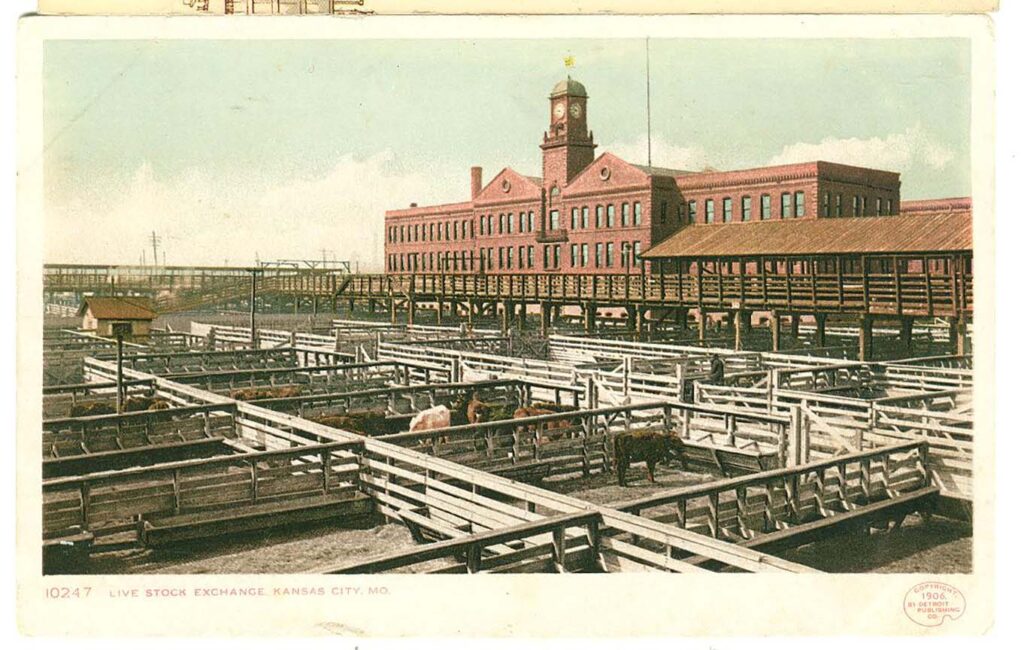
A few years after Cowboy McCoy settled in Abilene, Kansas City got their stockyards. Kansas City’s stockyards were located in a section of KC known as the West Bottoms. The birth of KC’s stockyards? 1871.

One: Cowboy McCoy. Two: Abilene. Three: The cattle business and Kansas City. Further writing, focused upon the latter. The two formers…mentioned as historical occurrences, relevant to the latter…

Ten years prior to KC getting their stockyards, Kansas City’s population had been about 4,000. By 1900, KC’s population grew to 160,000. Kansas City’s cattle industry was the driving force behind the city’s population growth.

Kansas City’s stockyards enabled livestock owners to transport their cattle to an exchange. At this newly-formed exchange in Kansas City, cattle could be sold to the highest bidders. Prior to the establishment of KC’s stockyards – and the exchange – livestock owners were only able to sell their cattle at whatever price railroad men offered to pay…limiting earning potential for cattle men. Kansas City’s stockyards – coupled to the establishment of the Kansas City Livestock Exchange – created a market for cattle men. The result? Higher cattle prices.

The Kansas City Livestock Exchange Building was constructed in 1911. At that time, the Kansas City Livestock Exchange Building was the largest livestock exchange building in the world.

The Exchange Building in Kansas City once housed over 400 offices. Telegraph offices. Beauty shops. Cattle tradesmen. Packing house buyers. Banks. All could be found in the Exchange Building in KC early in the 20th Century.

If you strolled through Kansas City’s stockyards early in the 20th Century, you could have found yourself in either Kansas or Missouri. The stockyards straddled both states.

KC’s stockyards were established in Kansas. Along the Kansas River. Two-thirds of KC’s stockyards were located in Kansas. The remainder of KC’s stockyards were located in Missouri.

By 1914, KC’s stockyards consisted of over 200 acres. Sixteen railroads converged in KC’s stockyards. The growth of the KC cattle trade – as well as the growth of the railroad – significantly contributed KC’s population growth. And to the growth of Kansas City’s economy. Kansas City’s first Union Station opened in the stockyards. In 1878.

By 1923, over 2.5 million head of cattle were shipped through KC’s stockyards. Local Kansas City packing houses were purchasing over 1 million heads of cattle per year. Only Chicago – Chicago’s Union Stockyards – was processing more cattle than KC. In fact, a world record was set in those KC Stockyards. In 1923. The record? One day’s receipts of cattle: 60,206 head

The maximum daily capacity of KC’s stockyards grew to nearly 200,000 head of cattle. Creating thousands of jobs. The KC stockyards were taking in cattle from 35 states. Shipping cattle off to 42 states. Plus Canada. Hence, Kansas City’s nickname – Cowtown.

In KC’s West Bottoms, where the stockyards were once located, where the cattle industry once thrived, today, you won’t find any cows.

Today in the West Bottoms, Flaherty and Collins’ Stockyards Place is a beautiful 21st Century Midwest collection of condominiums. Luxury living. A trendy urban lifestyle. A bike trail which runs alongside the Kansas River. No cows.

KC’s stockyards processed their last head of cattle in 1991. In October of 1991, KC’s stockyards were closed for good. No more packing house buyers.

Today, a different form of buyers can be found where the KC stockyards once were. This new form of buyers? They’re Kansas City professionals. KC professionals who are shopping for a new condo. Buyers? Yes. Packing house buyers? No.

The Livestock Exchange in Kansas City was located on Gennessee Street. Just a stone’s throw away from that old exchange on Gennessee Street, today you’ll find Stockyards Place. Luxury living. Walking distance to wineries. To galleries. No cattle pens. No feedlots. No cows.


Redevelopment in “New Jersey’s Greenwich Village”…Red Bank


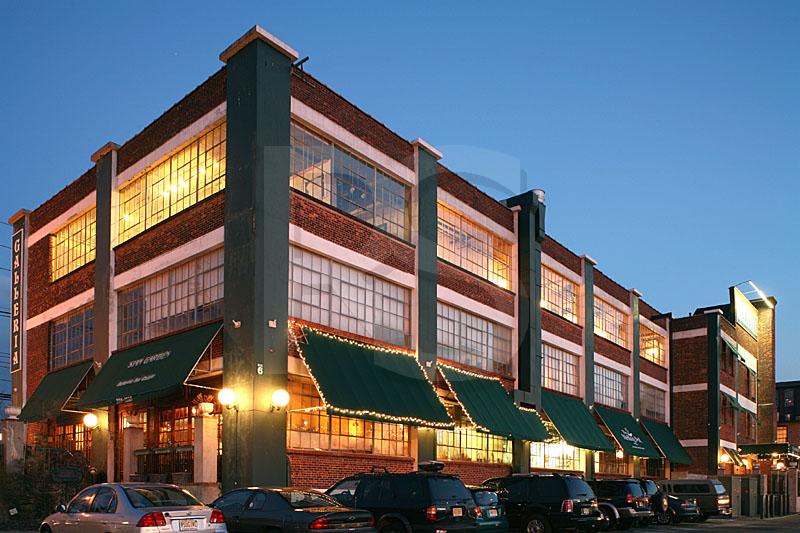
Nestled cozily in the heart of Red Bank, New Jersey, today, one will find The Galleria. The Galleria Red Bank. A quaint collection of offices, restaurants and boutiques. Found in “New Jersey’s Greenwich Village.” It took 10 years to build that Galleria…early in the Twentieth Century. And it wasn’t called The Galleria, at that time.


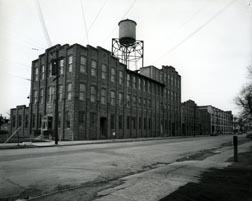
Between 1907 and 1917, The Galleria – originally known as The Eisner Building – was constructed with a specific endgame in mind. And that early Twentieth Century endgame for The Eisner Building was not thought up with similar planning to how The Galleria is utilized today.

The Galleria today? It’s a repurposed Red Bank centerpiece. Located where Bridge Avenue meets West Front Street. The original plan for The Galleria? For The Eisner Building? That original plan didn’t include any restaurants. Nor did that original plan include any retail outlets. Rather, that original plan for The Eisner Building was…textiles. A textile factory.

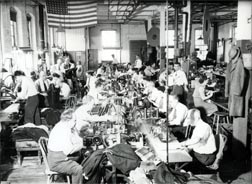
During World War I and World War II, The Eisner Building was a Red Bank stalwart…though not one which espoused trendy retail “DNA.” Rather, during both World Wars, The Eisner Building possessed quite a different industrial “DNA.” It functioned as a supply chain for American military equipment. Flight suits, military uniforms, gas masks. Wartime supplies. This was the original “DNA” for what is today The Galleria. The wartime purpose for The Eisner Building extended on through both World Wars. Manufacturing. Supplies for American soldiers. This was The Galleria – I.e.: then, The Eisner Building – in the early-to-mid Twentieth Century.


Today, there are eight retail outlets located in the once-a-textile-hub Galleria. Today, there are four restaurants located in the once-a-textile-hub Galleria. Buffalo wings, pizza, Thai food, Mexican food. All can be had today at The Galleria. No, you won’t find gas masks there…

Going back thirty years ago to when this transformation in Red Bank first took hold – in the early 1990’s – circumstances for The Galleria were quite different. At that time, The Galleria had not yet been redeveloped.

Today, there are five offices located in the once-a-textile-hub Galleria. That early Twentieth Century factory which long ago produced military uniforms, which once “majored” in textiles? That “DNA” has long since been repurposed. Redeveloped. Now “majoring” in office space. In restaurants. In retail.


In 2024, The Galleria is a 100,000 a square foot rustic multi-purpose retail center. One which owns a classic design. Situated on just about three acres. Complete with its own Farmers Market. A Farmer’s Market which begins each year on Mother’s Day…extending on through November.

While in 2024 The Galleria is most certainly a Monmouth County favorite among shoppers – not soldiers who are in need of supplies – The Galleria also serves as a Monmouth County example for what real estate redevelopment efforts can (and do) look like.

Neighborhoods are often interwoven by unique neighborhood features…and in KC’s Brookside, arguably, that unique neighborhood feature was that trolley…


Brookside is a proud collection of charming, quaint, leafy neighborhoods. Located in a southern section within Paris of the Plains – Kansas City, Missouri. Brookside also happens to be the largest contiguous master-planned community in the United States. Master-planned communities…that topic shall be left for another writing.

Part of the Country Club District, original plans for Brookside neighborhoods included building new homes for middle-income families, upper middle-income families, as well as high-income families. The more expensive homes in Brookside neighborhoods tended to have been built towards the west. Oftentimes, higher home values in Brookside neighborhoods have been assumed to be able to be determined based upon how far east – or how far west – of Main Street the home was originally built.

Brookside’s Trolley Track Trail…

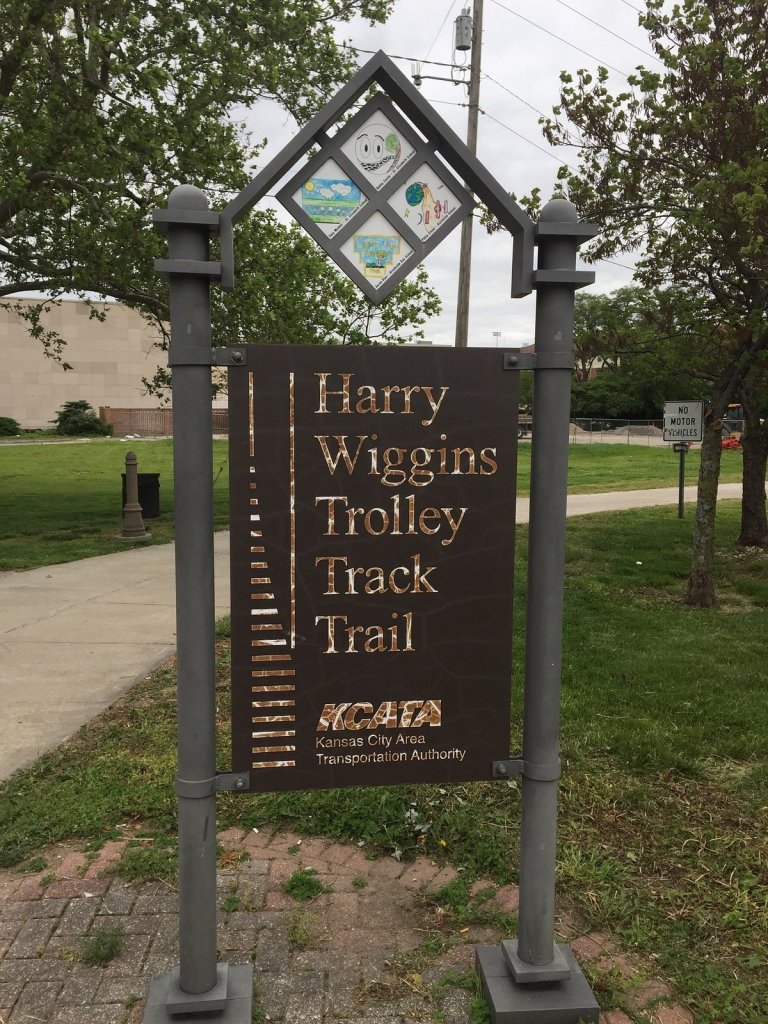
The Harry Wiggins Trolley Track Trail. This iconically-Brookside-only feature, named after the KC-born Missouri state senator Harry Wiggins – is a six-mile long pathway which runs right through the middle of those charming Brookside neighborhoods.

There is no trolley that one would ever find today on this Brookside trolley trail. No trolley, and no trolley tracks either. But at one time, there had been a trolley. Trolley tracks too. That old Brookside trolley run in Kansas City had been born in the late 19th Century.

By the late 1800’s, similar to cable cars which were already running out west in San Francisco, early-day KC trolleys, traveling along the Harry Wiggins Trolley Track Trail – through Brookside – were propelled by underground cables. The earliest Brookside trolleys ran by gripping underground cables. The underground cables were built along – I.e.: built underneath – the Brookside trolley track.

As the late 19th Century transitioned into the early part of the 20th Century, the means by which KC streetcars and trolleys were propelled – the underground cable system – was replaced with a streetcar and a trolley propulsion system, powered by electricity.

Those old Brookside trolley tracks we are talking about here have long since been torn up. The Harry Wiggins Trolley Track Trail is a now KC favorite among walkers, runners and cyclists. Not trolleys. Those old, adorable KC trolleys in Brookside – as well as the trolley tracks on which Brookside trolleys once traveled – long since having been replaced by a walking path. And by Kansas Citians walking, jogging or cycling over to Roasterie to enjoy a nice latte. In Brookside.

At its inception, the Harry Wiggins Trolley Track Trail fostered a trackbed, wooden cross ties, and the ballast. Facilitating a trolley’s passageway, through Brookside neighborhoods. This trolley line? This was the Country Club Line.

The Country Club Line took trolley patrons south in KC…over to Brookside Shops at 63rd Street and Brookside Boulevard. To a fun-filled day of Brookside shopping.

Founded in 1920, the Brookside Shopping District was Kansas City’s first suburban shopping center. Thirty-seven years after the Brookside Shopping District first opened, the last KC trolley chugged along that old Country Cub Line, and into Brookside. That was in 1957…1957 being the year the last trolley traveled into Brookside.

At one time, Kansas City had one of the most extensive streetcar systems – and trolley systems – in the country. In 2024, Kansas City – happily, once again – has its own fabulous KC streetcar system. One which is quite unique to Kansas City.

During the latter part of the 19th Century – and on in to the early part of the 20th Century – Kansas City’s streetcar system functioned as the primary mode of public transportation for Kansas Citians.

Times changed. Kansas City, like most cities by the mid-20th Century, replaced their streetcar system – as well as their trolley, and their trolley tracks – with buses. And bus routes.

Long, long ago those old trolley tracks in Brookside were torn up. Streetcar lines were torn up throughout Kansas City. The end of KC’s streetcar. The end of KC’s Brookside trolley.

In Brookside, this end-of-an-era transportation transformation led to the adoption of the Harry Wiggins Trolley Track Trail as a Brookside neighborhood favorite. For walkers, joggers and cyclists.

The Harry Wiggins Trolley Track Trail.

1977 – 2 nicknames – 2 Manhattans

As a fruit, the apple thrives in diverse climates with varying conditions. While Manhattan, Kansas adopted its “The Little Apple” nickname, with a humble, playful nod to that larger, more famous “Apple” – New York City’s Manhattan – the smaller Manhattan’s adoption of its apple-inspired nickname was in many ways an ode to the resiliency of the apple, as a fruit.

Natural disasters. Economic downturns. Manhattan, Kansas. Kansas’s Manhattan certainly encountered its fair share of those. As such, the smaller Manhattan’s reference to New York’s larger “Apple“- coupled to that old lovable tale of the apple tree growing to surpass all realistic expectations in the Fall…after first encountering harrowing hardship in the Spring. The resiliency of the apple. Resiliency…just as much of an inspiration for “The Little Apple” nickname in Manhattan, Kansas as is that fun-filled nod to the larger “Apple” – New York City.

Two famous nicknames are coined…

Manhattan, Kansas first became known as “The Little Apple” in 1977. So in terms of famous nicknames, 1977 was a rather memorable year for both of the Manhattans, wasn’t it? The big one, and the little one.

Reggie Jackson becomes “Mr. October” in the bigger Apple in 1977 – as one nickname is coined – just as Manhattan, Kansas becomes “The Little Apple” in the smaller Manhattan in Kansas – as the 2nd nickname is coined. 1977. Two Manhattans. The formation of two famous nicknames. 1977.

“The Little Apple” – Back in 1855, a small group of New Englanders ventured west to found a free state. Arriving nearby what is now Junction City by way of the Kansas River, Manhattan, Kansas – “The Little Apple” – was incorporated in 1857.

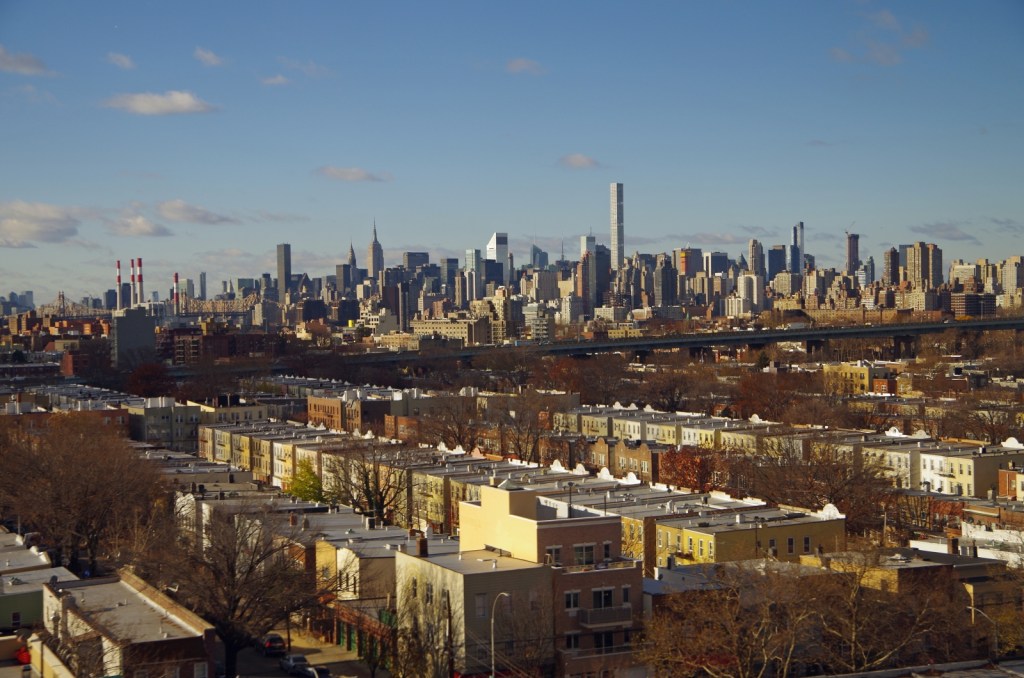
Housing Inflation – Housing Permits: New York City

Fewer new housing permits were issued in NYC in the decade of the 2010’s than had been issued in NYC in the decade of the 1960’s. Think about that for a moment.

There were 400,000 fewer NYC residents in 1960 than there were in 2010. There were 1,000,000 fewer NYC residents in 1960 than there were in 2020 – one million. This NYC housing demand – housing supply imbalance is not sustainable. Limiting (or managing) NYC housing inflation just isn’t happening.

Free market proponents tend to argue that “the market” fixes market inefficiencies. Overall, not just in NYC. Maybe. Maybe not. In relation to NYC affordable housing, has the free market functioned effectively?

The free market has not been working well in relation to housing affordability. Not in NYC. Not beyond NYC. While the market has facilitated an expansion of real estate sales professionals, I would argue that too few of those sales professionals focus on business models that could reverse housing affordability problems. Even though, developing such a business focus could provide sales professionals with a very nice real estate niche. In NYC. Nationwide. That niche? Creating (and selling) more affordable homes.