As the beginning of the Twentieth Century dawned in the Midwest, in Kansas City, streetcar suburbs came to be.
Early in the Twentieth Century, one streetcar line ran right down Troost Avenue. In the very heart of KC.
In the early-1900’s, one could jump on that Troost Avenue streetcar. Leave the hustle bustle of Kansas City. And arrive at one of Kansas City’s new streetcar suburbs.
Those new streetcar suburbs which were then being built in Paris of the Plains were still located in Kansas City. Yet, Kansas City’s streetcar suburbs did not espouse an urban feel. Manheim Park was one of those early Kansas City streetcar suburbs.
To the north, Manheim Park is bounded by 35th Street. To the west, Manheim Park is bounded by Troost Avenue. Troost Avenue…where one could jump on that Kansas City streetcar – early in the Twentieth Century – and be dropped off in Manheim Park – one of KC’s new streetcar suburbs.
The construction of new homes in Manheim Park took hold very early on in the 1900’s. Drawing upon a general distaste for how new Kansas City homes were then being constructed along, what oftentimes were, run-of-the-mill, plain vanilla roads that ran straight – either east-west or north-south – homes which were being built, in the opinion of early Manheim Park developers, too close to one another, no less. In Manheim Park, things would be somewhat different. In Manheim Park, your drive in to one of those new Manheim Park streetcar suburb homes was going to be…a drive along a new road with a unique contour.
Crooked roads…
To build new homes on any undeveloped land you need roads. And in Manheim Park, those new roads went in. Roads which did not necessarily run east-west. Roads which did not necessarily run north-south.
Those original Manheim Park roads were crooked. Creating a staple – all its own – for Manheim Park: its crooked roads
Brookside is a proud collection of charming, quaint, leafy neighborhoods. Located in a southern section within Paris of the Plains – Kansas City, Missouri. Brookside also happens to be the largest contiguous master-planned community in the United States. Master-planned communities…that topic shall be left for another writing.
Part of the Country Club District, original plans for Brookside neighborhoods included building new homes for middle-income families, upper middle-income families, as well as high-income families. The more expensive homes in Brookside neighborhoods tended to have been built towards the west. Oftentimes, higher home values in Brookside neighborhoods have been assumed to be able to be determined based upon how far east – or how far west – of Main Street the home was originally built.
Brookside’s Trolley Track Trail…
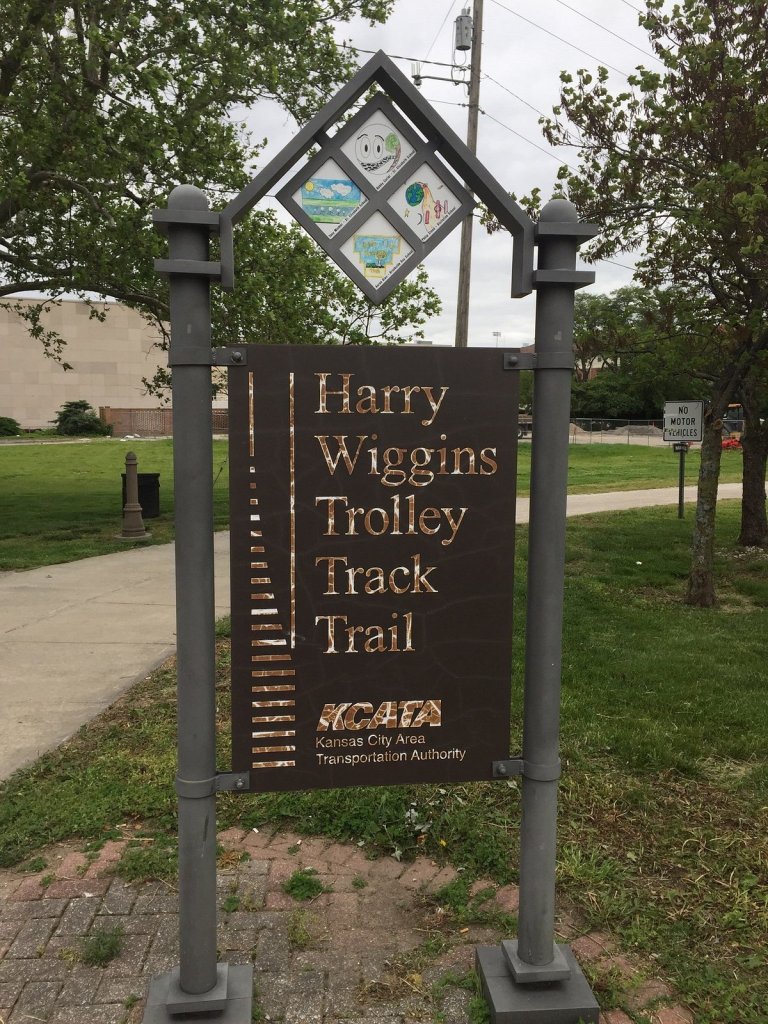
The Harry Wiggins Trolley Track Trail. This iconically-Brookside-only feature, named after the KC-born Missouri state senator Harry Wiggins – is a six-mile long pathway which runs right through the middle of those charming Brookside neighborhoods.
There is no trolley that one would ever find today on this Brookside trolley trail. No trolley, and no trolley tracks either. But at one time, there had been a trolley. Trolley tracks too. That old Brookside trolley run in Kansas City had been born in the late 19th Century.
By the late 1800’s, similar to cable cars which were already running out west in San Francisco, early-day KC trolleys, traveling along the Harry Wiggins Trolley Track Trail – through Brookside – were propelled by underground cables. The earliest Brookside trolleys ran by gripping underground cables. The underground cables were built along – I.e.: built underneath – the Brookside trolley track.
As the late 19th Century transitioned into the early part of the 20th Century, the means by which KC streetcars and trolleys were propelled – the underground cable system – was replaced with a streetcar and a trolley propulsion system, powered by electricity.
Those old Brookside trolley tracks we are talking about here have long since been torn up. The Harry Wiggins Trolley Track Trail is a now KC favorite among walkers, runners and cyclists. Not trolleys. Those old, adorable KC trolleys in Brookside – as well as the trolley tracks on which Brookside trolleys once traveled – long since having been replaced by a walking path. And by Kansas Citians walking, jogging or cycling over to Roasterie to enjoy a nice latte. In Brookside.
At its inception, the Harry Wiggins Trolley Track Trail fostered a trackbed, wooden cross ties, and the ballast. Facilitating a trolley’s passageway, through Brookside neighborhoods. This trolley line? This was the Country Club Line.
The Country Club Line took trolley patrons south in KC…over to Brookside Shops at 63rd Street and Brookside Boulevard. To a fun-filled day of Brookside shopping.
Founded in 1920, the Brookside Shopping District was Kansas City’s first suburban shopping center. Thirty-seven years after the Brookside Shopping District first opened, the last KC trolley chugged along that old Country Cub Line, and into Brookside. That was in 1957…1957 being the year the last trolley traveled into Brookside.
At one time, Kansas City had one of the most extensive streetcar systems – and trolley systems – in the country. In 2024, Kansas City – happily, once again – has its own fabulous KC streetcar system. One which is quite unique to Kansas City.
During the latter part of the 19th Century – and on in to the early part of the 20th Century – Kansas City’s streetcar system functioned as the primary mode of public transportation for Kansas Citians.
Times changed. Kansas City, like most cities by the mid-20th Century, replaced their streetcar system – as well as their trolley, and their trolley tracks – with buses. And bus routes.
Long, long ago those old trolley tracks in Brookside were torn up. Streetcar lines were torn up throughout Kansas City. The end of KC’s streetcar. The end of KC’s Brookside trolley.
In Brookside, this end-of-an-era transportation transformation led to the adoption of the Harry Wiggins Trolley Track Trail as a Brookside neighborhood favorite. For walkers, joggers and cyclists.
 Thinking About Becoming a Real Estate Developer?