Lee’s Summit…in the very beginning.


In 1865, at the conclusion of the Civil War, William B. Howard filed a plat to establish a new Missouri town. This new Missouri town would be located 25 miles to the southeast of Kansas City. The platting for Howard’s new town would become the Town of Strother.

Growth prospects for the Town of Strother, as well as planning for the economies of numerous towns which would emerge (or reemerge) in post-Civil War times, had been triggered by post-War Reconstruction. 

The founder of the Town of Strother – I.e.: Lee’s Summit – is William Bullitt Howard.

The name for the Town of Strother, paying homage to William Bullit Howard’s late wife, Maria Strother. 

Maria Strother died the same year William B. Howard filed his plat to establish the Town of Strother – 1865.

Land on which this new Missouri town would be erected totaled 70 acres. This 70-acre allotment which would go on to become Lee’s Summit was parceled out from the 800-plus acre Missouri plantation owned by William B. Howard.

Born and raised in Kentucky, William B. Howard moved to Jackson County, Missouri in the 1840’s. Coming from a wealthy family in the South, William B. Howard did not serve in the Civil War. As the War raged on, William B. Howard left Missouri. Returning to his native Kentucky. Preceding his later return to Missouri. Preceding the establishment of Lee’s Summit.

At War’s end, Howard did indeed return to his adopted Missouri. Returning to Missouri, while holding a belief that a pending rail connection of St. Louis to Kansas City would create opportunities in commerce. Opportunities which were sure to benefit William B. Howard. A large landowner. 

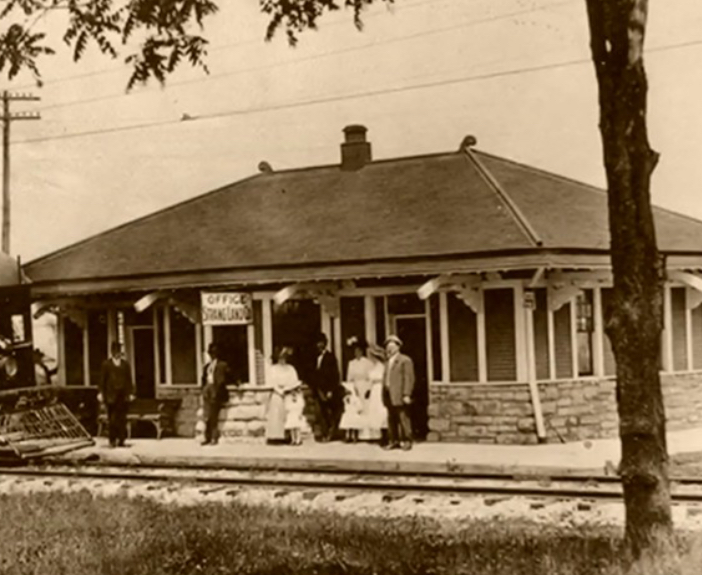
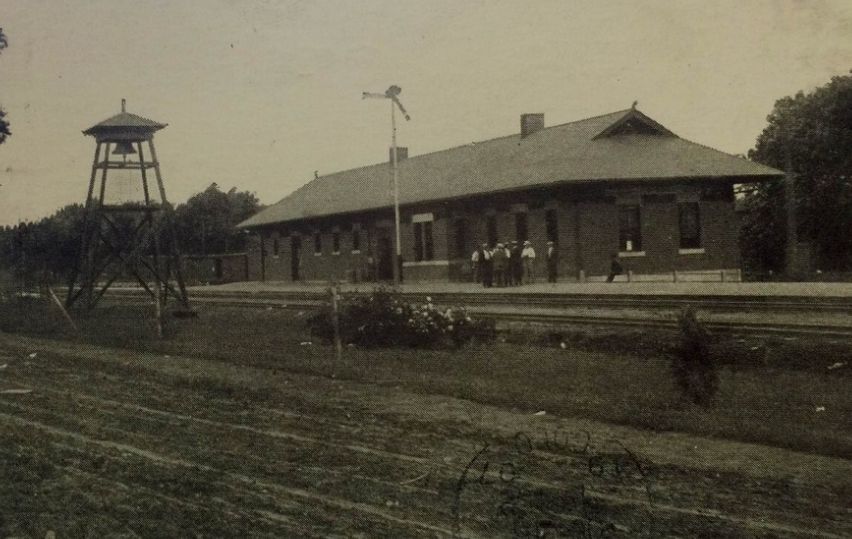
When the Civil War came to a close, recognizing the role rail was certain to play in a post-War economy – and in opportunities for growth in and around Kansas City – William B. Howard entered into negotiations with Missouri Pacific Railroad. Howard negotiated the construction of a new depot. A new depot which was to be built alongside Missouri Pacific Railroad tracks. Just south of Kansas City. On Howard’s land.

Missouri Pacific Railroad proceeded to build their new depot on Howard’s land in Strother.

Upon the incorporation of the Town of Strother in 1868, there was a name change for the town. From the Town of Strother. To Lee’s Summit.

Construction of a second Lee’s Summit depot – the all-brick Missouri Pacific Depot which, still, is located in downtown Lees’s Summit, to this day – was completed years later. In 1905. 

The current Missouri Pacific Depot replaced the older, original boxcar station which had been built in the Town of Strother by Missouri Pacific. That old Missouri Pacific boxcar station, and one famous old boxcar parked at that old station, played a humorous yet important role in the town’s name. 

The Missouri Pacific Depot which would be built on Howard’s land enabled passengers to travel from Lee’s Summit to St. Louis. That railway connection, having been completed two years after Howard filed his original plat for the Town of Strother in 1865. The Kansas City-to-St. Louis rail connection was completed in 1867. Two years after Howard filed his plat to establish the Town of Strother. One year prior to the incorporation of Lee’s Summit.

The name change from the Town of Strother to Lee’s Summit is attributed to William B. Howard learning of another Missouri town which had also been named “Strother.”

The “Lee” in Lee’s Summit.

Upon relocating to Missouri, from Kentucky, William B. Howard resided in Big Cedar. In Jackson County. Among Howard’s neighbors and friends in Big Cedar had been the Leas. Pleasant and Lucinda Lea. 

Pleasant Lea was the local doctor. And postmaster. The Lea family and the Howard family grew to become close friends. Sharing more than their adjacent Missouri addresses. They shared also, their southern pasts.

The Leas moved to Jackson County from Tennessee. The Howards moved to Jackson County from Kentucky. Each family had been a wealthy, transplanted southern family. Establishing new homes for themselves just outside of Kansas City. In Civil War times. 

Pleasant Lea died in 1862. Three years before William B. Howard filed his plat to establish his Town of Strother. Which had originally been named for his late wife.

The change in the town’s name from the Town of Strother to Lee’s Summit involved another close relationship of Howard’s. His neighbor and friend, Pleasant Lee. 

Pleasant Lea, the origin for our “Lee” in Lee’s Summit.

Pleasant Lea resided in Big Cedar, to the south of Kansas City, prior to the Howards’ arrival. Pleasant Lea. The local doctor. The local postmaster. Pleasant Lea, William B. Howard’s close friend. 

It’s Pleasant Lea, spelled L – E – A , so why is it Lee’s Summit, spelled L – E – E?

What should have been spelled out as “Lea’s Summit” – Lea – on a boxcar at that old Missouri Pacific Depot in the Town of Strother, was simply a misspelling. 

That boxcar should have had Lea’s Summit” painted on it. L – E – A. The “Lea” denoting the correct spelling for Pleasant Lea’s last name – Lea.

Rather, that boxcar had “Lee’s Summit” painted on it. A misspelling. And so, going forward, the “a” in Lea’s was dropped. Replaced with the “e.” To arrive at, Lee’s Summit.

The “Summit” in Lee’s Summit.

The definition of summit is, the highest point of a hill or mountain.

The “Summit” in Lee’s Summit was coined in recognition of Lee’s Summit being the highest point on the Missouri Pacific line which ran from St. Louis to Omaha, Nebraska.

Lee’s Summit. The name for which we find a wealthy landowner, originally from Kentucky. The railroad. A neighbor. And an elevation point. 
Kansas City


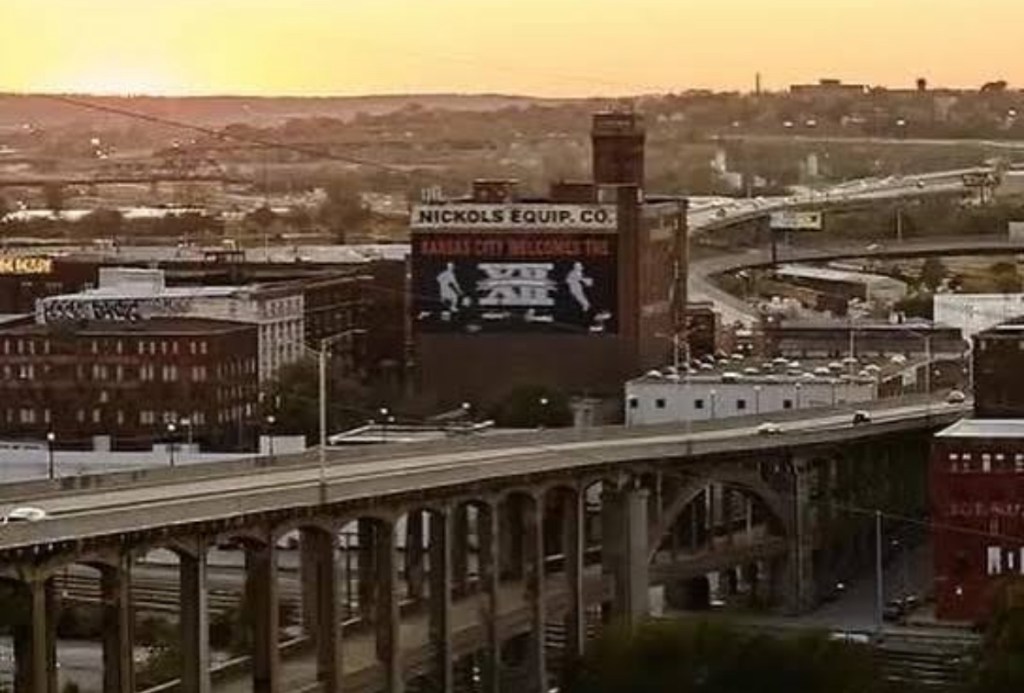
As a city, Kansas City trails only Paris with regard to each’s fountains count. The City of Fountains, as Kansas City is lovingly known to be, has over 200 fountains.

Some of those beautiful fountains in KC can be found near Kansas City’s majestic Union Station. From Union Station, take The Link over Grand Boulevard, and you arrive in the very heart of Crown Center.

At Christmastime, the beauty we find in Crown Center’s collection of fountains is accentuated by a special, special scene. Christmastime skaters.

For over fifty years Crown Center has been home to Kansas City’s original ice skating rink, Crown Center Ice Terrace. A staple for all who enjoy a Paris of the Plains Christmas.

Crown Center…

One of Kansas City’s true crown jewels would indeed be Crown Center. Another of Kansas City’s crown jewels would be the iconic corporation to which the fortunes of Crown Center Ice Terrace – as well as Crown Center itself – are owed. Hallmark. 

Each of our two Kansas City treasures – Crown Center and Hallmark – find their histories’ foundations in J.C. Hall. 

J.C. Hall…

As Kansas City continues to redevelop its downtown into one of the very finest downtowns in all of America, the wave of downtown redevelopment we see in Kansas City today also adopts into the club of downtown redevelopment leaders our forefather to Crown Center and to Hallmark, J.C. Hall.

While the focus of this article is not “redevelopment,” today’s Crown Center is very much emblematic of what can happen for a city when a corporate leader – in this case, J.C. Hall – opts to remain within a city’s downtown. Rather than follow (at that time) a trend of abandoning one’s center city roots by relocating to the suburbs.

The very beginning for Kansas City’s Crown Center goes back to a late 1960’s redevelopment plan. A redevelopment plan anchored through J.C Hall’s Crown Center businesses. A redevelopment plan which also received contributions from another iconic Kansas Citian, Walt Disney.

J.C. Hall. The one time door-to-door Avon salesman from Norfolk, Nebraska. Our Crown Center forefather.

J.C. Hall’s career evolved. From selling makeup, door-to-door. To selling postcards. And it was those postcards that J.C. Hall sold early on in his career that would bring J.C. Hall from his Cornhusker youth to Kansas City. And to forefather of Crown Center.

Yet, before we arrive at the company for which J.C. Hall’s “American signature” is forever most commonly linked, a prior step in his Kansas City business sequence

From postcards. To store. From store, to a grand department store. A grand department store in Crown Center.

Halls Department Store…

J.C. Hall began his career in Kansas City by selling his postcards. Later, adding greeting cards to his product offering. In time, J.C. Hall would go on to open that first store in Kansas City. The store from which he could sell his postcards. And his greeting cards too. This store that J.C. Hall opened in Kansas City would go on to become Halls Department Store.

Halls Department Store started out as a specialty store. With J.C. Halls offering much more of a retail collection than simply postcards and greeting cards. Yet those postcards and those greeting cards would certainly prove to be stalwarts to a J.C. Hall Crown Center icon. An icon that would go on to become a global brand. Hallmark.


At its origin, Halls Department Store stocked expensive, high-quality items. Favorites for upper echelon Kansas City patrons. In time, Halls Department Store had themselves a prime Country Club Plaza storefront.

Halls Department Store arrived in The Plaza in 1965. Later migrating from The Plaza to the hub of J.C.Hall’s enterprises. To where we find Halls Department Store today. Crown Center. 

Shoppers who visit Halls Department Store – Halls Department Store is owned by Hallmark – are heading over to Grand Boulevard. Halls Department Store. Grand Boulevard. Level 3. In Crown Center.

Crown Center, which also houses the headquarters for the centerpiece to J.C. Hall’s collection. That centerpiece, the “Crown Center nucleus” which benefitted from the experience J.C. Hall attained early on by selling his postcards? And his greeting cards? That centerpiece, is Hallmark.

J.C. Halls founded Hallmark Cards in 1910. 

Hallmark Cards has the same origin as does that of its founder, J.C. Hall. Greeting cards. Postcards.

Hallmark did not start out as Hallmark. Hallmark did not start out in Kansas City.

Hallmark Cards began in 1907 in Norfolk, Nebraska. Originally, as Norfolk Postcard Company.

The iconic Hallmark label was introduced as a stand-alone Norfolk Postcard Company brand eighteen years after J.C. Halls founded his Norfolk Postcard Company in Nebraska. Use of the Hallmark name began in 1928. 

In 1954, the original Norfolk Postcard Company – the company whose origin was the sale of those postcards in Nebraska by J.C.Hall – changed its company name. From its name at that time – Hall Brothers – to Hallmark. 

With Hallmark’s headquarters in Crown Center, with Halls Department Store in Crown Center, with J.C. Hall opting to keep his company in center city Kansas City rather than relocate to the suburbs, the underpinnings for Crown Center’s late-‘60’s redevelopment had been established. Redevelopment for Crown Center officially began in 1968. 

The beginning phase for the redevelopment of Crown Center involved construction of underground parking. As well as the central square. The central square in Crown Center, which is where we find our skaters.

Through redevelopment, Crown Center went on to become a truly unique mixed-use district. Offices. Retail. Theatres. Hotels… Crown Center opened to the public in 1971. Three years after redevelopment commenced.


Today, Crown Center encompasses 85 acres in Kansas City. Union Station. Our National World War I Museum and Memorial. Halls Department Store. Hallmark. Each, located in Crown Center.

Yet, at Christmastime, for so many, the Crown Center experience is best brought home by the ice skating. Ice skating made possible, that is, because one American corporate chief in Kansas City chose benefits bestowed upon his companies through redevelopment. Over a move out of Kansas City, to the suburbs.


So those happy skaters in Kansas City can thank a former door-to-door Avon salesman from Nebraska for their ice time fun.

They can thank J.C. Hall. Forefather of Crown Center.

Overland Park


In real estate, developers acquire land, then plat a subdivision. For Overland Park, Kansas, that is how it all began. As a platted subdivision. 

This platted Kansas subdivision – the one which evolved into today’s Overland Park – came to be through entrepreneurship espoused by a Johnson County entrepreneur. This entrepreneur, William B. Strang, Jr., his contributions to the Kansas City region coming through his establishment of a local rail service which connected Kansas City to Olathe, Kansas. Leading to the formation of Overland Park.


William B. Strang, Jr. founded the Missouri and Kansas Interurban Railway. Strang founded his railroad in 1906. Two years prior to Henry Ford’s Model T entering into production. 

When Strang founded his Missouri and Kansas Interurban Railway, there were no cars on Kansas City roads. One could not drive in to Kansas City, Missouri from Johnson County, Kansas. And in 1906, train travel in Kansas City was a luxury. A luxury with longer distance routes. A train to St. Louis. A train to Chicago. When Strang founded his Missouri and Kansas Interurban Railway there was no specific train route which took passengers from Kansas City, Missouri to Johnson County. No railroad was offering this local service. Yet Strang believed this could be an economically viable route. Hence, the origin of the Strang Line


Headquarters for Strang’s Missouri and Kansas Interurban Railway could be found in downtown Kansas City, Missouri. At the corner of 7th and Walnut. In the Railway Exchange Building.


With Missouri and Kansas Interurban Railway headquartered in Kansas City, Missouri, Strang proceeded to build several depots in Johnson County, Kansas. The largest of Strang’s depots was the one he built at what is today the corner of 80th Street and Santa Fe Drive. In Overland Park.  


William B. Strang, Jr. was a 20th Century railroad entrepreneur. He was also a real estate developer. A speculator. Strang built spec homes. The sale price for one of Strang’s spec homes – as well as demand for spec homes built by Strang – was driven by an idea: you can own your own new home in Johnson County.

To this point, Strang’s rail service enabled city dwellers in Kansas City, Missouri to gain access to the Johnson County suburbs. And, so too, to new homes built in Johnson County by William B. Strang, Jr. New homes being built where today we find Overland Park. 

William B. Strang, Jr.’s Olathe-to-KCMO Missouri and Kansas Interurban Railway contributed to the success Strang attained as a real estate developer. In that Stang’s Missouri and Kansas Interurban Railway increased access to new suburban Kansas homes Strang was then building. In turn, driving up demand for Strang’s homes. The result? Higher sale prices for Strang’s homes.

William B. Strang, Jr. arrived in what would go on to become Overland Park in the earliest days of the 20th Century. He arrived in Johnson County 1905. Upon his arrival, Strang proceeded to acquire land on which the downtown for today’s Overland Park now sits. Strang’s initial Johnson County land acquisition – the land acquisition which led to an Overland Park – totaled 600 acres.

A 600-acre acquisition…

A real estate developer…

The coupling of an idea: new homes/increased access to new homes…

A railroad entrepreneur…

The makings of Overland Park…

As a city, Overland Park was incorporated 55 years after William B. Strang, Jr. set foot in Johnson County. Overland Park was incorporated in 1960. Yet, by 1960, the railroad which laid the groundwork for the formation of Overland Park was no longer. The last Missouri and Kansas Interurban Railway train car pulled into Olathe in 1940…20 years prior to the incorporation of Overland Park.

Those 600 acres William B. Strang, Jr. purchased in Johnson County in 1905… Those subdivisions to the southwest of Kansas City, Missouri, those out in the Johnson County suburbs… One of those subdivisions was named “Overland Park.” 

Overland Park… Originally, one of William B. Strang, Jr’s subdivisions. The undertaking of one Johnson County real estate developer who became a railroad entrepreneur. 

A railroad entrepreneur whose subdivisions ignited the construction of new homes to the southwest of Kansas City. New homes which increased in value as a result of new access – by rail, circa the Missouri and Kansas Interurban Railway – to these new homes which were being built. Several of which were being built by William B. Strang, Jr. The train entrepreneur who was also the real estate developer.

William B. Strang, Jr. Real estate developer. Railroad entrepreneur. Founder of Overland Park. 

Manhattan, Kansas


In 1854, when President Franklin Pierce signed the Kansas-Nebraska Act into law, a new Kansas Territory was opened for settlement. That same year, seeds were planted for one such riverside settlement within this new Kansas Territory. A settlement that would go on to become “The Little Apple.”


Steps taken by pioneers to establish what would go on to become “The Little Apple” -aka, Manhattan, Kansas – should be thought about with the Kansas-Nebraska Act also in mind. This is so due to the relationship the Kansas-Nebraska Act had to the institution of slavery. To how the Act served as a catalyst for Kansas’ formation. To how the Act fueled the antislavery movement in Kansas. Then too, to how the Act served as the precipice for the early organizers of a townsite which would evolve into “The Little Apple.”


So how do we connect Manhattan’s formation to the Kansas-Nebraska Act? Then too, to the antislavery movement? This connection really begins, with a Senator from Illinois…

In 1854, Illinois Senator Stephen Douglas introduced a bill to Congress. This bill that Senator Douglas introduced to Congress was the Kansas-Nebraska Act.


Senator Douglas’ bill – which President Pierce signed into law the same year the bill was introduced – ended the Missouri Compromise. The Missouri Compromise banned slavery in states north of an established latitudinal designation. Minus, one state, Missouri. Missouri’s exclusion from the ban of slavery, being, the “Compromise.”

While doing away with the Missouri Compromise, the Kansas-Nebraska Act also organized two new territories for the United States. These two new U.S. territories being, one, the Kansas Territory, and, two, the Nebraska Territory.

Two new U.S. territories were organized. The Missouri Compromise was ended. Without the Missouri Compromise, the two new U.S.territories would be free to enact “popular sovereignty.” And this popular sovereignty, within Douglas’ Kansas-Nebraska Act, related to whether slavery would become an institutional pillar within each of the two new U.S. territories.

So, with President Pierce’s signing of the Kansas-Nebraska Act, the race was then on to settle these two new territories. And, to settle the territories with positions on slavery which would thus, in turn, be representative of the viewpoints pertaining to the institution of slavery espoused by the early framers of the territories.  

Popular sovereignty was in. The Missouri Compromise was out. The Kansas-Nebraska Act was in. What remained to be either in or out, was, the institution of slavery.

The same year the Kansas-Nebraska Act was signed into law by President Pierce, a settlement took hold in the Kansas Territory at the junction of the Kansas River and the Big Blue River. This, a riverside settlement founded by Colonel George Park. Colonel Park named his settlement, Poleska.

As Colonel Park founded Poleska, another group of pioneers heading into the new Kansas Territory – this group, cattlemen from Illinois, led by Samuel Houston – founded a neighboring settlement. Their neighboring settlement, Canton.

Popular sovereignty. No Missouri Compromise. And two new settlements in the Kansas Territory.

One year after Colonel Park founded Poleska, one year after Samuel Houston founded Canton, we find the structural framework for what would go on to become, “The Little Apple.” Manhattan.

Our framework for Manhattan, inspired by the popular sovereignty which came to be in the Kansas Territory. As the Missouri Compromise, was no more.


One year after the settlements of Poleska and Canton were founded, in 1855, a group of New England abolitionists traveled to this new Kansas Territory. From Boston. With popular sovereignty in mind, these New Englanders wanted to establish a Free State for this new Kansas Territory. They realized that they could do so. By increasing the number of antislavery voters in the Kansas Territory. Thus, with a majority of antislavery voters, ensuring that when Kansas did become a United States state, Kansas would enter the Union, as a free state. 


These abolitionists from Boston – the New England Emigrant Aid Company – selected the contiguous Poleska-Canton settlements as their new Free-State home. Their new Kansas Territory home, located alongside those two Kansas rivers. The Big Blue River. And the Kansas River. 

Recognizing how their settlement could develop reliable channels for commerce as a result of the settlement’s strategic position alongside two rivers, a river landing was built. With a river landing, then, ferries were built. Means of waterway commerce was established. A town constitution was adopted. The pioneers from Boston proceeded to acquire acreage. With their land acquisitions, the footprint of this new antislavery settlement, had been enhanced.

Yet, this antislavery settlement, was not yet a town. This settlement was not yet, Manhattan. 

Manhattan was once, Boston…

This townsite, nestled alongside the Kansas River and the Big Blue River was still known as – just as this townsite had been known to be, since its founding by Boston settlers – Boston.

The name Manhattan would indeed come…not long after.

The same year the New England Emigrant Aid Company arrived at the Poleska-Canton settlements, another group – this group, with their origin being, Cincinnati, Ohio – also arrived. And it was this second group, from which, our Manhattan name, came to be.

This second group was the Cincinnati and Kansas Land Company. The Cincinnati and Kansas Land Company arrived at the Poleska-Canton settlements, also in 1855. Making their journey to the new Kansas Territory, on a steamship.

Upon arrival, ready to put up buildings. And houses. To further develop the commerce which was still in its infancy – in year one – within the Poleska-Canton settlements.


As an inducement to advance commerce, the New Englanders offered the Cincinnati and Kansas Land Company half of their Kansas Territory townsite of Boston. 

Our new Kansas Territory group from Cincinnati accepted the stake holding offer. With one condition. This condition being, the townsite name would need to be changed. From Boston. To Manhattan.

A deal was struck. 

Manhattan, Kansas was founded in 1855. Two years later, Manhattan, Kansas was incorporated. 

The Little Apple.

Boston, a hill, limestone, abolitionists plus one rendering from a cartoonist…Lawrence, Kansas


Lawrence, Kansas was founded by a group of New England abolitionists. Abolitionists who were intent on establishing a new community where people of all races would be free. Culminating in Lawrence’s determination to ensure that Kansas – then…a territory – would be admitted to the United States as a “free state.”  

Lawrence was founded in 1854. Seven years prior to Kansas becoming the 34th State.

Nine years after the founding of Lawrence – in 1863 – then-Kansas Governor Thomas Carney signed a bill into law creating the second state university in Kansas. This university was to be built on 40 acres – the University of Kansas. Founded in 1864.

This university for Kansas – the second university within the Sunflower State – was to be constructed on Hogback Ridge. Hogback Ridge in Lawrence. Hogback Ridge, later becoming, Lawrence’s Mount Oread.


The relevance to Mount Oread? And to Mount Oread’s role in that which Lawrence is most famous for? This can be found under our feet.

Three years after Governor Carney signed into law the bill which would establish a Kansas university in Lawrence, classrooms at the University of Kansas first opened. This Lawrence university first started out as a preparatory school. With fewer than 100 students.

Back to Mount Oread…

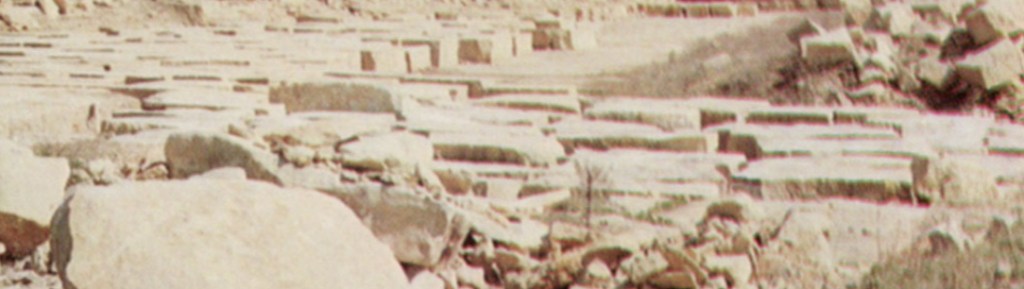
Mount Oread – that section of Lawrence on which KU was built – sits on a bed of limestone.


Limestone is chalk rock. Chalk rock – transposed – becomes rock chalk.

Hence, our famous, Rock Chalk Jayhawk.

Rock chalk. Chalk rock. Chalk rock sits below KU’s classrooms as the – quite literally… – as the foundation of the university.

Our chant? Rock Chalk? That chant – originating in the chalk rock of limestone found in Lawrence’s Mount Oread – was originally a slogan used by the university’s science club. A science club slogan.

Let’s go back to that group of New Englanders who established Lawrence…

Those New Englanders who first established Lawrence were not so much a loosely-aligned abolitionist group at all. No, Lawrence’s forefathers were actually an organized company. This company? The New England Emigrant Aid Company.

The New England Emigrant Aid Company had been a Boston-based transportation company. Established to transport those who opposed slavery into this new Kansas Territory out west.

As abolitionists, the idea espoused by the New England Emigrant Aid Company went along these lines…

Through New England Emigrant Aid Company’s transportation of anti-slavery immigrants who would settle – en masse – in the new Kansas Territory, the politics within the Kansas Territory would then favor the abolishment of slavery. Not the expansion of slavery. Abolitionists.

As such, with sentiment taking hold in the new Kansas Territory which frowned upon the institution of slavery, Kansas would then (ideally) choose to join the United States as a free state. Not as slave state. Which it indeed did. in 1861.

Rock chalk. That’s about limestone. Limestone underneath the KU campus. 

And after Rock Chalk we find…Jayhawk.

Rock chalk…limestone. So, how about the Jayhawk part of our slogan? 

Any conversation one has about the Jayhawk part of this famous slogan from Lawrence brings us back to Lawrence’s idea for Kansas to join the Union as a free state. To efforts undertaken by the New England Emigrant Aid Company. And to Lawrence’s abolitionist “DNA.”

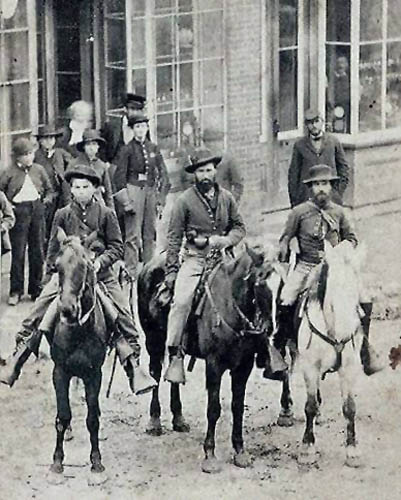
Prior to Kansas becoming a state in 1861, Kansas abolitionists battled pro-slavery factions. Factions who were intent on seeing Kansas join the Union as a slave state. Not as a free state. Those Kansas abolitionists we are referring to here were known as jayhawkers


During the 1860’s, jayhawkers were not only found in this new Kansas Territory. No, jayhawkers could also – at that time – be found throughout the Midwest. All the way down to Texas. The abolitionist movement of the 1860’s…native to the Midwest. Jayhawkers.

Yes, jayhawkers are most closely aligned with the State of Kansas. The Kansas Jayhawks. This is attributed to the Bleeding Kansas era. The period of violent conflict over the issue of slavery which took place prior to the outbreak of the Civil War.

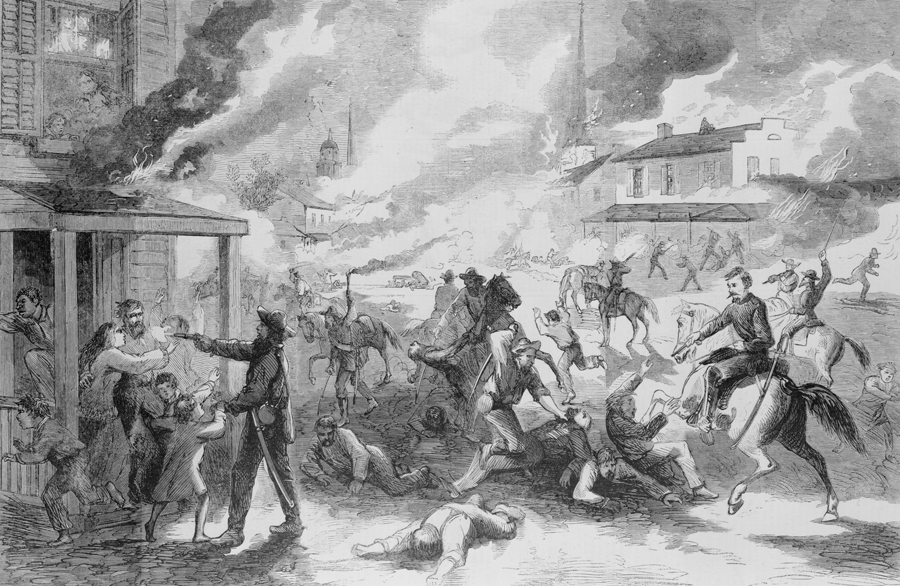
Between 1854 and 1859, murder, violence, the destruction of property and total mayhem took hold in Eastern Kansas and Western Missouri. Bleeding Kansas.


Kansas and abolitionists. Lawrence and Kansas’s university. The University of Kansas and jayhawkers.

The University of Kansas officially adopted the Jayhawk as the school’s mascot in the year 1923. 

That duck-like bird we now know to be our KU Jayhawk? No, there is no winged-jayhawk bird flying over the beautiful prairies of Kansas. No, there is no winged-jayhawk bird which has ever flown over those beautiful Kansas prairies.

That famous duck-like bird we find under 16 Final Four banners in Allen Fieldhouse? That bird is an artistic creation.

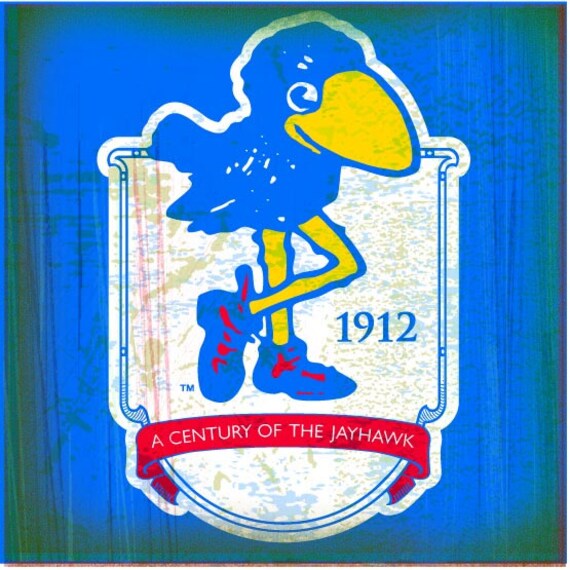
The most famous abolitionist logo in the history of sports can be traced all the way back to 1912.

In 1912 Henry Malloy was a cartoonist working for The University Daily Kansan – KU’s newspaper.

Henry Malloy – in 1912 – drew a picture of one shoe-wearing bird. And released his picture of his shoe-wearing bird in The University Daily Kansas. Our first jayhawk.


In 1923, eleven years after Henry Malloy created that very first jayhawk cartoon rendering, two KU sophomores – Jimmy O’Bryon and George Hollingbery – created the rendering more-closely based on the duck-like bird we find today in Allen Fieldhouse.

Boston…

Abolitionists…

A hill…

Limestone…

A cartoonist…

Two college sophomores…

Lawrence, Kansas.