Springtime in Kansas


It is suggested that one should wait until wind gusts are less than fifteen miles per hour. 

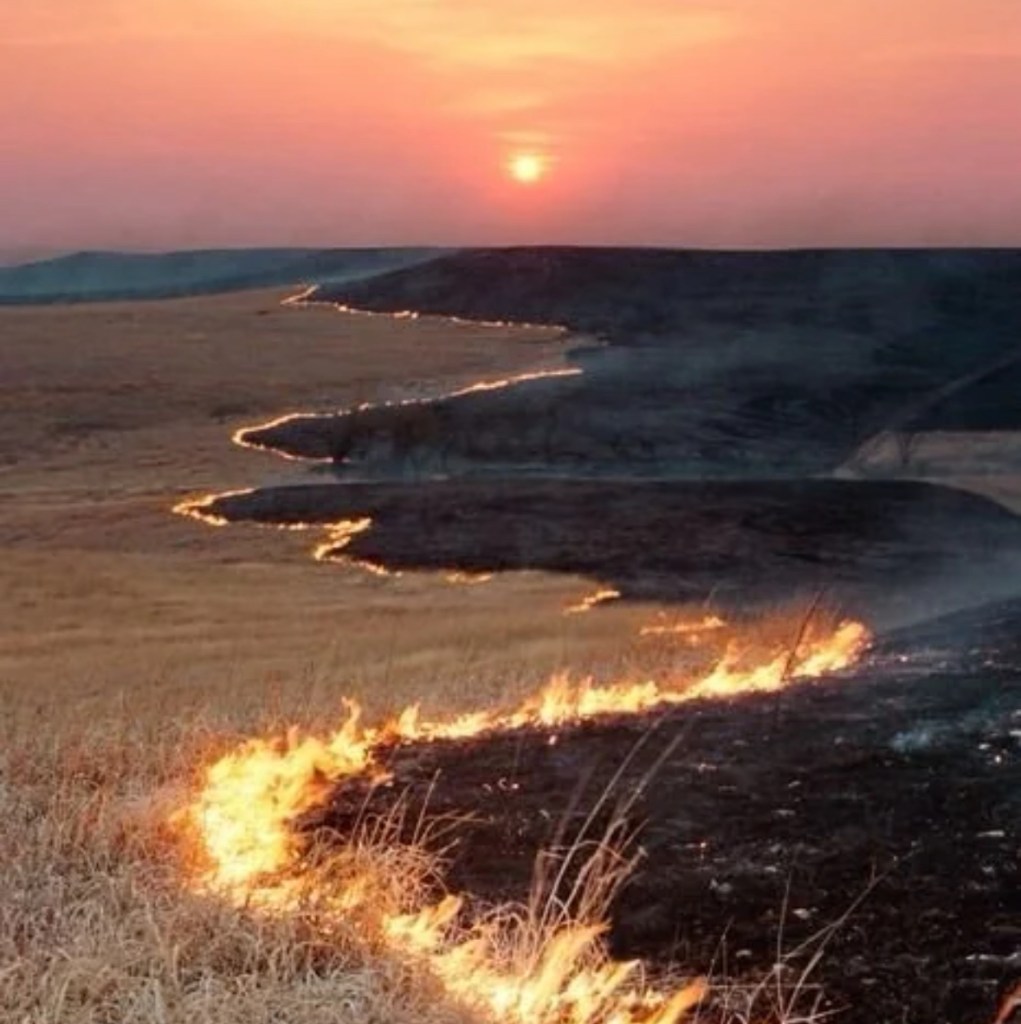
The fertile soil under our boots in the largest natural tallgrass prairie in the United States – The Flint Hills of Kansas – undergoes a replenishment every few years. Occurring when dead prairie tallgrass – dead tallgrass which has accumulated, and now lays dormant – is burned off. Right before Spring arrives.

The ignition of acres upon acres of tallgrasses culminates in quite the scene. Nighttime walls of fire, cascading the prairie’s landscape. Ablaze. Reaching up to twenty feet in height. It’s quite the site to see.

For those driving as the prairie burns, expect to encounter thick smoke. Christened with ash.

Strong winds create a dangerous situation while a prairie burns. Fires are erratic. Winds blowing in excess of 30 mph, coupled to low humidity, could lead to unintended consequences. Such as, a “firenado.Hence, wise planning. As coordinating burning off dead prairie grasses with tame wind gusts is necessary. “Tame” meaning, wind gusts which max out at less than fifteen miles per hour.

Ranchers patroling fence lines so as to ensure that flames don’t cross over into their pasteurs. Just one of many nuances which come, hand in hand, with Springtime in The Flint Hills of Kansas.

Unplowed slopes of rolling hills. Beset by shallow rocky soil. You may see bison, off in the distance. Topography of TheFlint Hills. Anchored through erosion-resistant limestone.

Tallgrass prairie of the Flint Hills today covers roughly four million acres. With the majority of those nearly-four million acres, found in Kansas. Making The Flint Hills the largest remaining tall grass prairie in the United States.

At one time, tallgrass prairie blanketed 170 million acres of the country. Once extending from the tallgrass prairie’s home today in Kansas – and, to a lesser extent, in Oklahoma – over into Nebraska, Texas, Iowa, Missouri, South Dakota, North Dakota, Illinois. And parts of Canada. 

Burning of Flint Hills grasses precedes the planting season each year in Kansas. Taking place in late March. Or early April.

The primary purpose for the annual igniting of the prairie is to enrich the soil. While so too, preventing the encroachment of trees. 

Fire-adaptive grasses thrive in The Flint Hills. These grasses, fortified by nutrients which are absorbed by the soil. This absorption of nutrients by the soil is one byproduct of the igniting of the prairie during the Spring.

The prairie is burned. Trees don’t thrive. Nutrient-rich grasses do. Therein lies the point. 

Those fires we see in the Flint Hills each Spring eliminate dead grasses. Ridding the prairie of dead grasses – barren of nutritional value – facilitates rapid growth of nutrient-rich grasses. High in protein. A high-protein diet is required in the cattle business.

Switchgrass…

Golden in the Fall, with a greenish-blue color in the Spring. The optimal grazing height of switchgrass is one-and-a-half feet to two feet. In the summer, as traditional grasses stop producing, Flint Hills switchgrass remains rich in protein. Perfect for cattle.

The cattle-to-person ratio in Kansas is two-to-one. Two head of cattle, one person. Cattle is a stalwart in the Kansas economy. There are, give or take, six million head of cattle in Kansas. Needless to say, the cattle industry is firmly entrenched in the economy of Kansas. Contributing $10 billion each year to the State’s GDP. 

One secret to the success of Kansas beef would be, weight gains. I.e.: rapid putting on of pounds, which Kansas cattle are able to do. Thanks in large part to rich grasses found throughout The Flint Hills.  Those nutrient-rich grasses in Kansas, making up the lion’s share of the diet for cattle.

In Kansas, cattle add most of their pounds, beginning in April – which coincides with the burning of the tallgrass prairie  – running through July. 

Cattle’s gains…

Kansas cattle can put on up to four pounds of weight – each day – within that April-to-July window. This rapid bulking up by cattle – fueled by nutrients found in Flint Hills tallgrass – contributes to an interest held by out of state ranchers of shipping their cattle to the Sunflower State.

Mature Kansas beef bulls can clock in at between 2,000 to 2,400 pounds. Mature bulls consume up to 45 pounds of dry matter (nutrient content without water) everyday.  Possessing such appetites, 4,000 acres of unobstructed nutrient-rich tall grass presents a very nice resource. For ranchers.

With a bull’s substantial daily consumption requirements, cattle from as far away as Florida often make their way up to Kansas’ Flint Hills.. Those nutrient-rich grasses? Attractive to ranchers. Even ranchers beefing up cattle as far away as the Sunshine State.
Pemberton, New Jersey

The naming of Burlington County, New Jersey’s Pemberton goes back to late-17th times. In naming of a town, we find a link William Penn. To a prominent local mill. To a a successor to Benjamin Franklin. To an abolitionist. One who decried waging war on Indian tribes. 

The beginnings for the Pemberton’s…

In 1682, an Englishman by the name of Phineas Pemberton settled on 300-some acres along the Delaware River. Phineas Pemberton, arriving as a colonial settler in England’s new American colony of Pennsylvania. Arriving in Pennsylvania by way of Lancashire, England. Phineas Pemberton started his colonial journey in Maryland. Later, migrating north. To Pennsylvania.

Once settled in Pennsylvania, Phineas Pemberton proceeded to work closely with Pennsylvania’s founder, William Penn. Phineas Pemberton served as Chief Administrator of Buck’s County, Pennsylvania for William Penn. Across the Delaware River from where today we find Pemberton, New Jersey.

Phineas Pemberton’s arrival in Pennsylvania’s Buck’s County came one year after King Charles II granted an area of land across “the Pond” within the British Empire to William Penn. Or, to be more era-precise, to Sir William Penn. This land, granted to Sir William Penn as a debt payoff by England’s king. This had been money owed by England’s king to William Penn’s father.

Pennsylvania’s very beginning. On land which had once been – prior to falling under Britain’s rule – New Sweden. New Pennsylvania settlements were taking hold. This, a time of colonial settled. And colonial migration. Leading to population growth for the new Buck’s County. 

Hence, we have our framework for an entrance by the Pemberton family name into the annals of American history.

In Buck’s County’s, Phineas Pemberton became William Penn’s Chief Administrator. As William Penn’s Chief Administrator, Phineas Pemberton was responsible for record keeping pertaining to the arrival of new settlers in Buck’s County.

Phineas Pemberton became Clerk of all Courts for Buck’s County. Phineas Pemberton became Register of Wills for Buck’s County. Phineas Pemberton became Master of the Rolls for Buck’s County. Phineas Pemberton became Receiver of Proprietary Quit Rents for Buck’s County. Phineas Pemberton became Surveyor General for Buck’s County. Phineas Pemberton’s was, shall we say, quite an important man.

Be it calculations of Buck’s County cattle. Be it births in Buck’s County. Buck’s County deaths. Migration tabulations for new settlers arriving in Buck’s County. These records were being memorialized by William Penn’s Chief Administrator, Phineas Pemberton.

Phineas Pemberton…establishing groundwork in Pennsylvania for a Pemberton family member who would later go on to become Pemberton’s namesake.

It would be some fifty years after Phineas Pemberton’s record keeping exercises for William Penn that we’ll find our origin for what would go on to become the New Jersey community for which the Pemberton family name today remains affixed.

As we will find when we learn about the beginnings for so many American cities and towns, industry was at the forefront of the progression of this community towards a becoming, first, a borough. Then later, a township. And in Pemberton’s case, that American industry happened to a mill. A saw and grist mill.

In 1752, David Budd, together with a group of entrepreneurs, established New Mills Company. Recognizing how Pemberton’s access to a great natural waterway could provide power to his mills, David Budd built his first industrial mill twelve years prior to the founding of his New Mills Conpany.

Upon building his first area mill in 1740, David Budd’s New Mills Company proceeded to build additional mills. These were saw and grist mills.

David Budd’s original New Mills Company mill stood in a community which would later go on to adopt the name, for which, David Budd’s company provided the reasoning. The community became, New Mills.

Yet, New Mills at this time was not a township. Nor was New Mills yet a borough. At that time, part of this New Mills community was situated within New Hanover. While another part of this New Mills community was situated within Northampton. Northampton, today’s Mount Holly.

Nonetheless, what was then New Mills was very much a burgeoning community. Growing around David Budd’s saw and grist mills. Across the Delaware River from where Phineas Pemberton earlier served as William Penn’s record keeper.

As the 18th Century faded, becoming the 19th Century, this mill community of New Mills would go on to adopt its new name: Pemberton.

These old sections of New Hanover and Northampton, together making up New Mills, broke off from their respective townships. They broke off to form a new borough. This township break-off is where we find the origin for the borough of Pemberton.

The borough of Pemberton – this, which once had been known as New Mills – was incorporated as a New Jersey borough in March of 1826. Pemberton was later incorporated as a New Jersey township. That happened twenty years later. In 1846.

We have Phineas Pemberton, William Penn’s numbers cruncher. We have New Mills Company. And David Budd. We have our township name, Pemberton.

While Phineas Pemberton and David Budd were locals of great importance to this region within New Jersey’s Burlington County, neither of these two men ended up becoming the reason for why Pemberton today goes by the name of Pemberton.

Pemberton is really Pemberton due to values espoused by an abolitionist from Pennsylvania. James Pemberton 


James Pemberton. The Pennsylvania Quaker who succeeded Benjamin Franklin as President of the Pennsylvania Abolition Society.

The New Mills borough renaming which took place in 1826 – from New Mills, to Pemberton – was an undertaking to honor that successor to Benjamin Franklin. He who headed up Franklin’s anti-slavery organization, after Franklin’s departure. An anti-slavery movement in Pennsylvania which was led by the Pennsylvania Abolition Society. Carried onward by James Pemberton. So as to ensure that the institution of slavery would not become one pillar on which this new country of America would be built.

James Pemberton. A founder of Pennsylvania Hospital. President of Benjamin Franklin’s Abolition Society. Influential area landowner. Member of the Pennsylvania Assembly…resigning from the Pennsylvania Assembly due to the fact that the governor of his State declared war on Indian tribes. Phineas Pemberton’s grandson.

James Pemberton. Our namesake for Pemberton.

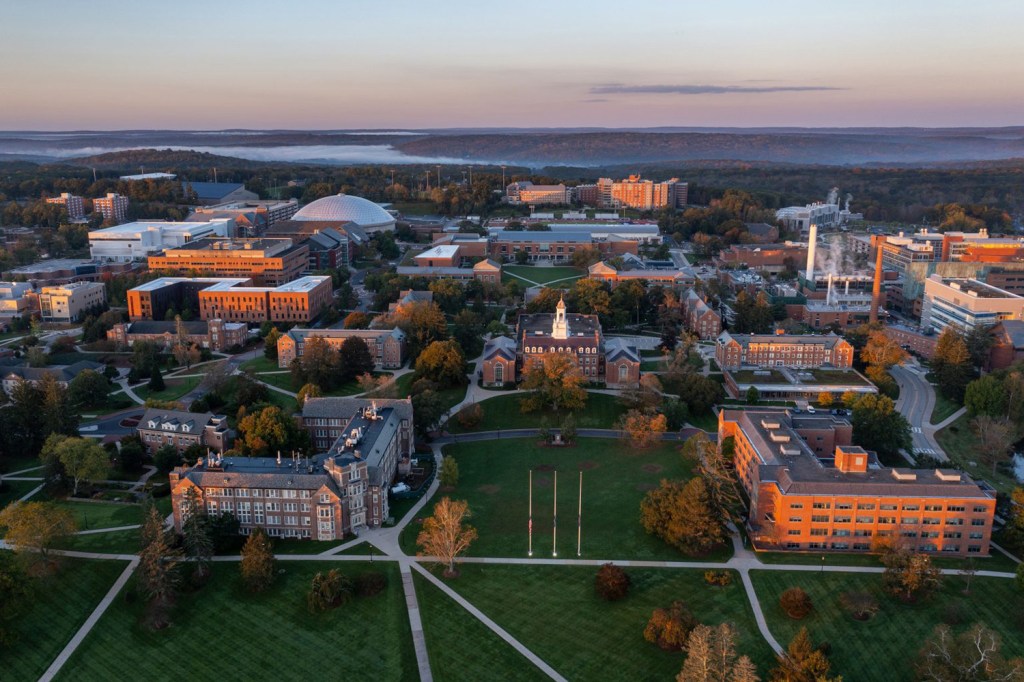
UCONN, and how the Huskies’ school came to be


In the year 1822, a boy by the name of Charles Storrs had been born into a world of Mansfield, Connecticut agriculture. The Storrs family…a family of Mansfield farmers.

While Charles Storrs’ 19th Century life found its origin in agriculture, Charles Storrs ventured out. Beyond his family’s humble Mansfield farm.

Charles Storrs migrated from an agricultural world, into Connecticut mercantilism. Going on to sell silk. For a Hartford manufacturer.

While Charles Storrs started out on a family farm in Mansfield, he attained his wealth by way of successes found in Connecticut mercantilism.

And, to the benefit of Charles Storrs’ home state of Connecticut, Charles Storrs turned back from his mercantile successes. Turning back to where it all began in Mansfield for Charles Storrs. Turning back, to agriculture.


The success of Charles Storrs…

In 1854, Charles Storrs ascended from silk salesman, to entrepreneur. By partnering with his older brother Augustus Storrs to establish Storrs Brothers. 

Charles Storrs headed the company he founded, the company which bore his name, from the company’s inception in 1854, on through 1879.

In 1880 Charles and Augustus Storrs donated 170 acres – along with several buildings – to the State of Connecticut. This land that Charles and Augustus Storrs granted to Connecticut was conveyed with a condition. The condition being, for Storrs’ farmland to become the ground on which a Connecticut agricultural school would be established. A college. An agricultural college.

These 170 Mansfield acres went on to become a Connecticut village. Storrs, Connecticut.

The agricultural school intentioned through the Storrs’ land conveyance went on to become a college – Storrs Agricultural College. Charles and Augustus Storrs, being the College’s founders.

Storrs Agricultural College evolved into the University of Connecticut. I.e.: UCONN.

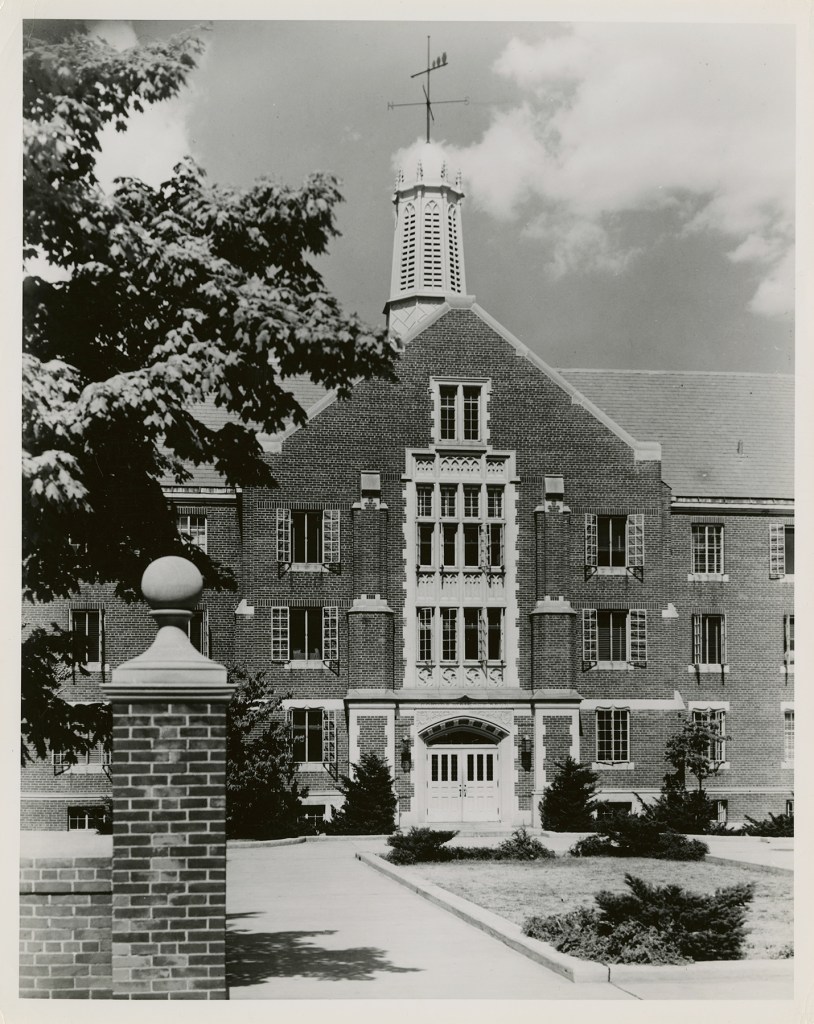
One of those old buildings which had been given by the Storrs Brothers to the State of Connecticut went on to become the very first Storrs Agricultural College campus building – Edwin Whitney Hall. Which today, on UCONN’s campus, is the Edwin Whitney Residence and Dining Hall.

Today, the village of Storrs, Connecticut remains anchored in academia. The village’s stalwarts being UCONN. As well as the Connecticut Repository Theatre.

UCONN’s address? 110 Storrs Road, Storrs, Connecticut.

Council Grove, Kansas


What is so very interesting about our nation’s history can be discovered through historical connections we make between famous Americans, and quite often, places we frequent. Or, places we visit. Or, in my case, the restaurant which serves the best bread pudding.

One of my – How did this come to be? – started off as an affinity for bread pudding. Bread pudding in Council Grove, Kansas. Bread pudding served at Hays House 1857.

Hays House 1857, Daniel Boone, Benjamin Franklin and Council Grove.

Council Grove’s origin…


In the earliest part of our nation’s 19th Century, in what would – 29 years later – go on to become the Territory of Kansas, in 1825, westward-focused American settlers had been eager to identify quicker (and better) trade routes. With this impetus for expanding trade to the west in mind, a treaty in 1825 had been negotiated between United States commissioners and the Osage Indians. Negotiated in a section of the Great Plains where frontiersmen gathered. Rested. And congregated. Before continuing on…west.

In the early part of our 19th Century in what today is Kansas, as United States trade – and as United States trade routes – were being expanded to the west, one 1825 treaty entered into by the United States with Indians – the Osage Indians – grew what would go on to become one of the most famous passageways – passageways, trails, routes, roads and/or highways… – in all of United States history. 

This trail…a 900-mile United States trade route. 


This trail…starting out in a small town, 100 miles to the east of Kansas City, Missouri.

This trail…its origin, a small town which had been founded by European setters in 1816. 

This trail…beginning in that small Missouri town – to the east of Kansas City – which had been named for one of the United States’ Founding Fathers.

This trail…which one would, at that time, start their travels on in Franklin, Missouri

Franklin, Missouri…a town named for one of the United States most famous Founding Fathers, Benjamin Franklin.


This trail…ultimately arriving in, Santa Fe, New Mexico.

This famous trail we are speaking to? The Santa Fe Trail. 


The treaty between United States commissioners and the Osage Indians extended our Santa Fe Trail to the west. Through a section of what would later go on to become, the Territory of Kansas. Later becoming, the State of Kansas. 

This treaty entered into between United States commissioners and the Osage Indians – in 1825 – was centered upon a destination point for frontiersmen traveling west. At the “Grove.”

In 1825, there was no incorporated United States town through which this section of the Santa Fe Trail had been extended. 

In 1825, there was no organized territory through which this section of the Santa Fe Trail had been extended.

This 1825 treaty – extending the Santa Fe Trail though a most-scenic part of the largest tall grass prairie in the United States, the Flint Hills – focused on an area in the Plains where travelers gathered their wagons. They’d form wagon trains. And they’d head west. From the “Grove.”

We are referring to an area in Kansas’s Flint Hills which was at that time – to the Osage Indians, and to frontiersmen – simply known to be, the “Grove.”

The “Grove.” Named for a grove of trees

This 1825 extension of the Santa Fe Trail would wind along – what had been at that time – simply, the main street in the “Grove.”

The unincorporated territory in which this section of the Santa Fe Trail had then been extended – in 1825 – would go on to become a formal United States Territory. In 1854. This territory would go on to become the Territory of Kansas.

This grove of trees would go on to become an incorporated United States city. Twenty-six years after the Territory of Kansas became the State of Kansas in 1861. The grove of trees would go on to become…Council Grove

Council Grove was incorporated as a city in Kansas in 1887.

And that old main street in the “Grove?” Our old main street would go on to become …Main Street. In Council Grove


Which brings us to our link between the “Grove,” the Santa Fe Trail, Council Grove and…Daniel Boone.

But first…Seth Hays.

Hays house ( lower case “h”) started serving American pioneers three years after the Territory of Kansas was incorporated as a United States territory. 


In 1857, Hays’ house originally started out as a Santa Fe Trail trading post. A Santa Fe Trail trading post coupled to a Santa Fe Trail restaurant. Located – then, and now – on the Santa Fe Trail. 


With its historical position, quite literally, on the Santa Fe Trail, the Hays house traces back to Seth Hays.


Seth Hays. Founder of Council Grove, Kansas.

Seth Hays. Rancher. Tavern owner. Trader. Publisher.

Seth Hays, who grew up in the Kansas City, Missouri neighborhood of Westport.

The original Hays house? Well, the original Hays house that Seth Hays built next to the Neosho River wasn’t actually a house.

The original Hays house was in fact a log cabin. A log cabin which functioned as Seth Hays’ home – I.e.:. where Seth Hays lived with his adopted daughter, a freed slave. And as a Santa Fe Trail trading post. 


The trading post built by Seth Hays in the “Grove” was a business venture headed by a relative of his, A.G. Boone. 

A.G. Boone…grandson of Daniel Boone.

Seth Hays…great-grandson of Daniel Boone.