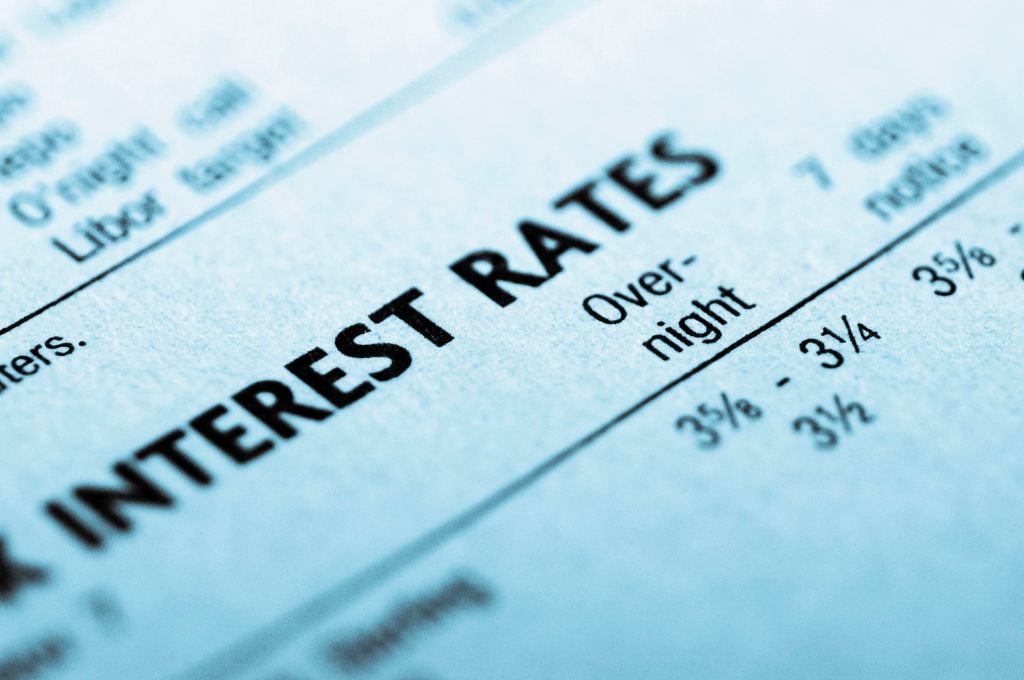
Mortgage rates dropped. Let’s look at fundamentals that trigger a drop (or a rise) in mortgage rates.

As 10 Year Treasury prices rise – while yields drop in direct correlation to the price increases – interest rates on 30-year fixed rate mortgages will come down. 

So how does this work?

When it has been determined – or shall we say, theorized – that we may encounter market volatility in the U.S., there is an inclination for investors to accept lower yields for “loans” they make to the United States government. Through their purchase of Treasuries.

Market volatility? Volatility means government bonds represent a stable place for investors to “park” their money. When compared to alternative investment vehicles. Such as the stock market.


Within a socioeconomic environment where there is a high level of demand for 10 Year Treasuries, bids by investors for Treasuries would (more likely than not) come in at or above the face value of Treasuries.

Increasing bond prices drive down bond yields. This is so because investors are willing to accept lower coupon rates for bonds in exchange for the de-facto “loans” they are making to the United States government. Through their purchase of 10 Year Treasuries.

TRENTON in 1974 – For some, 1974 was the year which formally cemented the City’s industrial decline.

Manufactured goods made in countries which offered lower wages to their workers.…coupled to less regulation. A hollowing out of the City’s property tax base. Suburbanization. Each contributed in their own unique way to Trenton’s continual decline. A decline in industrial output. A decline in the City’s population. But for Trenton, the year 1974 stands out as having a local occurrence of finality, some may say.


The early Twentieth Century industrial prowess of Trenton – and of Trenton industrialists – owed much sustenance to the City’s ability to utilize newly-built canals and railroads. Railroads and canals transported manufactured goods – made in Trenton – to end markets, such as New York City and Philadelphia.  

While Trenton enjoyed a long run as an important American manufacturing hub, in June of 1974, the final 1,400 employees of what had once been Roebling’s Trenton industrial empire lost their jobs. These final Roebling layoffs? The result of numerous failed attempts to revive the then-Trenton plant, which had been controlled by (at that time) Roebling’s acquirer, Colorado Fuel & Iron.

Those two Roebling manufacturing plants in Trenton closed their doors for good in 1974. Marking the end of Roebling’s manufacturing presence in Trenton. And, to some, also marking a finality of sorts, to what once had once been a thriving industrial hub. Trenton.

HUD can be a good “partner” for real estate developers

Identifying – and then acquiring – non-performing properties, on which developers can profitably build (or rehab) within neighborhoods which are in the process of being gentrified, has long been cited as one obstacle when it comes to increasing access to affordable housing. Then, once a suitable property has been identified to redevelop, would the developer elect to build affordable housing when homeownership may have been proven to be – historically speaking – difficult to attain for residents who live in neighborhoods where a disproportionately notable portion of potential future home buyers fall within a “very-low” income categorization? “Very low,” meaning, an income at or below 50% of HUD median income.

Lower credit scores for prospective home buyers who live in now-underserved neighborhoods could also be one assumption developers have. This would further exacerbate the limited-access-to-quality-affordable-housing challenge.

This being said, there are potential incentives for those who do choose to invest.

From an access-to-financing standpoint, such incentives may be able to be anchored through benefits such as lower loan costs and dedicated underwriters. For certain FHA loans.


Furthermore, it may be wise for developers to research a few HUD programs. Namely…

Section 207/223(f), Section 220 and Section 221(d)(4) may be eligible for Multifamily Accelerated Processing (MAP).

Section 207/223(f) provides mortgage insurance for FHA loans which can be used to finance existing multifamily rental housing.

Section 220 provides mortgage insurance for FHA loans which can be used to finance rental housing located within redevelopment areas.

Section 221(d)(4) provides mortgage insurance for FHA loans which can be used to finance rental and cooperative housing.

Protectionism and Tariffs: Inflation

During political campaigns, we often hear about goals which are tied to creating more American jobs. Oftentimes, through a reduction in the outsourcing of production – and of manufacturing – to countries which have lower wages and lower production costs. The idea? Creating (or saving) American jobs by not outsourcing. Sounds good, right? Yet by not outsourcing, higher prices will be the result.

Protecting American jobs – I.e.: protectionism – is a nice goal. But it can be rather expensive.

There is another geopolitical topic which is often discussed during political campaigns which can also be rather expensive. Tariffs.

Outsourcing and tariffs. Each of which correlate to prices companies will pay at the wholesale level. Then, to prices consumers pay at the retail level. Those wholesale prices? They directly correlate to the Producer Price Index.

In relation to prices – and thus, to inflation – tariffs are excluded from Producer Price Index computations. So the tariff itself is not included in the Producer Price Index. This is because tariffs are a tax. And taxes are not included in the Producer Price Index. How do tariffs work, in practice? Tariffs are collected by companies, then are passed on to the U.S. Customs and Border Protection Agency by companies. 


While tariffs are not directly included in the Producer Price Index, it can be argued that tariffs – like protectionism – lead to increases in prices paid by consumers at the retail level. Then, thus, to inflation.

With so much focus on inflation, it would be insightful for more politicians to choose to enter, 1) tariffs, and 2) outsourcing, into conversations about inflation. Doing so would be, shall we say, complete?

The RFP-Q and a Developer Response

You’ve considered writing a developer proposal. Your intention being, to submit the winning proposal. Thus, positioning yourself – as the developer – to be in contention for consideration pertaining to the acquisition of now non-performing city-owned properties that can be rehabbed. 

Ok…

Proposed property acquisitions – as well as debt and equity allocation – should be managed by designated personnel on the developer’s Management Team. This organizational structure-type is provided to a municipality in a Response. 

Management Team experience – as well as assigned project responsibilities – will be articulated for the municipality on the developer’s org chart. The org chart is provided to the municipality as a supplement within the Response.

The submission of a proposal will enter the developer – I.e.: the Respondent – into a competitive selection process. 

There is a lot that goes into writing a good proposal. Build plans in. Architectural plans in. Design plans in. Lots of minutiae. My opinion? Keep it simple. And one way to do just that – assuming all of your build details are in place – is by illustrating a good understanding of how to effectively couple financing, to equity.

The RFP-Q and a Developer Response

You’ve considered writing a developer proposal. Your intention being, to submit the winning proposal. Thus, positioning yourself – as the developer – to be in contention for consideration pertaining to the acquisition of now non-performing city-owned properties that can be rehabbed.

Ok…

Proposed property acquisitions – as well as debt and equity allocation – should be managed by designated personnel on the developer’s Management Team. This organizational structure-type is provided to a municipality in a Response.

Management Team experience – as well as assigned project responsibilities – will be articulated for the municipality on the developer’s org chart. The org chart is provided to the municipality as a supplement within the Response.

The submission of a proposal will enter the developer – I.e.: the Respondent – into a competitive selection process.

There is a lot that goes into writing a good proposal. Build plans in. Architectural plans in. Design plans in. Lots of minutiae. My opinion? Keep it simple. And one way to do just that – assuming all of your build details are in place – is by illustrating a good understanding of how to effectively couple financing, to equity.

The Fed left its key rate unchanged this week, so a little about the FOMC

Within the Federal Reserve, the Federal Open Market Committee (FOMC) makes important decisions applicable to, A) interest rates, B) growth of the money supply, and C) open market operations. Open market operations consist of the Fed’s buying and selling of Treasury securities.


The Federal Open Market Committee – made up of five members of the Board of Governors, the Chairman, the Vice Chairman as well as four regional Federal Reserve Bank presidents – partakes in eight meetings each year. Meeting intervals for the Federal Open Market Committee are set at five to eight weeks apart. 

Senior Housing

There are several types of living arrangements which are available to seniors when it comes to senior housing. Let’s look at a few of these.

An age-restricted adult community. This is a community where 80% of the homeowners are 55 or older. 

An active adult community. This one? It’s a development which provides for an independent lifestyle within the community. Coupled to, low maintenance. An active adult community is available to buyers who are 55 or older. 

An age-targeted community – also available to buyers who are 55 or older – lacks many of the restrictions found at an age-restricted adult community. Choosing an age-targeted community could be a nice option for those who are seeking an active lifestyle. With fewer restrictions. In an age-targeted community, there is no age restriction. As there would be an age restriction in an age-restricted adult community.

Whereas age-restricted adult communities allow for exemptions, as per the Housing For Older Persons Act of 1995, an age-targeted community has to take everyone. No restrictions. No exemptions.

Fun movie facts

Today in Kansas City’s City Market, on weekends, one will find global eateries, gourmet grocery stores, indie boutiques and the Arabia Steamboat. In the 1970’s, the mob ran City Market. While unknowingly also functioning as an idea for Hollywood.

Martin Scorsese’s Casino was released in 1995.

Nick Civella, the character upon whom Casino’s Vincent Borelli had been based, was the then-boss of the Kansas City mob.

In Casino, the Artie Piscano character was based upon Kansas City mobster Carl “Tuffy” DeLuna. 


Tuffy DeLuna – born in Brooklyn – was once an underboss in the mob in Kansas City. In Casino, the DeLuna-inspired character dies of a heart attack when the FBI raids his home.

DeLuna’s house was indeed raided by the FBI. In 1979. However, DeLuna did not die of a heart attack during that raid. In real life, DeLuna was sentenced to twenty years in prison. DeLuna was released from prison in 1998.

Tuffy DeLuna died in Kansas City in 2008.

Rock Chalk!! What do you mean by, there were two capitals? And two legislatures? In two different cities?

Prior to the outbreak of the Civil War, an abolitionist movement in the new territory of Kansas was led by “jayhawkers.”

Jayhawkers were settlers who moved west…into this new territory of Kansas. Jayhawkers possessed an ideology which was predicated upon the admission of the new territory of Kansas into the union as a free state. The acknowledged territorial capital of this new Kansas territory – at that time – was Lecompton. Yet jayhawkers – i.e.: abolitionists – established their own unofficial territory capital – and their own unofficial legislature – in Topeka.

Two capitals, two legislatures, in two different cities….one territory.