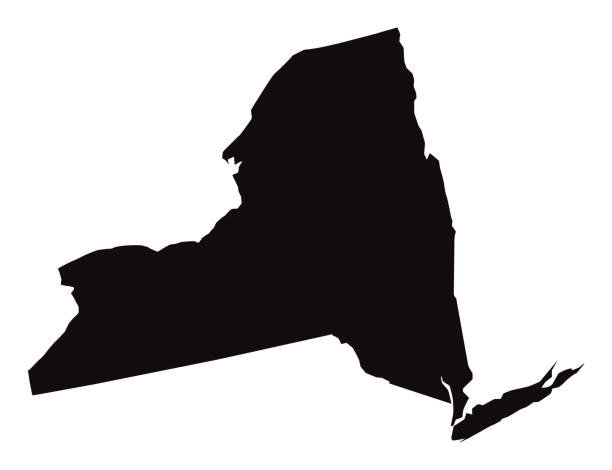
Land banks in New York…it’s working


There are just about 4 million total residential homes in state of New York. So, with all of the upheaval in our real estate business today – the NAR settlement, changes to buyers agency compensation, high mortgage rates, increased competition, limited inventory…among all of the other “normal” business challenges in real estate – if one is looking for a unique real estate specialty to consider focusing their efforts upon, as we head into 2025, here is something to consider…

Thirteen years after New York’s Land Bank Law went into effect, there are still in excess of, somewhere in the neighborhood of, 40,000 vacant residential homes situated within municipalities throughout The Empire State.

Two general truths…

Truth “A”:  a land bank has procedures available to the land bank which enable the land bank to acquire vacant and abandoned properties. 

Truth “B”:  Developers look for opportunities to acquire, then, to redevelop, properties.

Once redeveloped, and thus, in turn, once transitioned from its former status as a “non-performing” property to a new status – “performing” property – that property can be sold. Thus, returning what once had been a neighborhood liability to the community…coupled to a handsome, new classification: performing property. A community asset. A property which has now been added onto the municipality’s property tax roll.

As such, performing properties create newly-found property tax revenue for municipalities. Additional property tax revenue – now coming into the coffers of municipalities – ease budgetary constraints municipalities face.

Through New York’s Land Bank Law, in The Empire State, a New York municipality possesses the ability to create their own land bank. By establishing a land bank, resources, direction, vision, personnel – coupled to leveraged capital – enable New York redevelopment to take place. In essence, New York land banks create passageways whereby, as this passageway is followed, adverse conditions attributed to non-performing properties which are nestled, often times, for far too, too long, within New York State tax districts…are lessened.


The New York Land Bank Law was signed by Governor Cuomo on July 29,2011. New York’s first land bank was established the following year.. in 2012. Today, there are over 30 land banks in operation in New York State.

Here are some regional New York land bank statistics to think about. These are local land bank statistics…taken from the area of New York State where Josh Allen plays quarterback. And, albeit, as a KC Chiefs fan, I must say, he plays QB pretty darn excellently up there too:

A. 230 properties acquired

B. 44 renovations completed

C. $2.4 million in assessed Values returned to communities

D. $14 million in leveraged investment
Land Banks in New York…it’s working.

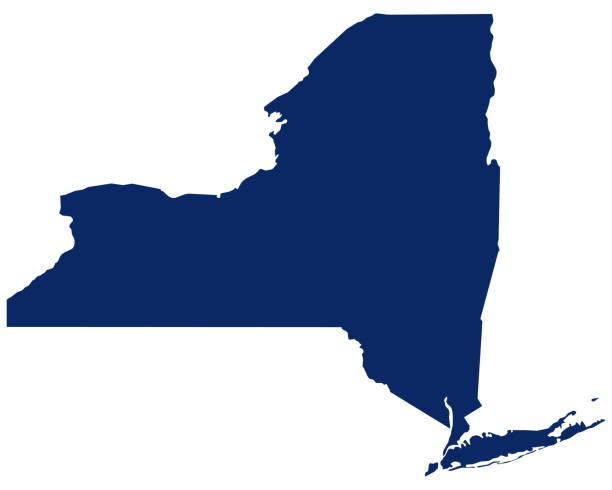
Map of New York in blue colour

There are just about than 4 million total residential homes in state of New York. If one is looking for a real estate development specialty to consider going into 2025, today, 13 years after the New York Land Bank Law went into effect, there are still in excess of somewhere in the neighborhood of 40,000 vacant residential homes located in municipalities throughout the state of New York.

Two general truths…

Truth “A”: a land bank has procedures available to the land bank which enables the land bank to acquire vacant and abandoned properties.

Truth “B”: Developers look for opportunities to acquire – and redevelop – non-performing properties.

Once transitioned from a non-performing property to a “performing” property, that property can then be sold. Thus, returning what was once a now-performing property to a neighborhood as a “performing” properties. As a community asset. As a property which is now on the municipality’s property tax roll. As such, performing properties create newly-found tax revenue for municipalities. This eases budget constraints.

Through New York’s Land Bank Law, in New York State, the New York municipality possesses an ability to create their own land bank. By establishing a land bank, resources, direction, vision, personnel – coupled to funding – enable New York redevelopment. Once created, New York land banks improve adverse conditions stemming from non-performing properties located within New York State tax districts.


The New York Land Bank law was signed by Governor Cuomo on July 29,2011. New York’s first land bank was established the next year.. in 2012. Today, there are over 30 land banks in operation in New York State..

Here are some land bank statistics from the part of New York Stare where Josh Allen plays quarterback:

A. 230 properties acquired

B. 44 renovations completed

C. $2.4 million in assessed Values returned to communities

D. $14 million in leveraged investment
A Fed rate cut…and mortgage rates went up.


Mortgage rates are at their highest levels in two months. This, after the Federal Reserve cut the federal funds rate for the first time in four years.

The Federal Open Market Committee sets a target range for the federal funds rate. The federal funds rate? The federal funds rate is the interest rate banks pay on money they – as banks – borrow from other banks.

The Fed does not directly set mortgage rates.

The Fed influences mortgage rates. The Fed influences mortgage rates through the role the Fed plays in setting monetary policy. As such, the Fed indirectly affects the interest rates borrowers lock into at the consumer level, by way of how credit spreads evolve in the market as a result of the Fed’s actions. In relation to the issuance of debt instruments. 

Credit spreads consist of the purchases of – and then the simultaneous sales of – contracts within the same asset classes. Credit spreads are not always so easy to predict. Then too, mortgage rates are not necessarily – nor definitively – so easy to predict, short term, either. Although the general direction mortgage rates will end up heading can rather accurately be predicted through actions taken by the Fed.

America’s 1st Commercial Bank

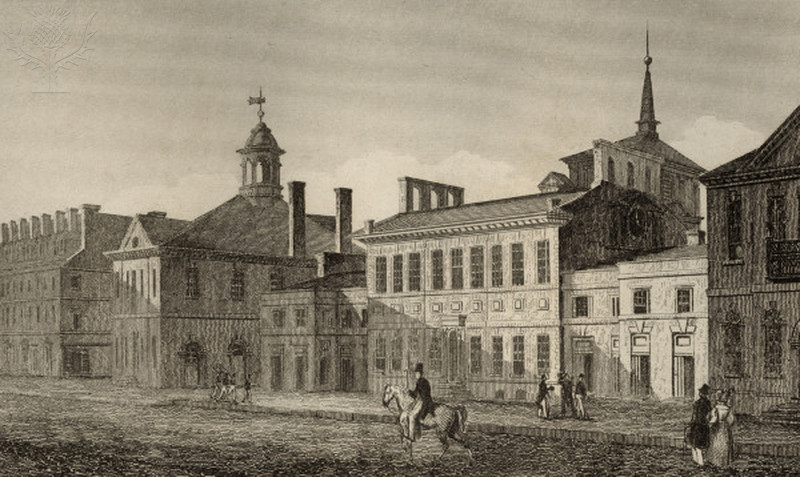
In 1781 Bank of North America opened its doors to the public for the first time in Philadelphia. Therein, we have the birth of the first commercial bank in the United States. Philadelphia’s Bank of North America.

The collective vision of two early American forefathers – Alexander Hamilton and Henry Morris – Bank of North America was initially intended to operate as a de-facto “central bank.” A bank that would contribute capital towards the financing of United States government operations.

In a twist, Bank of North America was established as a state chartered bank (chartered in Pennsylvania). Not as a commercial bank. And not being set up as a commercial bank, the “central bank” idea for Bank of North America never materialized.

Great for buyers…great for sellers: the 2-1 buydown

When mortgage rates are high – like they are today – you can use a 2-1 interest rate buydown to obtain a lower mortgage rate. And a lower mortgage payment.


The 2-1 interest rate buydown is a home loan feature whereby funds are set aside in an escrow account at the closing. These funds are set aside for the benefit of the buyer. The escrowed funds enable the buyer to “buy down” their interest rate for the first two years. In year one, the buyer’s interest rate will be 2% lower than the 30-year rate. In year two, the buyer’s interest rate will be 1% lower than the 30-year rate.


The 2-1 interest rate buydown is simple. It’s a 2% interest rate reduction in year one. It’s a 1% interest rate reduction in year two.


In years 3 through 30, the buyer’s interest rate remains the same. The buyer’s mortgage payment will remain the same as well. The buyer’s interest rate in years 3 through 30 – as well as the buyer’s mortgage payment in years 3 through 30 – is established when the buyer locks their rate.


The 2-1 interest rate buydown provides a buyer with an opportunity to qualify for a larger loan amount. This increases the number of homes the buyer can go out and look at.


By using the 2-1 interest rate buydown, a buyer can purchase a larger home. A buyer can purchase a more expensive home. A buyer can purchase a home with more “bells and whistles.” All are nice options. Possible, through the use of the 2-1 interest rate buydown.

What does a 2-1 interest rate buydown cost?

The cost of the 2-1 interest rate buydown is equal to the difference between principal and interest payments – based on the 30-year rate, which goes into effect in year 3 – and the principal and interest payments on the bought-down, lower rate in year 1 and year 2. Escrowed buydown funds are paid at the closing. Paid by the seller. Held in escrow. For the benefit of the buyer.

You are thinking about selling your home. How can the 2-1 interest rate buydown help you, as the seller? Let’s look at a few situations…

When the housing market is softening. When higher numbers of sellers are listing their homes for sale. When the housing market shifts from a seller’s market to a buyer’s market. When you see price reductions. When homes are sitting on the market – unsold – for longer periods of time. In each situation, the 2-1 interest rate buydown is an attractive tool that can be used by a seller to attract more buyers.


Over the past few years, mortgage rates have remained stubbornly high. When mortgage rates are high – like they are today – buyers who may be thinking about purchasing a home are also thinking about those higher mortgage rates. Higher mortgage rates = higher mortgage payments.

The 2-1 interest rate buydown lets a buyer get into the home they want today, with an interest rate during the first two years that will be closer to the lower mortgage rates buyers were used to seeing a few years ago. Lower mortgage rates buyers are eagerly waiting for. Mortgage rates…that are just not getting much lower.


Families hoping to purchase a home are taking notice of higher mortgage rates. Higher mortgage rates place pressure upon family budgets. This affects whether a buyer will decide to submit an offer to purchase a home. Which in turn, affects prices sellers get for homes they are selling. All being good reasons to consider using the 2-1 interest rate buydown. The 2-1 interest rate buydown benefits buyers. The 2-1 interest rate buydown benefits sellers.


Through the 2-1 interest rate buydown, as the seller, you offer your buyers the benefit of the lower mortgage rate. And the lower mortgage payment too. In year one. And in year two.

As the seller, by offering your buyers a lower mortgage rate for the first two years, you will attract more buyers to your home. Because your home is being sold with the 2-1 interest rate buydown. Because your home is being sold with a lower mortgage rate. Because your home is being sold with a lower mortgage payment. For two years. As the seller, this positions your home – which is being presented to buyers, with the 2-1 interest rate buydown – as an attractive option. Especially when compared to other homes on the market that buyers may be looking at. Because those homes don’t provide buyers with a lower mortgage rate in year 1 and year 2. Because those homes don’t provide buyers with a lower mortgage payment in year 1 and year 2. And yours does!

The 2-1 interest rate buydown. It’s great for sellers. The 2-1 interest rate buydown. It’s great for buyers.

The year 1900 brought us The Gold Standard Act and The Wizard of Oz

The Gold Standard Act was signed into law on March 14, 1900 by President William McKinley. The Gold Standard Act made gold the singular standard for the United States currency. 

The book – The Wonderful Wizard of Oz – was published on May 17, 1900. The book was written by L. Frank Baum.


L. Frank Baum’s book is about the American monetary system… just as the 19th Century ended, and the 20th Century began.

The Wonderful Wizard of Oz.

Oz is the abbreviation for ounce. An ounce of gold. Gold, the new currency standard. An ounce of silver. Silver, the replaced currency standard.

Twenty-seven years prior to The Gold Standard Act…twenty-seven years prior to Baum’s book, the Coinage Act of 1873 was signed into law by President Ulysses S. Grant.

The Coinage Act of 1873 officially replaced silver with gold as the standard for the United States currency. The Gold Standard Act expanded upon what went into effect through the Coinage Act, twenty-seven years prior.

The yellow brick road in The Wonderful Wizard of Oz is representative of the new American currency standard, gold.

Dorothy’s silver slippers are representative a replaced currency standard, silver. Gold and silver are measured in ounces. Hence…Oz. The Wonderful Wizard of Oz.

in the movie, Dorothy’s slippers are red. Red slippers? Red has no meaning. The movie strays from Baum’s book. Dorothy’s red slippers…just do not fit here.

In Baum’s book Dorothy’s slippers are silver. Silver. With meaning.

The book – much moreso than the movie – represents Baum’s views. In 1900.

An ounce – I.e.: Oz – of silver. An ounce – I.e.: Oz – of gold.

Redevelopment Area: New Jersey

In a designated Redevelopment Area, a municipality’s goals could be focused upon transitioning now non-performing residential, commercial and industrial properties to vibrant community assets. The pursuit of which could take on a community-centric theme. Renovations. Repurposing properties. And reconstruction too. Each of these being potential goals pursuant to redeveloping non-performing properties in designated Redevelopment Areas.


Steps taken by a municipality in their progression towards neighborhood revitalization in Redevelopment Areas – progression, coupled to a redevelopment plan emanating from city hall – often starts off with a city council passing a resolution. Following the resolution, the planning board then might construct a Redevelopment map. With a Redevelopment map formulated – and upon notification to the public of a scheduled hearing – a planning board could then potentially adopt a Redevelopment resolution. 

A Redevelopment resolution could recommend the establishment of a Redevelopment Area within a municipality. There is quite a bit more technical minutiae to this process, needless to say. Yet, in summarily-simplified terms, this is one we can thus arrive at the designation of a Redevelopment Area within a municipality.

Homesteading

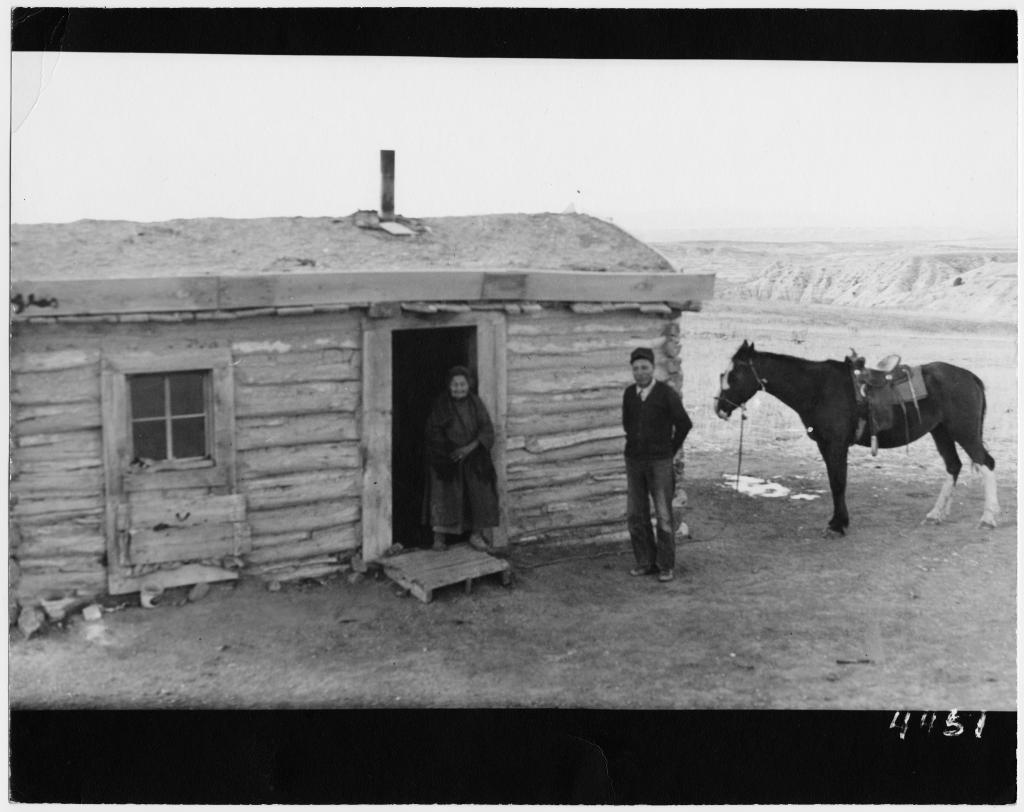
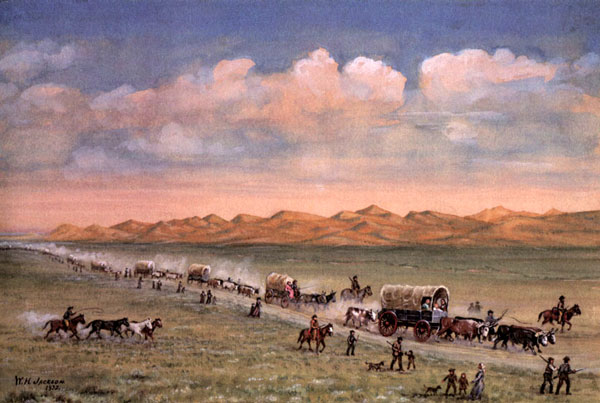
Early on in American history, as settlers pushed westward across the country, land had been able to be conveyed to those early American settlers through the Homestead Act.


Provisions within the Homestead Act called for conveyed land to be transferred with one condition of land transfers being, for that land to be settled, resided upon and cultivated – I:e.: improved – by he who acquired the land.

Early American “developers” – I:e.: westward-pushing settlers – were instrumental in effectuating intent found within the Homestead Act.

Homesteading had been a federal policy in the United States through the mid-1970’s.

In 1976, when President Gerald Ford signed the Federal Land Policy and Management Act, homesteading – as a federal policy – ceased to exist. The Federal Land Policy and Management Act was (and is) applicable to public land in the United States which is managed by the Bureau of Land Management.

Marlboro Township

The name – Marlboro Township – can be traced back to what had been a local discovery…a discovery which occurred, nearly three hundred years ago.

This local Marlboro discovery, then too, the utilization of what had been discovered nearly three-hundred years ago alongside what is now Marlboro Township, was a mineral. That mineral – emerging to go on to become quite important to the local agricultural industry – being this region’s marl. 


Marl is a mineral which, by the late 18th century in New Jersey, was relied upon first, by local farmers who owned farms in what would go on to become Marlboro Township. Then, later, by farmers farming farmland situated throughout New Jersey. Then, later, by farmers farming farmland well beyond – and outside of – New Jersey.

In Monmouth County New Jersey, marl was discovered in 1768. East of where the township lines for what we now call Marlboro Township can be found. A true farmer’s ally, the functionality of marl as a mineral can be seen in how marl – composed of the remains of prehistoric fish – was able to be spread over topsoil of area farmland during the winter months. Then tilled into the farmland soil in the spring. Farmers, in what we now know to be Marlboro Township, came to rely upon marl as the means through which they could improve their soil’s fertility.

Marl is not exclusive to New Jersey, by any means. The recognized use of marl goes way, way, way back. To the 1st century. 

Marl is a de-facto natural fertilizer. A natural fertilizer which had been found to exist in the grounds underneath Marlboro Township in the 18th Century. Long, long, long before the comeuppance of any commercial fertilizer industry in New Jersey would have been able to supply local New Jersey farmers with a finished fertilizer product which could be used for their farms.

Harvested in what would later go on to become Marlboro Township, the region’s marl – once the marl had been harvested – would go on to evolve as an industry. Later, to be transported by rail. On to nearby agricultural markets. New Jersey’s local discovery of marl established an industry early on for Marlboro Township.  

By the mid-19th Century, the transportation of New Jersey marl was key to facilitating commerce. For the local harvesters of marl. For the local “exporters” of this marl. And for the farmers and the farms which came to rely upon – and use – marl as fertilizer. 

To that effect – relating to marl, as a local industry…and to the transportation of marl as well – in 1853, the Freehold and Jamesburg Agricultural Railroad was founded in Jamesburg, New Jersey. Founded, primarily to facilitate the transportation – by rail – of this newly-identified regional mineral.

The Freehold and Jamesburg Agricultural Railroad operated along a 27-mile rail line.  Connecting the locally-harvested marl – in what is now Marlboro Township – to nearby agricultural markets. Among them, Freehold, Jamesburg, Monroe, Manalapan and Englishtown.  


For comments about this article, or to offer suggestions and ideas for further pieces written about Marlboro Township, kindly reach out to the author, Ted Ihde.

phone: (816) 699-6804

email: authortedihde@gmail.com

Westward Expansion: the Homestead Act, the Preemption Act

During the latter part of the 19th Century, westward-looking American settlers were able to acquire their land, thanks to federal policy – the Homestead Act.


The Homestead Act was signed into law by President Abraham Lincoln on May 20, 1862, and went into effect the following year. In 1863.

Twenty-two years prior to the Homestead Act, we find the Preemption Act of 1841.

The Preemption Act enabled American settlers to claim up to 160 acres of federal land at a cost of $1.25 per acre. 

So, inexpensive land acquisition – and westward expansion in early America, for that matter – had already been formal American policy…some twenty years before the Homestead Act became law-of-the-land.