Springtime in Kansas


It is suggested that one should wait until wind gusts are less than fifteen miles per hour. 

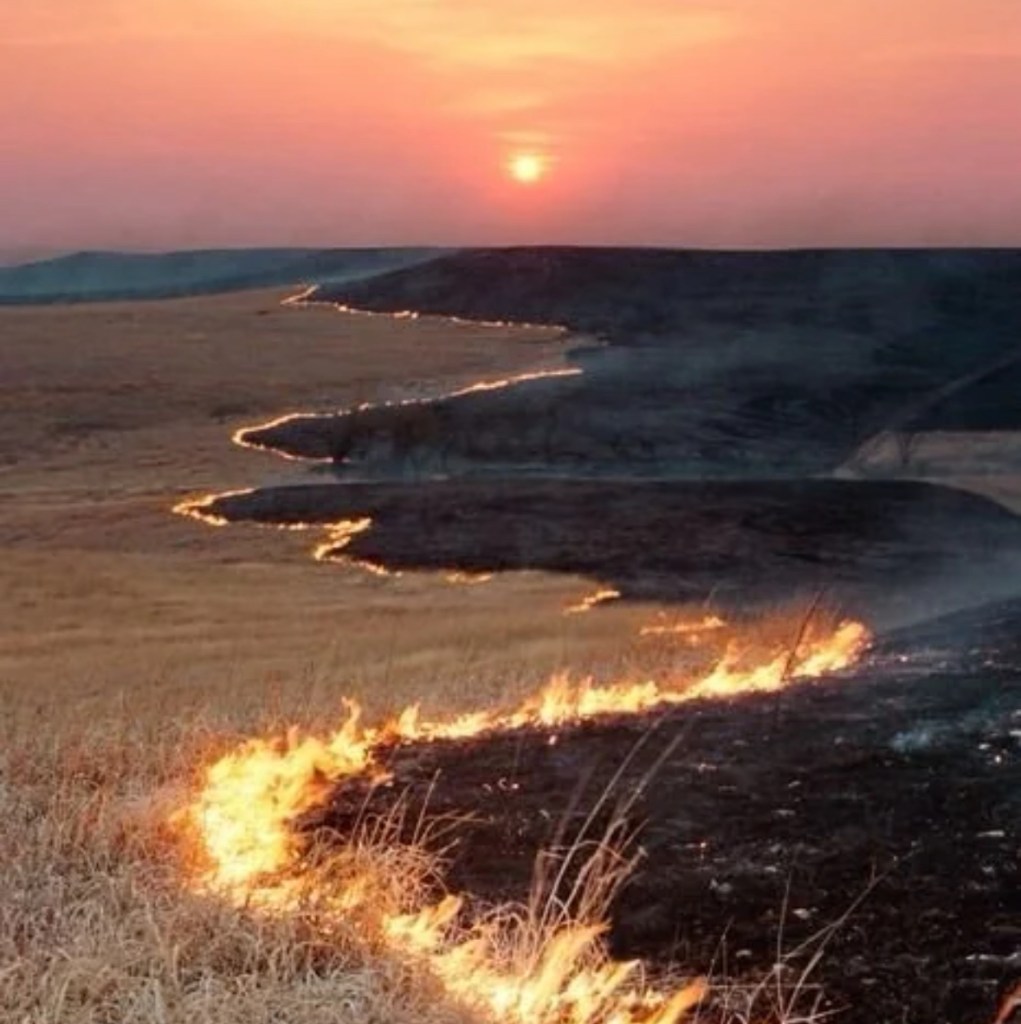
The fertile soil under our boots in the largest natural tallgrass prairie in the United States – The Flint Hills of Kansas – undergoes a replenishment every few years. Occurring when dead prairie tallgrass – dead tallgrass which has accumulated, and now lays dormant – is burned off. Right before Spring arrives.

The ignition of acres upon acres of tallgrasses culminates in quite the scene. Nighttime walls of fire, cascading the prairie’s landscape. Ablaze. Reaching up to twenty feet in height. It’s quite the site to see.

For those driving as the prairie burns, expect to encounter thick smoke. Christened with ash.

Strong winds create a dangerous situation while a prairie burns. Fires are erratic. Winds blowing in excess of 30 mph, coupled to low humidity, could lead to unintended consequences. Such as, a “firenado.Hence, wise planning. As coordinating burning off dead prairie grasses with tame wind gusts is necessary. “Tame” meaning, wind gusts which max out at less than fifteen miles per hour.

Ranchers patroling fence lines so as to ensure that flames don’t cross over into their pasteurs. Just one of many nuances which come, hand in hand, with Springtime in The Flint Hills of Kansas.

Unplowed slopes of rolling hills. Beset by shallow rocky soil. You may see bison, off in the distance. Topography of TheFlint Hills. Anchored through erosion-resistant limestone.

Tallgrass prairie of the Flint Hills today covers roughly four million acres. With the majority of those nearly-four million acres, found in Kansas. Making The Flint Hills the largest remaining tall grass prairie in the United States.

At one time, tallgrass prairie blanketed 170 million acres of the country. Once extending from the tallgrass prairie’s home today in Kansas – and, to a lesser extent, in Oklahoma – over into Nebraska, Texas, Iowa, Missouri, South Dakota, North Dakota, Illinois. And parts of Canada. 

Burning of Flint Hills grasses precedes the planting season each year in Kansas. Taking place in late March. Or early April.

The primary purpose for the annual igniting of the prairie is to enrich the soil. While so too, preventing the encroachment of trees. 

Fire-adaptive grasses thrive in The Flint Hills. These grasses, fortified by nutrients which are absorbed by the soil. This absorption of nutrients by the soil is one byproduct of the igniting of the prairie during the Spring.

The prairie is burned. Trees don’t thrive. Nutrient-rich grasses do. Therein lies the point. 

Those fires we see in the Flint Hills each Spring eliminate dead grasses. Ridding the prairie of dead grasses – barren of nutritional value – facilitates rapid growth of nutrient-rich grasses. High in protein. A high-protein diet is required in the cattle business.

Switchgrass…

Golden in the Fall, with a greenish-blue color in the Spring. The optimal grazing height of switchgrass is one-and-a-half feet to two feet. In the summer, as traditional grasses stop producing, Flint Hills switchgrass remains rich in protein. Perfect for cattle.

The cattle-to-person ratio in Kansas is two-to-one. Two head of cattle, one person. Cattle is a stalwart in the Kansas economy. There are, give or take, six million head of cattle in Kansas. Needless to say, the cattle industry is firmly entrenched in the economy of Kansas. Contributing $10 billion each year to the State’s GDP. 

One secret to the success of Kansas beef would be, weight gains. I.e.: rapid putting on of pounds, which Kansas cattle are able to do. Thanks in large part to rich grasses found throughout The Flint Hills.  Those nutrient-rich grasses in Kansas, making up the lion’s share of the diet for cattle.

In Kansas, cattle add most of their pounds, beginning in April – which coincides with the burning of the tallgrass prairie  – running through July. 

Cattle’s gains…

Kansas cattle can put on up to four pounds of weight – each day – within that April-to-July window. This rapid bulking up by cattle – fueled by nutrients found in Flint Hills tallgrass – contributes to an interest held by out of state ranchers of shipping their cattle to the Sunflower State.

Mature Kansas beef bulls can clock in at between 2,000 to 2,400 pounds. Mature bulls consume up to 45 pounds of dry matter (nutrient content without water) everyday.  Possessing such appetites, 4,000 acres of unobstructed nutrient-rich tall grass presents a very nice resource. For ranchers.

With a bull’s substantial daily consumption requirements, cattle from as far away as Florida often make their way up to Kansas’ Flint Hills.. Those nutrient-rich grasses? Attractive to ranchers. Even ranchers beefing up cattle as far away as the Sunshine State.
Kansas City


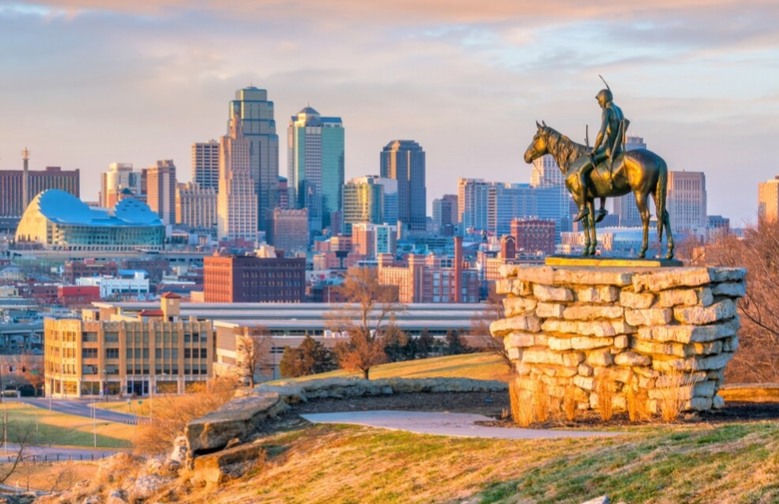
Each year, on the day after Thanksgiving, a crowd of 200,000 or so Kansas Citians partake in a Paris of the Plains Christmas tradition – The Plaza Lighting Ceremony. 

Kansas City’s Country Club Plaza. Named for Kansas City’s Country Club District. The Plaza. A 14-block historic shopping and entertainment district located on the southern end of Kansas City, Missouri. On the northern end of Ward Parkway.

The Plaza…with looks accentuated by fountains. By carriage rides. By statues. By sculptures. By its Spanish architecture. And at Christmastime, The Plaza takes on additional charm.

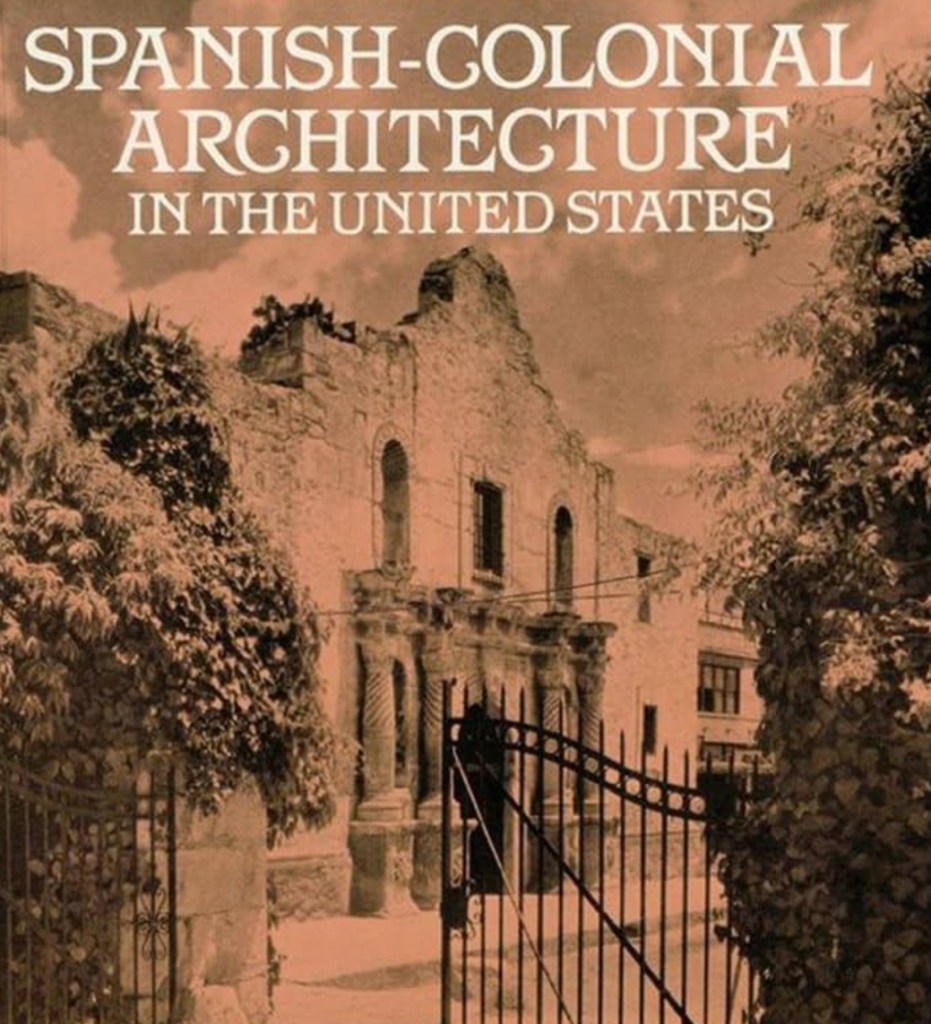
From an architectural standpoint, The Plaza’s design could be categorized as, Spanish Colonial Revival. Or, as Moorish Revival. 


Stamped upon The Plaza is a signature which speaks to Spanish architecture. The Christmas season begins in Kansas City each year in The Plaza with the illumination of this Spanish architecture. The lighting of Kansas City’s “Sevilla.” A Christmas tradition in KC, dating back to 1925. 

Although, in 1925, the “Plaza lighting” would not have been recognized as an occurrence on which a 100-year tradition would (or even could) be based.

The Plaza Lighting Ceremony. 200,000 jewel-toned lights which adorn streets on The Plaza at Christmas.

One of those Plaza buildings with Christmas lights is The Mill Creek Building. On Mill Creek Parkway.

And it is this Mill Creek Building which provides us with our story for the tradition of The Plaza lighting.

Kansas City’s Mill Creek building was the very first building ever constructed on The Plaza. 

Built in 1923, at the time of its construction, The Mill Creek Building was not known as The Mill Creek Building. No, when The Mill Creek Building was built, The Mill Creek Building was the Suydam Building.

The look for the Suydam Building was introduced to Kansas City by an architect from New York. Edward Buehler Delk. 

Edward Buehler Delk arrived in Kansas City five years before the first “Plaza lighting” took place. Delk arrived in Kansas City in 1920. Coming to Kansas City to work for a real estate developer – J.C. Nichols. 

Implementation of the style used by Edward Buehler Delk to plan out The Plaza for J. C. Nichols was attributed to trips Delk took to Spain, to Mexico and to South America. Delk absorbed architectural styles he liked in each locale, then conveyed those styles to Nichols. To be used for Nichols’ Plaza.

The look of The Plaza – and of the Suydam Building – is a look more likely to be found in southern California than in the Midwest.


Edward Buehler Delk – he whose architectural vision fostered the Suydam Building, as well as The Plaza – favored styles he took in on his trips to Spain, Mexico and South America. Styles which can be categorized as Spanish Colonial Revival. Or, Moorish Revival.

In later years, Edward Buehler Delk went on to design Kansas City buildings for Frank Lloyd Wright.

Going back to The Mill Creek Building…

Kansas City’s Mill Creek Building – The Plaza’s first building – holds a special place in Plaza lighting history. As The Mill Creek Building – the Suydam Building in 1925 – is where our tradition of “the lighting” began.

The very first “Plaza lighting” was unintentional happenstance. No grandiose planning. This which spawned a one hundred year tradition in Kansas City arose from quite a humble beginning.

In 1925 it was a maintenance worker, a maintenance worker employed by J.C. Nichols’ company – this maintenance worker, Charles Pitrat – who hung one, single strand of Christmas lights on the Suydam Building.

Hundreds of thousands partake in Kansas City’s Christmastime tradition on The Plaza. A tradition started by a maintenance worker. A maintenance worker who hung one single strand of Christmas lights on one building. The first building built in The Plaza. Designed by an architect on whose influence The Plaza is based. 

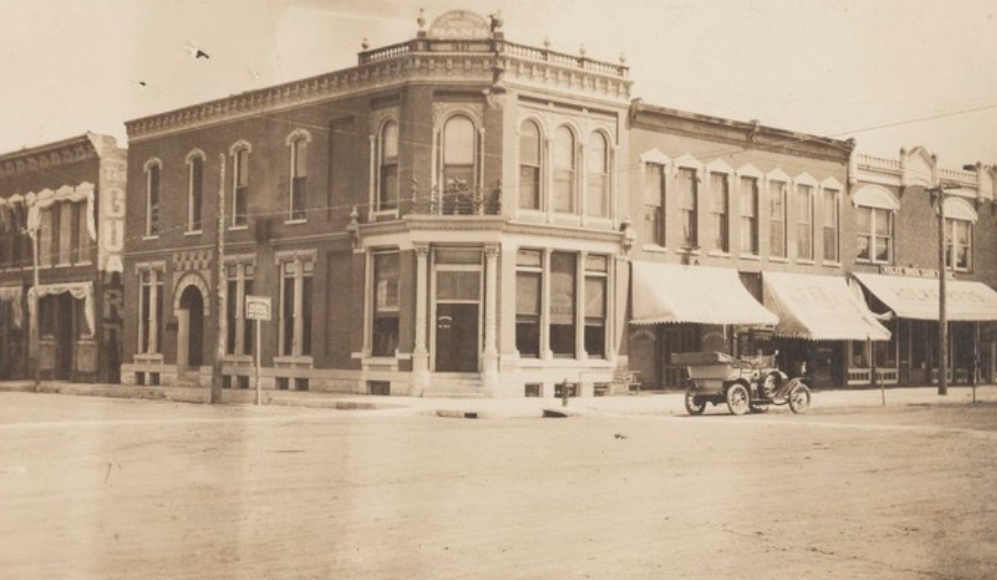
The Suydam Building. Now, the Mill Creek Building. 4634 – 4644 Mill Creek Parkway. Kansas City, Missouri. The Plaza’s first building. The first Plaza lighting.

Delk designed the building. Nichols built The Plaza. Lest we not forget when visiting The Plaza this time of year that it was a maintenance worker who hung that first stand of lights.

The prominent architect. The iconic Kansas City developer. And the maintenance worker. Our forefather for the lighting of The Plaza would be our maintenance worker, Charles Pitrat.

Pemberton, New Jersey

The naming of Burlington County, New Jersey’s Pemberton goes back to late-17th times. In naming of a town, we find a link William Penn. To a prominent local mill. To a a successor to Benjamin Franklin. To an abolitionist. One who decried waging war on Indian tribes. 

The beginnings for the Pemberton’s…

In 1682, an Englishman by the name of Phineas Pemberton settled on 300-some acres along the Delaware River. Phineas Pemberton, arriving as a colonial settler in England’s new American colony of Pennsylvania. Arriving in Pennsylvania by way of Lancashire, England. Phineas Pemberton started his colonial journey in Maryland. Later, migrating north. To Pennsylvania.

Once settled in Pennsylvania, Phineas Pemberton proceeded to work closely with Pennsylvania’s founder, William Penn. Phineas Pemberton served as Chief Administrator of Buck’s County, Pennsylvania for William Penn. Across the Delaware River from where today we find Pemberton, New Jersey.

Phineas Pemberton’s arrival in Pennsylvania’s Buck’s County came one year after King Charles II granted an area of land across “the Pond” within the British Empire to William Penn. Or, to be more era-precise, to Sir William Penn. This land, granted to Sir William Penn as a debt payoff by England’s king. This had been money owed by England’s king to William Penn’s father.

Pennsylvania’s very beginning. On land which had once been – prior to falling under Britain’s rule – New Sweden. New Pennsylvania settlements were taking hold. This, a time of colonial settled. And colonial migration. Leading to population growth for the new Buck’s County. 

Hence, we have our framework for an entrance by the Pemberton family name into the annals of American history.

In Buck’s County’s, Phineas Pemberton became William Penn’s Chief Administrator. As William Penn’s Chief Administrator, Phineas Pemberton was responsible for record keeping pertaining to the arrival of new settlers in Buck’s County.

Phineas Pemberton became Clerk of all Courts for Buck’s County. Phineas Pemberton became Register of Wills for Buck’s County. Phineas Pemberton became Master of the Rolls for Buck’s County. Phineas Pemberton became Receiver of Proprietary Quit Rents for Buck’s County. Phineas Pemberton became Surveyor General for Buck’s County. Phineas Pemberton’s was, shall we say, quite an important man.

Be it calculations of Buck’s County cattle. Be it births in Buck’s County. Buck’s County deaths. Migration tabulations for new settlers arriving in Buck’s County. These records were being memorialized by William Penn’s Chief Administrator, Phineas Pemberton.

Phineas Pemberton…establishing groundwork in Pennsylvania for a Pemberton family member who would later go on to become Pemberton’s namesake.

It would be some fifty years after Phineas Pemberton’s record keeping exercises for William Penn that we’ll find our origin for what would go on to become the New Jersey community for which the Pemberton family name today remains affixed.

As we will find when we learn about the beginnings for so many American cities and towns, industry was at the forefront of the progression of this community towards a becoming, first, a borough. Then later, a township. And in Pemberton’s case, that American industry happened to a mill. A saw and grist mill.

In 1752, David Budd, together with a group of entrepreneurs, established New Mills Company. Recognizing how Pemberton’s access to a great natural waterway could provide power to his mills, David Budd built his first industrial mill twelve years prior to the founding of his New Mills Conpany.

Upon building his first area mill in 1740, David Budd’s New Mills Company proceeded to build additional mills. These were saw and grist mills.

David Budd’s original New Mills Company mill stood in a community which would later go on to adopt the name, for which, David Budd’s company provided the reasoning. The community became, New Mills.

Yet, New Mills at this time was not a township. Nor was New Mills yet a borough. At that time, part of this New Mills community was situated within New Hanover. While another part of this New Mills community was situated within Northampton. Northampton, today’s Mount Holly.

Nonetheless, what was then New Mills was very much a burgeoning community. Growing around David Budd’s saw and grist mills. Across the Delaware River from where Phineas Pemberton earlier served as William Penn’s record keeper.

As the 18th Century faded, becoming the 19th Century, this mill community of New Mills would go on to adopt its new name: Pemberton.

These old sections of New Hanover and Northampton, together making up New Mills, broke off from their respective townships. They broke off to form a new borough. This township break-off is where we find the origin for the borough of Pemberton.

The borough of Pemberton – this, which once had been known as New Mills – was incorporated as a New Jersey borough in March of 1826. Pemberton was later incorporated as a New Jersey township. That happened twenty years later. In 1846.

We have Phineas Pemberton, William Penn’s numbers cruncher. We have New Mills Company. And David Budd. We have our township name, Pemberton.

While Phineas Pemberton and David Budd were locals of great importance to this region within New Jersey’s Burlington County, neither of these two men ended up becoming the reason for why Pemberton today goes by the name of Pemberton.

Pemberton is really Pemberton due to values espoused by an abolitionist from Pennsylvania. James Pemberton 


James Pemberton. The Pennsylvania Quaker who succeeded Benjamin Franklin as President of the Pennsylvania Abolition Society.

The New Mills borough renaming which took place in 1826 – from New Mills, to Pemberton – was an undertaking to honor that successor to Benjamin Franklin. He who headed up Franklin’s anti-slavery organization, after Franklin’s departure. An anti-slavery movement in Pennsylvania which was led by the Pennsylvania Abolition Society. Carried onward by James Pemberton. So as to ensure that the institution of slavery would not become one pillar on which this new country of America would be built.

James Pemberton. A founder of Pennsylvania Hospital. President of Benjamin Franklin’s Abolition Society. Influential area landowner. Member of the Pennsylvania Assembly…resigning from the Pennsylvania Assembly due to the fact that the governor of his State declared war on Indian tribes. Phineas Pemberton’s grandson.

James Pemberton. Our namesake for Pemberton.

Indiana University at the very beginning.


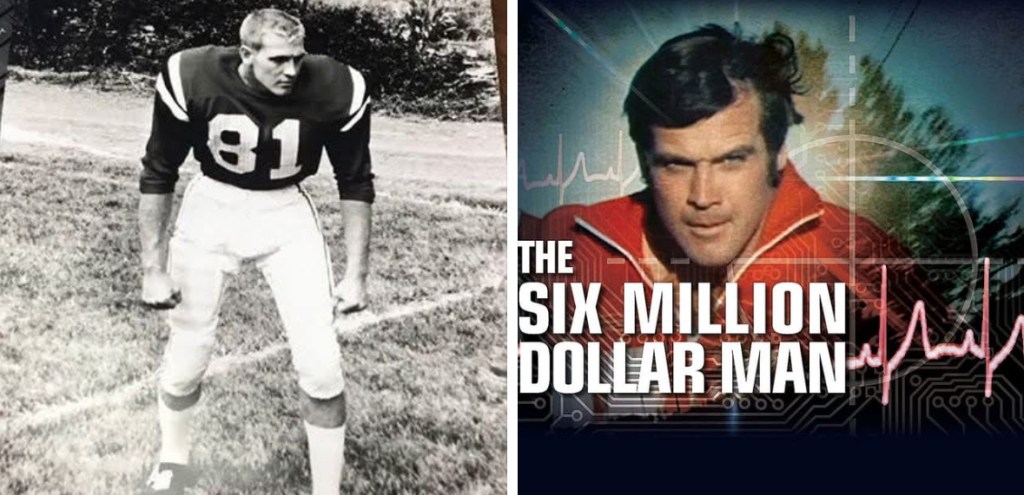
In 1820, the academic institution at which the Six Million Dollar Man first began his college football career as a defensive end, thanks to an IU athletic scholarship, was founded. This Midwest school with nine campuses and 90,000 students today was founded as a seminary

Classes began at this Hoosier seminary four years after the school’s founding.

Those early classes were held in Bloomington. Just as IU classes are held in Bloomington today.

Before Indiana University became Indiana University, Indiana University was educating Hoosiers as Indiana College. After first educating Hoosiers as Indiana Seminary.

Our Hoosier school. First, Indiana Seminary. Then, Indiana College. Then, Indiana University.

Indiana Seminary became Indiana College in 1828…four years after those first classes were held in Bloomington. At Indiana Seminary. Eight years after the school which would go on to become Indiana University was established. Twelve years after an Indiana university was to be established. According to Indiana’s state constitution.

Indiana’s university became Indiana University twenty two years after Indiana’s state constitution called for the establishment of an Indiana university.

Indiana’s state constitution was written in 1816. Written at the state capital. Written in Cordyn.

Indianapolis is Indiana’s capitol today. in 1816 Cordyn was the capital in the Hoosier State. Written in Cordyn in 1816, Indiana’s state constitution paved the way for the transformative history of IU.

Indiana’s university…

Indiana Seminary. Later becoming Indiana College. Later becoming Indiana University, where the Bionic Man once played defensive end.

Council Grove, Kansas


What is so very interesting about our nation’s history can be discovered through historical connections we make between famous Americans, and quite often, places we frequent. Or, places we visit. Or, in my case, the restaurant which serves the best bread pudding.

One of my – How did this come to be? – started off as an affinity for bread pudding. Bread pudding in Council Grove, Kansas. Bread pudding served at Hays House 1857.

Hays House 1857, Daniel Boone, Benjamin Franklin and Council Grove.

Council Grove’s origin…


In the earliest part of our nation’s 19th Century, in what would – 29 years later – go on to become the Territory of Kansas, in 1825, westward-focused American settlers had been eager to identify quicker (and better) trade routes. With this impetus for expanding trade to the west in mind, a treaty in 1825 had been negotiated between United States commissioners and the Osage Indians. Negotiated in a section of the Great Plains where frontiersmen gathered. Rested. And congregated. Before continuing on…west.

In the early part of our 19th Century in what today is Kansas, as United States trade – and as United States trade routes – were being expanded to the west, one 1825 treaty entered into by the United States with Indians – the Osage Indians – grew what would go on to become one of the most famous passageways – passageways, trails, routes, roads and/or highways… – in all of United States history. 

This trail…a 900-mile United States trade route. 


This trail…starting out in a small town, 100 miles to the east of Kansas City, Missouri.

This trail…its origin, a small town which had been founded by European setters in 1816. 

This trail…beginning in that small Missouri town – to the east of Kansas City – which had been named for one of the United States’ Founding Fathers.

This trail…which one would, at that time, start their travels on in Franklin, Missouri

Franklin, Missouri…a town named for one of the United States most famous Founding Fathers, Benjamin Franklin.


This trail…ultimately arriving in, Santa Fe, New Mexico.

This famous trail we are speaking to? The Santa Fe Trail. 


The treaty between United States commissioners and the Osage Indians extended our Santa Fe Trail to the west. Through a section of what would later go on to become, the Territory of Kansas. Later becoming, the State of Kansas. 

This treaty entered into between United States commissioners and the Osage Indians – in 1825 – was centered upon a destination point for frontiersmen traveling west. At the “Grove.”

In 1825, there was no incorporated United States town through which this section of the Santa Fe Trail had been extended. 

In 1825, there was no organized territory through which this section of the Santa Fe Trail had been extended.

This 1825 treaty – extending the Santa Fe Trail though a most-scenic part of the largest tall grass prairie in the United States, the Flint Hills – focused on an area in the Plains where travelers gathered their wagons. They’d form wagon trains. And they’d head west. From the “Grove.”

We are referring to an area in Kansas’s Flint Hills which was at that time – to the Osage Indians, and to frontiersmen – simply known to be, the “Grove.”

The “Grove.” Named for a grove of trees

This 1825 extension of the Santa Fe Trail would wind along – what had been at that time – simply, the main street in the “Grove.”

The unincorporated territory in which this section of the Santa Fe Trail had then been extended – in 1825 – would go on to become a formal United States Territory. In 1854. This territory would go on to become the Territory of Kansas.

This grove of trees would go on to become an incorporated United States city. Twenty-six years after the Territory of Kansas became the State of Kansas in 1861. The grove of trees would go on to become…Council Grove

Council Grove was incorporated as a city in Kansas in 1887.

And that old main street in the “Grove?” Our old main street would go on to become …Main Street. In Council Grove


Which brings us to our link between the “Grove,” the Santa Fe Trail, Council Grove and…Daniel Boone.

But first…Seth Hays.

Hays house ( lower case “h”) started serving American pioneers three years after the Territory of Kansas was incorporated as a United States territory. 


In 1857, Hays’ house originally started out as a Santa Fe Trail trading post. A Santa Fe Trail trading post coupled to a Santa Fe Trail restaurant. Located – then, and now – on the Santa Fe Trail. 


With its historical position, quite literally, on the Santa Fe Trail, the Hays house traces back to Seth Hays.


Seth Hays. Founder of Council Grove, Kansas.

Seth Hays. Rancher. Tavern owner. Trader. Publisher.

Seth Hays, who grew up in the Kansas City, Missouri neighborhood of Westport.

The original Hays house? Well, the original Hays house that Seth Hays built next to the Neosho River wasn’t actually a house.

The original Hays house was in fact a log cabin. A log cabin which functioned as Seth Hays’ home – I.e.:. where Seth Hays lived with his adopted daughter, a freed slave. And as a Santa Fe Trail trading post. 


The trading post built by Seth Hays in the “Grove” was a business venture headed by a relative of his, A.G. Boone. 

A.G. Boone…grandson of Daniel Boone.

Seth Hays…great-grandson of Daniel Boone.

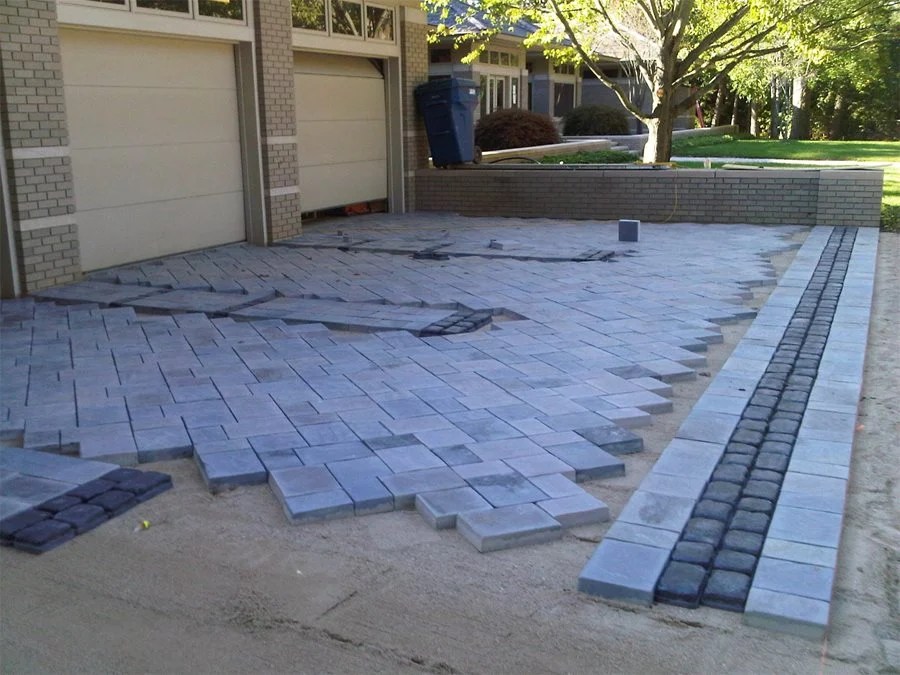
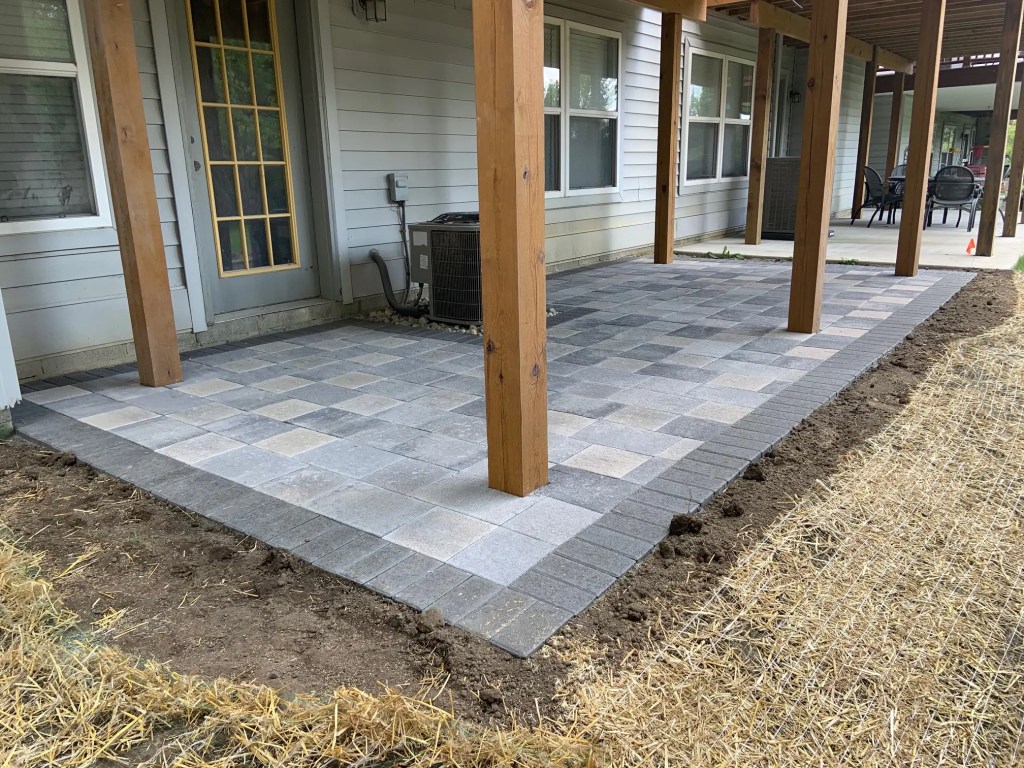
Your Paver Patio Subsurface


A well-prepared patio subsurface is crucial for long-term stability and drainage. Your patio subsurface is your patio’s foundation. With the proper foundation, you will ensure that your patio stays level. Preventing pavers from shifting. The result? You will have a durable, aesthetically pleasing patio. 

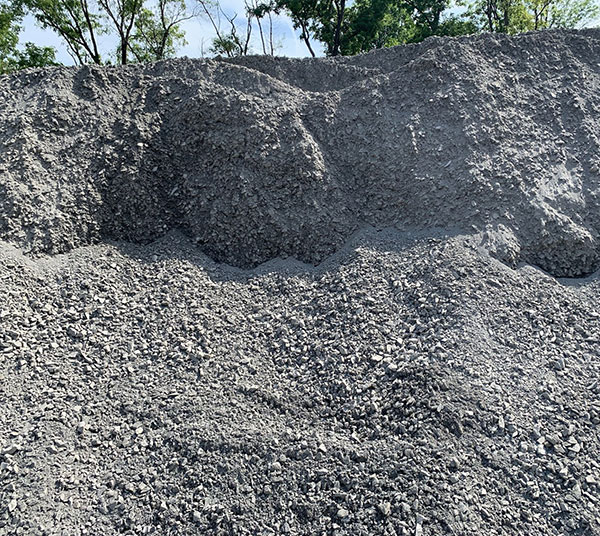
So what goes into a strong patio foundation? QP, DGA, 1” blend, crusher run.

Quarry process (“QP”), Dense Graded Aggregate (“DGA”), 1″ blend and crusher run. Four denominations used to identify an ingredient which is necessary in order to create the strong patio subbase you are looking for. An ingredient which is tantamount to the creation of the strong patio subbase you will want (and need) when you add that new paver patio to your outdoor living space. 

So, let’s talk a little bit about this important construction ingredient…

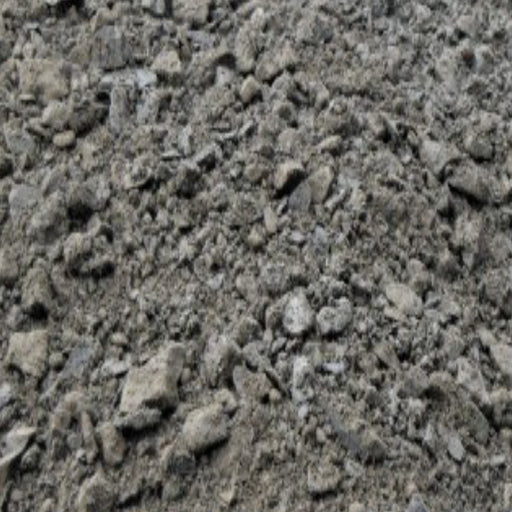
QP – DGA – 1” blend – crusher run is an aggregate which has been crushed and re-sized. Its altered composition? With QP – DGA – 1” blend, you have a collection of stones, 1” and smaller. With crusher run? Re-sized stones with a range in sizes which can be a tad larger than QP, DGA or 1” blend. With crusher run, you have an aggregate consisting of stones up to 1 1/2 inches in diameter…down to minuscule dust particles.


Your paver patio subbase will consist of a foundation which is made up of filtered, re-sized stones – up to either 1” or 1 1/2” in diameter, stone dust and gravel. Your patio subbase.


What are some of the benefits you will attain by using QP, DGA, 1” blend or crusher run when you construct your paver patio?

QP – DGA – 1” blend – crusher run are load bearing aggregates. By using a load bearing aggregate – coupled to adherence to the recommended level for your QP – DGA – 1” blend – crusher run subbase, your Cambridge, or Unilock or Techo-Bloc pavers will require a lower level of future maintenance. Translation? Fewer patio repairs. Less money spent on patio upkeep.

Furthermore, QP – DGA – 1” blend – crusher run is resistant to damage to your patio resulting from cold weather and frost. On top of this, using QP – DGA – 1” blend – crusher run as an ingredient for your patio’s subsurface will lessen concerns about erosion.

How does QP – DGA – 1” blend – crusher run work? This aggregate stabilizes your compacted base. In a nutshell, QP – DGA – 1” blend –crusher run establishes your optimal patio subgrade.

Stability, support and drainage…

QP – DGA – 1” blend – crusher run also creates an efficient drainage system. While preventing settlement. 

Sold by the ton, you’ll want to purchase at least one ton of QP – DGA – 1” blend – crusher run for every 30 square feet of paver patio that you intend to construct. 

For example…

If your hardscaping calls for building a 2,000 square foot patio – so as to accentuate the beauty within your backyard blueprint – you’ll want a delivery of 67 tons of QP – DGA – 1” blend – crusher run.

The ideal thickness of the QP – DGA – 1” blend – crusher run you will have beneath your new paver patio? Between four to six inches.