The famous saying, “Get out of Dodge…”

A town where buffalo hunters rested their weary legs, liquored-up, gambled and told their tales of adventures on the plains.

A town in Kansas which, to this day, is a cultural metaphor for violence and anarchy. The town which brings us our famous, “Get out of Dodge…”. Dodge City.
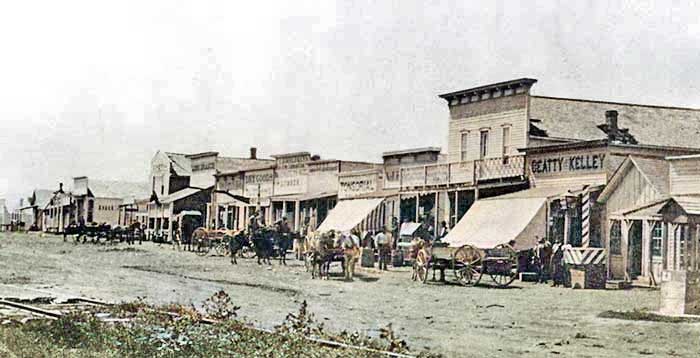

But how did Dodge City – the onetime buffalo capital of the west -come to be…?
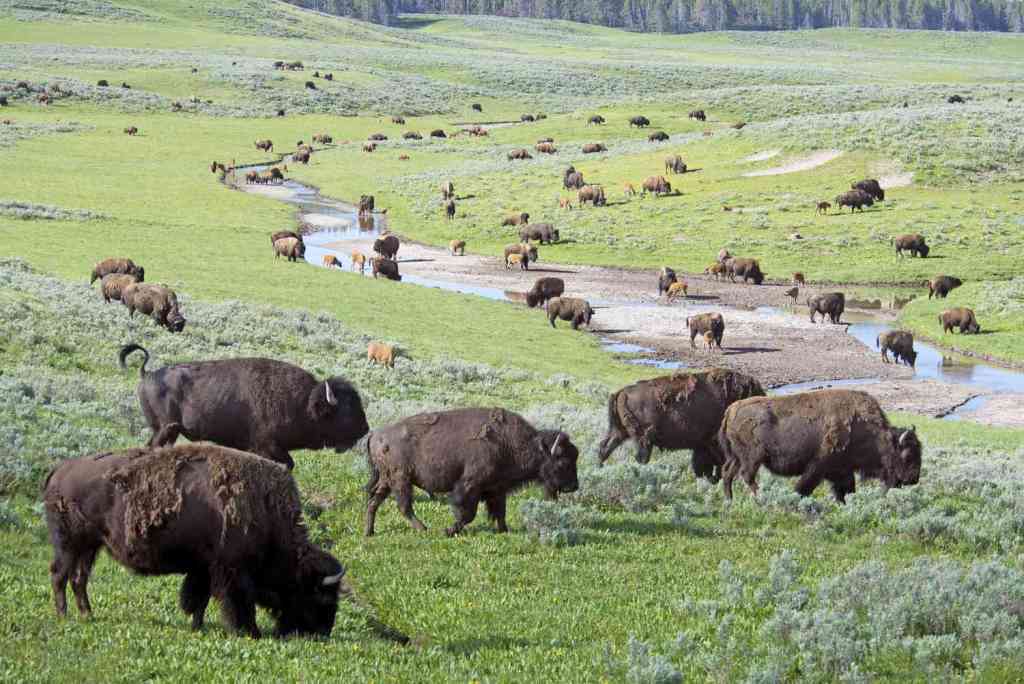

During the latter part of the 19th Century, alongside the Santa Fe Trail out in western Kansas there once stood a destination point for buffalo hunters. A destination point which history has allotted with fables, tales and lore.

Late in the 19th Century, this settlement became a favorite among those who were brave enough (or maybe, crazy enough) to seek out potential fortunes that westward expansion held in store. 

This destination point – frequented by some of the roughest and toughest characters our country has ever seen – became Dodge City. 
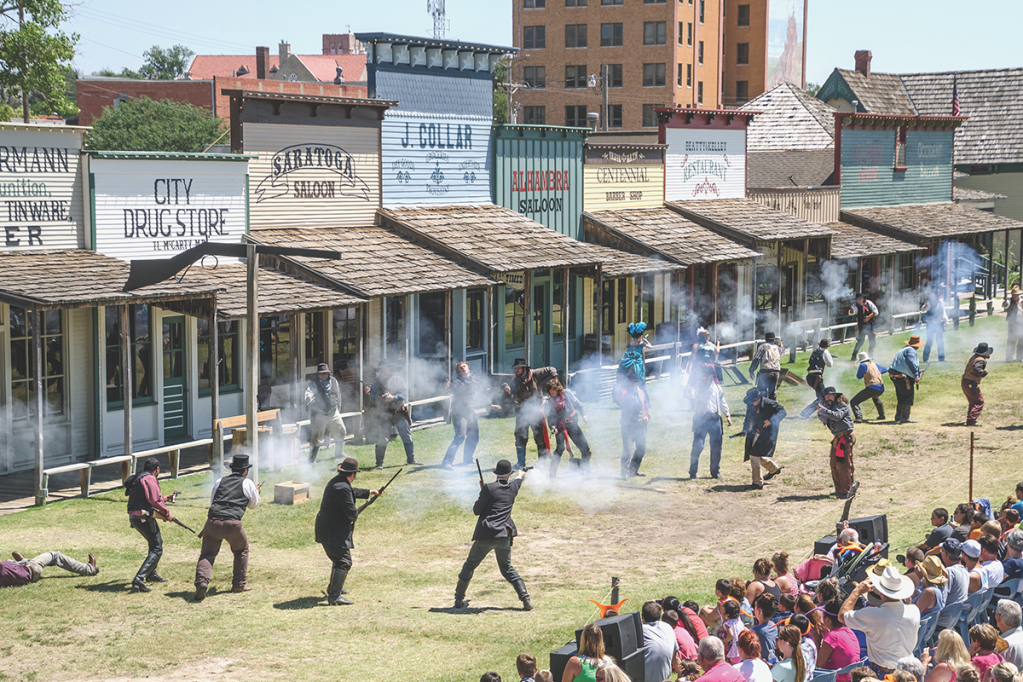

Dodge City is the product of a confluence of circumstances. So let’s look at a few of those interesting circumstances…

One early congregation point for buffalo hunters – located in what would go on to become Dodge – was, a modest three-bedroom house.

Henry Sitler constructed his three-bedroom house near Fort Dodge in Kansas. Stiter’s home became known as a place where buffalo hunters’ could stop by. For a stay over.

Circumstance…

Within a few years of Stitler building his house in what would go on to become Dodge City, over 1 million buffalo were being loaded onto trains – near Fort Dodge, near Stitler’s home – and being shipped east.

While hunters and traders were drawn to buffalo hunts by the profit they could realize through buffalo leather – used for boots and belts – the federal government promoted bison hunting.

In Washington D.C. – as the thinking went in D.C. late in the 19th Century – America was intent on further expanding to the west. So, by reducing the buffalo population in the west, the native peoples – people who stood in the way of America’s westward expansion – would lose their primary food source. Bison. Thus, turning – I.e.: forcing -the natives towards an American product as their main food source. 

The thinking in D.C. at that time went something like this… Too many natives. And too many buffalos.

So we’ve established some foundational framework for how – and why – Dodge City emerged.

The American government wanting to reduce the bison population…

Though D.C.’s endorsement, military forts then facilitated the extinguishment of bison…

Traders profiteering from buffalo leather…

The inevitable confrontations with native tribes that buffalo hunters – as well as soldiers – were certain to encounter as they slaughtered bison – the primary food source of an indigenous people…

Those, a few of the situational circumstances encountered by visiters to Henry Sitler’s house.

One million buffalo being extinguished…

Alongside Atchison, Topeka and Santa Fe Railroad Kansas train tracks…laden with train cars loaded with bison, en route to the east…Dodge City emerged as a major shipping center. While simultaneously becoming an American media darling.

Attracting rugged hunters and traders from all over the nation, American newspapers were gobbling up tales of Dodge City’s bedlam and belligerence. So, Americans introduction to Dodge City came by way of stories which made their way to printing presses. Churned out to American newspapers. Sensationalism sells news. Dodge City, in its raw, rough and wild manner, was sensational. Tales of Dodge City’s wild-ness – the hunters, the traders… – sold newspapers. Dodge City became a favorite topic among American media.


As Dodge City was growing, at its earliest stages, there had been no law enforcement. Buffalo hunters, railroad men and fisticuffs. Coupled to saloon. The perfect elixir for lawlessness. As lawlessness did prevail. In fact, the origin for the name of Dodge City’s famous cemetery – Boot Hill Cemetery – emanates from Dodge City gunfighters who died with their boots on. In raucous Dodge City.

Dodge City was a town built on an economy linked to buffalo…

The buffalo trade and Dodge City. The prevalence of buffalo to Dodge City’s story is dynamic…yet short lived.

As Dodge City was growing – the result of the buffalo trade – back east, in Washington D.C., the American government was intent on permanently putting down Indian resistance to American expansion. Orders were sent to one noted general – General William Sherman. Those orders? Slaughter the bison. Wipe out the natives’ primary food source. Drive natives onto reservations.

Within a few years, the buffalo population was reduced from millions to hundreds. Driving Dodge City’s buffalo hunters out of business. But not driving Dodge City out of business. The extinguishment of American bison simply served to function as a prelude to Dodge City continuing on as a real rough place out west.

With buffalo having been removed from the plains, the cattle business took off in Dodge. Dodge City became a cowboy town. A still-lawless cowboy town, at that.

The burgeoning lawlessness of the former buffalo capital of the west needed some sort of order to be established. As a more formal American cattle business replaced the informal buffalo trade in Dodge. And this need for order paved the way for Dodge City’s place within the curiosity of newspaper writers, Hollywood producers and, more broadly, American culture.

Tame Dodge City…

So an old buffalo hunter was brought in to do the job. He himself then proceeded to bring in his friend. Another old buffalo hunter. Together, they were going to temp down this unhinged town.

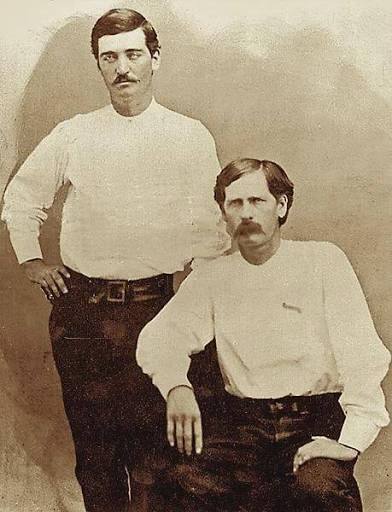
The man brought in to get Dodge under wraps became the deputy marshall. That man – the former buffalo hunter – was Wyatt Earp.

And the man Wyatt Earp brought in to help him to tame Dodge. The man Wyatt Earp appointed as his deputy marshall? That man – another former buffalo hunter – was Bat Masterson.
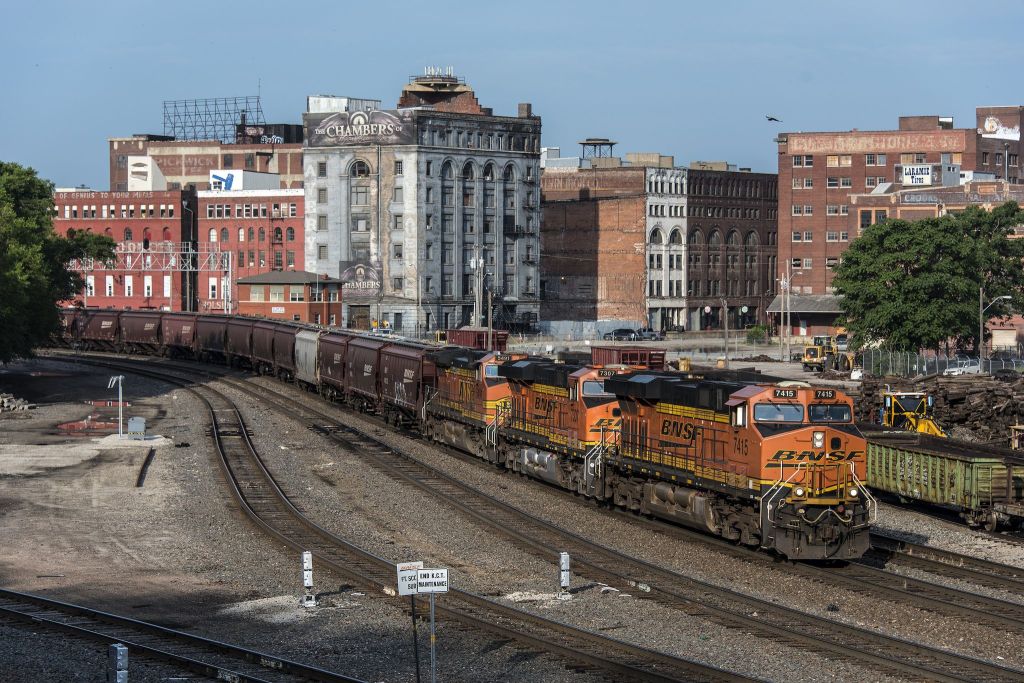
The West Bottoms

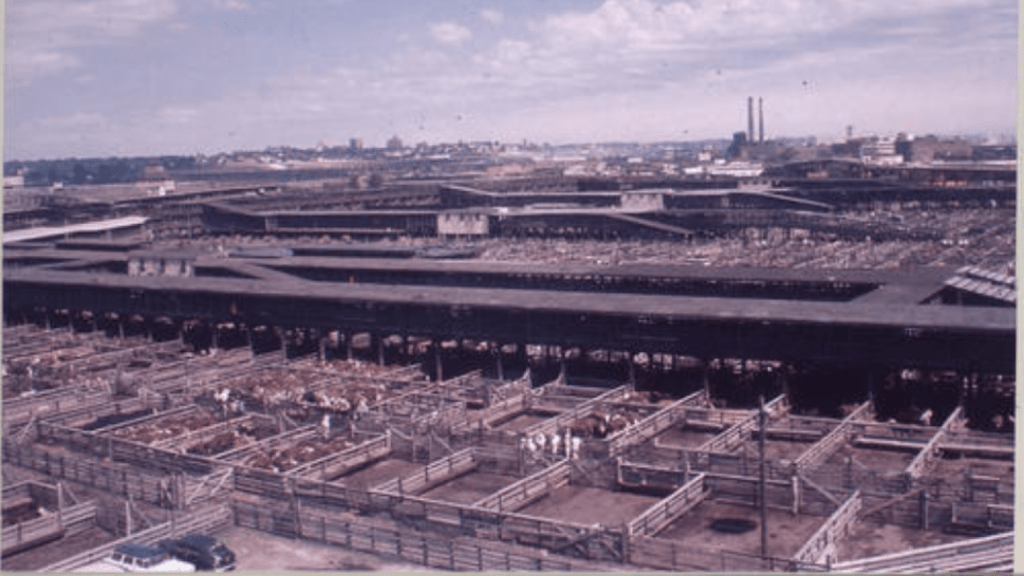
Kansas City’s stockyards – and the KC cattle business – once dominated a section of Kansas City, Missouri known as the West Bottoms.


The cattle industry had been Kansas City’s first multi-million dollar business. Actually, at one time, Kansas City’s stockyards were a multi-million dollar a day business. At their peak, Kansas City’s stockyards were the second busiest stockyards in the United States. Surpassed only by Chicago’s stockyards.


Long before trains transported cattle to and from the Kansas City stockyards, Kansas City’s West Bottoms were known as the French Bottoms. A place where French trappers and native Americans partook in commerce.

The Santa Fe Trail. Trade with Mexico. Western immigration routes. Steamships transporting goods along the Missouri River… At one time, one way or another, each converged in Kansas City’s West Bottoms. And in a country eager to expand its footprint to the West, Kansas City’s West Bottoms was the hub. As Kansas City became known as “the Gateway to the Southwest.”

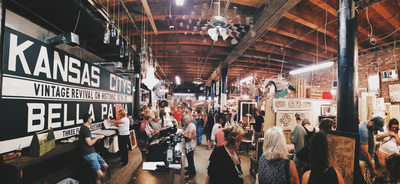
In the early Twentieth Century, Kansas City executives oversaw livestock businesses from offices located in the West Bottoms. Today, many of those old offices are lofts. The West Bottoms has become a trendy destination…sought after by young urban professionals. That office space which was once been used by cattle executives? It now houses budding Kansas City entrepreneurs.

There is still manufacturing in the West Bottoms. There are still warehouses. Today, a West Bottoms manufacturing facility – or a West Bottoms warehouse -might just be located on the same block as a restaurant or a haunted house. Near The Beast. Or The Edge of Hell. Or The Chambers of Edgar Allan Poe…

In 1923, the West Bottoms received 3,500,000 hogs, 350,000 calves, 1,000,000 sheep, plus 40,000 horses. That same year, Kansas City’s stockyards set the world record for one day’s receipt of cattle: 60,206 head.

One hundred years later? No cattle.

The live cattle price of $2.88 USD per pound and the lean hog price of $.83 USD per pound? Not too relevant in the West Bottoms in 2024.

High-speed Internet connection? Great restaurants? Those are relevant.


Freight trains still roll through Kansas City’s West Bottoms. Often, transporting millions of gallons of Bakken crude. Railroad tracks run straight through the middle of the West Bottoms. Train engine horns still blare…everyday. At its peak, 16 railroads once converged in the West Bottoms. 

The Kansas City Stockyards


In the late 1860’s, a young Illinois cattle dealer – Joseph “Cowboy” McCoy – had been scouting out locations. Cowboy McCoy was interested in an area along what became the Kansas Pacific rail line.


Cowboy McCoy was looking for the ideal setting. A destination point. Someplace Texas cattlemen could drive their cattle up north to before being sent on to Abilene, Kansas.

From Abilene, cattle would be shipped east. To Kansas City. Therein lies the origin for Kansas City’s emergence in the early Twentieth Century American cattle business.

A few years after Cowboy McCoy settled in Abilene, Kansas City got their stockyards. Kansas City’s stockyards were located in a section of KC known as the West Bottoms. The birth of KC’s stockyards? 1871.

One: Cowboy McCoy. Two: Abilene. Three: The cattle business and Kansas City. Further writing, focused upon the latter. The two formers…mentioned as historical occurrences, relevant to the latter…

Ten years prior to KC getting their stockyards, Kansas City’s population had been about 4,000. By 1900, KC’s population grew to 160,000. Kansas City’s cattle industry was the driving force behind the city’s population growth.

Kansas City’s stockyards enabled livestock owners to transport their cattle to an exchange. At this newly-formed exchange in Kansas City, cattle could be sold to the highest bidders. Prior to the establishment of KC’s stockyards – and the exchange – livestock owners were only able to sell their cattle at whatever price railroad men offered to pay…limiting earning potential for cattle men. Kansas City’s stockyards – coupled to the establishment of the Kansas City Livestock Exchange – created a market for cattle men. The result? Higher cattle prices.

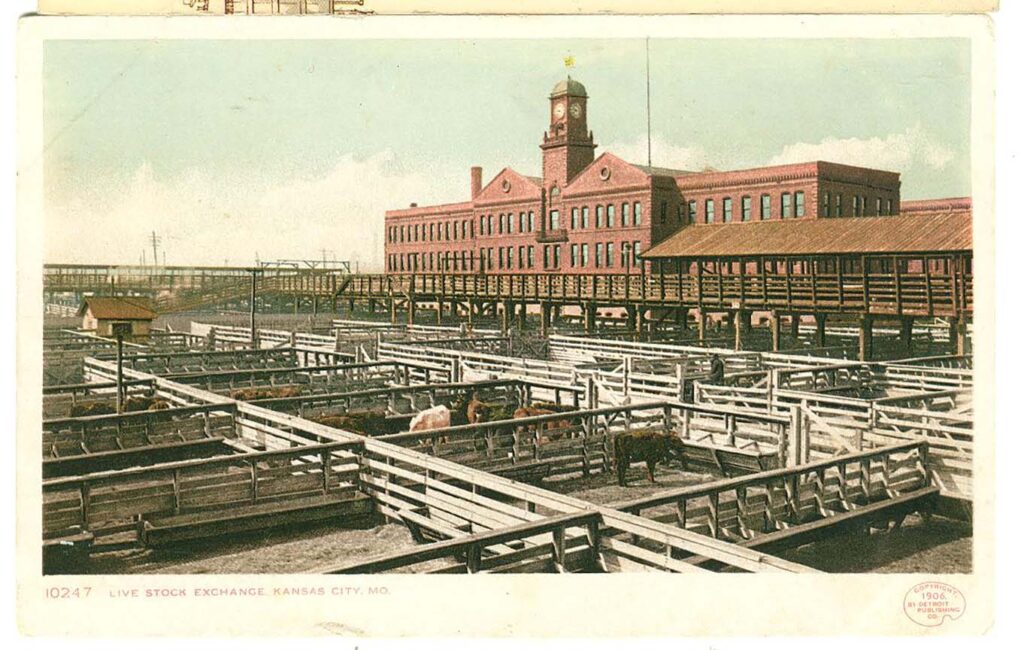
The Kansas City Livestock Exchange Building was constructed in 1911. At that time, the Kansas City Livestock Exchange Building was the largest livestock exchange building in the world.

The Exchange Building in Kansas City once housed over 400 offices. Telegraph offices. Beauty shops. Cattle tradesmen. Packing house buyers. Banks. All could be found in the Exchange Building in KC early in the 20th Century.

If you strolled through Kansas City’s stockyards early in the 20th Century, you could have found yourself in either Kansas or Missouri. The stockyards straddled both states.

KC’s stockyards were established in Kansas. Along the Kansas River. Two-thirds of KC’s stockyards were located in Kansas. The remainder of KC’s stockyards were located in Missouri.

By 1914, KC’s stockyards consisted of over 200 acres. Sixteen railroads converged in KC’s stockyards. The growth of the KC cattle trade – as well as the growth of the railroad – significantly contributed KC’s population growth. And to the growth of Kansas City’s economy. Kansas City’s first Union Station opened in the stockyards. In 1878.

By 1923, over 2.5 million head of cattle were shipped through KC’s stockyards. Local Kansas City packing houses were purchasing over 1 million heads of cattle per year. Only Chicago – Chicago’s Union Stockyards – was processing more cattle than KC. In fact, a world record was set in those KC Stockyards. In 1923. The record? One day’s receipts of cattle: 60,206 head

The maximum daily capacity of KC’s stockyards grew to nearly 200,000 head of cattle. Creating thousands of jobs. The KC stockyards were taking in cattle from 35 states. Shipping cattle off to 42 states. Plus Canada. Hence, Kansas City’s nickname – Cowtown.

In KC’s West Bottoms, where the stockyards were once located, where the cattle industry once thrived, today, you won’t find any cows.

Today in the West Bottoms, Flaherty and Collins’ Stockyards Place is a beautiful 21st Century Midwest collection of condominiums. Luxury living. A trendy urban lifestyle. A bike trail which runs alongside the Kansas River. No cows.

KC’s stockyards processed their last head of cattle in 1991. In October of 1991, KC’s stockyards were closed for good. No more packing house buyers.

Today, a different form of buyers can be found where the KC stockyards once were. This new form of buyers? They’re Kansas City professionals. KC professionals who are shopping for a new condo. Buyers? Yes. Packing house buyers? No.

The Livestock Exchange in Kansas City was located on Gennessee Street. Just a stone’s throw away from that old exchange on Gennessee Street, today you’ll find Stockyards Place. Luxury living. Walking distance to wineries. To galleries. No cattle pens. No feedlots. No cows.