A Connecticut governor, Newark…and The Robert Treat Hotel.

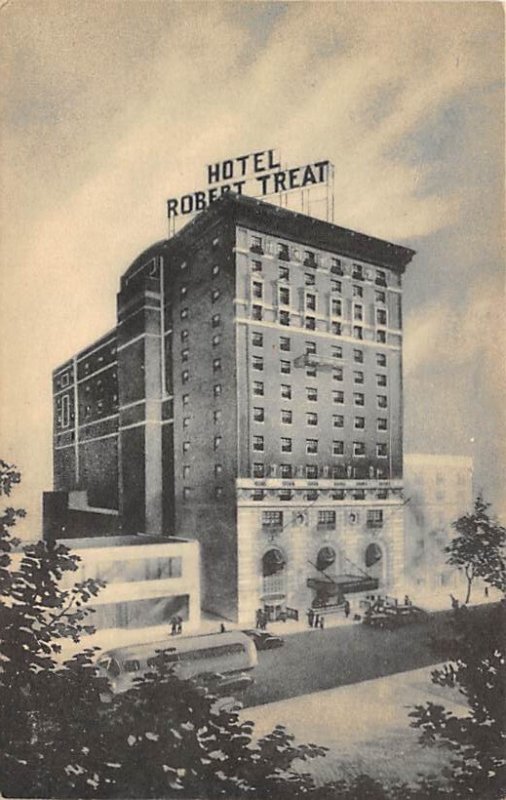
The Robert Treat Hotel opened to the public in Newark, New Jersey in the year 1916. This prominent hotel – located on Park Place in downtown Newark – was the first luxury hotel ever built in Newark. 

The Robert Treat is named after the very man to whom Newark owes its status as, first, a territory of Great Britain. Then later, as a township in the American colonies. Then later, as New Jersey’s largest city. This man, was Robert Treat.

Robert Treat was born in England in 1622. Robert Treat arrived in the British colonies – in Massachusetts – in 1630.

In 1666, Robert Treat established a new territory for Great Britain. This new territory being, “Newark.”

What evolved into Newark was established by Robert Treat as the third New Jersey settlement. Great Britain granted this new territory a royal charter…forty-five years after Robert Treat first arrived in Brick City. This royal charter having been granted by Great Britain to Treat’s territory in 1713.

One-hundred thirty-two years after Robert Treat established this new territory for Great Britain, Newark was incorporated as a township in the newly-established United States. That occurred in 1798. As Newark Township. Through an act of the New Jersey Legislature – the Township Act of 1798. Through the Township Act of 1798, Newark became one of the New Jersey’s original 104 towns.

It was Newark Township up through 1836. In 1836, Newark Township was reincorporated as a city. Newark Township was no more. From 1836 on, it was simply, Newark. 

At its origin – upon Treat’s arrival, while still a territory which was governed by Great Britain, long before there even was a New Jersey Legislature – Newark was not known as Newark Township. Nor as Newark.

At first, upon Treat’s arrival, this new Newark territory had been Pesayak Towne. The territory later became New Milford. Names for Newark…long before the territory Treat established became Newark Township. Then later, simply, Newark.

Prior to traveling south a bit from his native New England to what today is Newark – traveling…together with a fellow group of Puritans…as Robert Treat was a Puritan himself – Robert Treat had been a Connecticut governor. 

From 1683 to 1687 Robert Treat served as Connecticut’s governor. Robert Treat served a second, non-consecutive term as the governor of Connecticut as well. 
Governor Treat’s second gubernatorial term in Connecticut ran from 1689 to 1698.

Health club privileges. A free shuttle to Newark Liberty International Airport. A business center. A guest lounge. Banquet facilities… 

As we approach The Robert Treat Hotel’s 100-year anniversary, that’s what you’ll find today when you stay at The Robert Treat. Its colonial history…long since having evolved into the finest hotel stay that New Jersey has to offer.

A Connecticut governor and Newark…The Robert Treat Hotel

The Robert Treat Hotel opened to the public in Newark, New Jersey in the year 1916. This prominent hotel – located on Park Place in downtown Newark – was the first luxury hotel ever built in Newark.

The Robert Treat is named after the very man to whom Newark owes its status as, first, a territory of Great Britain. Then later, as a township in the American colonies. Then later, as New Jersey’s largest city. This man, was Robert Treat.

Robert Treat was born in England in 1622. Robert Treat arrived in the British colonies – in Massachusetts – in 1630.

In 1666, Robert Treat established a new territory for Great Britain. This new territory being, “Newark.”

What evolved into Newark was established by Robert Treat as the third New Jersey settlement. Great Britain granted this new territory a royal charter…forty-five years after Robert Treat first arrived in Brick City. This royal charter having been granted by Great Britain to Treat’s territory in 1713.

One-hundred thirty-two years after Robert Treat established this new territory for Great Britain, Newark was incorporated as a township in the newly-established United States. That occurred in 1798. As Newark Township. Through an act of the New Jersey Legislature – the Township Act of 1798. Through the Township Act of 1798, Newark became one of the New Jersey’s original 104 towns.

It was Newark Township up through 1836. In 1836, Newark Township was reincorporated as a city. Newark Township was no more. From 1836 on, it was simply, Newark.

At its origin – upon Treat’s arrival, while still a territory which was governed by Great Britain, long before there even was a New Jersey Legislature – Newark was not known as Newark Township. Nor as Newark.

At first, upon Treat’s arrival, this new Newark territory had been Pesayak Towne. The territory later became New Milford. Names for Newark…long before the territory Treat established became Newark Township. Then later, simply, Newark.

Prior to traveling south a bit from his native New England to what today is Newark – traveling…together with a fellow group of Puritans…as Robert Treat was a Puritan himself – Robert Treat had been a Connecticut governor.

From 1683 to 1687 Robert Treat served as Connecticut’s governor. Robert Treat served a second, non-consecutive term as the governor of Connecticut as well.
Governor Treat’s second gubernatorial term in Connecticut ran from 1689 to 1698.


Health club privileges. A free shuttle to Newark Liberty International Airport. A business center. A guest lounge. Banquet facilities…

As we approach The Robert Treat Hotel’s 100-year anniversary, that’s what you’ll find today when you stay at The Robert Treat. Its colonial history…long since having evolved into the finest hotel stay that New Jersey has to offer.

Colts Neck Township

The origin of Monmouth County’s Colts Neck Township goes all the way back to the late 17th Century. So let’s take a look at our 17th Century beginning for what we know today to be, Colts Neck Township.


The origin of Colts Neck Township

In 1676, two Native Americans brokered a real estate sale. This was a land sale. The land sale totaled just under 1,200 acres. To be precise, it a 1,170-acre brokered land sale.

This acreage was sold to four Monmouth County locals. These four Monmouth County locals? Nathaniel Leonard, Thomas Leonard, Henry Leonard and Samuel Leonard. 

Here is the breakdown for the Leonards’ 1.170-acre 17th Century Monmouth County land purchase – Henry Leonard acquired 450 of the 1,170 total acres. Samuel Leonard acquired 240 acres. Nathaniel Leonard acquired 120 acres. John Leonard acquired 120 acres. And Samuel Leonard acquired 120 acres. Here we have the original real estate sale for what would go on to become, Colts Neck Township.


Recorded in the minutes of the Board of Proprietors of the Eastern Division of New Jersey is one specific bill of sale which would be of interest to those who love Colts Neck. As well as to Monmouth County historians. This, the bill of sale for our aforementioned 17th Century “Colts Neck” land sale – the Leonards’ acquisition of these 1,170 acres in Monmouth County. Nearly 1,200 acres which would, in time, evolve into today’s Colts Neck Township.

The four Leonards acquired their land from two native Americans. The two Native American land sellers? The sellers of the 1,170 Monmouth County acres which would go on to become Colts Neck Township? Almeseke and Lamasand.


While the history of, How Colts Neck Township came to be…, goes all the way back to this brokered 17th Century real estate sale between the Leonards and Almeseke and Lamasand, it would be another two hundred years after this brokered land sale until Colts Neck Township officially became a New Jersey township. And from this point, it would be another one hundred years until the township name – Colts Neck Township – would become the official name for today’s Colts Neck Township.


As a township name, Colts Neck Township was officially adopted in 1962. Through a local referendum. 


Prior to the aforementioned 1962 referendum – which gave Colts Neck Township its name – what is now Colts Neck was, at that time, Atlantic Township. 

Atlantic Township?

In 1847, through an act which was carried out by the New Jersey legislature, Atlantic Township was established.

Atlantic Township, circa 1847 (formed by way of an act of the New Jersey legislature) would be renamed Colts Neck Township, circa 1962 (by way of a local referendum).  

Through an act of the New Jersey legislature, Colts Neck TownshipI.e.: Atlantic Township, at that time – was initially spun off from portions of three neighboring townships – Shrewsbury, Middletown and Freehold. There is a bit of irony to this 1847 legislative land spin off. This irony involves Shrewsbury. 

At one time, Shrewsbury had been one of the largest sections of the land area which we would have, informally at that time – prior to any local referendums, prior to any acts carried out by the New Jersey legislature, and prior to any Township Act – called “Colts Neck.

Through the New Jersey Township Act, Shrewsbury – as one contributor to the formal origin of what is today, Colts Neck Township– became a New Jersey township 49 years prior to Colts Neck’s appointment as a New Jersey township.


For comments about this article, or for ideas or suggestions for additional pieces written about Colts Neck Township, kindly email or call the author, Ted Ihde.

email: authortedihde@gmail.com

mobile: (816) 699-6804

Trenton

Go to New Jersey’s capital, and we’ll find that upwards of 60% of City residents rent their homes (or their apartments). Whereas, in Mercer County – Trenton is located in Mercer County – as well as in the State of New Jersey, overall, between 30% to 40% of residents rent.

Trenton has thousands of vacant lots, non-performing buildings and vacant homes. How come?

One contributing factor had been the hollowing out of Trenton’s industrial base. Leading to a reduction in property tax receipts for the City – I.e.: less property tax revenue. Culminating in a deterioration of Trenton’s center city housing stock.

This former American industrial manufacturing hub – like many other legacy cities which have been adversely affected by de-industrialization policies – has its share of housing-related challenges. Yet, with thousands of vacant lots, non-performing buildings and vacant homes located within its borders, this former Mid-Atlantic industrial heavyweight also possesses the ingredients – serving as a foundational starting point – to establish processes to transition now non-performing Trenton properties to high-quality affordable community assets. Available, then, to those who call Trenton “home.”

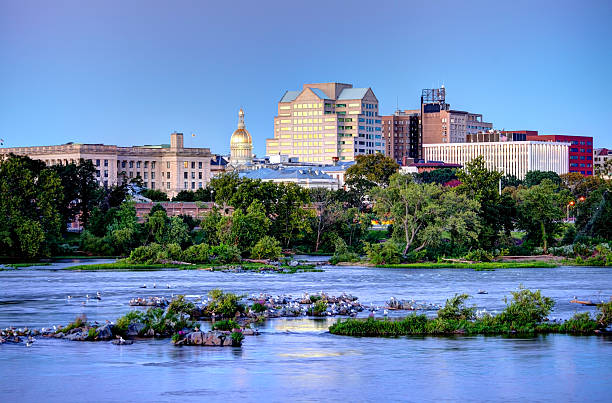
The New Jersey State House along the Delaware River is located in Trenton and is the house of government for the U.S. state of New Jersey.

Trenton, where at one time, Trenton Made, and the World Took…

Trenton’s historically iconic slogan – “Trenton Makes, the World Takes” – can be seen today, as the City’s catchy tag is nicely affixed to the Lower Trenton Bridge. I.e.: to the Lower Free Bridge. I.e.: to the Trenton makes bridge. This illuminated, bold, manufacturing-derived Trenton statement – “Trenton Makes, the World Takes” – was hung on the Trenton makes bridge – the first bridge to cross the Delaware River, by the way – in 1935.

Trenton claimed its confident slogan in the year 1917. Justifiably so. Attaching the confident pronouncement of what Trenton was really, really good at – manufacturing – to a city which was indeed, at that time, thriving. Thriving, thanks to the strong manufacturing base in Trenton. Thriving, thanks to Trenton’s strong export economy, which was tied to its strong manufacturing base. Trenton’s early-Twentieth Century manufacturing prowess – coupled to Trenton exporting its finished manufactured products, such as wire rope and rubber – positioned Trenton as one of the truly booming early-Twentieth Century Mid-Atlantic industrial hubs.

Wrought iron beams…beams used to construct the dome in our nation’s Capital building. Those beams were manufactured in Trenton. Wire rope…wire rope used during the construction of the Brooklyn Bridge, the George Washington Bridge, the Golden Gate Bridge and the Wheeling Bridge (the bridge which connects West Virginia to Ohio). That wire rope was manufactured in Trenton. Prior to Akron, Ohio claiming the title as the “Rubber Capital of the World,” in the early-1900’s, Trenton was “the nation’s tire capital.”

John A. Roebling established his steel wire manufacturing empire – The Roebling Steel Company – in Trenton. In 1849. Roebling established his company alongside the Delaware Canal and the Raritan Canal. John A. Roebling’s creation of what would go on to become the iconic Trenton-based manufacturing masterpiece, a company which also became Trenton’s largest and most well-known employer, formed on 25 acres John A. Roebling purchased in Trenton in 1848. By 1850, the early-on foundation for what would go on to become Trenton’s burgeoning rubber industry had taken hold. By the late 1800’s, Trenton was, without question, on its way to becoming a distinct American manufacturing powerhouse.

Twenty years after John A. Roebling laid the initial groundwork for his Roebling Steel Company, a father and son team – Alan and Frank Magowan – formed a company in Trenton which went on to become the oldest rubber mill in the United States – Trenton Rubber Company.

The Trenton Rubber Company was the resulting entity, formed through a conversion by the Magowans of an existing rubber outfit – Whitehead Brother’s Rubber Company – into the Magowans’ own rubber company, Trenton Rubber Company. Thanks in part to successes the McGowan’s enjoyed by reaping fruits bestowed upon them from their profits in the Trenton rubber business, Trenton, by the late 1800’s, became a major producer of rubber.

Roebling went on to become the world’s largest manufacturer of wire rope. Wire rope, shipping, mining, construction, electrical power transmission, cable cars, tramways, aircraft, submarine netting, musical instruments, elevators, logging, oil drilling… Each proudly manufactured and produced, at one time, in Trenton.

The early-Twentieth Century industrial strength of Trenton – and of Trenton industrialists – owed much of its sustenance to the City’s ability to utilize newly-built area canals and railroads to transport finished manufactured goods made in Trenton to larger end markets, such as New York City and Philadelphia.

While Trenton certainly enjoyed a long, well-sustained run as an important American manufacturing center, in June of 1974, the final 1,400 employees of what had once been Roebling’s Trenton industrial empire lost their jobs. These final Roebling-related layoffs, the result of numerous previous failed attempts to revive the then-Trenton plant controlled by (at that time) Roebling’s acquirer – Colorado Fuel & Iron. The two Trenton-based Roebling manufacturing plants closed their doors for good in 1974. Marking the formal end of Roebling’s manufacturing presence in Trenton. And, to some, also marking a finality of sorts, to what once had been a thriving industrial hub…

Cheaper foreign competition in the manufacturing sector. The hollowing out of the City’s property tax base. Suburbanization. Each contributing in their own unique way to Trenton’s decline. A decline in output…a decline in population.

Prior to Trenton’s continual decade-by-decade population descent, the City’s population had steadily increased, year-by-year, beginning in the late 18th Century. Right up through the 1950’s. Topping off at a population of just about 128,000 by the mid-1950’s. In 2022, Trenton’s population was about 90,000. 90,000 residents in Trenton. 90,000, a population total which is roughly 70% of the Trenton population total from seventy years ago.

Mechanicals used in San Francisco’s first streetcars? Manufactured in Trenton. Cable, spark plugs, and electrical wire used in aviator Charles Lindbergh’s iconic single-engine Spirit of St Louis plane in 1927? Trenton. Cable stays on the Wright Brother first airplane? Trenton. Under the Articles of Confederation, Trenton was once – albeit briefly, from November 1, 1784 until December 24, 1784, our nation’s capital.

While Trenton’s population peaked in the mid-1950’s, during this same time frame, specific socioeconomic challenges began to take hold in cities throughout the United States. One characteristic which accompanied some of these socioeconomic challenges had been found in laborers who, previously residing in southern US states, began migrating to northern industrial cities. To Trenton. Their migration, attributed to migrants’ need to identify higher wages, larger weekly paychecks, and more favorable employment conditions. In northern factories. Trenton, a northern industrial city, partook in this influx of mid-century migrants from the south.

A notable portion of mid-century migrants who ended up in Trenton (as had so too been the case in numerous northern cities) were not in possession of the advanced skill sets needed to enable the migrants to attain wages which were high enough to support the purchase (and the upkeep) of Trenton homes. Nor would the substandard wages paid to unskilled Trenton migratory workers enable the migrant laborers to afford to pay property taxes on Trenton homes (when they proceeded to purchase Trenton homes). The outcome being, over time, more and more Trenton homes fell into a state of disrepair.

Non-maintenance of Trenton homes, combined with (arguably, by some) a trend towards lax oversight by the City when it came to enforcing housing maintenance standards in Trenton, led to the deterioration of the condition of Trenton housing stock in center city. Which, when combined with White flight, likely redlining by lenders, trending suburbanization, a decrease in center city Trenton home values, and an increased ease accompanying the drive in to (and out of) center city Trenton, from the suburbs (thanks to the construction of new roads and highways), led to a substantive increase in blight within Trenton.

In Trenton today, upwards of 60% of Trenton residents rent their homes (or their apartments). Whereas, in Mercer County, New Jersey, as well as in the State of New Jersey overall, only between 30% to 40% of residents rent.

Furthermore, Trenton has thousands of vacant lots, vacant buildings and vacant homes. The hollowing out of Trenton’s industrial base. The deterioration of the quality of Trenton’s center city housing stock. This once-industrial powerhouse certainly owns its share of economic and housing-related challenges. Yet, with thousands of vacant lots, vacant buildings, and vacant homes located within its borders, this former Mid-Atlantic industrial heavyweight arguably also possesses the ingredients to establish processes to transition the now non-performing Trenton properties to high-quality affordable housing options. Available, then, to those who call Trenton “home.” While at the same time, increasing the city’s property tax base.