When it comes to financing an apartment building, banks, investors or partnerships constitute options developers may consider. So too can be the government.
The government…
Section 207 HUD loans through the 223(f) program are well-suited to finance the purchase of or the refinance of multifamily rental properties. Multifamily apartment buildings which are deemed to be in good condition. Properties that require substantial rehabilitation are not eligible for mortgage insurance (“MI”) in this program. Critical repairs must be made prior to the issuance of an endorsement.
Purpose…
The 223(f) program utilizes 35-year Government National Mortgage Association mortgages. GinnieMae mortgages…so competitive interest rates are available.
Eligible properties…
Properties must contain at least five residential units with kitchens and bathrooms which are in good condition. Furthermore, the property must have been rehabilitated at least three years prior to applying for MI. Non-critical repairs may be completed up to twelve months after closing.
Projects requiring substantial rehabilitation are not eligible for this program. An example of “substantial rehabilitation” would be the replacement of more than one major system.
The economic life for a project must be long enough for a ten-year mortgage to make sense. Amortization cannot exceed, 1) 35 years, or 2) 75% of the estimated life of improvements. The lesser of.
Here are some of the details…
87% LTV for projects with 90% (or greater) rental assistance.
85% LTV for projects that meet the definition of “affordable housing.”
83.3% LTV for market rate projects.
Participant eligibility includes for-profit and non-profit applicants.
Section 223(f) provides for Multifamily Accelerated Processing (MAP). Meaning, the sponsor works with a MAP-approved lender to obtain a firm commitment.
Files are underwritten to determine whether the project constitutes an acceptable risk. Considerations for approval include market need, as well as capabilities of the borrower.
Underwriters determine whether there will be enough project income to repay the loan, taking into account project expenses. Should the project satisfy program requirements, a commitment for MI is issued.
Applications submitted by non-MAP lenders are processed by a HUD field office through Traditional Application Processing (TAP).
With TAP, there are two processing stages: 1) the conditional commitment stage, and 2) the firm commitment stage.
The sponsor participates in a pre-application conference to determine the appraisal value of the property as well as the loan amount.
At the firm commitment stage, the loan amount is determined.
For proposals which meet program requirements, a MI commitment will be issued.
Municipalities enter into land bank agreements with redevelopment entities. In doing so, municipalities designate redevelopment entities as land bank entities.
Procedures are written into land bank agreements which clarify how land bank entities acquire properties on behalf of municipalities.
Why land banks?
Land bank properties are not bring absorbed by the market. There are reasons for this. Such as…
Years of back taxes owed. Clouded titles. Rehab budgets which exceed appraisal values. Limited “comps.” Are owner-occupying buyers able to secure renovation loans?
The market isn’t absorbing land bank properties. We have an inventory challenge. We have a housing affordability challenge.
Why not become proficient in land bank properties?
Markets do not optimally function when interest rates are too low. Markets do not optimally function when interest rates are too high. The housing market – as well as the home loan market – would be two markets where this point can be most easily seen.
Artificially-low interest rates create an overly-accommodative economy. The consequences for which we see in today’s stubbornly non-ignited housing market. Mortgage rates are not high today. They’re just a lot high-er than they were during the Pandemic. But mortgage rates today are certainly not anywhere near what we should classify as, high.
The ’70s’ would be one example we could use to illustrate how markets malfunction when interest rates are, first, too low, then, later, increased. Increased too much. Too fast.
There were points in time during the 1970’s where the country was actually in a negative interest rate environment. Bank deposits were yielding “storage charges,” so you speak. As opposed to throwing off interest income.
The low-rate environment in the 1970’s came about in many ways because the stock market was in shambles. The result of that market unease of the ‘70’s? The Fed enacted an easy money policy. The idea at the time being, to attain full employment. Overly-accommodative. This was a flawed approach. Which became highly inflationary.
Enter price controls? Yep. Did you ever make one mistake, then double-down, only make to make your second mistake? In succession? An easy money policy followed by price controls? That ill-advised combination did not work out so well.
So by the late ’70’s, with the country in the midst of rampant inflation, the Fed began to ratchet up interest rates. To temper the inflation. The origin of this inflation which was now being battled was of course triggered by the overly-accommodative fiscal policy of the Fed years before. The result of moving from an accommodative fiscal policy to a restrictive fiscal policy by way of rising interest rates? The economy went into recession.
Let’s look at another recent timeframe…
In the early-2000’s, interest rates were lowered. Interest rates became accommodative. At that time, lower interest rates were married to accommodative home loan underwriting policies. The result? Skyrocketing home values. An increase in home loan defaults. The Financial Crisis.
Overly-accommodative policy = a rough landing.
Overly-restrictive policy = a rough landing.
Overly-accommodative policy followed by overly-restrictive policy = a rough landing.
During the Pandemic, the federal funds rate was lowered to a range of 0% to 0.25%. Mortgage rates dropped. Home prices went up.
Fast forward to 2025…
Today, more than 75% of homeowners are nestled cozily in with a sub-5% mortgage rate. Around 55% of homeowners are nestled cozily in with a sub-4% mortgage rate. This “lock-in effect” we have in housing in 2025 is one byproduct of the low-rate policy the Fed enacted during the Pandemic.
Last year 25 out of every 1,000 homes found their way to new buyers. That was the lowest turnover rate we saw in housing in 30 years.
Accommodative policy – I.e.: low interest rates – do not only lead to future restrictive policy by way of elevated interest rates. Accommodative policy leads to the market restricting itself. Which is exactly where we are right now.
For example…
Why sell your home when the interest rate you have on your mortgage is 4% or less? Especially when you know you’d have to go out and buy another home in the midst of a restrictive cycle – at an elevated price, no less – with a mortgage rate which would be between 6% and 7%?
You’ve thought about building your own home. You can. A construction loan can make it happen.
There are different types of construction loans. So let’s look at two of these loan types: a) the one-time close construction loan, and b) the two-time close construction loan.
With the OTC, you qualify one time for two loans.
The 1st qualification is for your construction loan. The 2nd qualification is for your permanent loan.
And then there is the two-time close (“TTC”) construction loan.
The TTC is a riskier loan than the one-time close. Due to the fact that with the two-time close, you will need to qualify based upon your credit and your income a second time- after your home is built.
With the TTC, any reduction in your income or a drop in your FICO Score – while your home is being built – could make it more difficult to qualify for your permanent loan.
Another potential risk to consider with the two-time close is, What if the construction phase doesn’t go well? What if construction is not completed?What if it’s delayed?
In either situation – a) a drop in your credit score or a reduction in your income, or b) challenges with construction, with the TTC, qualifying for your permanent loan could be put at risk.
Key points…
The one-time close construction loan: one loan approval
The two-time close construction loan: two loan approvals
Come January 31st, each of New Jersey’s 564 municipalities is required to file their own resolution with the State, adopting affordable housing obligations for their municipality.
Come June 30th, each of New Jersey’s 564 municipalities is required to submit their affordable housing plan to the State, for their municipality.
Last October, the New Jersey Department of Community Affairs released New Jersey affordable housing requirements. These will need to be completed by 2035. And here they are…
A) Create 84,698 new affordable housing units.
B) Preserve an additional 65,410 existing housing units.
140,00 homes built or renovated over the next ten years. That’s a lot of homes. That’s a lot of infrastructure needed.
Impact fees…and Trenton.
The Municipal Development Impact Fee Authorization Act – presently in committee in Trenton – would, if passed, broaden New Jersey municipalities’ ability to pass through development-related costs to real estate developers. By broadening the scope for how impact fees can be collected by municipalities.
New Jersey is one of 22 states which presently authorizes the collection of impact fees by a municipality. Different states may refer to “impact fees” though their own state vernacular. For example, in Kansas – Kansas does authorize impact fees – impact fees are also referred to as adequate facility taxes. Or excise taxes.
At the present time, in New Jersey, the impact fees which can be passed along by municipalities to developers are pretty much limited to off-site improvements which arise as a direct consequence of the development. Direct consequence?
My humble opinion…
The way impact fees are levied upon developers in New Jersey today seems a bit…unjust. Tilted too far in favor of developers. At the expense of municipalities. See, direct consequence.
For example, an increased allocation of funds – and personnel – will likely be required in order to accommodate the higher number of classroom students which will be arrived at through the construction of new homes within any municipality. New homes are built. New families move in. Families have kids. Kids go to school.
Yet, in New Jersey, this increase in education funding which will be required by a municipality – as a result of new development – is not able to be passed through to real estate developers by way of impact fees. Though they should be able to be so.
Because any increase in education funding needed in order to accommodate larger classroom sizes – or additional teachers – which comes about as a direct result of development is as much of a direct development-related cost as one can think of. It’s attributed to…the building of new homes. Isn’t it?
Education funds for a New Jersey municipality – collected through impact fees charged to real estate developers – should be permissible.
Larger classrooms. Additional teachers. Potentially, the construction of a brand new school. These are a few of the costs – real costs – that a municipality will incur as a result of an increase in the student population. Because new homes were built in the municipality.
One proposed solution? A boardening of the scope for the collection of impact fees by New Jersey municipalities.
Whereas critics of increasing impact fees may view additional impact fees charged to developers as impediments to growth, that argument is easily overcome.
Impact fees can be collected in lieu of local property tax hikes. Furthermore, impact fees are specific to the development at hand. To the area being developed. As such, the implantation of impact fees enables the broader property tax-paying populace to not be unduly burdened through an increased annual property tax bill. To fund development in town…which really does not directly affect them.
Prior to the U.S. government’s entrance into the home loan business in the 1930’s – this coming as a result of FDR’s New Deal – savings and loan associations had, up until that point, provided the majority of the loans which were used to finance the acquisition of homes.
The Homeowners Refinancing Act and the Home Owners Loan Corporation Act were each passed in 1933…just as the Great Depression was devastating the finances of Americans. These two housing Acts? Extensions by the U.S. government into the private sector. One byproduct of FDR’s New Deal.
The Home Refinancing Act and the Home Owners Loan Corporation Act provided assistance to Americans who were in danger of losing their homes. Due to an inability to refinance their home loans. Thanks to the New Deal, Americans gained access to new refinancing opportunities. Which, should there have been no New Deal, would not have been in place. The government’s election to get more deeply involved in the home loan business during the Great Depression was a wise foray by the U.S. government into the private sector.
Rewind to 300 years before the New Deal. Rewind to the earliest days of settlers moving west into new territories of what would in time become the United States.
Whereas FDR’s New Deal took aim at stabilizing a teetering U.S. housing market during the Great Depression, for early settlers, there wasn’t a need for government assistance in regard to real estate. There were no government programs in place to assist early settlers. There was no U.S. government to provide such government assistance.
During the 17th Century, there were no American institutional resources – nor government programs – which could facilitate real estate transactions. Was there interest during the 17th Century in acquiring land? Yes. Was there a banking industry? Was there a mortgage industry? Were there government programs in place which could be relied upon to help finance real estate transactions? No. No. And…no.
During the 17th Century, land acquired by settlers who moved west…those land acquisitions would not be categorized as real estate sales. Nor was acquired land financed through the use of mortgages. No, in the 17th Century, those who aspired to own their own land in this vast, new territory ventured out west. They found a piece of land. They claimed the land. Land ownership without a deed. Without a mortgage. Without government oversight.
At that time, there was not a lot of “demand” for this land. Though the natives who long inhabited this land, pre-settlement, would beg to differ. There was no formal market established, through which land could be bought and sold. Nobody was entering into real estate contracts when they acquired their land. No sellers, as we would categorize sellers today. No buyers, as we would categorize buyers today.
Land acquisition – by way of financing the land acquired – was not the practice. Claiming unsettled land was the practice. No real estate contracts. No mortgages. No deeds. Interesting how, 300 years later, the U.S. government’s role in the home loan business would become so pronounced. So important. Interesting how the U.S. government evolved into a stakeholder in the business of financing real estate. This role for government occurred, largely, through FDR’s New Deal.
Government’s intervention in the home loan business? That was during the 1930’s. Government’s complete absence from the process of acquiring land? That would have been during the aforementioned 17th Century. How about vehicles used to finance the purchase of real estate, relevant to protections found within FDR’s New Deal? That would be banks.
Six years after Henry Duncan established the first savings bank in England in 1810, the first saving bank was organized in the United States. In Philadelphia. That bank was the Philadelphia Saving Fund Society – the very first American savings bank.
Philadelphia Saving Fund Society opened in Philadelphia in 1816…established by a group of investors headed by War of 1812 veteran – and Philadelphia native – Condy Raquet.
Bank takeovers, bank mergers, bank acquisitions… What once had been the Philadelphia Saving Fund Society is now part of Citizens Bank of Pennsylvania.
Whereas Philadelphia is home to the first American savings bank, Philadelphia is also home to the first commercial bank established in the United States.
Thirty-four years prior to the establishment of America’s first savings bank – Philadelphia Saving Fund Society, formed in 1816 – we have the first United States commercial bank. Also founded in Philadelphia. That year would be 1781. The bank? That bank was Bank of North America.
Bank of North America was the first chartered bank – the first commercial bank – organized in the United States. Bank of North America…the formation for which emanated from an idea shared by two early American forefathers. Those two forefathers? Alexander Hamilton and Henry Morris.
Hamilton and Morris set up their bank to function as an informal American central bank. Their idea for the bank being, to provide financing to the United States government. Though constructed with the goal for their bank to operate as a de-facto, unofficial United States central bank, Bank of North America instead became a traditional state chartered bank. Not the central bank it was envisioned to become. Bank of North America was never the government financing tool Hamilton and Morris envisioned the bank to be. Rather, Bank of North America provided home loans to Philadelphians.
Bank takeovers, bank mergers, bank acquisitions… Bank of North America is now part of Wells Fargo.
During the 1800’s, loans used by Americans to finance real estate were not mirror images of the loans Americans use to finance homes in 2024.
During the 19th Century, home loan payment schedules were much shorter. No 30-year amortization. No 15-year amortization. Rather, in the 19th Century, you’d likely have either a 5-year or a 6-year loan payment schedule. No 15-year amortization. No 30-year amortization.
During the 19th Century, balloon mortgages were common. With a 5-year mortgage or a 6-year mortgage, qualifying for the home loan was difficult. And, in many cases, those 5-year or 6-year mortgages were balloon mortgages.
19th Century balloon mortgages were often structured with interest-only payments. After the mortgagor made their payments for the five or six years, the loan would then “balloon.” Whereby, the mortgagor would at that time be required to pay off their loan in full.
Coupled to interest-only payments – with the balloon provision – 19th Century mortgages would oftentimes be accompanied by low loan-to-values. In the range of a 50% loan-to-value. With interest-only payments made for 5 or 6 years, loan payoffs for mortgagors after the 5 or 6 years would have remained at payoff amounts equal to 50% of the purchase price of the property. Not taking into account any potential property appreciation. No New Deal. No government assistance available. Difficult to pay off and/or refinance home loans at that time…
In the midst of the Great Depression, upwards of 40% of all home mortgages in the United States were in default. Hence, FDR’s New Deal…
No government regulation for those early land acquisitions out west. No government regulation when those home loans were interest-only, coupled to balloon provisions. Rationale behind some form of a “new deal”…maybe?
Through the FHA, longer loan terms became available. 20-year mortgages. 30-year mortgages. Amortized. Unlike earlier interest-only mortgages, through FDR’s government reach into the real estate sector, mortgagors would be paying down their home loan principal balances. Through each and every payment they made.
The 1934 National Housing Act was signed into law by President Franklin Delano Roosevelt on June 27, 1934. The 1934 National Housing Act fundamentally changed government’s role in housing.
The United States Housing Act of 1937 – the Wagner-Steagall Housing Act – established the Federal Housing Administration (the FHA). The FHA was created to handle mortgage insurance. Mortgage insurance allowed for amortized mortgages…coupled to regular monthly payments.
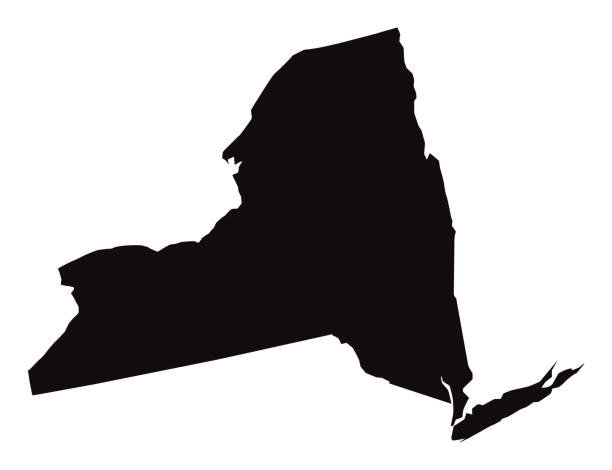
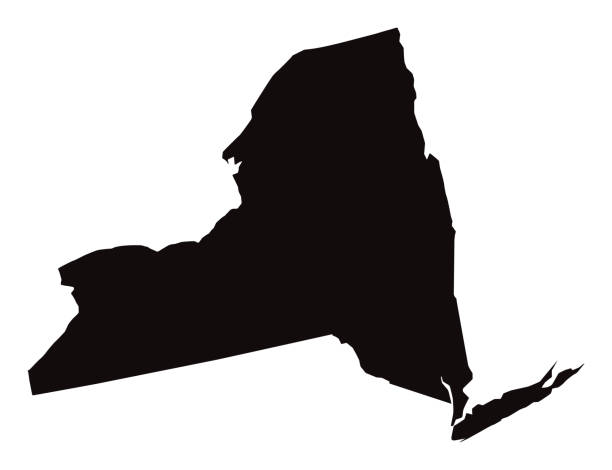
There are just about 4 million total residential homes in state of New York. So, with all of the upheaval in our real estate business today – the NAR settlement, changes to buyers agency compensation, high mortgage rates, increased competition, limited inventory…among all of the other “normal” business challenges in real estate – if one is looking for a unique real estate specialty to consider focusing their efforts upon, as we head into 2025, here is something to consider…
Thirteen years after New York’s Land Bank Law went into effect, there are still in excess of, somewhere in the neighborhood of, 40,000 vacant residential homes situated within municipalities throughout The Empire State.
Two general truths…
Truth “A”: a land bank has procedures available to the land bank which enable the land bank to acquire vacant and abandoned properties.
Truth “B”: Developers look for opportunities to acquire, then, to redevelop, properties.
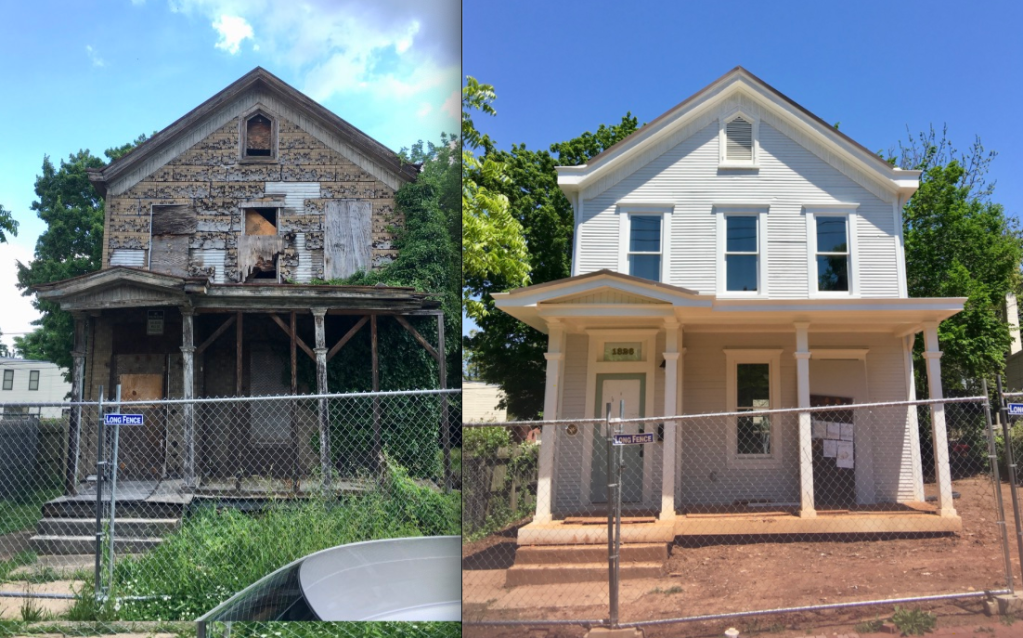
Once redeveloped, and thus, in turn, once transitioned from its former status as a “non-performing” property to a new status – “performing” property – that property can be sold. Thus, returning what once had been a neighborhood liability to the community…coupled to a handsome, new classification: performing property. A community asset. A property which has now been added onto the municipality’s property tax roll.
As such, performing properties create newly-found property tax revenue for municipalities. Additional property tax revenue – now coming into the coffers of municipalities – ease budgetary constraints municipalities face.
Through New York’s Land Bank Law, in The Empire State, a New York municipality possesses the ability to create their own land bank. By establishing a land bank, resources, direction, vision, personnel – coupled to leveraged capital – enable New York redevelopment to take place. In essence, New York land banks create passageways whereby, as this passageway is followed, adverse conditions attributed to non-performing properties which are nestled, often times, for far too, too long, within New York State tax districts…are lessened.
The New York Land Bank Law was signed by Governor Cuomo on July 29,2011. New York’s first land bank was established the following year.. in 2012. Today, there are over 30 land banks in operation in New York State.
Here are some regional New York land bank statistics to think about. These are local land bank statistics…taken from the area of New York State where Josh Allen plays quarterback. And, albeit, as a KC Chiefs fan, I must say, he plays QB pretty darn excellently up there too:
A. 230 properties acquired
B. 44 renovations completed
C. $2.4 million in assessed Values returned to communities
There are just about than 4 million total residential homes in state of New York. If one is looking for a real estate development specialty to consider going into 2025, today, 13 years after the New York Land Bank Law went into effect, there are still in excess of somewhere in the neighborhood of 40,000 vacant residential homes located in municipalities throughout the state of New York.
Two general truths…
Truth “A”: a land bank has procedures available to the land bank which enables the land bank to acquire vacant and abandoned properties.
Truth “B”: Developers look for opportunities to acquire – and redevelop – non-performing properties.
Once transitioned from a non-performing property to a “performing” property, that property can then be sold. Thus, returning what was once a now-performing property to a neighborhood as a “performing” properties. As a community asset. As a property which is now on the municipality’s property tax roll. As such, performing properties create newly-found tax revenue for municipalities. This eases budget constraints.
Through New York’s Land Bank Law, in New York State, the New York municipality possesses an ability to create their own land bank. By establishing a land bank, resources, direction, vision, personnel – coupled to funding – enable New York redevelopment. Once created, New York land banks improve adverse conditions stemming from non-performing properties located within New York State tax districts.
The New York Land Bank law was signed by Governor Cuomo on July 29,2011. New York’s first land bank was established the next year.. in 2012. Today, there are over 30 land banks in operation in New York State..
Here are some land bank statistics from the part of New York Stare where Josh Allen plays quarterback:
A. 230 properties acquired
B. 44 renovations completed
C. $2.4 million in assessed Values returned to communities
Over the past few years, yields on 10-year Treasuries rose. So too did mortgage rates. Those higher yields…benefitting investors who purchased Treasury bonds. By way of higher earned interest income. Yet these higher bond yields functioned as a “tax” on home buyers. Driving up the cost of homeownership. Due to higher mortgage rates. Due to higher monthly mortgage payments. Arguably, having the same effect as a “consumer tax” placed upon homeownership.
Remember, during this recent environment of increased – and increasing – bond yields, coupled to elevated mortgage rates, home prices rose. Home prices did not go down. Housing inflation got worse: 1) higher home prices, and 2) higher interest rates.
As monthly mortgage payments rose for home buyers as a result of higher mortgage rates (coupled to increasing home prices), what simultaneously so too did rise were earned income opportunities for bondholders. Bondholders benefitted…at the expense of home buyers.
If the Fed does indeed enact two rate cuts through the end of 2024, mortgage rates are likely to drop. As too will yields bondholders attain, through their purchase of newly-issued 10-year Treasuries.
A trade-off is in the making. A much-welcomed rebalancing.
In 2017, Opportunity Zones were created through the Tax Cuts and Jobs Act of 2017. That same year, the Minority Business Development Agency (the MBDA) conducted a study which focused upon differences in, A) access to financing, and B) financing costs, for businesses owned by White business owners, as compared to businesses owned by minority business owners.
The same year Opportunity Zones were created – in 2017 – the MBDA reported that the average loan provided to White-owned businesses totaled $310,000. And how about for minority-owned businesses? Financing provided to minority-owned businesses – according to the MBDA study – dropped substantially. To $149,000. That $149,000 financing amount…less than half of the amount which had been made available to White business owners.
OK, so how about the cost-of-credit?
According to the 2017 MBDA study, the average interest rate paid by minority-owned businesses had been 7.8%. For White-owned businesses? The cost-of credit was significantly lower. It was 6.4%.
So the 2017 MBDA study showed how White business owners paid less for the money they borrowed than minority business owners paid. And they were able to borrow quite a bit more money too.
In looking at findings in the 2017 MBDA study, one may have thought, it seemed to be rather expensive to not be White in business.
Opportunity Zones are merely one building block. In a building. A building that has a lot more floors that need to be built. Long before the building is even close to being complete.










 Thinking About Becoming a Real Estate Developer?