Opportunity Zones: 7 years ago, the “Why?” in the “Why!”

In 2017, Opportunity Zones were created through the Tax Cuts and Jobs Act of 2017. That same year, the Minority Business Development Agency (the MBDA) conducted a study which focused upon differences in, A) access to financing, and B) financing costs, for businesses owned by White business owners, as compared to businesses owned by minority business owners.

The same year Opportunity Zones were created – in 2017 – the MBDA reported that the average loan provided to White-owned businesses totaled $310,000. And how about for minority-owned businesses? Financing provided to minority-owned businesses – according to the MBDA study – dropped substantially. To $149,000. That $149,000 financing amount…less than half of the amount which had been made available to White business owners.

OK, so how about the cost-of-credit?

According to the 2017 MBDA study, the average interest rate paid by minority-owned businesses had been 7.8%. For White-owned businesses? The cost-of credit was significantly lower. It was 6.4%.

So the 2017 MBDA study showed how White business owners paid less for the money they borrowed than minority business owners paid. And they were able to borrow quite a bit more money too.

In looking at findings in the 2017 MBDA study, one may have thought, it seemed to be rather expensive to not be White in business.

Opportunity Zones are merely one building block. In a building. A building that has a lot more floors that need to be built. Long before the building is even close to being complete.


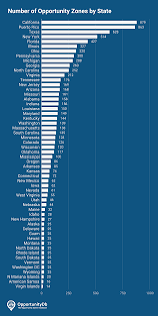
Opportunity Zone: an economic development tool that allows people to invest in distressed areas in the United States

Many news pieces as of late featuring Opportunity Zone proponent- devout Christian – South Carolina Senator Tim Scott. So a little bit here about one reason Senator Tim Scott cares so deeply about Opportunity Zones: ACCESS TO – OR A LACK THEREOF – FINANCING FOR BUSINESSES OWNED BY BLACK AMERICANS

According to a Federal Reserve report I read a few years ago, Black business owners apply for bank financing at a slightly higher rate than White business owners do. Yet, according to the same report I read, just over fifty per-cent of Black business owners are turned down for business financing. The turn-down rate for White business owners? It’s about half of that rate – it’s about 25%. 

Ok, so how about the turn-down rate for business financing applied for by Asian American business owners? The turn-down rate for business financing applied for by Asian American business owners had been – according to the report I read – just about 35%. 

How about for Hispanic business owners? According to that same report, the turn-down rate for business financing applied for by Hispanic business owners had been a little under 40%.

Access to financing – or a lack thereof – for American businesses which are owned by Black Americans… No one purports to proclaim that there is any sort of quick fix to inequality. This being said, support for – and continued interest in – Opportunity Zones has multiple facets applicable to “upside.” Tim Scott, is right.

When a loan officer complains about “inventory” or “their clients losing out on offers,”a humble suggestion: hand the loan officer Census data and a mirror.

According to the U.S. Census, over 12 million American households were formed between January 2012 and June 2021…whereas only 7 million new single-family homes were built.

As housing demand continues to far outpace supply, this demand could more adequately be financed…if there was an adequate supply of homes to purchase.

Arguably, home loan providers could increase their profits if and when the supply of homes catches up with the demand for homes…coupled to an available supply of mortgage money which is available to finance homes.

This being said, new home construction lending has tended to not be a primary focus for a uniquely high portion of loan officers. Construction loans which are used to finance new home builds continue to be an area of expertise for traditional banks.

So then, a think through. Should (or could) focusing on financing new home builds make sense for more loan officers, notwithstanding the fact that the majority of commission income for loan officers is derived by arranging financing for homes that already exist?

In other words, Why build a home loan origination platform as a mortgage lender to service only a small fraction of the market, comparing sales of new homes – i.e.: new home construction – to sales of existing homes – i.e.: resales?

Answers: 1) lower overall inventory levels = lower commission levels for loan officers, 2) financing what the market actually needs is usually a good business idea for salespeople, 3) less competition – the loan officer’s job will not succumb to automation.

What’s behind mortgage rates?

When there is an elevated level of demand for 10-year Treasury notes, investor bids for the notes would most likely come in at or above a bond’s face value. These higher offer prices for bonds drive bond yields down. This is so due to investors’ willingness to accept lower coupon rates for bonds in exchange for the de-facto loans they are making to the United States government by way of their purchase of 10-year Treasuries.

When investors determine that there is market volatility, investors may be inclined to accept lower yields on their “loans” to the United States government. An investor’s determination of a “volatile” market could lead the investor to arrive at their conclusion that government bonds are a safe place to park their money, as compared to other available investment vehicles they have available to select from (i.e.: the stock market).