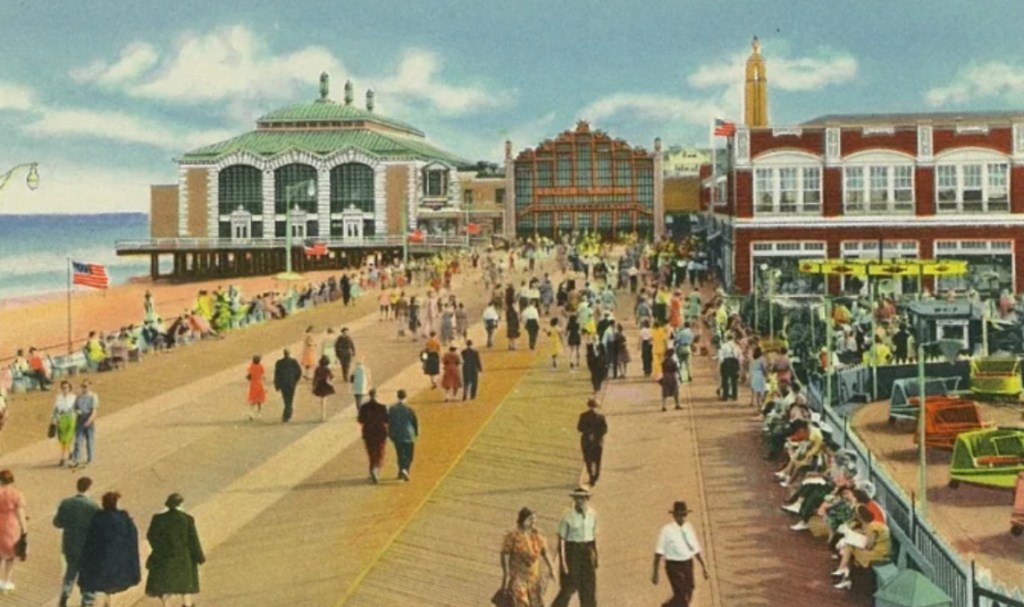
Queen Anne style architecture in Asbury Park, New Jersey can be spoken of as late-19th Century Victorian-styled homes. Victorian homes boasting of seaside-inspired asymmetrical designs.
The building of Queen Anne-styled homes in Asbury Park enjoyed a 30-year run in popularity. Beginning in 1880.
Originally, home for a Queen Anne-style home, was England.
Americans speak English. The British speak English. Yet, in taking a Shakespeare course in college, I discovered that while Shakespeare did indeed write in English, Shakespeare’s English required a translation.
So, in order to translate Early Modern English, Professor Carey read Shakespeare while translating the Early Modern English to a context that I could follow.
Historically, sometimes that of old English origin isn’t exactly the same as it is upon arrival in the United States. Even when it is “the same.”
This can be said of architecture.
In one such case, English architecture which ended up coming to the United States – architecture known by the same name in Great Britain as it was in the States – followed that storyline.
Shakespearean English. American English. Queen Anne-style architecture in England. Queen Anne-style architecture in the United States. English-inspired Queen Anne architecture in Asbury Park. In each case, the labels match. Yet, the products…not exact matches.
Ocean Grove, Avon-by-the-Sea, Long Branch and Asbury Park. Each, a Jersey Shore seaside gem established long, long ago along the coast of Monmouth County.
Asbury Park…
In Asbury Park, a segment of the city’s architecture tastes of a Victorian flavor. These being homes built in Asbury Park near Deal Lake.
Following the pattern of Victorian homes which were then being built on the East Coast during the latter stages of the 18th Century, three floors were the standard in a Queen Anne home. Following that trend, three-floor Queen Anne homes would be built in Asbury Park.
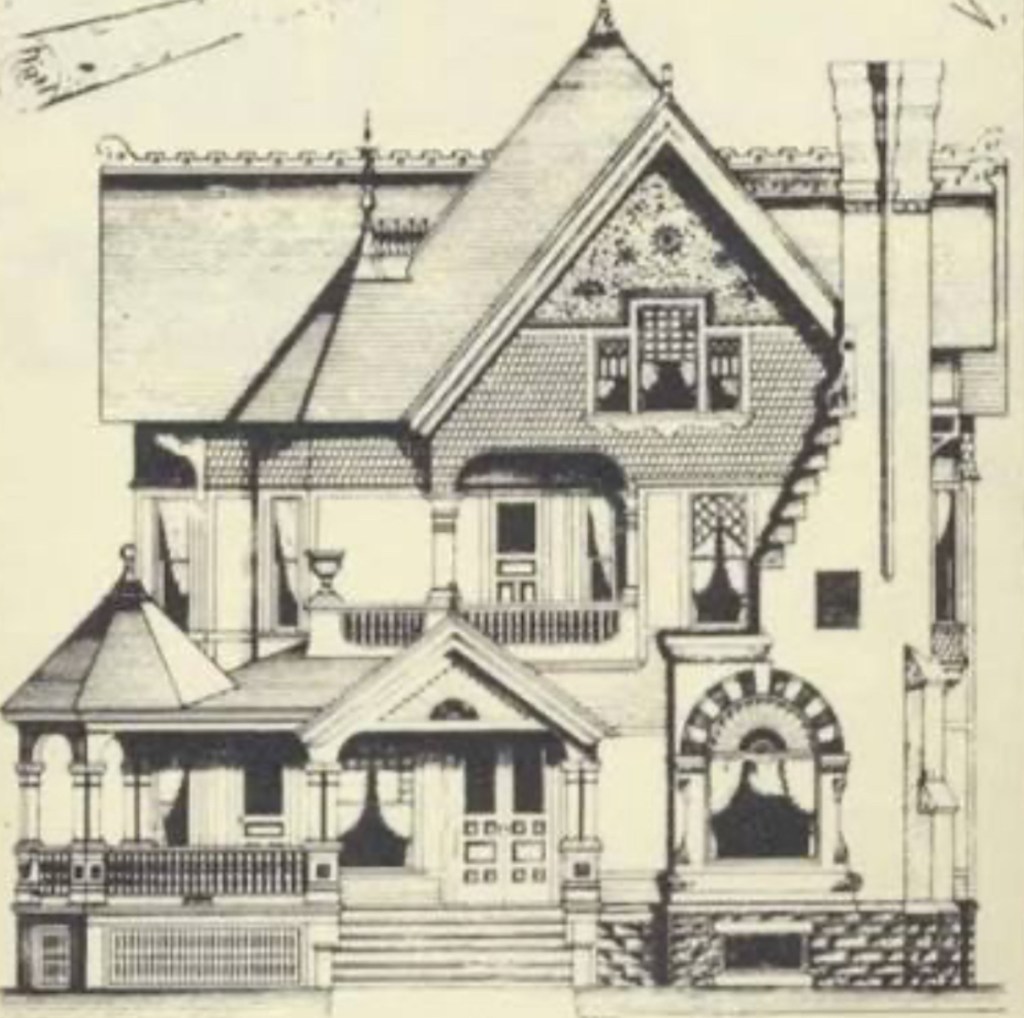
Whereas Queen Anne homes being built on the West Coast at this time tended to have two floors.
In Asbury Park, the Queen had her say…
Beginning late in the 1800’s, and extending on through the early part of the 20th Century, a New World Queen Anne Revival in architecture was becoming quite popular on the Jersey Shore. And Asbury Park was incorporated, right around this time.
First developed as a residential resort in 1871, Asbury Park was incorporated three years later. Asbury Park’s beginning, occurring just as this architectural trend from England – a style, named for a Queen – took hold.
Queen Anne-style architecture was a popular choice in the United States from 1880 through 1910.
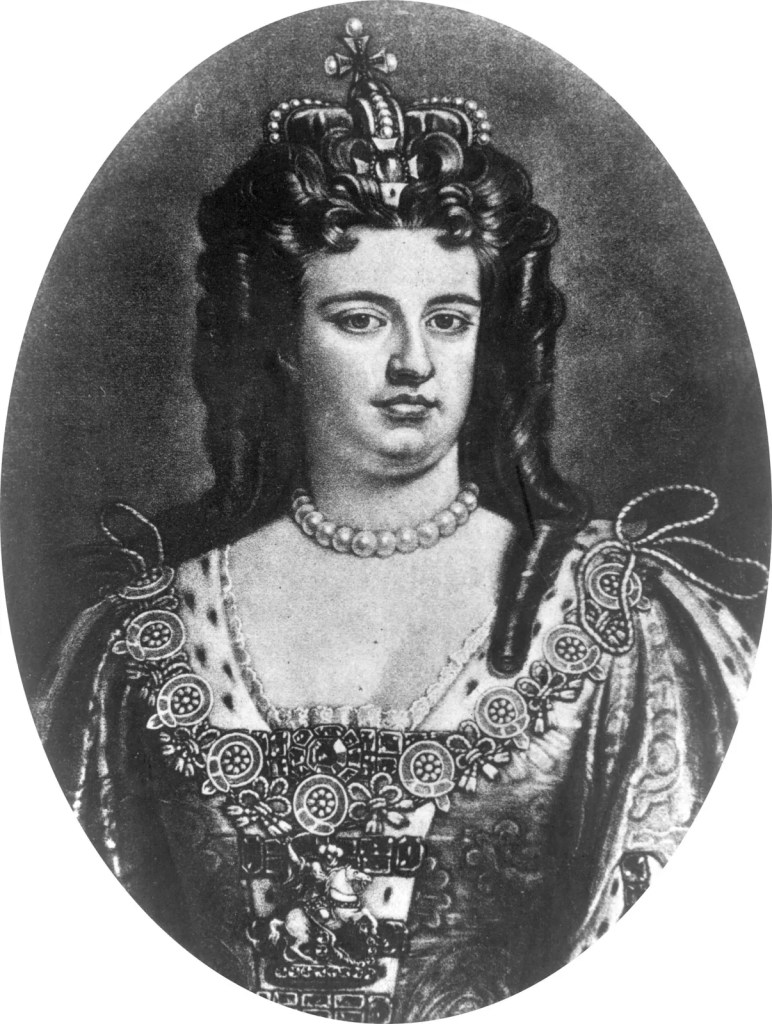
Queen Anne, an 18th Century English Queen. She, a Queen holding the throne from 1702 through 1714. Asbury Park adopted their own version of this trend in architecture which had been named for the queen.
Homes built in Asbury Park utilized a style found within the Queen Anne architectural movement. These designs, which found their way onto 19th Century Asbury Park blue prints, not being mirror images of those used for Queen Anne homes built in Great Britain.
Queen Anne homes of Great Britain were more closely aligned with the Arts and Crafts movement than were their Asbury Park sister homes.
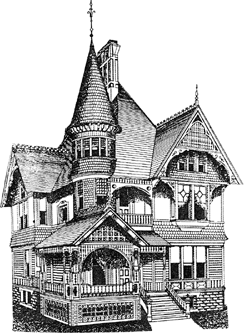
Distinct brickwork. Corner towers. Wide porches. Asymmetrical fronts. Red-brick walls which were commonly offset by pale stone. White-painted woodwork. Bay windows. Characteristics found in a Queen Anne home built in Great Britain late in the 19th Century. And early in the 20th century.
In the midst of Great Britain’s Industrial Age, one British architect’s Queen Anne imprint was famously being cast upon the English landscape. He, an English architect whom many an American has heard of – Norman Shaw.

Born in Scotland, Norman Shaw is widely considered to be one of the very finest architects Great Britain has ever produced. Or, the world has produced, for that matter.
Norman Shaw is responsible for a consortium of Queen Anne structures which, to this day, still proudly stand in Great Britain. Among Shaw’s 19th Century Queen Anne Revival contributions to Great Britain? Albert Hall Mansions.
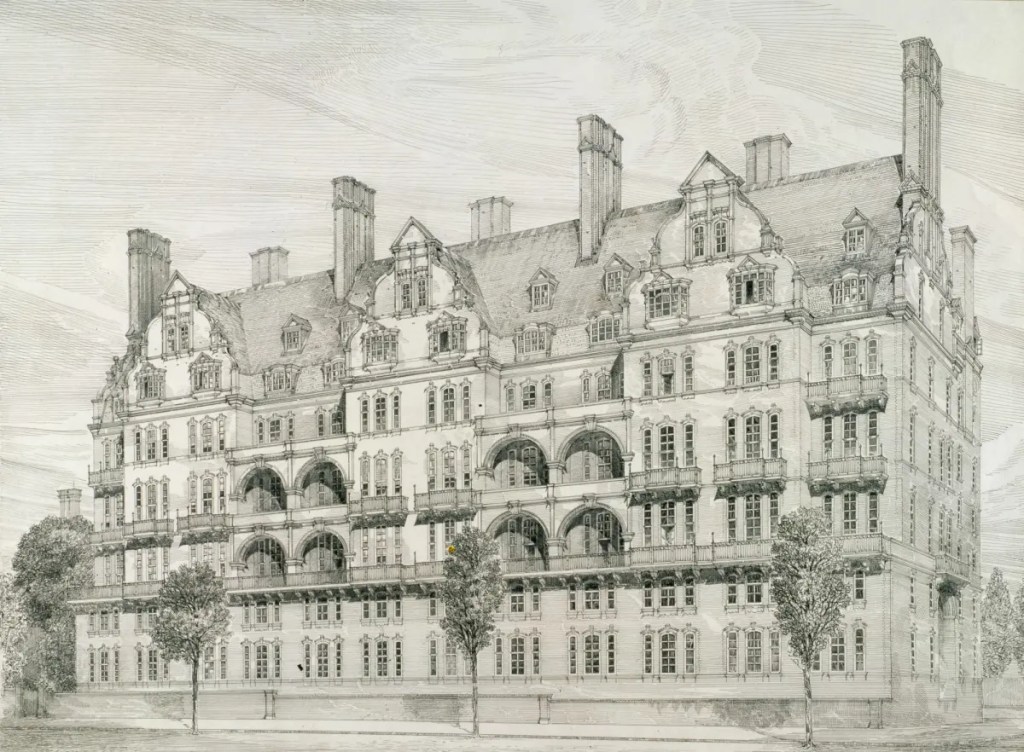
Shaw’s Albert Hall Mansions was built in 1878. Four years after Asbury Park was established.
Queen Anne masterpieces designed by Shaw were famous for blending characteristics taken from Arts and Crafts homes. As well as from Tudor homes.
With regard to Asbury Park’s version of Queen Anne architecture, when one looks, one will see an inspiration drawn from this style. Inspired by, yet not an exact match.
Asbury Park’s Queen Anne-styled influence can best be seen when walking near Deal Lake. Seen in the turrets. Seen in the towers. Towers and turrets of a Queen Anne design. First thought up in England.
Several of the towers affixed to Asbury Park homes prominently stand three stories tall. Just as a comparable tower which had been added to a Queen Anne blue print in England by Shaw, so too, still stands.
Named for the Queen, made popular in England by one of the world’s most renowned architects, Asbury Park’s version of a Queen Anne home adopted distinct Asbury Park features.
For example…
In Asbury Park, the stateliness of a Queen Anne home often included a wrap-around porch. Also, we’ll see the bay windows in an Asbury Park Queen Anne home. Norman Shaw also liked bay windows. Yet in Asbury Park, the bay windows we’d see would have been below a cedar shingled-roof. Wood shingled-roofs were quite popular in Asbury Park Queen Anne homes.
Not so for a Queen Anne home designed by Norman Shaw in England.
Norman Shaw favored roofs owning a very steep pitch. A favorite of Shaw, his roofs were often finished with red tile. Not wood shingles. With Shaw roofs often married to handsome gables. And to decorative chimneys.
Whereas Shaw went with a deep pitch for his roofs, Queen Anne roofs in Asbury Park had uniquely irregular shapes. Less-reliant upon a steep pitch.
While cedar shingle roofs were commonly found in Asbury Park, such a roof might also have had terracotta tiles. Or metal cornices. Neither of which, Shaw would have used.
The facades…
Norman Shaw’s facades felt fortress-like. Stone-clad. Classic. Old English. Shaw’s facades, inspired by medieval times.
While in Asbury Park, the facade of a Queen Anne home took a different direction.
Asbury Park Queen Anne architecture is known for asymmetrical fronts. And in comparison to Shaw’s homes, for lighter color schemes.
An Asbury Park Queen Anne home would also have had more windows than a Queen Anne home built by Shaw. With lighter color schemes – as well as higher window counts – reflective of Asbury Park being an oceanside community.
Old English – much like Queen Anne architecture – was translated. And in so for each, exactness accompanied not, the translations.

 Thinking About Becoming a Real Estate Developer?