The Federal-Aid Highway Act of 1956 – commonly known as the National Interstate and Defense Highways Act – triggered the construction of countless highways throughout the United States. Those newly-constructed highways were then able to take Americans from their offices in American cities to the suburbs. The suburbs…where there is just less density. Paving the way – literally, and figuratively – for suburban housing demand. Coupled to the building of suburban homes. Those were (and are) larger homes. Larger than homes that could be built in the denser American cities.
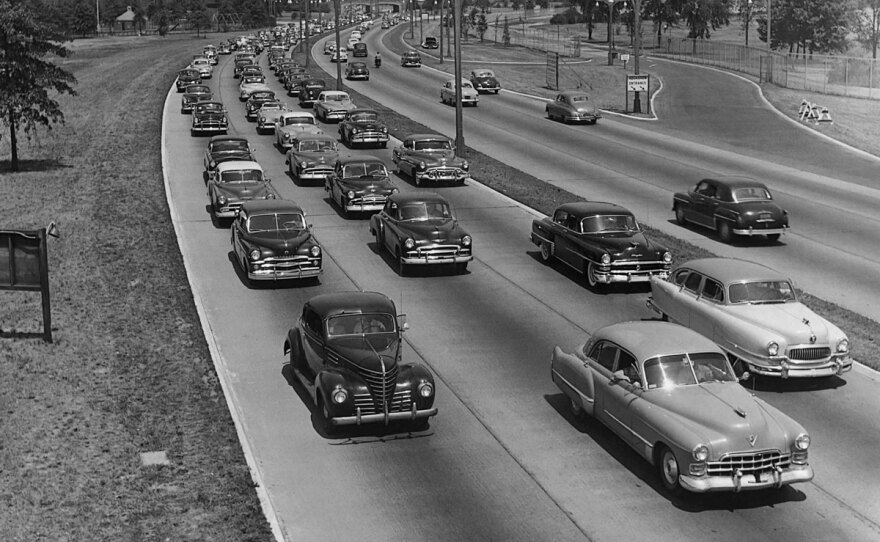
Ten years – 41,000 miles – $25 billion. This is what the Highway Act consisted of. $25 billion and 41,000 miles.
Let’s use Kansas City as an example.
Interstate 435 in the Kansas City Metro Area traces its origin back to the year 1965. I-435 could take a Kansas Citian out of Kansas City, Missouri – where a family might live in a smaller home – to Overland Park, Kansas. And in Overland Park, Kansas, larger homes have been built, can be built and will continue be built.
There was just more space in Overland Park, Kansas to build larger homes. More space than there was – in 1965 – in center city Kansas City, Missouri. And one can get there – to Overland Park, that is – by taking I-435. So I-435 is and has been a catalyst in regard to why larger homes would be built, can be built, will continue to be built and are built in the Kansas City Metro Area suburbs.
It is, just as it was…the highway.

 Thinking About Becoming a Real Estate Developer?