Land banks in New York…it’s working


There are just about 4 million total residential homes in state of New York. So, with all of the upheaval in our real estate business today – the NAR settlement, changes to buyers agency compensation, high mortgage rates, increased competition, limited inventory…among all of the other “normal” business challenges in real estate – if one is looking for a unique real estate specialty to consider focusing their efforts upon, as we head into 2025, here is something to consider…

Thirteen years after New York’s Land Bank Law went into effect, there are still in excess of, somewhere in the neighborhood of, 40,000 vacant residential homes situated within municipalities throughout The Empire State.

Two general truths…

Truth “A”:  a land bank has procedures available to the land bank which enable the land bank to acquire vacant and abandoned properties. 

Truth “B”:  Developers look for opportunities to acquire, then, to redevelop, properties.

Once redeveloped, and thus, in turn, once transitioned from its former status as a “non-performing” property to a new status – “performing” property – that property can be sold. Thus, returning what once had been a neighborhood liability to the community…coupled to a handsome, new classification: performing property. A community asset. A property which has now been added onto the municipality’s property tax roll.

As such, performing properties create newly-found property tax revenue for municipalities. Additional property tax revenue – now coming into the coffers of municipalities – ease budgetary constraints municipalities face.

Through New York’s Land Bank Law, in The Empire State, a New York municipality possesses the ability to create their own land bank. By establishing a land bank, resources, direction, vision, personnel – coupled to leveraged capital – enable New York redevelopment to take place. In essence, New York land banks create passageways whereby, as this passageway is followed, adverse conditions attributed to non-performing properties which are nestled, often times, for far too, too long, within New York State tax districts…are lessened.


The New York Land Bank Law was signed by Governor Cuomo on July 29,2011. New York’s first land bank was established the following year.. in 2012. Today, there are over 30 land banks in operation in New York State.

Here are some regional New York land bank statistics to think about. These are local land bank statistics…taken from the area of New York State where Josh Allen plays quarterback. And, albeit, as a KC Chiefs fan, I must say, he plays QB pretty darn excellently up there too:

A. 230 properties acquired

B. 44 renovations completed

C. $2.4 million in assessed Values returned to communities

D. $14 million in leveraged investment

Land Banks in New York…it’s working.

Map of New York in blue colour

There are just about than 4 million total residential homes in state of New York. If one is looking for a real estate development specialty to consider going into 2025, today, 13 years after the New York Land Bank Law went into effect, there are still in excess of somewhere in the neighborhood of 40,000 vacant residential homes located in municipalities throughout the state of New York.

Two general truths…

Truth “A”: a land bank has procedures available to the land bank which enables the land bank to acquire vacant and abandoned properties.

Truth “B”: Developers look for opportunities to acquire – and redevelop – non-performing properties.

Once transitioned from a non-performing property to a “performing” property, that property can then be sold. Thus, returning what was once a now-performing property to a neighborhood as a “performing” properties. As a community asset. As a property which is now on the municipality’s property tax roll. As such, performing properties create newly-found tax revenue for municipalities. This eases budget constraints.

Through New York’s Land Bank Law, in New York State, the New York municipality possesses an ability to create their own land bank. By establishing a land bank, resources, direction, vision, personnel – coupled to funding – enable New York redevelopment. Once created, New York land banks improve adverse conditions stemming from non-performing properties located within New York State tax districts.


The New York Land Bank law was signed by Governor Cuomo on July 29,2011. New York’s first land bank was established the next year.. in 2012. Today, there are over 30 land banks in operation in New York State..

Here are some land bank statistics from the part of New York Stare where Josh Allen plays quarterback:

A. 230 properties acquired

B. 44 renovations completed

C. $2.4 million in assessed Values returned to communities

D. $14 million in leveraged investment

A Fed rate cut…and mortgage rates went up.


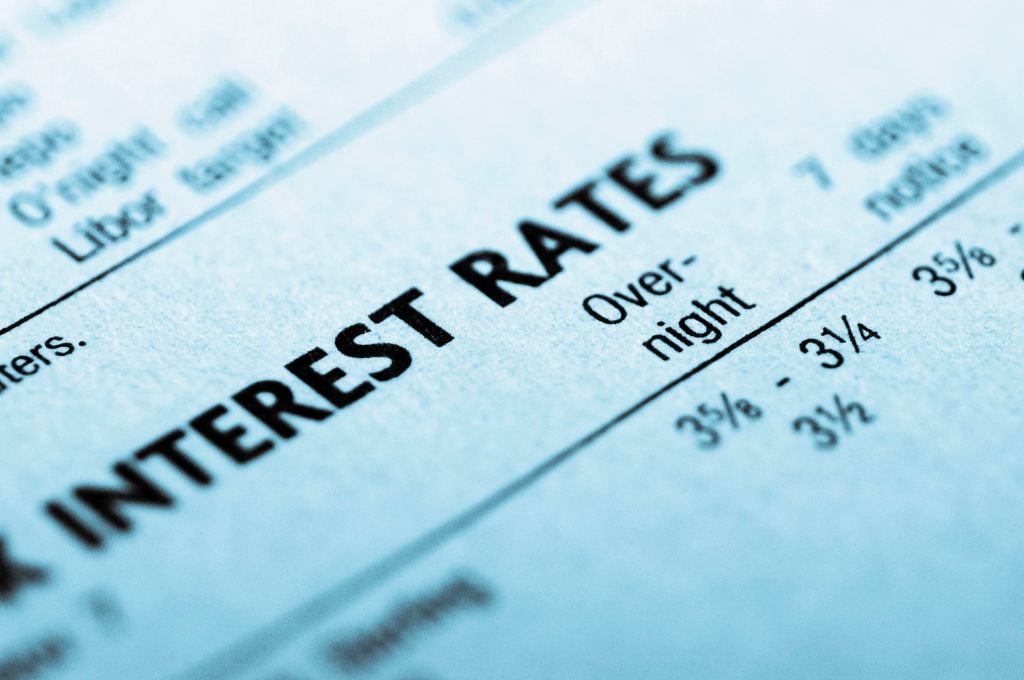
Mortgage rates are at their highest levels in two months. This, after the Federal Reserve cut the federal funds rate for the first time in four years.

The Federal Open Market Committee sets a target range for the federal funds rate. The federal funds rate? The federal funds rate is the interest rate banks pay on money they – as banks – borrow from other banks.

The Fed does not directly set mortgage rates.

The Fed influences mortgage rates. The Fed influences mortgage rates through the role the Fed plays in setting monetary policy. As such, the Fed indirectly affects the interest rates borrowers lock into at the consumer level, by way of how credit spreads evolve in the market as a result of the Fed’s actions. In relation to the issuance of debt instruments. 

Credit spreads consist of the purchases of – and then the simultaneous sales of – contracts within the same asset classes. Credit spreads are not always so easy to predict. Then too, mortgage rates are not necessarily – nor definitively – so easy to predict, short term, either. Although the general direction mortgage rates will end up heading can rather accurately be predicted through actions taken by the Fed.

Great for buyers…great for sellers: the 2-1 buydown

When mortgage rates are high – like they are today – you can use a 2-1 interest rate buydown to obtain a lower mortgage rate. And a lower mortgage payment.


The 2-1 interest rate buydown is a home loan feature whereby funds are set aside in an escrow account at the closing. These funds are set aside for the benefit of the buyer. The escrowed funds enable the buyer to “buy down” their interest rate for the first two years. In year one, the buyer’s interest rate will be 2% lower than the 30-year rate. In year two, the buyer’s interest rate will be 1% lower than the 30-year rate.


The 2-1 interest rate buydown is simple. It’s a 2% interest rate reduction in year one. It’s a 1% interest rate reduction in year two.


In years 3 through 30, the buyer’s interest rate remains the same. The buyer’s mortgage payment will remain the same as well. The buyer’s interest rate in years 3 through 30 – as well as the buyer’s mortgage payment in years 3 through 30 – is established when the buyer locks their rate.


The 2-1 interest rate buydown provides a buyer with an opportunity to qualify for a larger loan amount. This increases the number of homes the buyer can go out and look at.


By using the 2-1 interest rate buydown, a buyer can purchase a larger home. A buyer can purchase a more expensive home. A buyer can purchase a home with more “bells and whistles.” All are nice options. Possible, through the use of the 2-1 interest rate buydown.

What does a 2-1 interest rate buydown cost?

The cost of the 2-1 interest rate buydown is equal to the difference between principal and interest payments – based on the 30-year rate, which goes into effect in year 3 – and the principal and interest payments on the bought-down, lower rate in year 1 and year 2. Escrowed buydown funds are paid at the closing. Paid by the seller. Held in escrow. For the benefit of the buyer.

You are thinking about selling your home. How can the 2-1 interest rate buydown help you, as the seller? Let’s look at a few situations…

When the housing market is softening. When higher numbers of sellers are listing their homes for sale. When the housing market shifts from a seller’s market to a buyer’s market. When you see price reductions. When homes are sitting on the market – unsold – for longer periods of time. In each situation, the 2-1 interest rate buydown is an attractive tool that can be used by a seller to attract more buyers.


Over the past few years, mortgage rates have remained stubbornly high. When mortgage rates are high – like they are today – buyers who may be thinking about purchasing a home are also thinking about those higher mortgage rates. Higher mortgage rates = higher mortgage payments.

The 2-1 interest rate buydown lets a buyer get into the home they want today, with an interest rate during the first two years that will be closer to the lower mortgage rates buyers were used to seeing a few years ago. Lower mortgage rates buyers are eagerly waiting for. Mortgage rates…that are just not getting much lower.


Families hoping to purchase a home are taking notice of higher mortgage rates. Higher mortgage rates place pressure upon family budgets. This affects whether a buyer will decide to submit an offer to purchase a home. Which in turn, affects prices sellers get for homes they are selling. All being good reasons to consider using the 2-1 interest rate buydown. The 2-1 interest rate buydown benefits buyers. The 2-1 interest rate buydown benefits sellers.


Through the 2-1 interest rate buydown, as the seller, you offer your buyers the benefit of the lower mortgage rate. And the lower mortgage payment too. In year one. And in year two.

As the seller, by offering your buyers a lower mortgage rate for the first two years, you will attract more buyers to your home. Because your home is being sold with the 2-1 interest rate buydown. Because your home is being sold with a lower mortgage rate. Because your home is being sold with a lower mortgage payment. For two years. As the seller, this positions your home – which is being presented to buyers, with the 2-1 interest rate buydown – as an attractive option. Especially when compared to other homes on the market that buyers may be looking at. Because those homes don’t provide buyers with a lower mortgage rate in year 1 and year 2. Because those homes don’t provide buyers with a lower mortgage payment in year 1 and year 2. And yours does!

The 2-1 interest rate buydown. It’s great for sellers. The 2-1 interest rate buydown. It’s great for buyers.

Do we see two Fed rate cuts through the end of the year? My guess? Yes we do.

Over the past few years, yields on 10-year Treasuries rose. So too did mortgage rates. Those higher yields…benefitting investors who purchased Treasury bonds. By way of higher earned interest income. Yet these higher bond yields functioned as a “tax” on home buyers. Driving up the cost of homeownership. Due to higher mortgage rates. Due to higher monthly mortgage payments. Arguably, having the same effect as a “consumer tax” placed upon homeownership.

Remember, during this recent environment of increased – and increasing – bond yields, coupled to elevated mortgage rates, home prices rose. Home prices did not go down. Housing inflation got worse: 1) higher home prices, and 2) higher interest rates.

As monthly mortgage payments rose for home buyers as a result of higher mortgage rates (coupled to increasing home prices), what simultaneously so too did rise were earned income opportunities for bondholders. Bondholders benefitted…at the expense of home buyers.


If the Fed does indeed enact two rate cuts through the end of 2024, mortgage rates are likely to drop. As too will yields bondholders attain, through their purchase of newly-issued 10-year Treasuries.

A trade-off is in the making. A much-welcomed rebalancing.

Circumstances, Timing, and Policy. Or a lack thereof?


It can credibly be argued that opportunities for Americans to build wealth through the acquisition of real estate has usually been based upon, 1) circumstances, and 2) timing.

Minus, 1) favorable circumstances, and 2) good timing, is (or was) an American just outta luck in regard to real estate? Due to different reasons, for many – long, long ago, and still today – that answer, unfortunately, was and is, “YES.”

So what role can, should or will government take on with regard to creating more opportunities for generational wealth building through the ownership of real estate? Remember, as a “game-changer,” HUD was created 59 years ago…in 1965. A long time ago.

Going back…hundreds of years before the formation of HUD, what role did our government play when real estate was sought out? In the earliest stages of our American set-up.

During the 1600’s, a select portion of those residing in what would go on to become the American colonies – those who aspired to “own” land for themselves, that is – ventured out, and found themselves a piece of land. They claimed that land. They then “owned” that land. And there you have it. Notwithstanding, this was land “ownership” – for some – without a deed being recorded. Notwithstanding, this was land “ownership” without the issuance of title insurance. Notwithstanding, this was land “ownership” which went into effect without the use of a mortgage.

During the 17th Century, in what would go on to become the United States, when one wanted land, one could often just travel a few miles north. Or south. Or east. Or west. Outside of a settled area, that is. Find some barren land. Land that had not yet been claimed. Then, proceed to claim that unsettled land. Circumstances permitted.

So a notable portion of our early “eligible” American settlers didn’t see value in buying land from someone else. Nor was there a need to.

Circumstances. Timing.

When the United States is short millions of new homes – as we are today – and when there is no substantive national policy being spoken of which can work towards addressing our very real housing problem (in an election year, for that matter) do we just leave this all to “Mr. Market,” and say, “Well…it’s just, 1) circumstances, and 2) timing.”

That’s kinda what we’re doing…

A land bank is ok for Kansas City, but New York is different. Oh really?

Of the one million or so investor-owned residential homes in the State of New York, it has been estimated that in excess of 3% of these investor-owned properties sit vacant or abandoned. Say, between 30,000 and 35,000 homes. Vacant. Abandoned. Non-performing.

In New York, municipalities which can establish land banks include a) cities, b) villages, c) towns, and d) counties.

Here is how it works…

The New York municipality first establishes an entity to function as what is known as a “foreclosing governmental unit.” The foreclosing governmental unit operates within guidelines established through local laws, local ordinances and local resolutions. The laws, ordinances and resolutions outline parameters by which the city, village, town or county – i.e.: the “municipality” – is able to establish procedures which enable the municipality to function as the foreclosing governmental entity. I.e.: as the land bank.

Oversight and governance for New York land banks is the responsibility of land bank boards of directors.

When a loan officer complains about “inventory” or “their clients losing out on offers,”a humble suggestion: hand the loan officer Census data and a mirror.

According to the U.S. Census, over 12 million American households were formed between January 2012 and June 2021…whereas only 7 million new single-family homes were built.

As housing demand continues to far outpace supply, this demand could more adequately be financed…if there was an adequate supply of homes to purchase.

Arguably, home loan providers could increase their profits if and when the supply of homes catches up with the demand for homes…coupled to an available supply of mortgage money which is available to finance homes.

This being said, new home construction lending has tended to not be a primary focus for a uniquely high portion of loan officers. Construction loans which are used to finance new home builds continue to be an area of expertise for traditional banks.

So then, a think through. Should (or could) focusing on financing new home builds make sense for more loan officers, notwithstanding the fact that the majority of commission income for loan officers is derived by arranging financing for homes that already exist?

In other words, Why build a home loan origination platform as a mortgage lender to service only a small fraction of the market, comparing sales of new homes – i.e.: new home construction – to sales of existing homes – i.e.: resales?

Answers: 1) lower overall inventory levels = lower commission levels for loan officers, 2) financing what the market actually needs is usually a good business idea for salespeople, 3) less competition – the loan officer’s job will not succumb to automation.

Should a portion of the blame for our housing shortage be placed upon sales managers?

In an environment which is accompanied by elevated interest rates, hopeful home buyers are challenged by housing affordability (or a lack thereof). But the real problem is not found in interest rates. The real problem is found in inflation. Housing inflation, to be more specific.

Housing inflation, linked to the fact that, we just don’t build (or rehab) enough homes. Every year. Year after year. Same problem. So, in real estate, is it wise to simply recruit more salespeople to follow the same business model? To attain the same outcome?

What is the real sales challenge to solve? Add more homes to the market. Every year. Year after year. Meet demand.

A noted portion of homes which could be/should be added to the market each year will come through, 1) rehabbing more homes, and 2) building more new homes.

An industrywide over-reliance which is placed upon selling move-in ready homes, coupled to a lack of prioritization – and/or specialization – in creating additional housing stock is arguably a “sales management C-minus,” or a “sales management D.”

Don’t blame Jerome Powell. Our housing challenge is, in many ways, about sales management deficiencies. A lack of leadership in sales. Which, in my opinion, functions as one primary contributor to our ongoing national housing challenge. Inefficient sales management in real estate makes Jerome Powell’s tough job even tougher.

Creating more inventory is the solution. Ignoring processes which will lead to the creation of more inventory further contributes to housing inflation. To fewer sales. To less commission. And, quite possibly, to the underutilization of capable real estate professionals.

Real Estate and AI

One does not really sell a home. So then can one really, effectively push for a deal to close? Yes. And, no.

People really kinda’ buy homes. So pulling a buyer in, to a great experience offered to that buyer – an experience which “stars the home” so to speak – could be an effective approach to consider. Then engaging your buyer in an interactive way. Rather than selling a home to a buyer. Ideas and approaches. Aligned with the effective use of AI. In real estate.

By observing data, and in this form, “data” could be consumer behavior, then by thinking through responses to observed data, a real estate professional could craft their own foundational buyer-inquiry follow-up system. In this manner, AI could facilitate added value for the real estate professional. In their market. For buyers. And as such, for sellers too.

With an emphasis placed upon the buyer’s experience. Adding to a value-add the real estate professional delivers. By facilitating an interactive experience for the buyer. Less of a need to push deals. More so, the focus having been transitioned to, pulling buyers in through a great virtual experience. Delivered by the Realtor.

Data…Feedback…Response.