Within a real estate request for proposals (“RFP”), a municipality would likely provide a top-down overview for prospective service providers (i.e.: Respondents). Such an overview could include pertinent information about properties included by the municipality in the RFP. These could be properties that a municipality would be looking to convey to rehabbers upon the issuance of the RFP: 1) rehabbed properties, 2) revitalized neighborhoods.
Project-specific criteria prospective service providers would hope to meet during the RFP evaluation process are outlined by a municipality within the RFP. As too would goals be. Goals the municipality is hoping to accomplish through the RFP issuance. Managed through the municipality’s service provider vetting process.
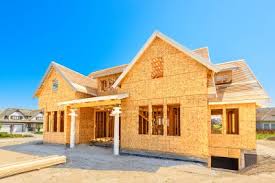
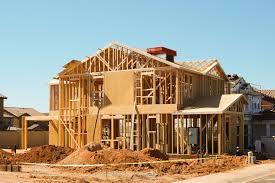
With new home construction, when your home build is financed with a construction loan, a detailed itemization for work performed – coupled to building supplies – will be provided to your lender. This is done through a draw request. Having each invoice properly organized prior to submitting your draw request is an important step to take. Doing so accurately can ensure that a timely release of funds by your lender – as per the submitted draw request – takes place.
In the U.S. economy, there is a “balancing act” found within projected, planned and/or implemented wholesale-retail price increases. Just as there is a “balancing act” in managing tariffs.
Wholesale price increases, retail price increases and tariffs. Each being a conversation piece relevant to how price changes could/will affect consumer behavior. And demand.
As prices increase, consumer demand could in turn decrease. Companies opting to reduce the prices that consumers ultimately pay at the retail level, with an eye on jumpstarting demand – if demand had been deemed to have stalled out – can prove to be challenging when companies absorb higher-than-planned-for wholesale price increases. As is reflected through an increasing – or a stubbornly consistent higher-than-planned-for – Producer Price Index.
And those wholesale prices paid by corporations – prior to consumers purchasing products at the retail level? Those wholesale prices – paid by U.S. corporations – are driven up by tariffs.
“You can’t tax business. Business doesn’t pay taxes. It collects taxes.” – a quote by Ronald Reagan
In our economy, there is a “balancing act” found within projected, planned and/or implemented wholesale-retail cost increases. Just as there is a “balancing act” with tariffs.
Wholesale price increases, retail price increases and tariffs. Each being a conversation piece relevant to how price increases could/will affect consumer demand. Since as prices increase, consumer demand may well in turn decrease. Yet companies reducing prices at the retail level in order to increase demand – if demand had indeed diminished – can be made all the more difficult in an era of higher-than-planned-for rising wholesale prices. As would be reflected through an increasing – or in a stubbornly consistent higher-than-planned-for – Producer Price Index.
Last year home builders started construction on 947,200 single-family homes. In 2000, what would the number of new housing permits been? 1.6 million.
Fast forward from the year 2000, to 4 years later…
Looking at back-to-back years 20 years ago – 2004 and 2005 – housing permits obtained for privately owned homes topped 2 million each year. 2004 was the first year that permits obtained for privately owned homes exceeded 2 million. The trajectory of new home builds in the United States had been on an upward swing, twenty years ago.
Last year home builders started construction on 947,200 single-family homes.
In the Wizard of Oz, author Lyman Frank Baum created his story…a story built upon the premise that a money supply based upon gold could be subject to manipulation. Manipulation by powerful East Coast and West Coast banks. I.e.:, by the Wicked Witch of the East, and the Wicked Witch of the West.
If you recall in the movie, Dorothy would only remain safe on the yellow brick road if Dorothy were to wear her silverslippers. Theyellow brick road in Baum’s book represented gold. Gold…not safe. And Dorothy’s slippers? Those slippers were silver.Silver was good. Silver was safe. According to Baum.
A United States monetary policy based upon silver – and not gold – was the author’s preference.
Monetary policy…according to author, Lyman Frank Baum.
“The objective of the township’s open space program is to take as much property off-line from development, as cost effectively as possible.” – Marlboro, NJ Mayor Jonathan L. Hornik
Looking at the concerted effort taking place in Marlboro Township – this effort, emanating from City Hall – to remove property from being developed, one finds the Marlboro Agricultural and Open Space Committee. This is an advisory committee. The goal of the Marlboro Agricultural and Open Space Committee is to preserve Marlboro’s historically-rural “DNA” by working in conjunction with the Planning Board and Town Council protect Marlboro’s open space.
How is this done?
The Marlboro Agricultural and Open Space Committee identifies properties that could be eligible to receive Green Acres funding. Once a property has been aligned with Green Acres funding, the Committee coordinates land preservation efforts in unison with available Monmouth County programs. Linking land preservation undertaken in Marlboro to Monmouth County officials and to State officials.
Once a property is determined to be suitable for inclusion in the open space program, Committee, County and State outreach efforts are enacted.
How come?
Outreach efforts make known the in-the-works, land preservation efforts established by Marlboro.
Coordinated outreach adds supplemental funding channels. Providing resources which are coupled to donors who may be inclined to contribute to the program.
Donations are able to be deployed by Marlboro in conjunction with Green Acres funding. Providing the capital necessary to acquire and to preserve land.
Mandatory Inclusionary Zoning (MIH) requires a real estate developer to add affordable housing within areas that are rezoned as part of a development project. These inclusions would then be necessary in order to facilitate the building of new residential housing. It’s a trade-off of sorts. Such as, “Want to build here? Include some affordable housing there.”
In essence, Mandated inclusionary Zoning becomes a sort of de-facto voluntary exercise. Meaning, projects just don’t need to be undertaken by developers. As such, Mandatory Inclusionary Zoning has – arguably – flaws within its construct. This is so because real estate development occurs only after a projected business model is analyzed by project stakeholders. Analyzed, with an expected return-on-investment determined by the assessors. Mandating the building of affordable housing could be a “deal-pause.”
Applicable to a homeowner who dies intestate – the home, not owned by the decedent through joint-tenancy nor through tenancy-by-the-entirety (no joint tenancy) – the sale process for the home is a probate sale. One of the early steps in a probate sale is for the court to authorize a licensed real estate agent to list the decedent’s home. This being the home, now listed for sale by the real estate agent, which had been owned by the decedent, intestate.
The Fed, inflation, mortgage rates, homebuyer sentiment, institutional investors, consumer surveys and so on, and so on, and so on and so on… At the core of each of these aforementioned talking points, we can (arguably) find a property purchase platform based predominantly upon move-in ready resales. Move-in ready resales – sales of (and the purchase of) existing homes that are bought by buyers at, in most cases, higher prices. These are homes which more times than not, do not need to be rehabbed. These are homes which had been purchased at an earlier date by the now-sellers. Homes which are now being sold (i.e.: resold) to new home buyer. Homes being sold at higher prices.
Correlation: A) Move-in ready resales – higher home prices, B) Housing inflation – affordability (or a lack thereof).






 Thinking About Becoming a Real Estate Developer?