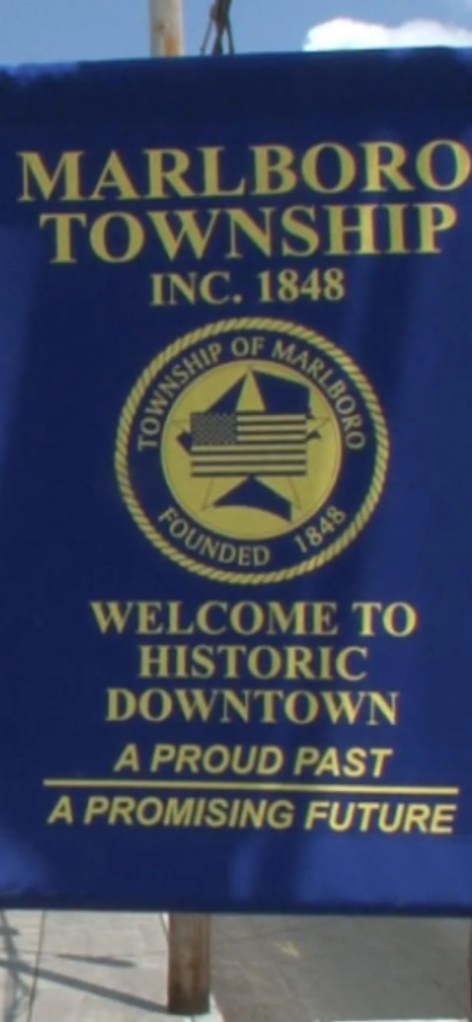
Marlboro Township

The name – Marlboro Township – can be traced back to what had been a local discovery…a discovery which occurred, nearly three hundred years ago.

This local Marlboro discovery, then too, the utilization of what had been discovered nearly three-hundred years ago alongside what is now Marlboro Township, was a mineral. That mineral – emerging to go on to become quite important to the local agricultural industry – being this region’s marl. 

Marl is a mineral which, by the late 18th century in New Jersey, was relied upon first, by local farmers who owned farms in what would go on to become Marlboro Township. Then, later, by farmers farming farmland situated throughout New Jersey. Then, later, by farmers farming farmland well beyond – and outside of – New Jersey.

In Monmouth County New Jersey, marl was discovered in 1768. East of where the township lines for what we now call Marlboro Township can be found. A true farmer’s ally, the functionality of marl as a mineral can be seen in how marl – composed of the remains of prehistoric fish – was able to be spread over topsoil of area farmland during the winter months. Then tilled into the farmland soil in the spring. Farmers, in what we now know to be Marlboro Township, came to rely upon marl as the means through which they could improve their soil’s fertility.

Marl is not exclusive to New Jersey, by any means. The recognized use of marl goes way, way, way back. To the 1st century. 

Marl is a de-facto natural fertilizer. A natural fertilizer which had been found to exist in the grounds underneath Marlboro Township in the 18th Century. Long, long, long before the comeuppance of any commercial fertilizer industry in New Jersey would have been able to supply local New Jersey farmers with a finished fertilizer product which could be used for their farms.

Harvested in what would later go on to become Marlboro Township, the region’s marl – once the marl had been harvested – would go on to evolve as an industry. Later, to be transported by rail. On to nearby agricultural markets. New Jersey’s local discovery of marl established an industry early on for Marlboro Township.  

By the mid-19th Century, the transportation of New Jersey marl was key to facilitating commerce. For the local harvesters of marl. For the local “exporters” of this marl. And for the farmers and the farms which came to rely upon – and use – marl as fertilizer. 

To that effect – relating to marl, as a local industry…and to the transportation of marl as well – in 1853, the Freehold and Jamesburg Agricultural Railroad was founded in Jamesburg, New Jersey. Founded, primarily to facilitate the transportation – by rail – of this newly-identified regional mineral.

The Freehold and Jamesburg Agricultural Railroad operated along a 27-mile rail line.  Connecting the locally-harvested marl – in what is now Marlboro Township – to nearby agricultural markets. Among them, Freehold, Jamesburg, Monroe, Manalapan and Englishtown.  


For comments about this article, or to offer suggestions and ideas for further pieces written about Marlboro Township, kindly reach out to the author, Ted Ihde.

phone: (816) 699-6804

email: authortedihde@gmail.com
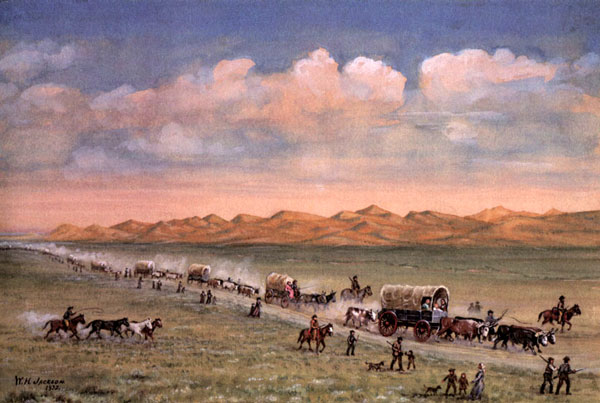
Westward Expansion: the Homestead Act, the Preemption Act

During the latter part of the 19th Century, westward-looking American settlers were able to acquire their land, thanks to federal policy – the Homestead Act.


The Homestead Act was signed into law by President Abraham Lincoln on May 20, 1862, and went into effect the following year. In 1863.

Twenty-two years prior to the Homestead Act, we find the Preemption Act of 1841.

The Preemption Act enabled American settlers to claim up to 160 acres of federal land at a cost of $1.25 per acre. 

So, inexpensive land acquisition – and westward expansion in early America, for that matter – had already been formal American policy…some twenty years before the Homestead Act became law-of-the-land.

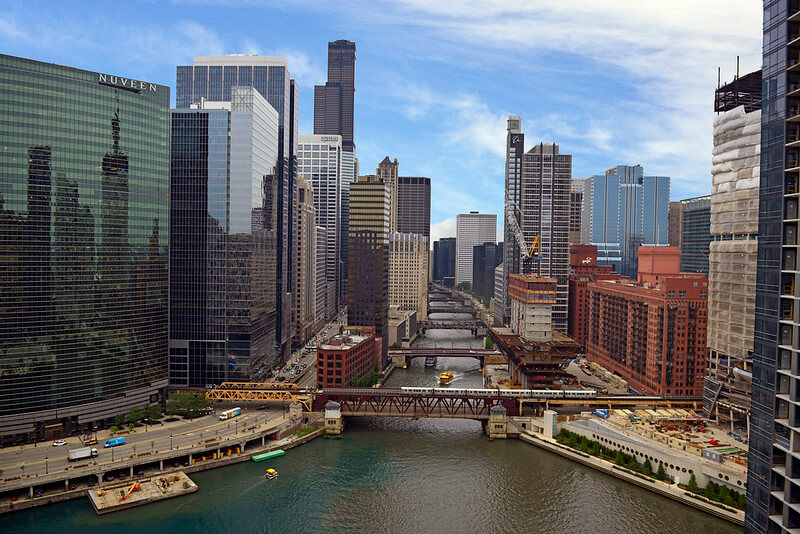
Chicago

55,000 – Fifty-five thousand would be the number of non-performing residential structures in the city of Chicago five years ago…in 2019.

32,000 – Thirty-two thousand would be the number of vacant lots in the city of Chicago five years ago…in 2019.

In order to increase Chicago’s property tax base, vacant, abandoned and distressed residential structures will need to be renovated, in scale. Thus, transitioning now non-performing “black holes” on Chicago’s balance sheet to investors. And to owner-occupying homebuyers. Intended outcome? The undergoing of substantial numbers of inner city renovation projects of non-performing residential structures. The transformation of what can now be categorized as city liabilities, into city assets.

How about vacant Chicago lots?

Non-performing lots in Chicago need to be conveyed – in scale – to new property owners. Property owners who pursue the building of new homes on the vacant lots.

As new homes are built on what are now vacant city lots, a new revenue source for the city – coming by way of property taxes paid to the city…property tax amounts which are based upon assessment values for properties which have newly-constructed homes on them – is established.

While Chicago is saddled with substantive numbers of non-performing residential structures, the establishment of processes which reduce the number of vacant lots has been a priority for the city.

For example


Between the years 2015 and 2019, Chicago proceeded to sell in excess of 1,000 (out of approximately 11,500) vacant lots. Five years. Over 1,000 lots sold. On average, over 200 vacant lots sold per year. For five years. Pretty good!

The Chicago Large Lots Program…

Through a program Chicago established to address challenges linked to the high number of vacant city-owned lots – this program being, the Large Lots Program – neighborhood property owners were able to purchase up to two vacant lots from the city. One condition of the lot acquisitions being, the lots purchased needed to be properties on streets on which buyers already owned real estate.

The sale prices of those lots sold through the Large Lots Program? $1 each.

Thinking About Becoming A Real Estate Developer? by Ted Ihde

Thinking About Becoming a Real Estate Developer? is a guidebook meant to help others transition from having little or no experience in being a realtor to becoming a seasoned real estate developer. The author provides the reader with real-life examples, step by step guides, and answers to many questions that may come up in the day to day workings of a real estate developer. He also explores the elements of learning how to pursue the acquisition of properties that are not available or not yet for sale through his own successful process.

Producer Price Index

The Producer Price Index measures the average change -over time – in prices domestic producers receive for their output. Whereas “retail” constitutes prices reflected through the sale of goods and services to the public for their own consumption – not for resale – the Producer Price Index measures the cost of goods and services at the wholesale level.


Each month, the Producer Price Index is published by the Bureau of Labor Statistics. Typically, the Producer Price Index is released by the Bureau of Labor Statistics the second week of the month.

Trillions of dollars in homeowner equity…so are the best “captains” of “equity conversion airplanes” the homeowners themselves? No.

There is an impetus placed upon real estate professionals – as well as an implied responsibility – to honestly, to effectively and to accurately communicate reality to home sellers. An inability to do so? Fewer real estate listings. Lower sale prices for home sellers. Less equity converted into cash for home sellers. Less revenue for real estate companies. Inopportuneacross the board.


Three years ago, American homeowners were custodians of an estimated $19 trillion in homeowner equity. Furthermore, over the past three years – even with these stubbornly-elevated mortgage rates – we witnessed an uninterrupted, further run-up in home prices. More equity gained, for American homeowners.

As mortgage rates ease downwards heading into the fall, unlocking trillions of dollars in homeowner equity – as a result of more homeowners deciding to either trade up to larger homes, or to downsize to smaller homes, circumstances permitting – will trigger a large-scale (and an upcoming) re-thinking of this following question by more and more homeowners: What shall we now do with this equity we have in our home?

So what’s the plan?

In real estate, the effective utilization of well-tested “tools,” such as 3-D tours and virtual staging, coupled to good marketing processes – I.e.: a Marketing Plan – deployed by successful real estate teams is a great way for homeowners to convert the equity they have in their homes into cash.

It works.

Ok, so if you are a for sale by owner home seller in 2024, data indicate that an over-reliance in – as well as, maybe, blind faith placed upon(?), “the Internet,” if you decide to sell your home yourself , FSBO, could lead to an entirely avoidable (and a costly) home selling misadventure. As well as to a saddened foray for home sellers into this unintended outcome: lower sale prices.

Wichita: streets – rail – bonds – industry

In 1870, Darius Munger and William “Dutch Bill” Greiffenstein filed plats to lay out the first streets in what would go on to become Wichita, Kansas. Wichita incorporated as a city on July 21, 1870.  


One year later – on June 22, 1871 -underpinnings for the establishment of ‘Cowtown’ were laid in steel in Wichita.

The Wichita and Southwestern Railroad Company was incorporated on June 22, 1871. A few months later, relative to railroad expansion in Wichita, a Sedgwick County, Kansas bond issuance took place. That bond issuance was approved by Sedgwick County voters on August 11, 1871: $200,000 in bonds

This bond issuance enabled Wichita to finance the construction of a rail line which connected Wichita to Newton, Kansas.

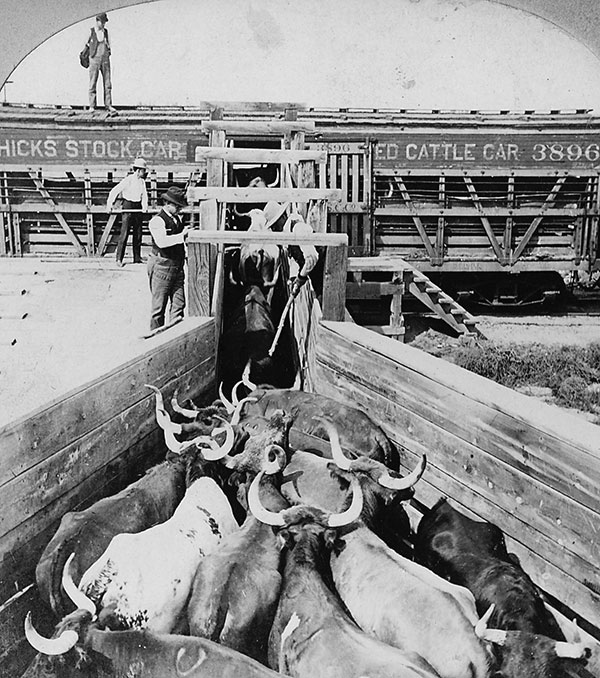
Rail service in Wichita – connecting Wichita to Newton -was a boon for Texas cattlemen. The new rail line -to the north of Texas – enabled shipment of cattle from Texas, on to Wichita. Then further along to Newton. And off to eastern markets in the United States.

The Probate Home Sale

When an offer to purchase a home being sold through probate in New Jersey has been accepted, a notice will be mailed to heirs of the estate. This notice is the Notice of Proposed Action.

The Notice of Proposed Action enables estate heirs to object to the sale of the home. Should an estate heir – or, should estate heirs – object to the sale of the home, a court date will be set.

Any offer to purchase a home being sold through probate must be equal to – or greater than – 90% of the appraisal value of the home. The appraisal value of the home is provided to the court by a licensed real estate appraiser who has been designated by the court to conduct such an appraisal.

Whats next?

The attorney for the estate schedules a confirmation hearing. This hearing takes place within 45 days of the filing date. Throughout the process, the listing agent of the home being sold through probate continues to show the home to prospective buyers.

One directive the listing agent has in continuing to show the home to buyers is to determine whether an over-bidder emerges. An over-bidder is a buyer who submits their offer to purchase the home at a sale price which is greater than offers which have been received, to date. Thus, raising the sale price of the home. Increasing proceeds for the estate.

In the event that there is an offer submitted by an over-bidder, the over-bidder attends a confirmation hearing. At the confirmation hearing, the over-bidder is required to present a certified check which is equal to or greater than 10% of the proposed sale price.

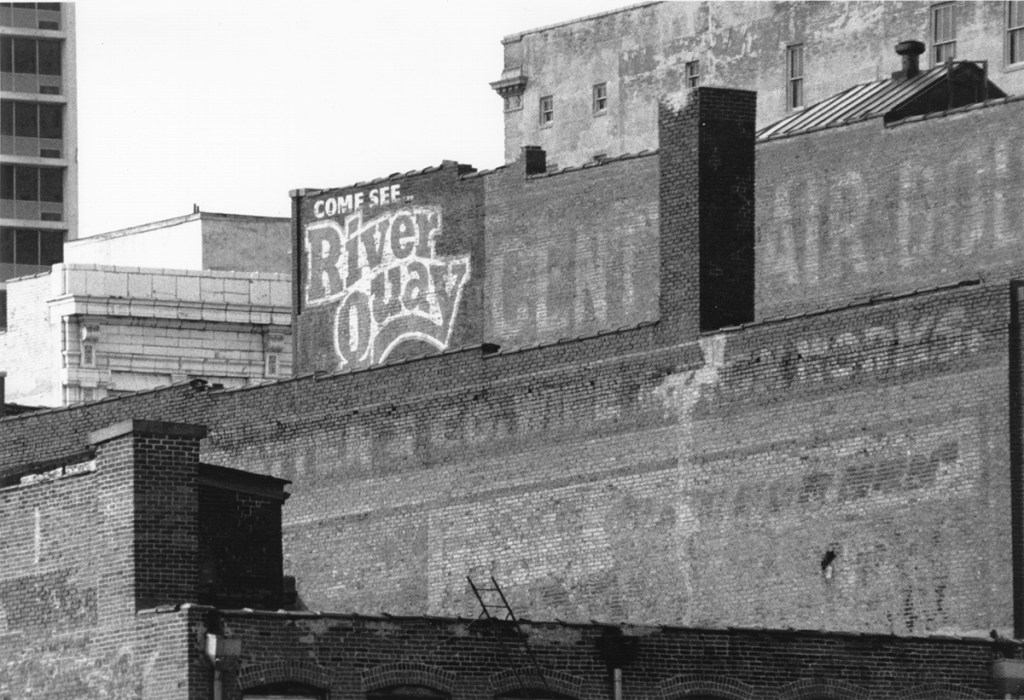
River Quay

In Kansas City, if one were to bring up the topic of River Quay (pronounced “River Key”), that conversation would no doubt evolve into a conversation about River Market.

Today, River Market is a hip-and-trendy neighborhood in Kansas City, Missouri. Located just south of the Missouri River. Adorning River Market’s quaint neighborhood feel, you’ll find chic eateries. Coupled to an urban lifestyle. Complete with a streetcar. A stone’s throw to the west of Christopher S. Bond Bridge. That’s today. Today’s River Market. Yesterday’s River Quay.

In 1971, Marion Trozzolo – then, a Rockhurst University professor – began renovating historic buildings alongside the “Big Muddy” in a section of Kansas City that we now know to be River Market. It was Professor Trozzolo who came up with the River Quay nickname.

Trozzolo’s idea for River Quay? For River Quay to undergo a thorough, artsy-remake. Into a Kansas City-styled French Quarter. A neighborhood comparable to Chicago’s Old Town. To San Francisco’s Ghirardelli Square. Trozzolo envisioned a family-friendly environ for River Quay. Unfortunately, the latter half of the ‘70’s was a rough time for this neighborhood next to the muddy Missouri.

The word Quay? It’s a word of French origin. The translation for Quay? Loading platform. Or wharf.

Did River Quay ever become a Kansas City French Quarter? Did River Quay ever become a Kansas City Old Town? Did River Quay ever become a Kansas City Ghirardelli Square? Hardly.

By the late ‘70’s, revitalization efforts in River Quay had stalled. Leaving River Quay saddled with boarded up buildings. Deserted through-streets. A neighborhood, with no vibrancy. Streets, with no traffic. Sidewalks, with no passers-by.

By the late ‘70’s, developers were walking away from unfinished River Quay projects. Whereas River Quay had once – not long before – been primed for a grandiose new identity. One which bespoke of a rebirth for this neighborhood. A transition. From blight. To that of an entertainment district. Yet by the late ‘70’s, River Quay was not on its way to becoming Kansas City’s French Quarter.

By the late ‘70’s, you’d still find an X-rated theatre in River Quay. With mob ties. Homeless, sleeping next to decrepit River Quay buildings. Empty River Quay buildings which had once been fancied as prime renovation opportunities. Projects, sadly cast aside and forgotten. In River Quay. 

In the late 1970’s? Well, at that time, River Quay was as an unfinished idea. Full of unrealized potential. Full of unrealized promise. Disappointing, no doubt. Yet today, on those same grounds, alongside the Missouri River, we have Kansas City’s stunning River Market. A great idea. Then a detour. Yet, a happy ending – and a nice story, with a unique history- in Kansas City.