Land Banks in New York…it’s working.

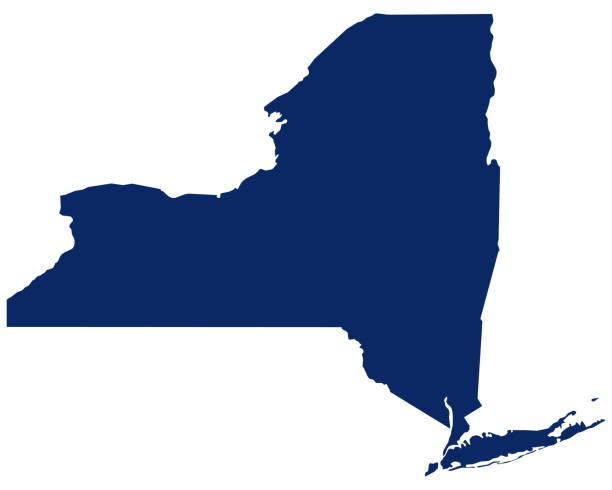
Map of New York in blue colour

There are just about than 4 million total residential homes in state of New York. If one is looking for a real estate development specialty to consider going into 2025, today, 13 years after the New York Land Bank Law went into effect, there are still in excess of somewhere in the neighborhood of 40,000 vacant residential homes located in municipalities throughout the state of New York.

Two general truths…

Truth “A”: a land bank has procedures available to the land bank which enables the land bank to acquire vacant and abandoned properties.

Truth “B”: Developers look for opportunities to acquire – and redevelop – non-performing properties.

Once transitioned from a non-performing property to a “performing” property, that property can then be sold. Thus, returning what was once a now-performing property to a neighborhood as a “performing” properties. As a community asset. As a property which is now on the municipality’s property tax roll. As such, performing properties create newly-found tax revenue for municipalities. This eases budget constraints.

Through New York’s Land Bank Law, in New York State, the New York municipality possesses an ability to create their own land bank. By establishing a land bank, resources, direction, vision, personnel – coupled to funding – enable New York redevelopment. Once created, New York land banks improve adverse conditions stemming from non-performing properties located within New York State tax districts.


The New York Land Bank law was signed by Governor Cuomo on July 29,2011. New York’s first land bank was established the next year.. in 2012. Today, there are over 30 land banks in operation in New York State..

Here are some land bank statistics from the part of New York Stare where Josh Allen plays quarterback:

A. 230 properties acquired

B. 44 renovations completed

C. $2.4 million in assessed Values returned to communities

D. $14 million in leveraged investment
Circumstances, Timing, and Policy. Or a lack thereof?


It can credibly be argued that opportunities for Americans to build wealth through the acquisition of real estate has usually been based upon, 1) circumstances, and 2) timing.

Minus, 1) favorable circumstances, and 2) good timing, is (or was) an American just outta luck in regard to real estate? Due to different reasons, for many – long, long ago, and still today – that answer, unfortunately, was and is, “YES.”

So what role can, should or will government take on with regard to creating more opportunities for generational wealth building through the ownership of real estate? Remember, as a “game-changer,” HUD was created 59 years ago…in 1965. A long time ago.

Going back…hundreds of years before the formation of HUD, what role did our government play when real estate was sought out? In the earliest stages of our American set-up.

During the 1600’s, a select portion of those residing in what would go on to become the American colonies – those who aspired to “own” land for themselves, that is – ventured out, and found themselves a piece of land. They claimed that land. They then “owned” that land. And there you have it. Notwithstanding, this was land “ownership” – for some – without a deed being recorded. Notwithstanding, this was land “ownership” without the issuance of title insurance. Notwithstanding, this was land “ownership” which went into effect without the use of a mortgage.

During the 17th Century, in what would go on to become the United States, when one wanted land, one could often just travel a few miles north. Or south. Or east. Or west. Outside of a settled area, that is. Find some barren land. Land that had not yet been claimed. Then, proceed to claim that unsettled land. Circumstances permitted.

So a notable portion of our early “eligible” American settlers didn’t see value in buying land from someone else. Nor was there a need to.

Circumstances. Timing.

When the United States is short millions of new homes – as we are today – and when there is no substantive national policy being spoken of which can work towards addressing our very real housing problem (in an election year, for that matter) do we just leave this all to “Mr. Market,” and say, “Well…it’s just, 1) circumstances, and 2) timing.”

That’s kinda what we’re doing…