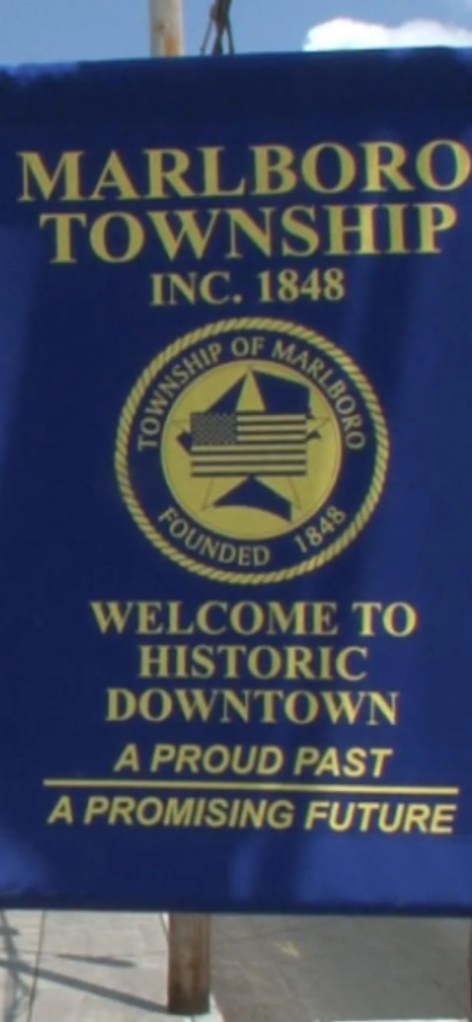
The name – Marlboro Township – can be traced back to what had been a local discovery…a discovery which occurred, nearly three hundred years ago.
This local Marlboro discovery, then too, the utilization of what had been discovered nearly three-hundred years ago alongside what is now Marlboro Township, was a mineral. That mineral – emerging to go on to become quite important to the local agricultural industry – being this region’s marl.
Marl is a mineral which, by the late 18th century in New Jersey, was relied upon first, by local farmers who owned farms in what would go on to become Marlboro Township. Then, later, by farmers farming farmland situated throughout New Jersey. Then, later, by farmers farming farmland well beyond – and outside of – New Jersey.
In Monmouth County New Jersey, marl was discovered in 1768. East of where the township lines for what we now call Marlboro Township can be found. A true farmer’s ally, the functionality of marl as a mineral can be seen in how marl – composed of the remains of prehistoric fish – was able to be spread over topsoil of area farmland during the winter months. Then tilled into the farmland soil in the spring. Farmers, in what we now know to be Marlboro Township, came to rely upon marl as the means through which they could improve their soil’s fertility.
Marl is not exclusive to New Jersey, by any means. The recognized use of marl goes way, way, way back. To the 1st century.
Marl is a de-facto natural fertilizer. A natural fertilizer which had been found to exist in the grounds underneath Marlboro Township in the 18th Century. Long, long, long before the comeuppance of any commercial fertilizer industry in New Jersey would have been able to supply local New Jersey farmers with a finished fertilizer product which could be used for their farms.
Harvested in what would later go on to become Marlboro Township, the region’s marl – once the marl had been harvested – would go on to evolve as an industry. Later, to be transported by rail. On to nearby agricultural markets. New Jersey’s local discovery of marl established an industry early on for Marlboro Township.
By the mid-19th Century, the transportation of New Jersey marl was key to facilitating commerce. For the local harvesters of marl. For the local “exporters” of this marl. And for the farmers and the farms which came to rely upon – and use – marl as fertilizer.
To that effect – relating to marl, as a local industry…and to the transportation of marl as well – in 1853, the Freehold and Jamesburg Agricultural Railroad was founded in Jamesburg, New Jersey. Founded, primarily to facilitate the transportation – by rail – of this newly-identified regional mineral.
The Freehold and Jamesburg Agricultural Railroad operated along a 27-mile rail line. Connecting the locally-harvested marl – in what is now Marlboro Township – to nearby agricultural markets. Among them, Freehold, Jamesburg, Monroe, Manalapan and Englishtown.
For comments about this article, or to offer suggestions and ideas for further pieces written about Marlboro Township, kindly reach out to the author, Ted Ihde.
phone: (816) 699-6804
email: authortedihde@gmail.com
 Thinking About Becoming a Real Estate Developer?