Municipalities enter into land bank agreements with redevelopment entities. In doing so, municipalities designate redevelopment entities as land bank entities.
Procedures are written into land bank agreements which clarify how land bank entities acquire properties on behalf of municipalities.
Why land banks?
Land bank properties are not bring absorbed by the market. There are reasons for this. Such as…
Years of back taxes owed. Clouded titles. Rehab budgets which exceed appraisal values. Limited “comps.” Are owner-occupying buyers able to secure renovation loans?
The market isn’t absorbing land bank properties. We have an inventory challenge. We have a housing affordability challenge.
Why not become proficient in land bank properties?
Markets do not optimally function when interest rates are too low. Markets do not optimally function when interest rates are too high. The housing market – as well as the home loan market – would be two markets where this point can be most easily seen.
Artificially-low interest rates create an overly-accommodative economy. The consequences for which we see in today’s stubbornly non-ignited housing market. Mortgage rates are not high today. They’re just a lot high-er than they were during the Pandemic. But mortgage rates today are certainly not anywhere near what we should classify as, high.
The ’70s’ would be one example we could use to illustrate how markets malfunction when interest rates are, first, too low, then, later, increased. Increased too much. Too fast.
There were points in time during the 1970’s where the country was actually in a negative interest rate environment. Bank deposits were yielding “storage charges,” so you speak. As opposed to throwing off interest income.
The low-rate environment in the 1970’s came about in many ways because the stock market was in shambles. The result of that market unease of the ‘70’s? The Fed enacted an easy money policy. The idea at the time being, to attain full employment. Overly-accommodative. This was a flawed approach. Which became highly inflationary.
Enter price controls? Yep. Did you ever make one mistake, then double-down, only make to make your second mistake? In succession? An easy money policy followed by price controls? That ill-advised combination did not work out so well.
So by the late ’70’s, with the country in the midst of rampant inflation, the Fed began to ratchet up interest rates. To temper the inflation. The origin of this inflation which was now being battled was of course triggered by the overly-accommodative fiscal policy of the Fed years before. The result of moving from an accommodative fiscal policy to a restrictive fiscal policy by way of rising interest rates? The economy went into recession.
Let’s look at another recent timeframe…
In the early-2000’s, interest rates were lowered. Interest rates became accommodative. At that time, lower interest rates were married to accommodative home loan underwriting policies. The result? Skyrocketing home values. An increase in home loan defaults. The Financial Crisis.
Overly-accommodative policy = a rough landing.
Overly-restrictive policy = a rough landing.
Overly-accommodative policy followed by overly-restrictive policy = a rough landing.
During the Pandemic, the federal funds rate was lowered to a range of 0% to 0.25%. Mortgage rates dropped. Home prices went up.
Fast forward to 2025…
Today, more than 75% of homeowners are nestled cozily in with a sub-5% mortgage rate. Around 55% of homeowners are nestled cozily in with a sub-4% mortgage rate. This “lock-in effect” we have in housing in 2025 is one byproduct of the low-rate policy the Fed enacted during the Pandemic.
Last year 25 out of every 1,000 homes found their way to new buyers. That was the lowest turnover rate we saw in housing in 30 years.
Accommodative policy – I.e.: low interest rates – do not only lead to future restrictive policy by way of elevated interest rates. Accommodative policy leads to the market restricting itself. Which is exactly where we are right now.
For example…
Why sell your home when the interest rate you have on your mortgage is 4% or less? Especially when you know you’d have to go out and buy another home in the midst of a restrictive cycle – at an elevated price, no less – with a mortgage rate which would be between 6% and 7%?
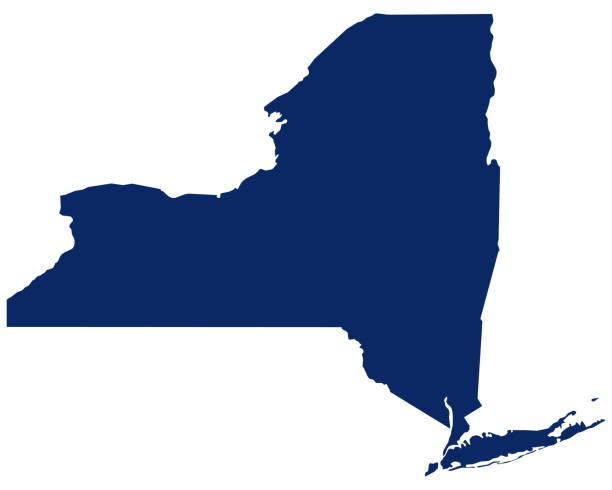
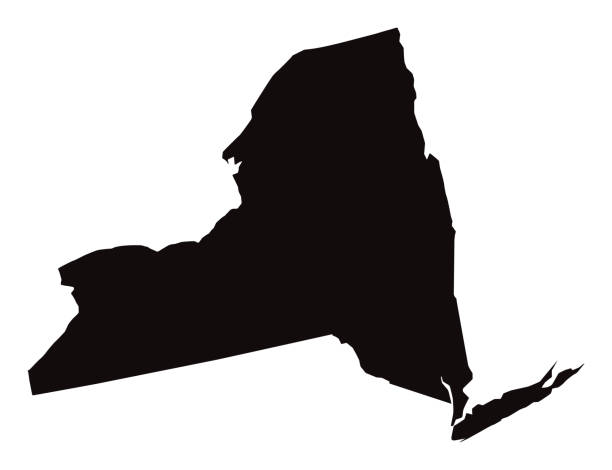
There are just about than 4 million total residential homes in state of New York. If one is looking for a real estate development specialty to consider going into 2025, today, 13 years after the New York Land Bank Law went into effect, there are still in excess of somewhere in the neighborhood of 40,000 vacant residential homes located in municipalities throughout the state of New York.
Two general truths…
Truth “A”: a land bank has procedures available to the land bank which enables the land bank to acquire vacant and abandoned properties.
Truth “B”: Developers look for opportunities to acquire – and redevelop – non-performing properties.
Once transitioned from a non-performing property to a “performing” property, that property can then be sold. Thus, returning what was once a now-performing property to a neighborhood as a “performing” properties. As a community asset. As a property which is now on the municipality’s property tax roll. As such, performing properties create newly-found tax revenue for municipalities. This eases budget constraints.
Through New York’s Land Bank Law, in New York State, the New York municipality possesses an ability to create their own land bank. By establishing a land bank, resources, direction, vision, personnel – coupled to funding – enable New York redevelopment. Once created, New York land banks improve adverse conditions stemming from non-performing properties located within New York State tax districts.
The New York Land Bank law was signed by Governor Cuomo on July 29,2011. New York’s first land bank was established the next year.. in 2012. Today, there are over 30 land banks in operation in New York State..
Here are some land bank statistics from the part of New York Stare where Josh Allen plays quarterback:
A. 230 properties acquired
B. 44 renovations completed
C. $2.4 million in assessed Values returned to communities
In an environment which is accompanied by elevated interest rates, hopeful home buyers are challenged by housing affordability (or a lack thereof). But the real problem is not found in interest rates. The real problem is found in inflation. Housing inflation, to be more specific.
Housing inflation, linked to the fact that, we just don’t build (or rehab) enough homes. Every year. Year after year. Same problem. So, in real estate, is it wise to simply recruit more salespeople to follow the same business model? To attain the same outcome?
What is the real sales challenge to solve? Add more homes to the market. Every year. Year after year. Meet demand.
A noted portion of homes which could be/should be added to the market each year will come through, 1) rehabbing more homes, and 2) building more new homes.
An industrywide over-reliance which is placed upon selling move-in ready homes, coupled to a lack of prioritization – and/or specialization – in creating additional housing stock is arguably a “sales management C-minus,” or a “sales management D.”
Don’t blame Jerome Powell. Our housing challenge is, in many ways, about sales management deficiencies. A lack of leadership in sales. Which, in my opinion, functions as one primary contributor to our ongoing national housing challenge. Inefficient sales management in real estate makes Jerome Powell’s tough job even tougher.
Creating more inventory is the solution. Ignoring processes which will lead to the creation of more inventory further contributes to housing inflation. To fewer sales. To less commission. And, quite possibly, to the underutilization of capable real estate professionals.
In the U.S. economy, there is a “balancing act” found within projected, planned and/or implemented wholesale-retail price increases. Just as there is a “balancing act” in managing tariffs.
Wholesale price increases, retail price increases and tariffs. Each being a conversation piece relevant to how price changes could/will affect consumer behavior. And demand.
As prices increase, consumer demand could in turn decrease. Companies opting to reduce the prices that consumers ultimately pay at the retail level, with an eye on jumpstarting demand – if demand had been deemed to have stalled out – can prove to be challenging when companies absorb higher-than-planned-for wholesale price increases. As is reflected through an increasing – or a stubbornly consistent higher-than-planned-for – Producer Price Index.
And those wholesale prices paid by corporations – prior to consumers purchasing products at the retail level? Those wholesale prices – paid by U.S. corporations – are driven up by tariffs.
“You can’t tax business. Business doesn’t pay taxes. It collects taxes.” – a quote by Ronald Reagan




 Thinking About Becoming a Real Estate Developer?