Within a Redevelopment Area, a municipality’s goal could be to transition residential, commercial and industrial properties within the Redevelopment Area into vibrant community assets. The pursuit of which could take on a community-centric theme. Renovations, repurposing properties, new home construction… Goals pursuant to the redevelopment of properties within a Redevelopment Area.
Redevelopment of properties within a Redevelopment Area could start out with a city council resolution. To redevelop properties. With the resolution, a planning board might then choose to construct a Redevelopment map. With a Redevelopment map – and upon notification to the public of an upcoming hearing – a planning board could then look to adopt a Redevelopment resolution. The resolution could recommend the establishment of a Redevelopment Area within the municipality.
Potential steps a municipality could consider beginning with in order to establish a Redevelopment Area within the municipality…
You can direct any comments or questions to Ted Ihde.
Since the 1920’s, Kansas City, Missouri has utilized the council-manager form of government. Phoenix is the largest American city which utilizes the council-manager form of government.
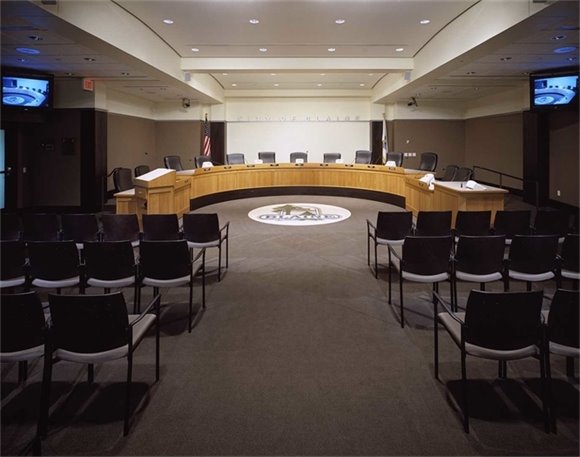
In a council-manager form of government, city council charts how the city functions. An analogy…
In a council-manager form of government, city council could be looked at as being comparable to a corporate board of directors. The council-manager form of government, through its construct, looks somewhat like corporate governance. Using the corporate analogy, a city manager would be the city’s “executive officer.” The city’s “CEO.” The city manager, which is an unelected position, is hired by the city.
The city manager works, in theory (ideally) outside of the scope of the political arena. The city manager executes policy. The city manager implements ordinances…ordinances passed by, using our corporate analogy once again, the city’s “board of directors.” The “board of directors” being…city council.
The city’s “CEO?” City manager. The city’s “board of directors?” City council.
Under the council-manager form of government, the mayor is an elected public official. Elected by voters.
The city manager operates behind the-scenes. Running the city’s day-to-day operations. The mayoral position is a more visible position. Interviews? Newspaper articles? Mayor.
As executive officer, the city manager is responsible for oversight of city departments. The city manager collaborates with the mayor – and with city council – to enact policy. City policy? That policy emanates from city council.
City planning? City programs? The city budget? These are responsibilities of the city manager.
The position of mayor is a political position. The city manager position is apolitical.
City managers are not out campaigning alongside candidates who are running for public office. The city manager does not publicly promote the interests of Democrats, nor of Republicans.
Campaigning? Part of what it takes to become mayor. Politics? Goes hand-in hand with winning an election and becoming mayor.
Photo ops? Fundraising? TV appearances? Mayor. The city manager may very well attend these events as well. Yet it will be the mayor – moreso than the city manager – who is more likely to show up and make an appearance.

 Thinking About Becoming a Real Estate Developer?