The Request For Information in Real Estate Development


The request for information – I.e.: RFI – is the formal communication channel within real estate development which is utilized by individual stakeholders to obtain additional details about a project’s materials, processes, plans and/or specifications.

The RFP is issued. The RFI is requested…

The Respondent to a request for proposals (“RFP”) – the RFP being an entry point for proposed stakeholders who aspire to supply their products, their services and/or their processes to the project for which the RFP had been issued – benefits through the RFI. In that, through the RFI, the Respondent is able to gain information about construction. Enabling the Respondent to enhance or to amend their Response. In a manner which is aligned with additional “project directions” gathered by the Respondent through the RFI. The outcome being…?

The Respondent will more aptly be able to provide the real estate developer with project specifications which facilitate progression through each stage of development.

Project details gathered by a Respondent through the RFI may have initially been unclear to the Respondent when the RFP was first issued. Potentially, questions presented to the developer by a Respondent through the RFI – as well as answers sought by the Respondent in the RFI – may not necessarily have been spoken to, within the original RFP, at the onset of the RFP issuance. I.e.: when the site plan was first able to be studied by the Respondent. 

In such a case, the most effective way for a real estate developer to provide clarity sought by a Respondent – and, as such, the most effective way for a Respondent to supplement (or amend) their Proposal for the developer – is through a request for information. The RFI.

When reviewing RFP development specifications, in order to be able to accurately understand how to best address site plan requirements for the developer, a Respondent may elect to submit their own RFI. Submitted to developer. Or to the architect. Or to the general contractor. And so on. Doing so lets the Respondent notify a particular project stakeholder – for example, the developer, the architect, or the general contractor… – that RFP provision clarification, as has been requested by the Respondent through the Respondent’s RFI, will be helpful at this stage of the project. Helpful, insomuchas, with the named clarification(s) provided, the Respondent will be able to progress towards satisfying their stated commitment to the project’s success. In alignment with goals established through the RFP.

Throughout development, as a project progresses, the RFI is an important tool which can be introduced by several different people. Issued by several different people. Each of whom remain independently, yet, through the process, collectively – through the RFP, through the RFI – involved in construction. 

Opportunity Zones: 7 years ago, the “Why?” in the “Why!”

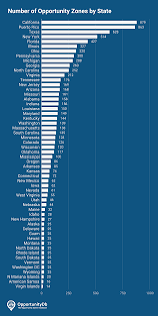
In 2017, Opportunity Zones were created through the Tax Cuts and Jobs Act of 2017. That same year, the Minority Business Development Agency (the MBDA) conducted a study which focused upon differences in, A) access to financing, and B) financing costs, for businesses owned by White business owners, as compared to businesses owned by minority business owners.

The same year Opportunity Zones were created – in 2017 – the MBDA reported that the average loan provided to White-owned businesses totaled $310,000. And how about for minority-owned businesses? Financing provided to minority-owned businesses – according to the MBDA study – dropped substantially. To $149,000. That $149,000 financing amount…less than half of the amount which had been made available to White business owners.

OK, so how about the cost-of-credit?

According to the 2017 MBDA study, the average interest rate paid by minority-owned businesses had been 7.8%. For White-owned businesses? The cost-of credit was significantly lower. It was 6.4%.

So the 2017 MBDA study showed how White business owners paid less for the money they borrowed than minority business owners paid. And they were able to borrow quite a bit more money too.

In looking at findings in the 2017 MBDA study, one may have thought, it seemed to be rather expensive to not be White in business.

Opportunity Zones are merely one building block. In a building. A building that has a lot more floors that need to be built. Long before the building is even close to being complete.

Opportunity Zone: an economic development tool that allows people to invest in distressed areas in the United States

Many news pieces as of late featuring Opportunity Zone proponent- devout Christian – South Carolina Senator Tim Scott. So a little bit here about one reason Senator Tim Scott cares so deeply about Opportunity Zones: ACCESS TO – OR A LACK THEREOF – FINANCING FOR BUSINESSES OWNED BY BLACK AMERICANS

According to a Federal Reserve report I read a few years ago, Black business owners apply for bank financing at a slightly higher rate than White business owners do. Yet, according to the same report I read, just over fifty per-cent of Black business owners are turned down for business financing. The turn-down rate for White business owners? It’s about half of that rate – it’s about 25%. 

Ok, so how about the turn-down rate for business financing applied for by Asian American business owners? The turn-down rate for business financing applied for by Asian American business owners had been – according to the report I read – just about 35%. 

How about for Hispanic business owners? According to that same report, the turn-down rate for business financing applied for by Hispanic business owners had been a little under 40%.

Access to financing – or a lack thereof – for American businesses which are owned by Black Americans… No one purports to proclaim that there is any sort of quick fix to inequality. This being said, support for – and continued interest in – Opportunity Zones has multiple facets applicable to “upside.” Tim Scott, is right.

Wholesale Prices – Retail Prices

In the U.S. economy, there is a “balancing act” found within projected, planned and/or implemented wholesale-retail price increases. Just as there is a “balancing act” in managing tariffs.

Wholesale price increases, retail price increases and tariffs. Each being a conversation piece relevant to how price changes could/will affect consumer behavior. And demand.

As prices increase, consumer demand could in turn decrease. Companies opting to reduce the prices that consumers ultimately pay at the retail level, with an eye on jumpstarting demand – if demand had been deemed to have stalled out – can prove to be challenging when companies absorb higher-than-planned-for wholesale price increases. As is reflected through an increasing – or a stubbornly consistent higher-than-planned-for – Producer Price Index.

And those wholesale prices paid by corporations – prior to consumers purchasing products at the retail level? Those wholesale prices – paid by U.S. corporations – are driven up by tariffs.

“You can’t tax business. Business doesn’t pay taxes. It collects taxes.” – a quote by Ronald Reagan