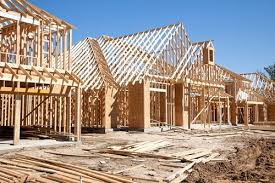
Come January 31st, each of New Jersey’s 564 municipalities is required to file their own resolution with the State, adopting affordable housing obligations for their municipality.
Come June 30th, each of New Jersey’s 564 municipalities is required to submit their affordable housing plan to the State, for their municipality.
Last October, the New Jersey Department of Community Affairs released New Jersey affordable housing requirements. These will need to be completed by 2035. And here they are…
A) Create 84,698 new affordable housing units.
B) Preserve an additional 65,410 existing housing units.
140,00 homes built or renovated over the next ten years. That’s a lot of homes. That’s a lot of infrastructure needed.
Impact fees…and Trenton.
The Municipal Development Impact Fee Authorization Act – presently in committee in Trenton – would, if passed, broaden New Jersey municipalities’ ability to pass through development-related costs to real estate developers. By broadening the scope for how impact fees can be collected by municipalities.
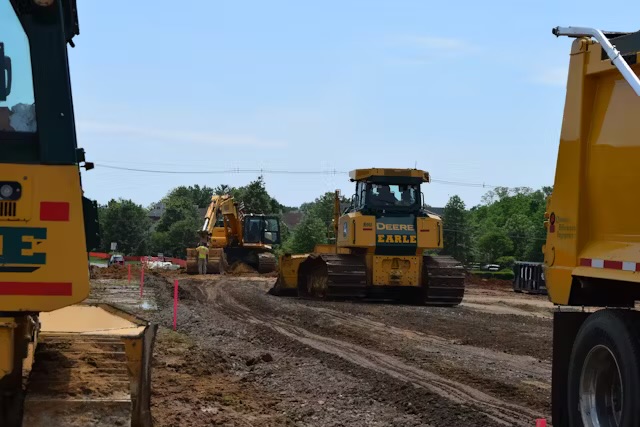
New Jersey is one of 22 states which presently authorizes the collection of impact fees by a municipality. Different states may refer to “impact fees” though their own state vernacular. For example, in Kansas – Kansas does authorize impact fees – impact fees are also referred to as adequate facility taxes. Or excise taxes.
At the present time, in New Jersey, the impact fees which can be passed along by municipalities to developers are pretty much limited to off-site improvements which arise as a direct consequence of the development. Direct consequence?
My humble opinion…
The way impact fees are levied upon developers in New Jersey today seems a bit…unjust. Tilted too far in favor of developers. At the expense of municipalities. See, direct consequence.
For example, an increased allocation of funds – and personnel – will likely be required in order to accommodate the higher number of classroom students which will be arrived at through the construction of new homes within any municipality. New homes are built. New families move in. Families have kids. Kids go to school.
Yet, in New Jersey, this increase in education funding which will be required by a municipality – as a result of new development – is not able to be passed through to real estate developers by way of impact fees. Though they should be able to be so.
Because any increase in education funding needed in order to accommodate larger classroom sizes – or additional teachers – which comes about as a direct result of development is as much of a direct development-related cost as one can think of. It’s attributed to…the building of new homes. Isn’t it?
Education funds for a New Jersey municipality – collected through impact fees charged to real estate developers – should be permissible.
Larger classrooms. Additional teachers. Potentially, the construction of a brand new school. These are a few of the costs – real costs – that a municipality will incur as a result of an increase in the student population. Because new homes were built in the municipality.
One proposed solution? A boardening of the scope for the collection of impact fees by New Jersey municipalities.
Whereas critics of increasing impact fees may view additional impact fees charged to developers as impediments to growth, that argument is easily overcome.
Impact fees can be collected in lieu of local property tax hikes. Furthermore, impact fees are specific to the development at hand. To the area being developed. As such, the implantation of impact fees enables the broader property tax-paying populace to not be unduly burdened through an increased annual property tax bill. To fund development in town…which really does not directly affect them.
 Thinking About Becoming a Real Estate Developer?