A lower interest rate through a 2-1 buy down increases housing options for buyers.

The 2-1 interest rate buydown provides home buyers with an opportunity to qualify for a home mortgage with a larger loan balance when they purchase their home at the outset. While at the same time, enabling the home buyer to potentially purchase a larger home. Or a home with more features. In summary, a home buyer can purchase a larger home, a home buyer can purchase a more expensive home, and/or a home buyer can purchase a home with more “bells and whistles”…each benefit made possible for the home buyer through their wise use of the 2-1 interest rate buydown.

What’s behind factors that establish mortgage rates?

Credit spreads consist of the purchase of – then the simultaneous sales of – contracts within the same asset classes. Credit spreads are not always so easily predictable. Then too, mortgage rates are not necessarily nor definitively so easily predictable either. Although the general direction mortgage rates will end up heading can rather accurately be predicted.

Inflation

When Americans talk about inflation, most would be referring to the inflation they face at the consumer level. Which would be, prices Americans are paying everyday when they go shopping. And while the Producer Price Index does not specifically measure inflation at the retail level – i.e.: at the consumer level – the Producer Price Index serves as a very effective overall inflation indicator. This is so because as the cost of goods and services increase for businesses at the wholesale level, those increases in costs that businesses incur at the wholesale level are then often passed on to consumers at the retail level. Leading to the more widely talked about, consumer inflation.

The 2-1 interest rate buydown

The 2-1 buydown is a real estate financing technique…an attractive home loan provision whereby funds are set aside in an escrow account at the closing, for the benefit of the buyer. These escrowed buydown funds permit the home buyer to “buy down” the interest rate on their home loan…as the buyer’s interest rate is “bought down” for the two-year period. 

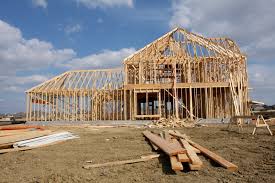
It’s simple: Too few new homes are being built today.

Housing starts for privately owned homes surpassed the 2-million threshold in 2005. Housing starts for privately-owned homes fell just short of 2 million during the prior year, in 2004. At that point in time, the market had been absorbing just about 2 million new homes a year.

In 2021, the market absorbed 1.7 million new permits for privately owned homes, while the market also took on 1.6 million new privately owned homes which had been built. The 1.7 million new permits, and the 1.6 million new housing starts…each total representing annual figures which were three-hundred thousand fewer (permits) and four-hundred thousand fewer (housing starts) than the market absorbed 16 years earlier.

Inflation

The Producer Price Index measures the average change over time in the prices domestic producers receive for their output. Whereas “retail” constitutes prices reflected through the sale of goods and services to the public for their own consumption – not for resale – the Producer Price Index measures the cost of goods and services at the wholesale level. Each month, the Producer Price Index is published by the Bureau of Labor Statistics. Typically, the Producer Price Index is released by the Bureau of Labor Statistics the second full week of each month.

Treasuries…yield…and demand.

When there is a socioeconomic environment in place which constitutes relatively high levels of market demand for 10-year Treasury notes, investor bids for these notes would most likely come in at or above a bond’s face value. The higher offer prices for the bonds will drive down bond yields, because investors are willing to accept the lower coupon rate they receive for the bonds in exchange for the de-facto loans they are making to the United States government by way of their purchase of 10-year Treasuries.

The Producer Price Index (“PPI”)

In the United States, the Producer Price Index measures the average change over time in the prices domestic producers receive for their output. Whereas “retail” constitutes prices reflected through the sale of goods and services to the public for their own consumption – not for resale – the Producer Price Index measures the cost of goods and services at the wholesale level. Each month, the Producer Price Index is published by the Bureau of Labor Statistics. Typically, the Producer Price Index is released by the Bureau of Labor Statistics the second full week of each month.

New Home Construction: Land Grading

Your goal is to build a new home – new home construction. For your new home, the property surface – i.e.: the land on which your new home will be built – is, literally and figuratively, the “foundation” to it all.

With single-family new home construction, before your home builder breaks ground on the project, as the property owner, you will want to ensure that steps are taken to clear and level your buildable residential lot. The foundation for your new home soon will be poured. So any holes found in the property’s surface should be filled in. This ensures that the foundation for your new home will be poured on a land surface which has optimal conditions, applicable to new home construction.

The foundation will soon be in. So it’s a good idea to use wooden stakes to mark where exactly the foundation will ultimately be poured. If your property turns out to have an uneven surface – i.e.: hills, recesses, dips, mounds, holes… – the next step is, grading.

So while a flat, level lot is, early on in the process of planning your new home-build, what your goal would be – as you approach the pouring of your foundation – an entirely flat, purely level lot with no slope whatsoever throughout the entire property, extending beyond your home’s footprint, is not a property surface condition to sustain. Which brings us to, grading.

Grading is the structuring of the surface of the land area, applicable to your new home-build. To summarize, the property’s grading is it’s slope. As per grading, it is tantamount to ensure there will be proper slope added to the graded property surface. The ideal slope for your home-build project is, for the land on the outer perimeter of your home’s foundation to descend away from your newly-built home. This decline – applicable to grading – is important because grading ultimately determines where rainwater – as well as where runoff water from the roof – will flow to.

With positive grade, the land slopes away from your new home. Thereby, positive grade is the desired outcome for your home-build. Insomuch as with positive grade, rainwater – as well as roof run-off – will be directed away from the foundation of your new home. And this is ideal. Positive grade is also referred to as good soil grade.

In contrast to positive grade, negative grade slopes the property surface towards the foundation of your home – and this slope would not be your desired outcome. Negative grade is also known as poor soil grade. Positive grade reduces the risk of erosion, thereby mitigating future foundation damage. With negative grade, erosion – and in turn, potential foundation damage – is more likely possible.

For every one foot that you move away from your home-build’s footprint, you will want the ground surface for your property to drop one inch. This application – one foot – drop one inch – should be established for your home-build footprint’s perimeter – extending up to ten feet around the perimeter of the footprint.

In terms of “real estate speak”, being a real estate broker myself, I often read property descriptions for marketed homes, whereby the property description is written as, having a “level lot.” In terms of your new home-build, “level” is not the property surface condition you are looking for. “Level”, thereby, is not optimal.

In this article, we touched on the topic of positive grade. And in this article we also touched on the topic of negative grade. Positive grade, and negative grade…so we should also discuss, level grade.

Level grade is a condition where the ground surface is, well, level. I.e.: flat. When building your new home, level grade is a property surface condition which needs to be corrected – not maintained. And this correction can be accomplished, through grading. For your new home-build, you want positive grade.

Level grade should be transitioned to positive grade. So as to ensure there will be proper drainage around the foundation of your new home. This occurs when the property surface is sloped at the optimal decline. I.e.: positive grade. Thus, with positive grade, rainwater – as well as roof run-off – will flow away from the foundation of your new home. As discussed in this article, the then trajectory of rainwater, away from the foundation of your new home, reduces your future risk of foundation damage.

What does grading cost? The typical cost for grading can run between $5.00 to $10.00 per square foot of the property.

Red Bank and Redevelopment

The Galleria Red Bank – today, a quaint collection of offices, restaurants, and boutiques located in the heart of, what some refer to as, New Jersey’s “Greenwich Village” – was built over a ten-year period, early in the Twentieth Century. 

Between the years of 1907 and 1917, The Galleria – originally known as the Eisner Building – was constructed with an endgame in mind which is not similar to what The Galleria is known to be today. The Galleria of today is a redeveloped Red Bank centerpiece…located right where Bridge Avenue meets West Front Street. No, that original early Twentieth Century endgame for The Galleria did not involve chic restaurants. No, that original early Twentieth Century endgame for The Galleria did not involve enticingly charming retail outlets. Rather, that original early Twentieth Century endgame was predicated on the idea of The Galleria functioning as…a textile factory. 

During both World Wars, The Galleria was a township stalwart which did not espouse a trendy retail “DNA”. Rather, The Galleria of long-ago-Red Bank once possessed an industrial “DNA”, serving as a vital supply-chain-hub for World War I and World War II American military equipment. Flight suits, military uniforms, and gas masks. Those being the wartime supplies which once made up the consortium of items produced for American soldiers in Red Bank at The Galleria early in the Twentieth Century.

In New Jersey, a Redevelopment Area is correlated to the topic of, What to do with blight? More specifically, Redevelopment Areas relate to blighted areas. Areas where, once that blight has been redeveloped, revitalization of the community as a whole takes place. 

In a designated Redevelopment Area, a municipality’s goals could be focused upon transitioning now non-performing residential, commercial, and industrial properties to vibrant community assets. The pursuit of which takes on a community-centric theme. Renovations. Repurposing properties. And reconstruction too. Each of these being goals pursuant to redeveloping non-performing properties in designated Redevelopment Areas.

Steps taken by a municipality in their progression towards revitalization in Redevelopment Areas – progression, coupled to a redevelopment plan emanating from city hall – often starts off with city council passing a resolution. Following a resolution, the planning board then might construct a Redevelopment map. With a Redevelopment map formulated – and upon notification to the public of a scheduled hearing – the planning board could then potentially adopt a Redevelopment resolution. The adopted Redevelopment resolution could recommend the establishment of a Redevelopment Area within the municipality. There is quite a bit more technical minutiae to this process, needless to say. Yet, in summarily-simplified terms, this is how we can thus arrive at the designation of a Redevelopment Area within a municipality.

On July 23, 2019, resulting from a unanimous vote undertaken by Red Bank Commissioners, the Red Bank Redevelopment Agency was created. In Red Bank, the Redevelopment Agency prioritizes development and redevelopment efforts which enhance the Red Bank community, as well as the lives of those who reside in Red Bank. It’s a well thought-out, community-centric, redevelopment and revitalization approach.

Today, there are eight retail outlets in the once-a-textile-hub Galleria. Today, there are four restaurants located in the once-a-textile-hub Galleria. Buffalo wings, pizza, Thai food, and Mexican food – available today at The Galleria, thanks to planned redevelopment efforts undertaken by Red Bank.

Tracing back thirty years ago, to the origin of the transformation of what is now a collection of fine amenities at The Galleria, in the early 1990’s, circumstances at The Galleria were quite different. In the early 1990’s, The Galleria had not yet been redeveloped. 

Utilizing “tools” made available to New Jersey municipalities through development and redevelopment “road maps” established in Trenton, “Trenton redevelopment road maps” can serve as “redevelopment toolkits”. Red Bank used these “tools” to designate an entity in the early 1990’s to manage redevelopment efforts for The Galleria within a Red Bank special improvement district.

A special improvement district is a Business Improvement District. It’s an area within a municipality where businesses pay an additional tax which goes towards funding redevelopment projects undertaken in the designated district. In Red Bank, as per redevelopment, today’s “fruits of labor” that one finds at The Galleria trace their origin to Red Bank’s use of redevelopment “tools”, made available to municipalities such as Red Bank, through Trenton. 

There are five offices in the once-a-textile-hub Galleria. That early Twentieth Century factory at The Galleria, long ago producing American military uniforms, once “majored” in textiles. Today, that old factory now “majors” in the provision of office space, in restaurants, and in retail. This is the result of redevelopment.

Pursuant to redevelopment, New Jersey municipalities are required to reexamine their master plan at least once every ten years. Red Bank is able to be progressively proactive in this manner, through their establishment of the Red Bank Redevelopment Agency.

Two noted objectives set forth by the Red Bank Redevelopment Agency are, 1) “Complete an inventory of Borough-owned properties, an assessment of their zoning status, and perform a highest and best use analysis”, and, 2) “Support the preservation of single family, owner occupied housing”. Priorities in Red Bank include, continuing to focus on the process of transitioning non-performing properties which are now owned by the municipality so they can be repurposed, as well as enhancing the availability of quality single-family homes.

So let’s do a quick, “OK, this is how we do it here…and, OK, this is how they do it there…”

In Kansas City, my close friend and partner, Ted Anderson, served as the Executive Director for the Land Bank of Kansas City, Missouri. While Kansas City, Missouri utilized their Land Bank to transition then non-performing city-owned properties in KC to developers and to rehabbers, Red Bank does not, at the present time, utilize a comparable “land bank” to transition properties owned by Red Bank to developers. Land banks are rather new in the State of New Jersey. Governor Murphy signed the New Jersey Lank Bank Law into effect on July 11, 2019…only three years ago. By contrast, in Kansas City, the Kansas City Land Bank went into effect seven years prior to the signing of the New Jersey Land Bank Law – in 2012.

For New Jersey municipalities which do not have a land bank, procedures to transition properties owned by the municipality to developers, while remaining aligned with municipality redevelopment plans, can be effectuated through the issuance of a Request For Proposals (“RFP”) or the issuance of a Request For Qualifications (“RFQ”) .

What is interesting (with some added complexity) about township Redevelopment procedures in New Jersey (which includes Red Bank), as compared to Kansas City and the Kansas City Land Bank, is that in New Jersey, once a planning board designates a Redevelopment Area within a municipality, the municipality is required to forward their local resolution to the New Jersey Department of Community Affairs (“DCA”). At which time, if the designated Redevelopment Area is not located in an area where development/redevelopment is sought after pursuant to objectives set forth in Trenton, the Redevelopment Area designation would then be predicated upon the issuance of a final approval, by the DCA.

Beginning each year on Mother’s Day, then continuing on through November, the Farmers Market in Red Bank at The Galleria owes its weekly collection of vegetables to local farmers…farmers whose locally grown produce is enjoyed by swaths of market-goers every Sunday in-season at The Galleria in Red Bank. This local community benefit has been made possible by Red Bank redevelopment efforts.

The 100,000 square foot Galleria, today a beautifully rustic multi-purpose building, is situated on nearly-three acres of redeveloped land in the heart of Red Bank. Today, The Galleria serves as a notably visible representation of what redevelopment really looks like when community-centric revitalization efforts are enacted.

 “Decisions of the agency will be made transparently and with input from the community” – exactly as worded, this is a stated priority of The Redevelopment Agency of the Borough of Red Bank. With an eye on what is in store in the future for Red Bank, it’s a good idea for those who live, who work, and who love Red Bank to participate in redevelopment discussions in a manner which is aligned with the stated objectives set forth by the Red Bank Redevelopment Agency. I.e.: “…with input from the community.”