Redevelopment

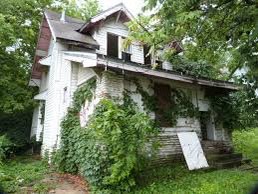
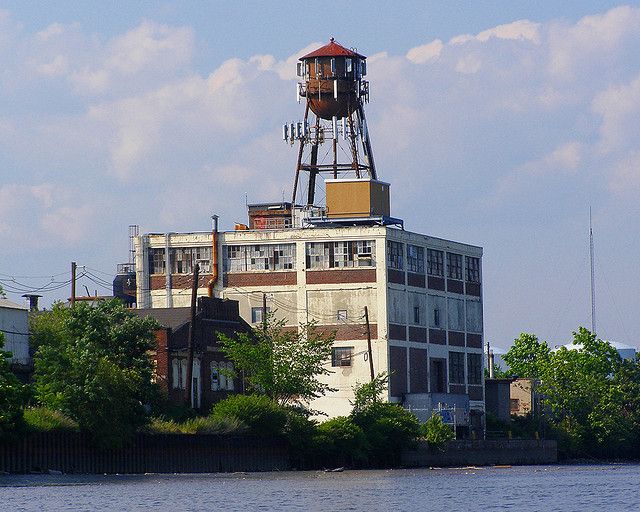
In a designated Redevelopment Area, a municipality’s goals could be focused upon transitioning now non-performing residential, commercial and industrial properties to vibrant community assets. The pursuit of which could take on a community-centric theme. Renovations. Repurposing properties. And reconstruction too. Each of these being potential goals pursuant to redeveloping non-performing properties in designated Redevelopment Areas.

Steps taken by a municipality in their progression towards neighborhood revitalization in Redevelopment Areas – progression, coupled to a redevelopment plan emanating from city hall – often starts off with a city council passing a resolution. Following the resolution, the planning board then might construct a Redevelopment map. With a Redevelopment map formulated – and upon notification to the public of a scheduled hearing – a planning board could then potentially adopt a Redevelopment resolution.

A Redevelopment resolution could recommend the establishment of a Redevelopment Area within a municipality. There is quite a bit more technical minutiae to this process, needless to say. Yet, in summarily-simplified terms, this is one we can thus arrive at the designation of a Redevelopment Area within a municipality.

Mortgage Rates

Last year, higher interest rates established by the Fed set the benchmark on which altered credit spreads had to be determined by investors. As the Fed steadily raised its rate last year, the Fed’s direct actions – in relation to a tightening of the money supply – moved the country out of the low interest rate environment we had been in. That low-rate environment, having served as the “fuel” for elevated levels of home purchases, and corporate borrowing. As the Fed raised the Federal Funds Rate last year, mortgage rates followed accordingly.

Acquiring city-owned properties to rehab?

Years of back taxes owed. Clouded titles. Rehab budgets which oftentimes exceed market values of city-owned homes…even once the homes are fully-rehabbed. Few good “comps” for appraisals. Can owner-occupants get a home loan if they buy one of these homes for themselves? Small loan amounts. And oftentimes mortgage lenders don’t like those small loan amounts. Complexities associated with the FHA 203(k) loan. And so on, and so on, and so on… 

Challenges, and lots of them. Challenges, yet one objective municipalities have is to transition these now non-performing properties into neighborhood assets. Because while non-performing properties do have these very real challenges, with high numbers of “single challenges” – i.e.: distressed, vacant homes – situated within neighborhoods, a municipality will have a larger scale collective challenge on their hands as well. A neighborhood challenge, so to speak. A social challenge. And that’s the real problem…

Probate: selling the home

The probate real estate sale…

The list price of the decedent’s home – which is now being sold probate – is effectively established by the court. In pricing the home to be sold – i.e.: in arriving at the list price of the home, the court will take into account the professional opinion of a licensed appraiser. The appraiser, having been enlisted by the court to complete the appraisal of the intestate’s home, which is now being sold.

The pricing of the decedent’s home – i.e.: the list price – will be arrived at through local market knowledge provided to the court by the designated listing agent. In arriving at the final list price of the intestate’s home, the court will also take into consideration those opinions and perspectives provided to the court by representatives of the intestate’s estate.

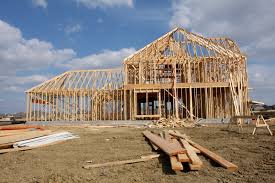
Each year new home buyers enter the market…only to find an inadequately low level of new homes built.

Three years ago, in 2021, there were 1.7 million permits issued to build new homes. In 2021 the market absorbed 1.6 million new home builds. The 1.7 million new permits – and the 1.6 million new housing starts – each total representing annual figures which were three-hundred thousand fewer (permits) and four-hundred thousand fewer (housing starts) than the market absorbed 16 years earlier.

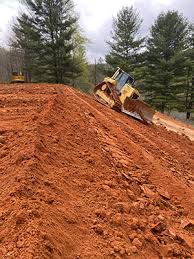
New home construction: land grading

Grading is the structuring of the surface of the land area, applicable to your new home-build. To summarize, the property’s grading is it’s slope. As per grading, it is tantamount to ensure there will be proper slope added to the graded property surface. The ideal slope for your home-build project is, for the land on the outer perimeter of your home’s foundation to descend away from your newly-built home. This decline – applicable to grading – is important because grading ultimately determines where rainwater – as well as where runoff water from the roof – will flow to.

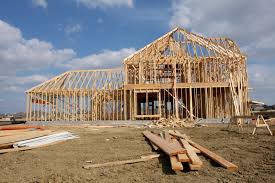
There is never an “inventory challenge” when a business plan is focused upon new home construction.

It has been argued (by some) that an industrywide over reliance on selling traditional move-in ready home resales, with a lessened focus on creating more housing stock – i.e.: an industry reliance built mostly upon selling move-in ready homes which are already built, which are already owned, and which are already lived in – is part of our housing inflation challenge today (as it is too, to reduced buyer demand).

An industry model, and an over-reliance, on selling predominantly move-in ready home resales, coupled to a potential lack of focus on, a lack or prioritizing for, and a lack of specialization by professionals in, creating more housing stock that can be added to the market (affordably) every year, then made available to a higher number of home buyers. Facilitating an ongoing national affordability-in-housing challenge. Creating inventory is the solution, whereas ignoring the creation of inventory further contributes to the housing inflation problem we face.