As the Twentieth Century dawned in the Midwest, in Kansas City, streetcar suburbs arose.
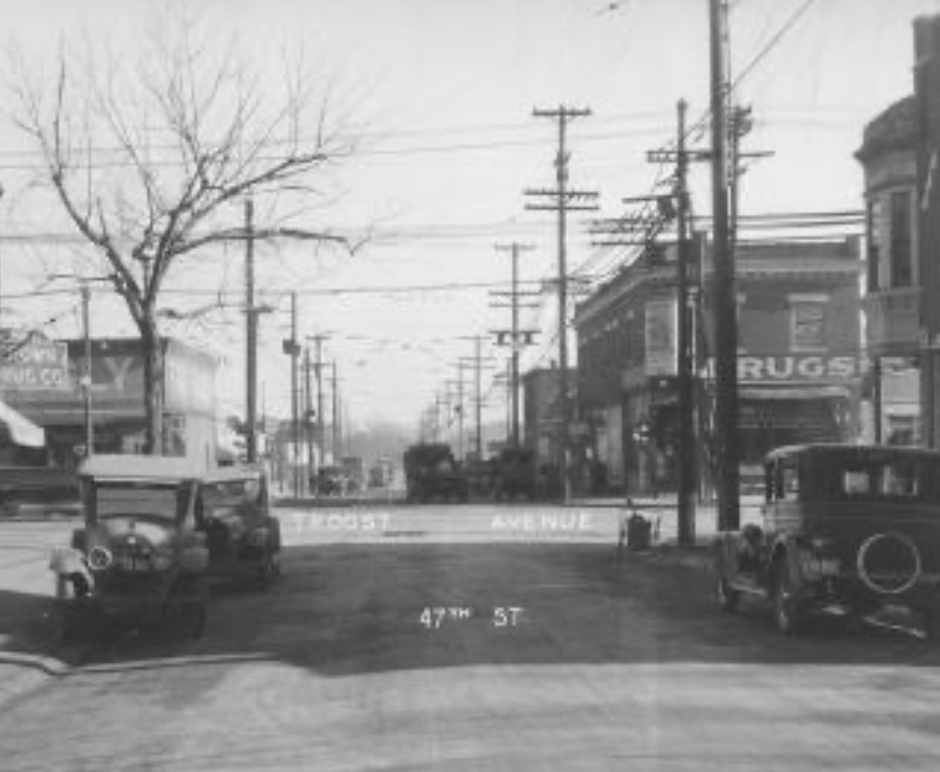
Early in the Twentieth Century one streetcar line ran right down Troost Avenue.
In the early-1900’s, one could jump on that Troost Avenue streetcar. Leave the hustle bustle of Kansas City behind. And arrive at one of those new streetcar suburbs.
Those new streetcar suburbs which were being built were still located in Kansas City. Yet, those new streetcar suburbs did not espouse an urban feel. Manheim Park was one of the early streetcar suburbs.
To the north, Manheim Park touches 35th Street. To the west, Manheim Park touches Troost Avenue.
Troost Avenue…where one could hop onto a streetcar early in the Twentieth Century and be dropped off in Manheim Park. A new streetcar suburb.
Construction of new homes in Manheim Park took hold during the early years of the 1900’s. Drawing upon a general distaste for how new homes were then being built on what oftentimes were run-of-the-mill, “plain-jane vanilla” roads. Roads that ran straight. East to west. North to south. Homes which were considered to be too close to one another.
In Manheim Park, things would be different. In Manheim Park, your drive to one of those streetcar suburban homes would be a drive along a road with a unique contour.
The crooked roads…
To build new homes on any undeveloped land you need roads. In Manheim Park, new roads went in. Roads which did not necessarily run east to west. Roads which did not necessarily run north to south.
Those original Manheim Park roads were crooked. Creating a staple – all its own – for Manheim Park. Its crooked roads.

 Thinking About Becoming a Real Estate Developer?