The township name for Montclair – Montclair, “Where the suburb meets the city.”– originates from France. From a French term. This term, mont clair. Meaning, clear mountain.
An elevated position, nestled alongside a mountain in Essex County. Mont clair.
On a clear day, with clear skies, you can see Manhattan from this New Jersey suburb. Mont clair.
In French, “mont” translates to “mountain.” In French, “clair” translates to “clear.”
Mont clair. Montclair.
Early settlements which led to the formation of today’s Montclair took hold during the 17th Century. I’d like to speak to two such settlements. Each of the two, having notable relevance to the formation of Montclair.
One of these two settlements took hold in what today is the northern part of Montclair. And the other of these two settlements took hold in what today is the southern part of Montclair. The 17th Century settlement in what today is southern Montclair, was Cranetown.
In 1679, Cranetown was established. Cranetown…a settlement named for Azriah and Mary Treat Crane. Azriah and Mary Treat Crane, two migrants of English descent who traveled south to Newark. From Connecticut.
While Cranetown was located in, today, what would be the southern section of Montclair, in the northern section of today’s Montclair, during the latter part of the 17th Century, we would have found our second settlement. That second settlement was Speertown.
But first, a little about the Cranes…
Azriah and Mary Treat Crane. The Crane family. Going on in years, long past the 17th Century, the Crane family remained relevant to Montclair’s formation..
Two centuries removed from the early days of 17th Century Cranetown, in the 19th Century, descendants of Azriah and Mary Treat Crane raised capital to obtain an important charter from the State of New Jersey. This, a charter of historical importance to Montclair.
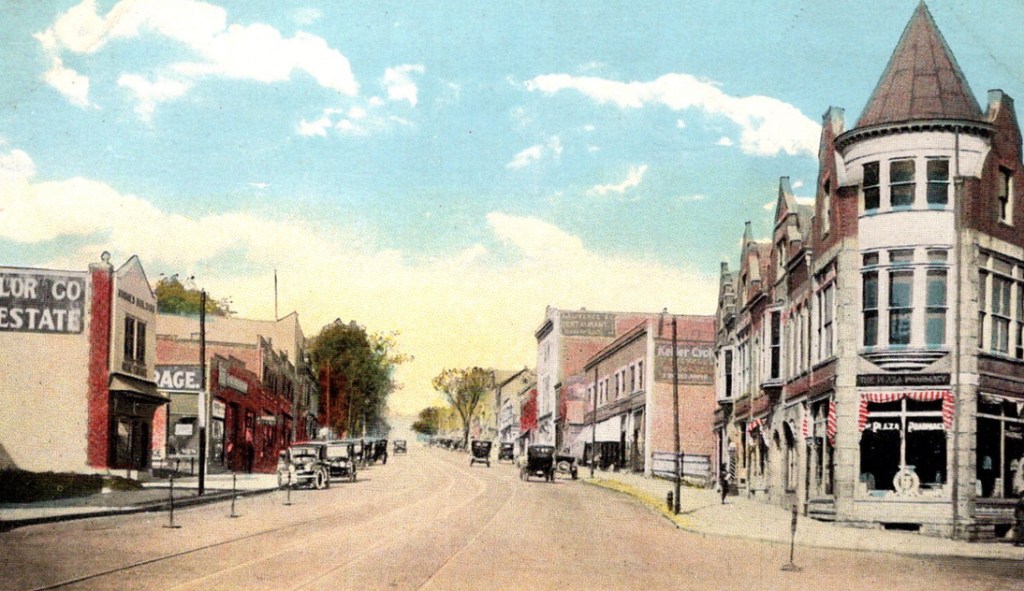
This State charter facilitated the construction of the Newark Pompton Turnpike. Once built, as the Newark Pompton Turnpike entered into what would become Montclair, the Turnpike became Bloomfield Avenue. Bloomfield Avenue…a thoroughfare created as a result of the charter the Crane family secured. Bloomfield Avenue, in time, becoming the main thoroughfare coming into central Montclair.
At the time, along Bloomfield Avenue, there was not yet a Montclair. Along Bloomfield Avenue, the Turnpike brought with it an increase in commerce. Coupled to an increase in population. Many of those residents, both then, in the earliest days, as well as today, were commuters. The increase in the local population which took place after the Newark Pompton Turnpike was built led to an increase in commuters.
Yet Cranetown was still, at that time, part of Bloomfield. And Bloomfield was still, at that time, a ward of Newark.
In 1812, when Bloomfield became an independent township – no longer a ward of Newark – this settlement, then known as Cranetown, joined with Speertown. Together, Cranetown and Speertown became Bloomfield.
Still, Montclair was not yet an independent township. While no longer a settlement which existed as a ward of Newark, what today is Montclair, was then still part of Bloomfield. Crantown, together with Speertown, were at that time known as West Bloomfield. Part of Bloomfield.
Going back to Speertown…
Today, Upper Montclair – while Upper Montclair does have its own zip code – is part of Montclair Township. It’s the section of Montclair, situated to the north of Watchung Avenue. What Upper Montclair had been – in its earliest days – was Speertown.
Speertown, established by the Dutch settler, John Speer. Speertown is today’s Upper Montclair. John Speer’s original home still, to this day, stands – 612 Upper Mountain Avenue.
There was Cranetown. There was Speertown. Two important early settlements which evolved into today’s Montclair. Yet, with those early settlements, it was really the railroad that can be pointed to as the catalyst for Montclair’s independent status as a township.
During the second half of the 19th Century, West Bloomfield – West Bloomfield being, Speertown and Cranetown – was a commuter community. West Bloomfield, during the 19th Century was laden with those who trekked into New York City. Just as Montclair today has many NYC commuters. Montclair is – just as West Bloomfield then was- a commuter town.
And while still a part of Bloomfield, West Bloomfield enjoyed (and celebrated) its own distinct identity. So while those living in West Bloomfield enjoyed their own apparatus – apart from Bloomfield (yet, still part of Bloomfield) – it proved to be a disagreement concerning rail service which led to the fraying of the Bloomfield – West Bloomfield union.
Upon Bloomfield residents voting down a referendum which would have brought a second rail line into Bloomfield, West Bloomfield – then being, primarily, a community of commuters – did not appreciate the “no” vote. West Bloomfield wanted that second rail line. And it was that disagreement – triggered by the voting down of increased rail service – which led to Montclair’s independence.
In 1868, residents of West Bloomfield secured a charter through the State. This charter authorized West Bloomfield to form their own township. Enabling West Bloomfield to become independent of Bloomfield.
In 1868, coming through the charter obtained by West Bloomfield residents, West Bloomfield seceded from Bloomfield. With this secession, the Township of Montclair was formed.
Mont clair.

 Thinking About Becoming a Real Estate Developer?